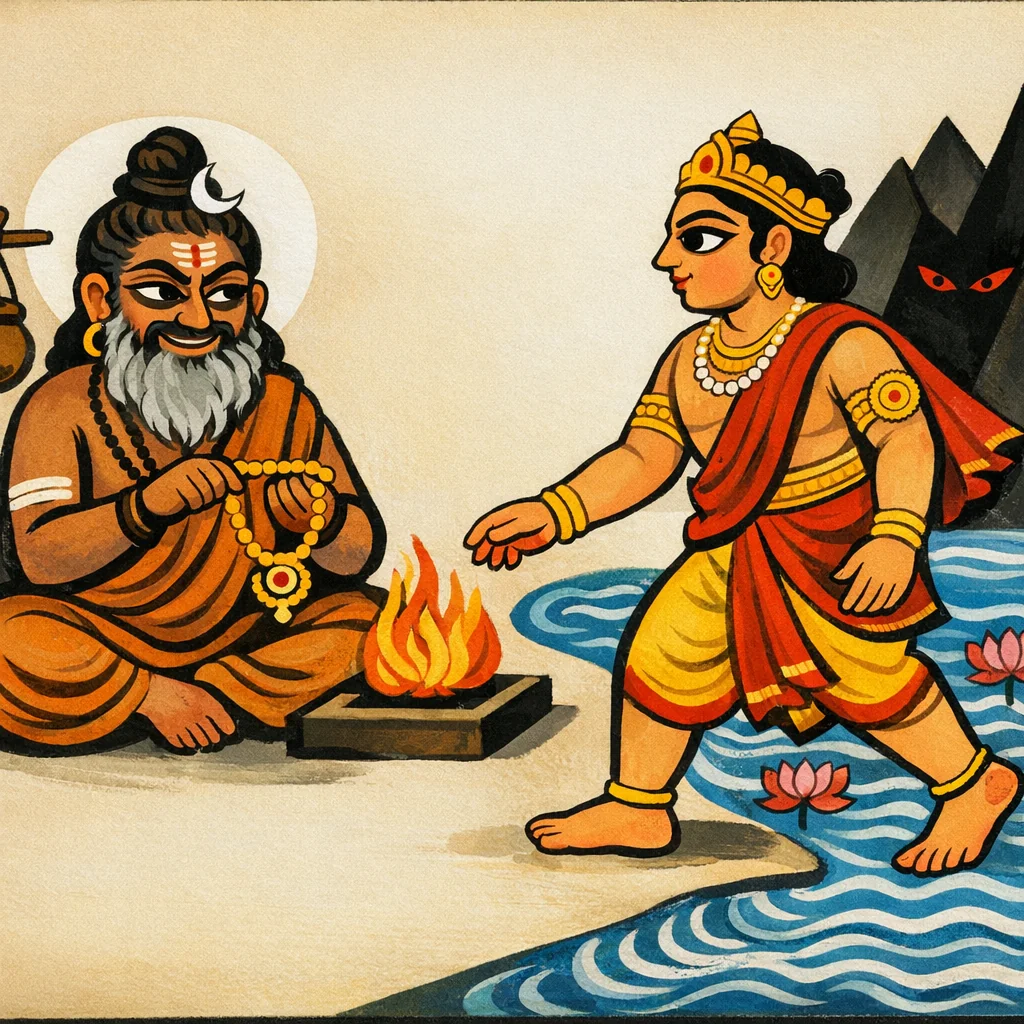
Adhyaya 22: Kuvalayashva’s Death through Daitya-Deceit and Madalasa’s Self-Immolation
कुवलयाश्ववध-मदालसामरण (Kuvalayāśvavadha–Madālasāmaraṇa)
Dharma of Giving
This adhyaya recounts how King Kuvalayāśva is brought to death through the deceitful stratagem of the Daitya/Asuras. Queen Madalasā, overwhelmed by grief, upholds her sacred fidelity and enters the funeral fire in self-immolation to follow her husband, conveying the chapter’s solemn pathos and dharmic gravity.
Divine Beings
Key Content Points
Focus Keywords
Shlokas in Adhyaya 22
Verse 1
इति श्रीमार्कण्डेयपुराणे कुवलयाश्वीयॆ मदालसापरिणयनं नामैकविंशोऽध्यायः । द्वाविंशोऽध्यायः । पुत्रावूचतुः । ततः काले बहुतिथे गते राजा पुनः सुतम् । प्राह गच्छाशु विप्राणां त्राणाय चर मेदिनीम् ॥
Thus, in the revered Mārkaṇḍeya Purāṇa, in the Kuvalayāśva section, the twenty-first chapter called “The Marriage of Madālasā” comes to an end. Now begins the twenty-second chapter. “The sons said:” Then, after much time had passed, the king again said to his son: “Go quickly for the protection of the brāhmaṇas; roam the earth.”
Verse 2
अश्वमेनं समारुह्य प्रातः प्रातर्दिने दिने । अबाधा द्विजमुख्यानामन्वेष्टव्या सदैव हि ॥
Mount this horse; day after day, morning after morning. You must always ensure that the foremost among the twice-born—the Brahmin sages—remain unharmed and untroubled.
Verse 3
दुर्वृत्ताः सन्ति शतशो दानवाः पापयोनयः । तेभ्यो न स्याद्यथा बाधा मुनीनां त्वं तथा कुरु ॥
There are hundreds of wicked Dānavas, born of sinful origins. Act so that no harm comes to the sages because of them.
Verse 4
स यथोक्तस्ततः पित्रा तथा चक्रे नृपात्मजः । परिक्रम्य महीं सर्वां ववन्दे चरणौ पितुः ॥
Thus instructed by his father, the prince did exactly so. Having gone around the entire land, he bowed at his father’s feet.
Verse 5
अहन्यहन्यनुप्राप्ते पूर्वाह्ने नृपनन्दनः । ततश्च शेषं दिवसं तया रेमे सुमध्यया ॥
Each day, when the forenoon arrived, the king’s son fulfilled his duty; and then, for the rest of the day, he sported with that fair-waisted lady.
Verse 6
एकदा तु चारन् सोऽथ ददर्श यमुनातटे । पातालकेतोरनुजं तालकेतुं कृताश्रमम् ॥
Once, while roaming, he saw on the bank of the Yamunā Tālaketu, the younger brother of Pātālaketu, who had established an āśrama (hermitage).
Verse 7
मायावी दानवः सोऽथ मुनिरूपं समास्थितः । स प्राह राजपुत्रं तं पूर्ववैरमनुस्मरन् ॥
That Dānava, skilled in māyā (illusion), assumed the form of a sage. Remembering a former enmity, he spoke to the prince.
Verse 8
राजपुत्र ब्रवीमि त्वां तत् कुरुष्व यदीच्छसि । न च ते प्रार्थनाभङ्गः कार्यः सत्यप्रतिश्रव ॥
Prince, I tell you this—do it if you wish. But you must not break a request, O you whose pledge is truth.
Verse 9
यक्ष्ये यज्ञेन धर्माय कर्तव्याश्च तथेष्टयः । चितयस्तत्र कर्तव्या नास्ति मे दक्षिणा यतः ॥
I will perform a yajña for the sake of dharma, and the proper rites are to be carried out. Citayās (altar/funeral-pyre structures) must be made there, but I have no dakṣiṇā, the priestly fee.
Verse 10
अतः प्रयच्छ मे वीर हिरण्यार्थं स्वभूषणम् । यदेतत् कण्ठलग्नं ते रक्ष चेमं माश्रमम् ॥
Therefore, O hero, give me your ornament for the sake of gold—this one that hangs upon your neck. And protect this my hermitage as well.
Verse 11
यावदन्तर्जले देवं वरुणं यादसां पतिम् । वैदिकैर्वारुणैर्मन्त्रैः प्रजानां पुष्टिहेतुकैः ॥
Until (he worships) within the waters the god Varuṇa, lord of aquatic beings, with Vedic Varuṇa-mantras that are causes of the nourishment and prosperity of the people—
Verse 12
अभिष्टूय त्वरायुक्तः समभ्येमीति वादिनम् । तं प्रणम्य ततः प्रादात् स तस्मै कण्ठभूषणम् ॥
Having praised him, and being impelled by urgency, he said, “I shall come near; I shall approach.” Then, bowing to him, he presented him with a necklace-ornament.
Verse 13
प्राह यैनं भवान् यातु निर्व्यलीकेन चेतसा । स्थास्यामि तावदत्रैव तवाश्रमसमीपतः ॥
He said, “Let your honour go forth with a mind free from deceit. For the time being I shall remain here, close to your hermitage.”
Verse 14
तवादेशान्महाभाग यावदागमनं तव । न ते 'त्र कश्चिदाबाधां करिष्यति मयि स्थिते । विश्रब्धश्चात्वरन् ब्रह्मन् कुरुष्व त्वं मनोगतम् ॥
O fortunate one, by your command, until your return, while I remain stationed here no one shall trouble you in this place. Confident and without delay, O brahmin, do what you have in mind.
Verse 15
पुत्रावूचतुः एकमुक्तस्ततस्तेन स ममज्ज नदीजले । ररक्ष सो 'पि तस्यैव मायाविहितमाश्रमम् ॥
The two sons spoke; then, when a single statement had been made, he plunged into the river-water. He too protected that very hermitage, which had been fashioned by magical power.
Verse 16
गत्वा जलाशयात् तस्मात् तालकेतुश्च तत्परम् । मदालसायाः प्रत्यक्षमन्येषाञ्चैतदुक्तवान् ॥
Then Tālāketu, having come forth from that water-reservoir, immediately spoke this account in the very presence of Madālasā and of others.
Verse 17
तालकेतुरुवाच वीरः कुवलयाश्वो 'सौ ममाश्रमसमीपतः । केनापि दुष्टदैत्येन कुर्वन् रक्षां तपस्विनाम् ॥
Tālāketu said: “That hero Kuvalayāśva is near my hermitage, protecting the ascetics; yet, because of some wicked daitya…”
Verse 18
युध्यमानो यथाशक्ति निघ्नन् ब्रह्मद्विषो युधि । मायामाश्रित्य पापेन भिन्नः शूलेन वक्षसी ॥
Fighting to the utmost of his power, striking down in battle those who hate Brahman (the brahminical order and sacred law), he was—by that sinful one resorting to māyā—pierced in the chest with a trident.
Verse 19
म्रियमाणेन तेनिदं दत्तं मे कण्ठभूषणम् । प्रापितश्चाग्निसंयोगं स वने शूद्रतापसैः ॥
As he was dying, he gave me this necklace-ornament. And in the forest he was brought into contact with fire by śūdra ascetics.
Verse 20
कृतार्तहरेषाशब्दो वै त्रस्तः साश्रुविलोचनः । नीतः सो 'श्वश्च तेनैव दानवेन दुरात्मना ॥
Uttering cries and the distressed neighing of the horse, terrified and with tearful eyes, he and the horse were carried away by that same wicked-souled dānava.
Verse 21
एतन्मया नृशंसनेन दृष्टं दुष्कृतकारिणा । यदत्रानन्तरं कृत्यं क्रियतां तदकाळिकम् ॥
This I have seen myself—though I am cruel and a doer of misdeeds. Whatever should be done next in this matter, let it be done at once, without delay.
Verse 22
हृदयाश्वासनञ्चैतद् गृह्यतां कण्ठभूषणम् । नास्माकं हि सुवर्णेन कृत्यमस्ति तपस्विनाम् ॥
“Accept this necklace as a solace to the heart. For we ascetics truly have no use for gold.”
Verse 23
पुत्रावूचतुः इत्युक्त्वोत्सृज्य दत्त्वा भूमौ स जगाम यथागतम् । निपपात जनः सोऽथ शोकार्तो मूर्च्छयातुरः ॥
Having spoken thus, the two sons—letting it go and placing it upon the ground—went away as they had come. Then that person/those people, stricken by grief and afflicted by fainting, fell down.
Verse 24
तत्क्षणात् चेतनां प्राप्य सर्वास्ता नृपयोषितः । राजपत्नीश्च राजा च विलेपुरतिदुःखिताः ॥
At that very moment, regaining consciousness, all those royal women—and the king’s queens and the king as well—lamented, overwhelmed with sorrow.
Verse 25
मदालसा तु द् दृष्ट्वा तदीयं कण्ठभूषणम् । तत्याजाशु प्रियान् प्राणान् श्रुत्वा च निहन्त पतिम् ॥
But Mādālasā, upon seeing that necklace—and hearing that her husband had been slain—quickly gave up her beloved life-breaths.
Verse 26
ततस्तथा महाक्रन्दः पौराणां भवनेष्वभूत् । यथैव तस्य नृपतेः स्वगेहे समवर्तत ॥
Then a great wailing arose in the homes of the townspeople as well—just as it had occurred in the king’s own house.
Verse 27
राजा च तां मृतां दृष्ट्वा विना भर्त्रा मदालसाम् । प्रत्युवाच जनं सर्वं विमृश्य सुस्थमानसः ॥
The king, seeing Mādālasā dead and bereft of her husband, replied to all the people after reflecting with a steady mind.
Verse 28
न रोदितव्यं पश्यामि भवतामात्मनस्तथा । सर्वेषामेव संचित्य सम्बन्धानामनित्यताम् ॥
“I see no reason for you to weep thus for yourselves—when one reflects that all relationships, for everyone, are impermanent.”
Verse 29
किंनु शोचामि तनयं किंनु शोचाम्यहं स्नुषाम् । विमृश्य कृतकृत्यत्वाम्नम्येऽशोच्यावुभावपि ॥
“Whom indeed should I grieve for—my son, or my daughter-in-law? Reflecting, I bow to the truth that neither is to be grieved for, having fulfilled what was to be done.”
Verse 30
मच्छ्रु श्रुपुर्मद्वचनाद्द्विजरक्षणतत्परः । प्राप्तो मे यः सुतो मृत्युं कथं शोच्यः स धीमताम् ॥
“Obedient to my words and devoted to protecting the twice-born (brāhmaṇas), my son met death. How could he be one to be mourned by the wise?”
Verse 31
अवश्यं याति यद्देहं तद्द्विजानां कृते यदि । मम पुत्रेण संत्यक्तं नन्वभ्युदयकारि तत् ॥
“If the body must inevitably depart (perish), then when my son has relinquished it for the sake of the twice-born, is that not a cause of welfare and uplift?”
Verse 32
इयञ्च सत्कुलोत्पन्ना भर्तर्येवमनुव्रताम् । कथन्नु शोच्या नारीणां भर्तुरन्यन्न दैवतं ॥
She is born into a good family and therefore is devoted to her husband. How, indeed, should such a woman be pitied—since for women there is no deity other than the husband?
Verse 33
अस्माकं बान्धवानाञ्च तथान्येषां दयावताम् । शोच्या ह्येषा भवेदेवं यदि भर्त्रा वियोगिनी ॥
For our relatives—and for other compassionate people as well—she would indeed be pitiable in this way, if she were separated from her husband.
Verse 34
या तु भर्तुर्वधं श्रुत्वा तत्क्षणादेव भामिनी । भर्तारमनुयातेयं न शोच्यातो विपश्चिताम् ॥
But that spirited woman who, upon hearing of her husband’s killing, immediately followed her husband—she should not be lamented by the wise.
Verse 35
ताः शोच्या या वियोगिन्यो न शोच्या या मृताः सह । भर्त्रा वियोगस्त्वनया नानुभूतः कृतज्ञया ॥
Those women who live in separation are to be pitied; those who died together (with the husband) are not to be pitied. For this grateful woman did not experience separation from her husband.
Verse 36
दातारं सर्वसौख्यानामिह चामुत्र चोभयोः । लोकयोः का हि भर्तारं नारी मन्येत मानुषम् ॥
(He is) the giver of all happiness here and hereafter, in both worlds. What woman, indeed, would regard her husband as merely human?
Verse 37
नासौ शोच्यो न चैवेयं नाहं तज्जननी न च । त्यजता ब्राह्मणार्त्थाय प्राणान् सर्वे स्म तारिताः ॥
“He is not to be lamented, nor is she; nor am I to be lamented, nor am I his mother in the sense of bereavement. By his surrendering his life for the sake of a brāhmaṇa, we all have been delivered.”
Verse 38
विप्राणं मम धर्मस्य गतः स हि महामतिः । आनृण्यमर्धभुक्तस्य त्यागाद् देहस्य मे सुतः ॥
“That great-minded one has gone as a support to the brāhmaṇa and to my dharma. My son, having enjoyed only half his allotted life, attained debtlessness by the abandonment of his body.”
Verse 39
मातुः सतीत्वं मद्वंशवैमल्यं शौर्यमात्मनः । संग्रामे संत्यजन् प्राणान् नात्यजद् द्विजरक्षणम् ॥
“He upheld his mother’s chastity, the purity of my lineage, and his own valor. Though he gave up his life in battle, he did not abandon the protection of the twice-born (brāhmaṇa).”
Verse 40
पुत्रावूचतुः ततः कुवलयाश्वस्य माता भर्तुरनन्तरम् । श्रुत्वा पुत्रवधं तादृक् प्राह दृष्ट्वा तु तं पतिम् ॥
“Then the two sons spoke. After that, Kuvalayāśva’s mother, immediately following the death of her husband, having heard of such a killing of her son, spoke upon seeing her husband.”
Verse 41
मातोवाच न मे मात्रा न मे स्वस्त्रा प्राप्ता प्रीतिर्नृपेदृशी । श्रुत्वा मुनिपरित्राणे हतं पुत्रं यथा मया ॥
“The mother said: ‘Never have I obtained such joy from being a mother, nor from being a sister, O king, as I have upon hearing that my son was slain while protecting a sage.’”
Verse 42
शोचतां बान्धवानां ये निःश्वसन्तोऽतिदुःखिताः । म्रियन्ते व्याधिना क्लिष्टास्तेषां माता वृथाप्रजा ॥
Those who, while their relatives grieve, die in misery—sighing, exceedingly afflicted, tormented by disease—of such men the mother’s motherhood is in vain.
Verse 43
संग्रामे युध्यमाना येऽभीता गोद्विजरक्षणे । क्षुण्णाः शस्त्रैर्विपद्यन्ते त एव भुवि मानवाः ॥
Those who fight in battle without fear, for the protection of cows and brāhmaṇas, and who fall—cut down by weapons—those alone are truly men upon the earth.
Verse 44
अर्थिनां मित्रवर्गस्य विद्विषाञ्च पराङ्मुखः । यो न याति पिता तेन पुत्री माता च वीरसूः ॥
That father who does not “go forth”—turning away from petitioners, from his circle of friends, and from adversaries—for him even a daughter and a mother who bears heroes are as though lost to purpose, shamefully unfulfilled.
Verse 45
गर्भक्लेशः स्त्रियो मन्ये साफल्यं भजते तदा । यदारिविजयी वा स्यात् संग्रामे वा हतः सुतः ॥
The hardship of pregnancy, I think, becomes truly fulfilled for women when the son either becomes a conqueror of enemies—or is slain in battle.
Verse 46
पुत्रावूचतुः ततः स राजा संस्कारं पुत्रपत्नीमलम्भयत् । निर्गम्य च बहिः स्नातो ददौ पुत्राय चोदकम् ॥
Then the two sons spoke; thereafter the king arranged the rites for his son’s wife. Going outside and bathing, he also offered the water-oblation (udaka) to his son.
Verse 47
तालकेतुश्च निर्गम्य तथैव यमुनाजलात् । राजपुत्रमुवाचेदं प्रणयान्मधुरं वचः ॥
And Tālaketu too, emerging from the waters of the Yamunā, spoke these sweet words to the prince out of affection.
Verse 48
गच्छ भूपालपुत्र ! त्वं कृतार्थोऽहं कृतस्त्वया । कार्यं चिराभिलषितं त्वय्यत्राविचले स्थिते ॥
Go, O prince. I have been fulfilled by you; the long-desired task has been accomplished while you stood here steadfast.
Verse 49
वारुणं यज्ञकार्यञ्च जलेशस्य महात्मनः । तन्मया साधितं सर्वं यन्ममासीदभीप्सितम् ॥
The Varuṇa-related sacrificial duty—the rite of the great lord of waters—has been fully accomplished by me; all that I had desired has been achieved.
Verse 50
प्रणिपत्य स तं प्रायाद्राजपुत्रः पुरं पितुः । समारुह्य तमेवाश्वं सुपर्णानिलविक्रमम् ॥
Having bowed to him, the prince departed for his father’s city, mounting that very horse, swift as Garuḍa and the wind in its stride.
Frequently Asked Questions
The chapter tests the limits of dharmic trust—truthfulness, charity, and protection of ascetics—when confronted by māyā (deceptive strategy). It then reframes grief through anityatā (impermanence) and argues that death accepted for dvija-rakṣaṇa is ethically meritorious and therefore not an object of lament for the wise.
It does not directly enumerate Manvantaras or Manu-lineages; instead, it advances a dynastic-ethical (vaṃśa/rājadhrama) strand by presenting the royal household’s response to death in the context of protecting Vedic society, reinforcing Purāṇic ideals of kingship and merit.
This Adhyāya lies outside the Devī Māhātmya (Adhyāyas 81–93) and contains no stuti, śākta theology, or Devī battle narrative. Its primary contribution is to the Kuvalayāśva–Madālasā lineage-episode, emphasizing rājadhrama, satya, and the moral hazards posed by daitya-māyā.