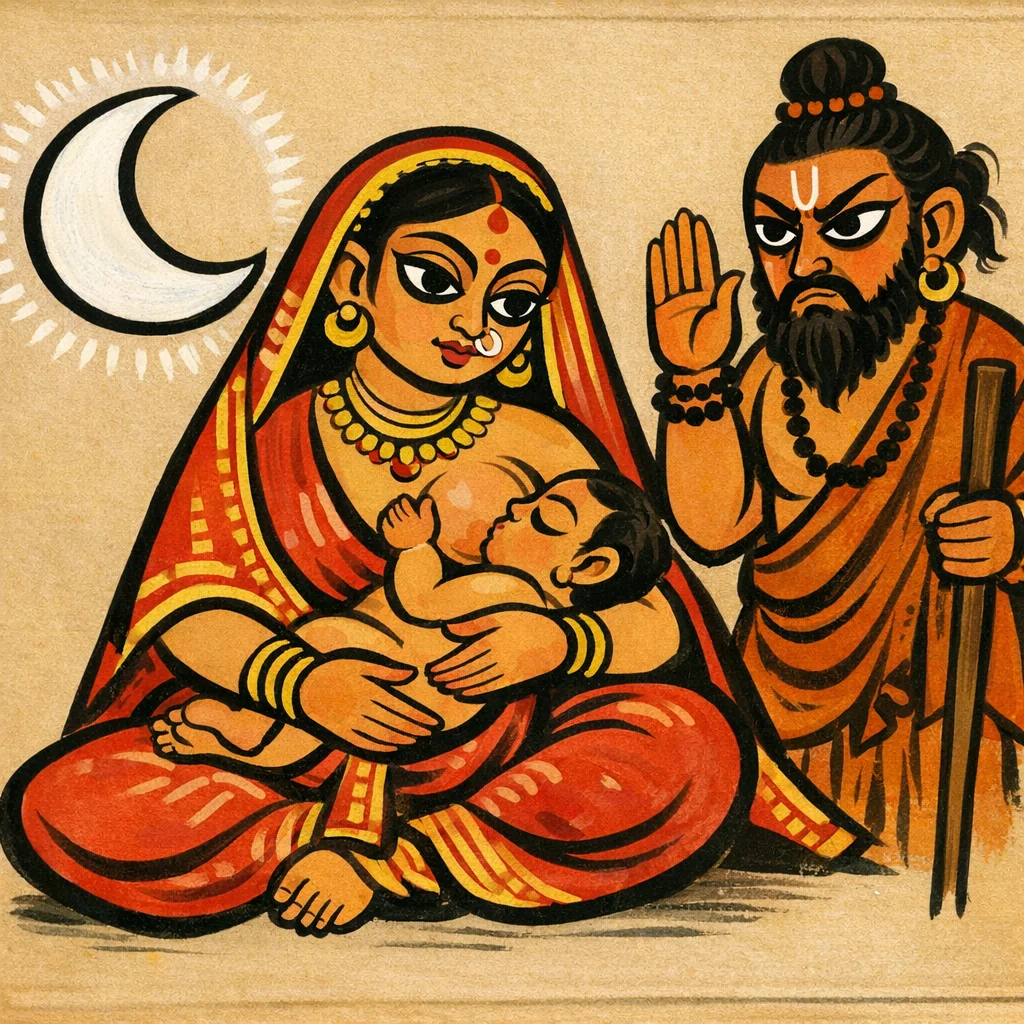
Adhyaya 17: The Birth of Atri’s Three Sons: Soma, Dattatreya, and Durvasa
अत्रिपुत्रत्रयोत्पत्तिः (Atriputratrayotpattiḥ)
Harishchandra
This chapter recounts the exalted austerities of the sage Atri and the chaste Anusūyā. Pleased, the Trimūrti—Brahmā, Viṣṇu, and Śiva (Rudra)—bestow their grace, and three sons are born: Soma (Chandra, the Moon), Dattātreya, and Durvāsā. Each manifests divine power and virtue, ordained to uphold Dharma and bring welfare to the world.
Divine Beings
Celestial Realms
Key Content Points
Focus Keywords
Shlokas in Adhyaya 17
Verse 1
इति श्रीमार्कण्डेयपुराणे पितापुत्रसंवादे अनसूयावरप्राप्तिर्नाम षोडशोऽध्यायः । सप्तदशोऽध्यायः । पुत्र उवाच ततो काले बहुतिथे द्वितीयो ब्रह्मणः सुतः । स्वभार्यां भगवानत्रिरनसूयामपश्यत ॥
Thus, in the Śrī Mārkaṇḍeya Purāṇa, in the dialogue of father and son, ends the sixteenth chapter called “Anasūyā’s obtaining of a boon.” Chapter Seventeen. The son said: After some time had passed, the revered Atri—Brahmā’s second-born son—saw his wife Anasūyā.
Verse 2
ऋतुस्नातां सुचार्वङ्गीं लोभनीयॊत्तमाकृतिम् । सकामो मनसा भेजे स मुनिस्तामनिन्दिताम् ॥
Seeing her bathed after her season, with lovely limbs and a most alluring form, the sage—filled with desire—turned his mind toward that blameless woman.
Verse 3
तस्याभिध्यायतस्तान्तु विकारो योऽन्वजायत । तमेवोवाह पवनस्तिरश्चोर्ध्वञ्च वेगवान् ॥
While he was meditating, a certain transformation (a manifested form) arose from him. Then the swift wind carried that manifestation away, moving both sideways and upward.
Verse 4
ब्रह्मरूपञ्च शुक्लाभं पतमानं समन्ततः । सोमरूपं रजोपेतं दिशस्तं जगृहुर्दश ॥
A white, Brahmā-like form, falling all around, became a Soma-form tinged with rajas; the ten directions seized and received it.
Verse 5
स सोमो मानसोजज्ञे तस्यामत्रेः प्रजापतेः । पुत्रः समस्तसत्त्वानामायुराधार एव च ॥
That Soma was born from the mind of that Prajāpati Atri. He became Atri’s son, the very support of the lifespan of all beings.
Verse 6
तुष्टेन विष्णुना जज्ञे दत्तात्रेयो महात्मना । स्वशरीरात् समुत्पाद्य सत्त्वोद्रिक्तो द्विजात्तमः ॥
From Viṣṇu, the great-souled one, being pleased, Dattātreya was born—brought forth from his own body—an excellent twice-born, predominant in sattva.
Verse 7
दत्तात्रेय इति ख्यातः सोऽनसूयास्तनं पपौ । विष्णुरेवावतार्णोऽसौ द्वितीयोऽत्रेः सुतोऽभवत् ॥
He became known as Dattātreya; he drank Anasūyā’s breast-milk. He was indeed Viṣṇu descended (as an incarnation), and he became Atri’s second son.
Verse 8
सप्ताहात् प्रच्युतो मातुरुदरात् कुपितो यतः । हैहयेन्द्रमुपावृत्तमपराध्यन्तमुद्धतम् ॥
After seven days, he burst forth from his mother’s womb, born in anger. He beheld the Haihaya king approaching—offensive and arrogant.
Verse 9
दृष्ट्वात्रौ कुपितः सद्यो दग्धुकामः स हैहयम् । गर्भवासमहायास-दुःखामर्षसमन्वितः ॥
Seeing him, Atri’s son became at once enraged, desiring to burn that Haihaya. He was filled with resentment arising from the great hardship and pain of dwelling in the womb.
Verse 10
दुर्वासास्तमसोद्रिक्तो रुद्रांशः समजायत । इति पुत्रत्रयं तस्याः जज्ञे ब्रह्मेशवैष्णवम् ॥
Durvāsā was born, abounding in tamas, as a portion of Rudra. Thus, for her (Anasūyā), a triad of sons was born—of Brahmā, Īśa (Śiva), and Viṣṇu (aspects).
Verse 11
सोमो ब्रह्मभवद्विष्णुर्दत्तात्रेयो व्यजायत । दुर्वासाः शङ्करो जज्ञे वरदानाद्दिवौकसाम् ॥
Soma became (an aspect of) Brahmā; Dattātreya was born as Viṣṇu. Durvāsā was born as Śaṅkara, due to the boon-granting (of) the gods (divaukas).
Verse 12
सोमः स्वरश्मिभैः शीतैर्वोरुधौषधिमानवान् । आप्याययन् सदा स्वर्गे वर्तते स प्रजापतिः ॥
Soma, with his cool rays, ever nourishes the ocean, the herbs, and human beings. Always in heaven, that Prajāpati abides there.
Verse 13
दत्तात्रेयः प्रजां पाति दुष्टदैत्यनिबर्हणात् । शिष्टानुग्रहकृच्चेति ज्ञेयश्चांशः स वैष्णवः ॥
Dattātreya protects the people by destroying the wicked Daityas, and he is renowned as one who grants favor to the righteous—therefore he should be understood as a Vaiṣṇava portion (aṃśa) of the Lord.
Verse 14
निर्दहत्यवमन्तारं दुर्वासा भगवानजः । रौद्रं समाश्रित्य वपुर्दृङ्मनोवाग्भिरुद्धतः ॥
Durvāsā—the unborn, venerable one—burns up whoever insults him, having assumed a Rudra-like form, impetuous through eye, mind, and speech.
Verse 15
सोमत्वं भगवानत्रैः पुनश्चक्रे प्रजापतिः । दत्तात्रेयोऽपि विषयान् योगास्थो बुभुजे हरिः ॥
Prajāpati again conferred Soma-status upon the venerable Atri; and Dattātreya too—Hari—while established in yoga, experienced sense-objects (yet remained yogically poised).
Verse 16
दुर्वासाः पितरं हित्वा मातरञ्चोत्तम व्रतम् । उन्मत्ताख्यं समाश्रित्य परिबभ्राम मेदिनीम् ॥
Durvāsā, leaving behind his father and mother, adopted the excellent vow called ‘unmatta’ and roamed about the earth.
Verse 17
मुनिपुत्रवृतो योगी दत्तात्रेयोऽप्यसङ्गिताम् । अभीप्स्यमानः सरसि निममज्ज चिरं प्रभुः ॥
Dattātreya, the yogin, though surrounded by sages’ sons, wishing to cultivate non-attachment, immersed himself in a lake for a long time, that powerful one.
Verse 18
तथापि तं महात्मानमतीव प्रियदर्शनम् । तत्यजुर्न कुमारास्ते सरसस्ती्रमाश्रिताः ॥
Even so, those youths did not abandon that great-souled one, exceedingly pleasing to behold; they remained on the shore of the lake.
Verse 19
दिव्ये वर्षशते पूर्णे यदा ते न त्यजन्ति तम् । तत्प्रीत्या सरसस्तीरे सर्वे मुनिकुमारकाः ॥
When a full hundred divine years had passed and they still did not abandon him, then, out of affection for them, all those sages’ boys remained at the lakeside (as the story continues).
Verse 20
ततो दिव्याम्बरधरां चारुपीननितम्बिनीम् । नारीमादाय कल्याणीमुत्तितार जलान्मुनिः ॥
Then the sage rose up from the water, bringing with him an auspicious woman, clothed in celestial garments, beautiful and full-hipped.
Verse 21
स्त्रीसन्निकर्षाद्यद्येते परित्यक्ष्यन्ति मामिति । मुनिपुत्रास्ततोऽसङ्गी स्थास्यामिति विचिन्तयन् ॥
Thinking, ‘If these sages’ sons abandon me because of my closeness to a woman,’ the unattached one resolved, ‘Then I shall remain as I am,’ reflecting thus.
Verse 22
तथापि तं मुनिसुता न त्यजन्ति यदा मुनिम् । ततः सह तया नार्या मद्यपानमथापिबत् ॥
Yet when the sages’ sons still did not abandon that sage, then he drank liquor together with that woman.
Verse 23
सुरापानरतं ते न सभार्यं तत्यजुस्ततः । गीतवाद्यादिवनिताभोगसंसर्गदूषितम् ॥
Therefore they did not abandon him, even though he (appeared to be) devoted to drinking liquor, together with his wife—one seemingly tainted by association with women, singing, music, instruments, and enjoyments.
Verse 24
मन्यमाना महात्मानं पीतासवसविक्रियम् । नावाप दोषं योगीशो वारुणीं स पिबन्नपि ॥
Considering him a great-souled one—though altered by drinking liquor—the lord of yogins incurred no fault, even while drinking vāruṇī (wine).
Verse 25
अन्तावसायिवेश्मान्तर्मातरिश्वा वसन्निव । सुरां पिबन् सपत्नीकस्तपस्तेपे स योगवित् । योगीश्वरश्चिन्त्यमानो योगिभिर्मुक्तिकाङ्क्षिभिः ॥
As if Mātariśvan (Vāyu) were dwelling within the house of a caṇḍāla/lowest outcaste, that knower of yoga performed austerity even while drinking liquor, together with his wife; and that lord of yogins was contemplated by yogins who desired liberation.
Frequently Asked Questions
The chapter probes how spiritual realization (yogic asaṅga) can coexist with outwardly transgressive conduct, using Dattātreya’s staged proximity to wine, women, and entertainment to test whether observers judge by appearances or by inner intention and detachment.
It does not primarily develop a Manvantara chronology; instead, it strengthens purāṇic genealogical-theological mapping by presenting Atri’s line as a conduit for cosmic administration (Soma as sustainer) and divine-portion embodiment (vaiṣṇava and raudra manifestations).
This Adhyaya is outside the Devi Mahatmyam (Adhyayas 81–93). Its relevance is instead vamśa-focused: it anchors the Atri–Anasūyā lineage and articulates a triadic emanation model (brahma–vaiṣṇava–raudra) through Soma, Dattātreya, and Durvāsā.