Adhyaya 196
स्त्रीणां माहात्म्यप्रश्नः — Yudhiṣṭhira’s Inquiry into the Excellence of Women (Pativratā-Dharma)
Upa-parva: Mārkaṇḍeya–Yudhiṣṭhira Dharmasaṃvāda (Strī-dharma / Pativratā-māhātmya Prakaraṇa)
Vaiśaṃpāyana reports that Yudhiṣṭhira poses a subtle, difficult dharma-question to the luminous sage Mārkaṇḍeya: he seeks an account of women’s excellence (strīṇāṃ māhātmyam) and the fine-grained truth of their dharma. Yudhiṣṭhira lists ‘visible’ divinities and revered supports of life—sun, moon, wind, earth, fire, as well as father, mother, and cows—then argues that women who practice single-spouse fidelity, truthfulness, pregnancy, childbirth, and nurturing undertake extraordinary hardship. He highlights the demanding nature of service to parents and to one’s husband, calling women’s dharma “severe” and uniquely difficult. Mārkaṇḍeya agrees to answer and begins by emphasizing parental sacrifice in obtaining and raising children, the hopes parents place in offspring, and the lasting merit of fulfilling those hopes. He asserts that for women, ritual substitutes (yajña, śrāddha, fasting) are not the focus here; rather, devoted service to the husband (bhartari śuśrūṣā) is presented as the principal means to merit in this doctrinal frame. The chapter closes by announcing a focused exposition on the regulated dharma of pativratās.
Chapter Arc: राजा (शिवि-परंपरा का दानी नरेश) के सामने एक ब्राह्मण याचक-रूप में उपस्थित होता है और ‘भगवन्, अपनी शर्त बताइये’—राजा स्वयं दान-धर्म की कसौटी सुनने को तत्पर हो उठता है। → ब्राह्मण कठोर प्रश्न उठाता है—जीव-लोक में सबसे बड़ा विद्वेष तब होता है जब किसी से ‘प्रिय’ वस्तु माँगी जाए; फिर वह राजा से पूछता है कि यदि अत्यन्त दयित वस्तु माँगी जाए तो राजा क्या देगा। यह चुनौती दान की मात्रा नहीं, आसक्ति-त्याग की परीक्षा बन जाती है। → राजा घोषणा करता है कि वह दान देकर उसका बखान नहीं चाहता, न ही अनधिकृत को देता है; पर जो याचना करके माँगे, उसे वचन देकर प्रसन्नता से देता है—और तत्क्षण ‘रोहिणी’ वर्ण की एक सहस्र गौएँ ब्राह्मण को देने का निश्चय करता है। → राजा ब्राह्मण को एक हजार गौएँ दान कर देता है; ब्राह्मण दान प्राप्त कर लेता है। कथा दान के शुद्ध भाव—अहंकार-रहित, शोक-रहित, क्रोध-रहित—को स्थापित करती है। → याचक की परीक्षा-प्रकृति और आगे की माँगें (यदि हों) क्या होंगी—यह जिज्ञासा बनी रहती है।
Shlokas
Verse 1
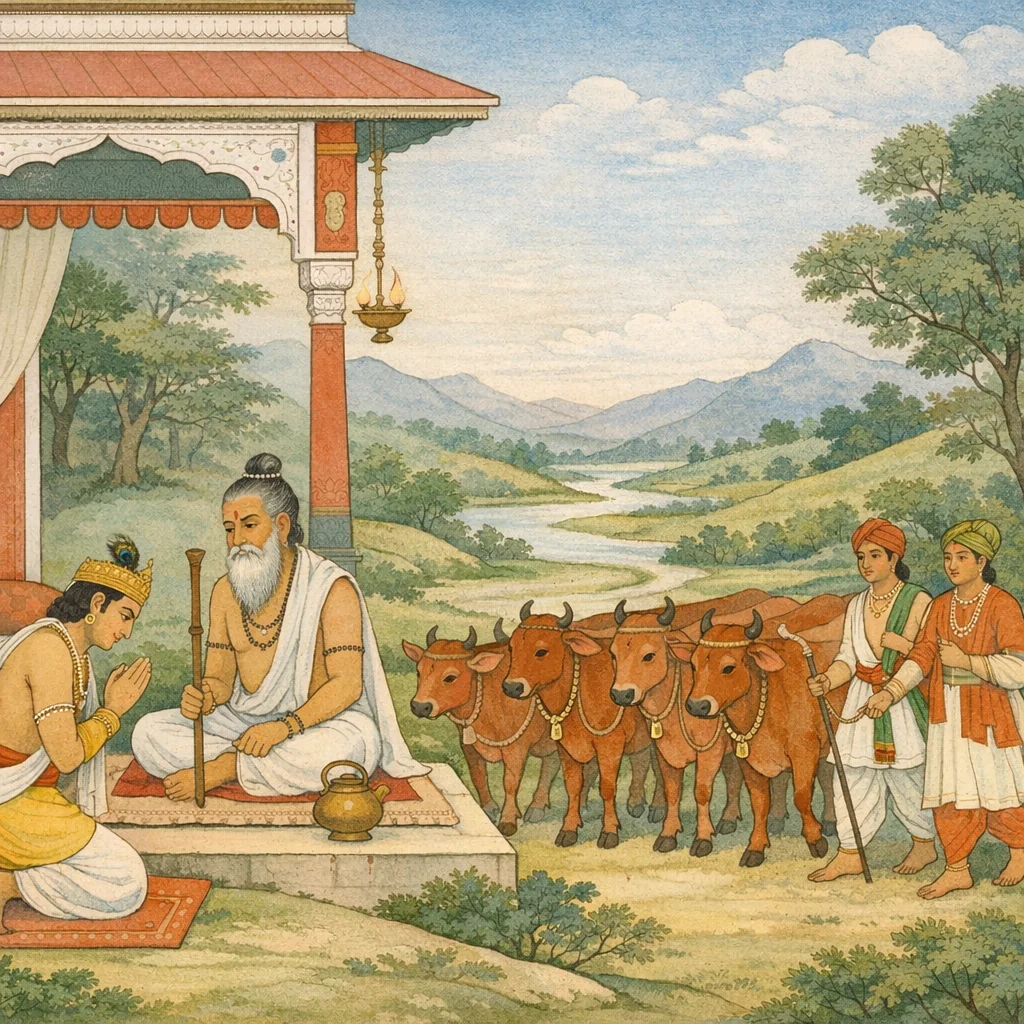
इस प्रकार श्रीमहाभारत वनपर्वके अन्तर्गत मार्कण्डेययमास्यापर्वमें शिविचरिताविषयक एक सौ चौरानबेवाँ अध्याय पूरा हुआ ॥/ १९४ ॥। #::73:.8 #::3:.:.7 () हि 2 7 पजञज्चनवर्त्याधेकशततमो< ध्याय: राजा ययातिद्वारा ब्राह्गको सहस्र गौओंका दान मार्कण्डेय उवाच इदमन्यच्छुयतां ययातिर्नाहुषो राजा राज्यस्थ: पौरजनावृत आसांचक्रे गुर्वर्थी ब्राह्मण उपेत्याब्रवीद् भो राजन गुर्वर्थ भिक्षेयं समयादिति,मार्कण्डेयजी कहते हैं--युधिष्ठि!! अब एक-दूसरे क्षत्रिय नरेशका महत्त्व सुनो-- नहुषके पुत्र राजा ययाति जब पुरवासी मनुष्योंसे घिरे हुए राजसिंहासन-पर विराजमान थे, उन्हीं दिनोंकी बात है, एक ब्राह्मण गुरु-दक्षिणा देनेके लिये भिक्षा माँगनेकी इच्छासे उनके पास आकर बोला--'राजन! मैं गुरु-दक्षिणा देनेके लिये भिक्षा चाहता हूँ, किंतु उसके साथ एक शर्त है”
Markandeya said: “Now hear another account—of King Yayati, son of Nahusha. While he sat established in his kingdom, surrounded by the citizens, a Brahmin approached him, seeking means to pay his teacher’s fee. He addressed the king: ‘O King, I ask alms for my guru’s due—but only on a stipulated condition.’”
Verse 2
राजोवाच ब्रवीतु भगवान् समयमिति,राजाने कहा--भगवन्! आप अपनी शर्त बताइये
The king said, “Let the venerable one state the agreed condition.” Addressing the sage with reverence, the king asks him to declare the terms—showing his readiness to proceed within fairness and dharma, not by impulse or coercion.
Verse 3
ब्राह्मण उवाच विद्वेषणं परमं जीवलोके कुर्यान्नरः पार्थिव याच्यमान: । त॑ त्वां पृष्छामि कथं तु राजन् दद्याद् भवान् दयितं च मेडद्य,ब्राह्मण बोला--भूपाल! इस संसारमें प्रायः देखा जाता है कि जब किसी मनुष्यसे कोई वस्तु माँगी जाती है, तब वह उस माँगनेवालेसे अत्यन्त द्वेष करने लगता है। अतः राजन! मैं आपसे पूछता हूँ कि आज आप मुझे मेरी प्रिय वस्तु कैसे दे सकते हैं?
The Brahmin said: “O king, in this world it is commonly seen that when a man is asked for something, he develops the strongest resentment toward the one who asks. Therefore, O Rajan, I ask you: how will you give me today what is dear to me—how will you truly grant my cherished request?”
Verse 4
राजोवाच न चानुकीर्तयेदद्य दत्त्वा अयाच्यमर्थ न च संशूणोमि । प्राप्पमर्थ च संभश्रुत्य त॑ चापि दत्त्वा सुसुखी भवामि,राजाने कहा--दान लेनेके अधिकारी ब्राह्मणदेव! मैं कोई वस्तु देकर उसकी बार-बार चर्चा नहीं करता और यह प्रतिज्ञापूर्वक कहता हूँ कि मेरे पास कोई ऐसी वस्तु नहीं है, जो आपके माँगने योग्य न हो। जो वस्तु प्राप्त हो सकती है, उसे देनेकी प्रतिज्ञा कर लेनेपर मैं उसे देकर ही अधिक सुखी होता हूँ
The king said: “Having given a gift, I do not today keep repeating it in self-praise, nor do I speak with any grudging tone. And once I have pledged to give what can be obtained, I become truly happier only after I have actually given it.”
Verse 5
ददामि ते रोहिणीनां सहस्त्रं प्रियो हि मे ब्राह्मणो याचमान: । न मे मन: कुप्यति याचमाने दत्त न शोचामि कदाचिदर्थम्,मैं आपको लाल रंगकी एक हजार गौएँ देता हूँ; क्योंकि न्याययुक्त याचना करनेवाला ब्राह्मण मुझे बहुत प्रिय है। मेरे मनमें याचकपर कभी क्रोध नहीं आता है और न मैं कभी दिये हुए धनके लिये पश्चात्ताप ही करता हूँ
The king said: “I give you a thousand reddish (rohiṇī) cows, for a Brahmin who asks in a rightful manner is dear to me. My mind never grows angry with one who petitions, and I never regret any wealth once it has been given.”
Verse 6
इत्युक्त्वा ब्राह्मणाय राजा गोसहस्रं ददौ । प्राप्तवांश्ष गवां सहस्र॑ ब्राह्मण इति,ऐसा कहकर राजाने ब्राह्मणको एक हजार गौएँ दे दीं और ब्राह्मणने उन सहस्रों गौओंको ग्रहण कर लिया
Having spoken thus, the king bestowed a thousand cows upon the brāhmaṇa. The brāhmaṇa accepted and took possession of that thousand—an act that underscores the ethical ideal of royal generosity (dāna) and the rightful reception of gifts by a worthy recipient within the framework of dharma.
Verse 195
इति श्रीमहाभारते वनपर्वणि मार्कण्डेयसमास्यापर्वणि नाहुषचरिते पञ्चनवत्यधिकशततमो<ध्याय:
Thus ends the one-hundred-and-ninety-fifth chapter of the Nahusha episode, within the Markandeya Samasya sub-section of the Vana Parva of the revered Mahabharata.
Frequently Asked Questions
Yudhiṣṭhira asks how to ethically evaluate and articulate women’s dharma—especially pativratā service—given its intensity, social centrality, and the apparent absence of parallel ritual prescriptions in this frame.
Merit is tied to disciplined fulfillment of relational duties: honoring parental sacrifice and sustaining household obligations through restraint, steadiness, and consistent service, treated as ethically weighty action.
No formal phalaśruti appears here; instead, the chapter functions as a doctrinal preface that authorizes a systematic exposition on pativratā-dharma within the broader exile-era dharma discourse.