Adhyaya 40
Udyoga Parva, Adhyāya 40 — Vidura’s Ethical Counsel and Dhṛtarāṣṭra’s Fatalistic Turn
Upa-parva: Vidura-nīti (Counsel of Vidura) — Dhṛtarāṣṭra-anuśāsana Context
Adhyāya 40 presents a sustained nīti discourse delivered by Vidura, framed as pragmatic ethics for rulership and personal conduct. Vidura commends prompt assistance to the virtuous and the renunciation of wealth acquired through adharma, equating ethical shedding of harmful gain to a serpent discarding old skin. He classifies certain acts—self-serving falsehood, court-directed slander, and coercive deceit toward one’s teacher—as gravely destructive. The chapter catalogs behavioral threats: envy as a pathway to ruin, excessive speech as corrosive to prosperity, and negligence as a systemic hazard; anger is depicted as capable of damaging collective order. Vidura also juxtaposes learning and comfort, arguing that the pursuit of knowledge requires renunciation of ease. A series of metaphors (insatiable fire, ocean, death, and desire) underscores the endlessness of appetite. The discourse expands to household and social norms (items to maintain for worship and hospitality), then to existential reflection: the impermanence of body and possessions, the solitude of karmic consequence after death, and the need to anchor oneself in the “nitya” (dharma) over the “anitya.” The chapter includes guidance on consulting elders, sensory discipline, and varṇa-based duties leading to auspicious outcomes. Dhṛtarāṣṭra replies that he understands and agrees, yet admits his mind repeatedly turns away from the Pāṇḍavas after meeting Duryodhana, concluding with a fatalistic claim that destiny cannot be overcome and that human effort is ineffective.
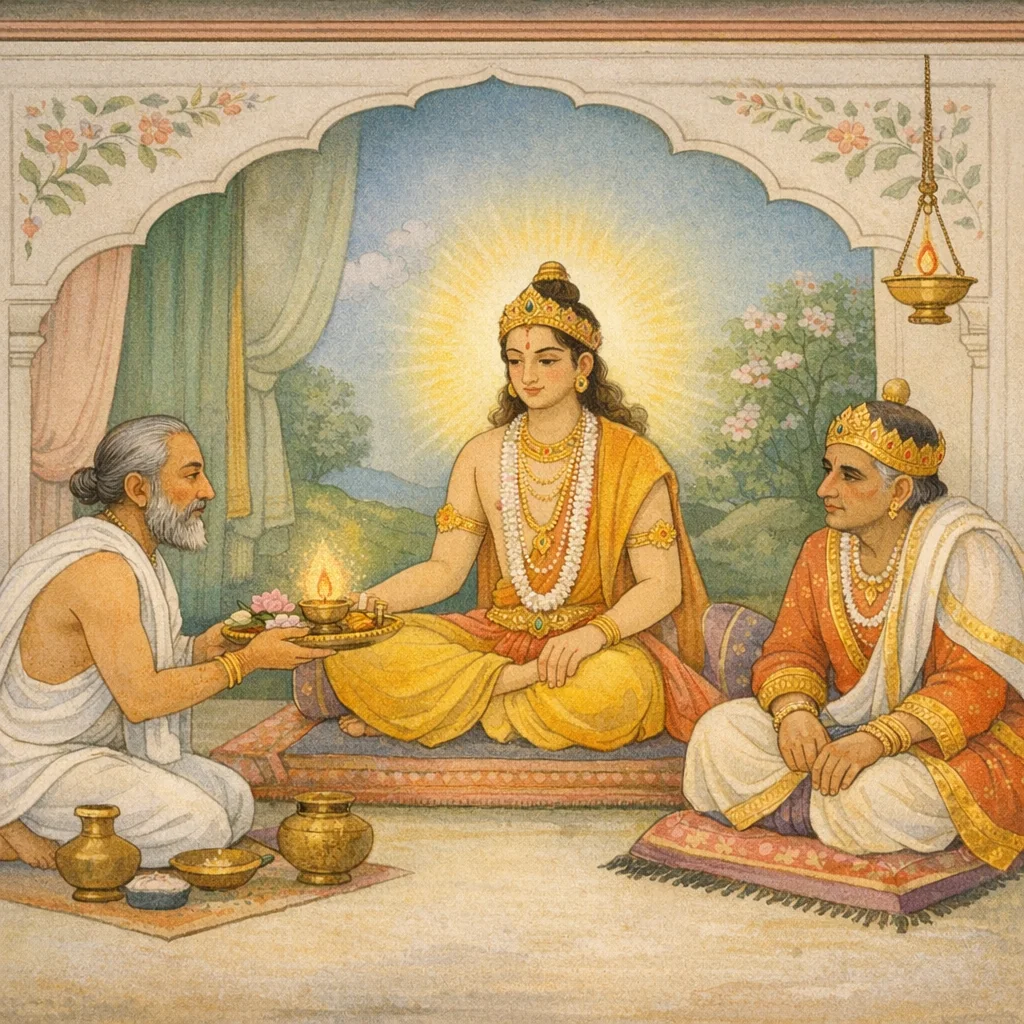
Chapter Arc: धृतराष्ट्र के भीतर भय, जरा और मृत्यु का अँधेरा घिरा है; उसी क्षण विदुर स्मरण करते हैं उस सनातन कुमार-ऋषि ‘सनत्सुजात’ का, जिसने कहा था—“मृत्यु नहीं है।” → विदुर अपनी सीमाएँ स्वीकारते हैं—“मैं शूद्र-योनि में जन्मा; गूढ़ ब्रह्मविद्या का उपदेश करने का साहस नहीं”—पर साथ ही यह भी कहते हैं कि कुमार की शाश्वत बुद्धि वे जानते हैं और वही धृतराष्ट्र के हृदय-गुह्य प्रश्नों को प्रकाशित कर सकती है। → विदुर के चिंतन-मात्र से सनत्सुजात प्रकट होते हैं; विधिपूर्वक पाद्य-अर्घ्य-मधुपर्क से उनका सत्कार होता है और विदुर धृतराष्ट्र के लिए उस ज्ञान की याचना करते हैं जिसे सुनकर मनुष्य लाभ-हानि, प्रिय-अप्रिय, जरा-मृत्यु, भय-क्रोध, भूख-प्यास, मद-ऐश्वर्य, आलस्य-चिन्ता—सब द्वंद्वों को सह सके। → अध्याय का अंत उपदेश की भूमिका पर ठहरता है: विदुर ने योग्य गुरु को उपस्थित कर दिया, धृतराष्ट्र के लिए शोक-निवारक ब्रह्मविद्या का द्वार खुल गया। → सनत्सुजात अब ‘मृत्यु नहीं’ के रहस्य को कैसे उद्घाटित करेंगे—और क्या धृतराष्ट्र उस सत्य को धारण कर पाएँगे?
Shlokas
Verse 1
है अर छा | अकाल > गार्हपत्याग्नि, दक्षिणाग्नि और आहवनीयाग्नि--ये तीन अग्नियाँ हैं। (सनत्सुजातपर्व) एकचत्वारिशो< ध्याय: विदुरजीके द्वारा स्मरण करनेपर आये हुए सनत्सुजात ऋषिसे धृतराष्ट्रको उपदेश देनेके लिये उनकी प्रार्थना धृतराष्ट उवाच अनुक्तं यदि ते किंचिद् वाचा विदुर विद्यते । तन्मे शुश्रूषतो ब्रूहि विचित्राणि हि भाषसे,धृतराष्ट्र बोले--विदुर! यदि तुम्हारी वाणीसे कुछ और कहना शेष रह गया हो तो कहो, मुझे उसे सुननेकी बड़ी इच्छा है; क्योंकि तुम्हारे कहनेका ढंग विलक्षण है
Dhṛtarāṣṭra said: “Vidura, if there still remains anything unspoken in your words, tell it to me. I am eager to listen, for your manner of speaking is indeed remarkable.”
Verse 2
विदुर उवाच धृतराष्ट्र कुमारो वै यः पुराण: सनातन: । सनत्सुजात: प्रोवाच मृत्युनास्तीति भारत,विदुरने कहा--भरतवंशी धृतराष्ट्रा कुमार “सनत्सुजात” नामसे विख्यात जो (ब्रह्माजीके पुत्र) परम प्राचीन सनातन ऋषि हैं, उन्होंने (एक बार) कहा था--'मृत्यु है ही नहीं"
Vidura said: “O Bhārata, Sanatsujāta—an ancient, eternal sage—once declared, ‘There is no death.’”
Verse 3
स ते गुहान् प्रकाशांश्व सर्वान् हृदयसंश्रयान् । प्रवक्ष्यति महाराज सर्वबुद्धिमतां वर:,महाराज! वे समस्त बुद्धिमानोंमें श्रेष्ठ हैं, वे ही आपके हृदयमें स्थित व्यक्त और अव्यक्त सभी प्रकारके प्रश्नोंका उत्तर देंगे
O King, the best among all the wise will explain to you every matter—both hidden and manifest—that lies lodged within your heart.
Verse 4
धृतराष्ट उवाच कि त्वं न वेद तद् भूयो यन्मे ब्रूयात् सनातन: । त्वमेव विदुर ब्रूहि प्रज्ञाशेषो5स्ति चेत् तव,धृतराष्ट्रने कहा--विदुर! क्या तुम उस तत्त्वको नहीं जानते, जिसे अब पुनः: सनातन ऋषि मुझे बतावेंगे? यदि तुम्हारी बुद्धि कुछ भी काम देती हो तो तुम्हीं मुझे उपदेश करो
Dhṛtarāṣṭra said: “Vidura, do you not know that truth which the ancient sage will again declare to me? If any remnant of discernment still remains in you, then you yourself tell me—give me counsel.”
Verse 5
विदुर उवाच शूद्रयोनावहं जातो नातो<न््यद् वक्तुमुत्सहे । कुमारस्य तु या बुद्धिवेद तां शाश्वतीमहम्,विदुर बोले--राजन्! मेरा जन्म शाूद्रा स्त्रीके गर्भसे हुआ है, अतः (मेरा अधिकार न होनेसे) इसके अतिरिक्त और कोई उपदेश देनेका मैं साहस नहीं कर सकता, किंतु कुमार सनत्सुजातकी बुद्धि सनातन है, मैं उसे जानता हूँ
Vidura said: “I was born from a Śūdra womb; therefore I do not dare to speak further (as one lacking the proper standing). But I know the eternal wisdom that belongs to the youth Sanatsujāta.”
Verse 6
ब्राह्मीं हि योनिमापन्न: सुगुह्ममपि यो वदेत् । न तेन गह्टों देवानां तस्मादेतद् ब्रवीमि ते,ब्राह्मणयोनिमें जिसका जन्म हुआ है, वह यदि गोपनीय तत्त्वका प्रतिपादन कर दे तो देवताओंकी निन्दाका पात्र नहीं बनता। इसी कारण मैं आपको ऐसा कह रहा हूँ
Vidura said: “One born in the Brahmin lineage, even if he speaks a most secret truth, does not thereby become blameworthy in the eyes of the gods. Therefore, for this reason, I speak this to you.”
Verse 7
धृतराष्ट उवाच ब्रवीहि विदुर त्वं मे पुराणं तं सनातनम् | कथमेतेन देहेन स्यादिहैव समागम:,धृतराष्ट्रने कहा--विदुर! उन परम प्राचीन सनातन ऋषिका पता मुझे बताओ। भला, इसी देहसे यहाँ ही उनका समागम कैसे हो सकता है?
Dhṛtarāṣṭra said: “Tell me, Vidura, that ancient, eternal account. How could there be a meeting with him here and now, in this very world, while still in this same body?”
Verse 8
श्रीसनत्सुजात और महाराज धृतराष्ट्र वैशम्पायन उवाच चिन्तयामास विदुरस्तमृषिं शंसितव्रतम् | स च तच्चिन्तितं ज्ञात्वा दर्शयामास भारत,वैशम्पायनजी कहते हैं--राजन्! तदनन्तर विदुरजीने उत्तम व्रतववाले उन सनातन ऋषिका स्मरण किया। उन्होंने भी यह जानकर कि विदुर मेरा स्मरण कर रहे हैं, प्रत्यक्ष दर्शन दिया
Vaiśampāyana said: “Then Vidura meditated upon that sage of renowned vows, Sanatsujāta. Knowing that he was being remembered by Vidura, the sage appeared before him, O Bhārata.”
Verse 9
स चैनं प्रतिजग्राह विधिदृष्टेन कर्मणा । सुखोपविष्टं विश्रान्तमथैनं विदुरोडब्रवीत्,विदुरने शास्त्रोक्त विधिसे पाद्य, अर्घ्य एवं मधुपर्क आदि अर्पण करके उनका स्वागत किया। इसके बाद जब वे सुखपूर्वक बैठकर विश्राम करने लगे, तब विदुरने उनसे कहा --
And he received him with the rites prescribed by proper custom. When the guest had sat down comfortably and was rested, Vidura then addressed him.
Verse 10
भगवन् संशय: कश्रिद् धृतराष्ट्रस्य मानस: । यो न शकक्यो मया वक्तुं त्वमस्मै वक्तुमहसि,“भगवन्! धृतराष्ट्रके हृदयमें कुछ संशय है, जिसका समाधान मेरे द्वारा किया जाना उचित नहीं है। आप ही इस विषयका निरूपण करनेयोग्य हैं"
“Revered sir, there is a certain doubt in Dhṛtarāṣṭra’s mind. It is not proper for me to speak on it; you are the one who ought to explain it to him.”
Verse 11
य॑ श्रुत्वायं मनुष्येन्द्र: सर्वदुःखातिगो भवेत् | लाभालाभौ प्रियद्वेष्यौ यथैनं न जरान्तकौ
Vaiśampāyana said: “Having heard this, a king among men would rise beyond all sorrow. Gain and loss, the pleasant and the unpleasant would no longer overpower him—just as old age and death do not overcome one who is thus established.”
Verse 12
विषहेरन् भयामर्षो क्षुत्पिपासे मदोद्धवौ । अरतिकश्लैव तन्द्री च कामक्रोधौ क्षयोदयौ
Vaiśampāyana said: They endured fear and resentment; hunger and thirst; the upheavals born of intoxication; also discontent and lethargy; and the twin forces of desire and anger—now waning, now rising.
Verse 41
जिसे सुनकर ये नरेश सब दु:खोंसे पार हो जायँ और लाभ-हानि, प्रिय-अप्रिय, जरा- मृत्यु, भय-अमर्ष, भूख-प्यास, मद-ऐश्वर्य, चिन्ता-आलस्य, काम-क्रोध तथा अवनति-उन्नति --ये इन्हें कष्ट न पहुँचा सकें ।। इति श्रीमहाभारते उद्योगपर्वणि सनत्सुजातपर्वणि विदुरकृतसनत्सुजातप्रा र्थने एकचत्वारिंशो5 ध्याय:,इस प्रकार श्रीमह्ाभारत उद्योगपर्वके अन्तर्गत सनत्युजातपर्वमें विदुरजीके द्वारा सनत्युजातकी प्रार्थनाविषयक इकतालीसवाँ अध्याय पूरा हुआ
Vaiśampāyana said: “Hearing this, all these kings would cross beyond sorrow, and the pairs of opposites—gain and loss, the pleasant and the unpleasant, old age and death, fear and resentment, hunger and thirst, intoxication and power, anxiety and sloth, desire and anger, decline and rise—would no longer be able to afflict them.” (Thus ends the forty-first chapter in the Sanatsujāta section of the Udyoga Parva, concerning Vidura’s prayer to Sanatsujāta.)
Frequently Asked Questions
Whether immediate advantage (artha) and dynastic loyalty should override dharma: Vidura argues that unethical gain and uncontrolled impulses undermine both personal integrity and state stability, while Dhṛtarāṣṭra’s attachment enables repeated ethical backsliding.
Sustainable governance depends on self-restraint, truthful and measured speech, reliance on competent elders, and refusal of adharmic profit; negligence and anger are treated as strategic liabilities with collective consequences.
Yes: the chapter asserts that understanding and implementing such counsel yields durable reputation (yaśas) and reduces fear “here and hereafter,” while emphasizing that karmic consequence accompanies the individual beyond social support and material inheritance.