Adhyaya 339
अव्यय-पुरुष-निरूपणम् | The Imperishable Puruṣa: Witness, Kṣetrajña, and Nirguṇa
Upa-parva: Mokṣadharma Parva (Liberation-Doctrine Section)
This chapter presents a Brahmā-voiced doctrinal outline of the puruṣa as śāśvata (eternal), avyaya/akṣaya (imperishable), aprameya (immeasurable), and sarvaga (all-pervading). The puruṣa is said to be beyond ordinary perception—known as both saguṇa and nirguṇa, and as ‘knowledge-seen’ rather than sense-seen. Though ‘bodiless,’ it dwells within all bodies without being stained by karma, functioning as the sākṣin (witness) of all embodied beings and remaining ungraspable. Universal-form descriptors (world-head, world-arms, etc.) emphasize pervasive presence, while the kṣetra–kṣetrajña schema identifies bodies as ‘fields’ and karmic potentials as seeds that the yogic Self knows. The discourse notes that the puruṣa’s ‘movement’ is not knowable by beings, yet it can be approached through Sāṃkhya method and Yogic discipline in sequence. Unity-in-manifold is illustrated via analogies (one fire, one sun, one wind, one ocean-source), culminating in the claim that renunciation of guṇa-bound action and dualities enables nirguṇa orientation; the realized ascetic reaches the ‘puruṣa prabhu.’ A distinction is drawn between the ever-nirguṇa paramātman (identified with Nārāyaṇa, unstained like a lotus leaf) and the karmātmā that is associated with bondage and enumerated constituents; the chapter closes by stating that this is the requested exposition in Sāṃkhya-knowledge and Yoga.
Chapter Arc: भीष्म युधिष्ठिर को श्वेतद्वीप की दिव्य-परंपरा सुनाते हैं—जहाँ देवर्षि नारद भगवान् के दर्शन-लाभ हेतु कठोर साधना और स्तुति में प्रवृत्त होते हैं। → नारद ‘दिदृक्षु’ होकर, मन-वचन-शिरसा पूजन करते हुए, सर्वकृच्छ्र-व्रत में स्थित होकर एकाग्रता साधते हैं; निर्गुण होते हुए भी गुणात्मा, निष्क्रिय होते हुए भी सर्वकर्ता—ऐसे परम तत्त्व को वाणी में बाँधने का कठिन प्रयत्न बढ़ता जाता है। → नारद ऊर्ध्वबाहु होकर विश्व-व्यापक, लोकसाक्षी, क्षेत्रज्ञ, पुरुषोत्तम, अनन्त आदि दो सौ नामों से भगवान् की स्तुति आरम्भ करते हैं—नाम-धारा में निर्गुण ब्रह्म और सगुण ईश्वर का एकत्व एक साथ प्रकट होता है। → भीष्म के कथन में यह स्थापित होता है कि शुद्ध भक्ति, तप और नाम-स्मरण द्वारा देवर्षि भी परमात्मा की ओर उन्मुख होते हैं; स्तुति स्वयं साधक के चित्त को परम शान्ति में प्रतिष्ठित करती है। → नारद की स्तुति-श्रृंखला आगे किन-किन नामों/तत्त्व-व्याख्याओं तक जाती है और उसके फलस्वरूप श्वेतद्वीप में क्या दिव्य संकेत/अनुभव होता है—यह अगले अंश में खुलता है।
Shlokas
Verse 1
(दाक्षिणात्य अधिक पाठका १ श्लोक मिलाकर कुल ४२ श्लोक हैं) अष्टत्रिशर्दाधिकत्रिशततमो< ध्याय: नारदजीका दो सौ नामोंद्वारा भगवान्की स्तुति करना भीष्म उवाच प्राप्य श्वेत॑ं महाद्वीपं नारदो भगवानृषि: । ददर्श तानेव नरान् श्वैतांश्रन्द्रसमप्रभान्,भीष्मजी कहते हैं--युधिष्ठिर! उस महान श्वेतद्वीपमें पहुँचकर भगवान् देवर्षि नारदने जब वहाँके उन चन्द्रमाके समान कान्तिमान् पुरुषोंको देखा, तब मस्तक झुकाकर प्रणाम किया और मन-ही-मन उनकी पूजा की। तत्पश्चात् श्वेतद्वीपनिवासी पुरुषोंने भी नारदजीका सत्कार किया। फिर वे भगवानके दर्शनकी इच्छासे उनके नामका जप करने लगे एवं कठोर नियमोंका पालन करते हुए वहाँ रहने लगे
Bhīṣma said: Having reached the great White Island (Śvetadvīpa), the divine sage Nārada beheld those very inhabitants—radiant, white-hued men whose splendor was like the moon. Seeing them, he bowed his head in reverence and worshipped them inwardly. The residents of Śvetadvīpa then honored Nārada in return; and, desiring the vision of the Supreme Lord, he began the repetition of the Lord’s names and remained there, observing strict disciplines.
Verse 2
पूजयामास शिरसा मनसा तैश्व पूजित: । दिदृक्षुर्जप्पपरम: सर्वकृच्छुगत: स्थित:,भीष्मजी कहते हैं--युधिष्ठिर! उस महान श्वेतद्वीपमें पहुँचकर भगवान् देवर्षि नारदने जब वहाँके उन चन्द्रमाके समान कान्तिमान् पुरुषोंको देखा, तब मस्तक झुकाकर प्रणाम किया और मन-ही-मन उनकी पूजा की। तत्पश्चात् श्वेतद्वीपनिवासी पुरुषोंने भी नारदजीका सत्कार किया। फिर वे भगवानके दर्शनकी इच्छासे उनके नामका जप करने लगे एवं कठोर नियमोंका पालन करते हुए वहाँ रहने लगे
Bhishma said: Having reached that great Śvetadvīpa, when the divine sage Nārada beheld those men radiant like the moon, he bowed his head in reverence and worshipped them inwardly in his mind. They too honoured Nārada in return. Then, intent on obtaining the vision of the Lord, he devoted himself to the repetition of the divine Name and remained there, steadfastly observing rigorous disciplines.
Verse 3
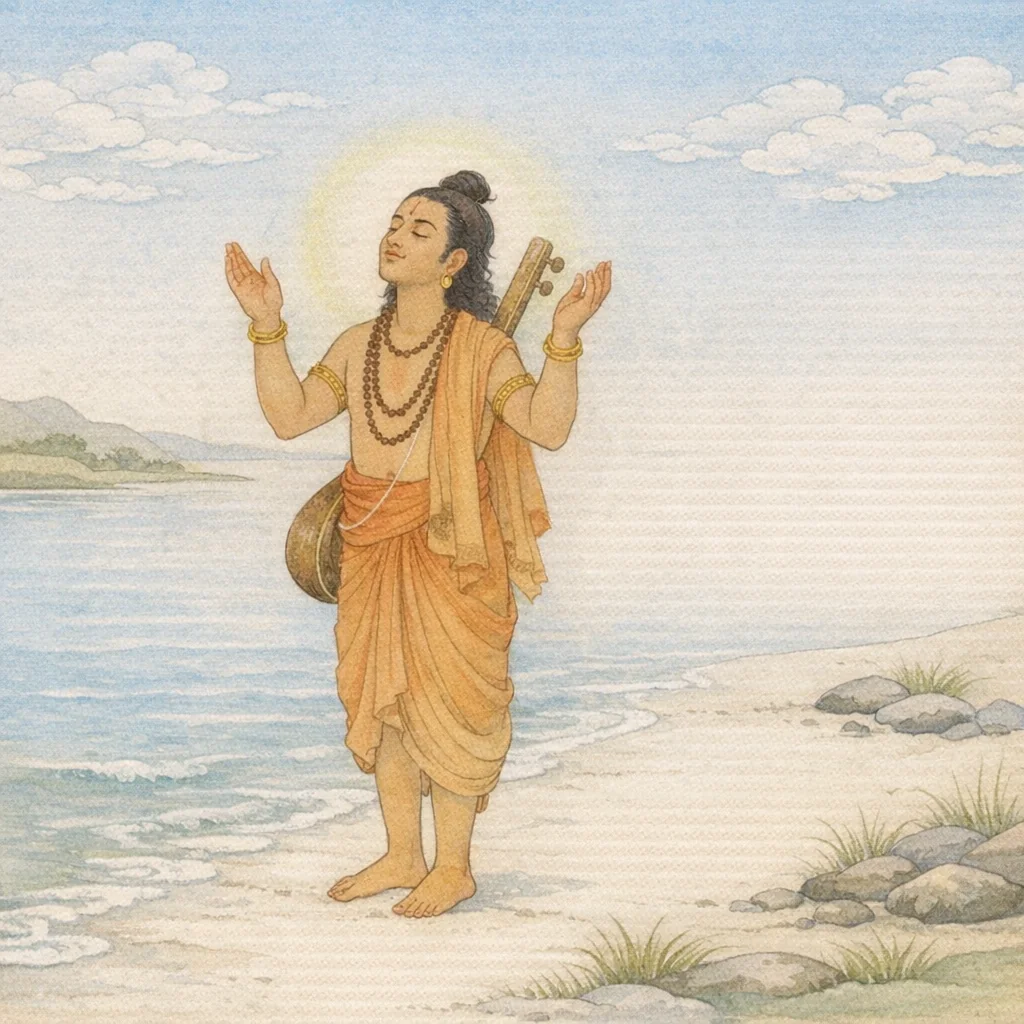
भूत्वैकाग्रमना विप्र ऊर्ध्वबाहु:ः समाहित: । स्तोत्र जगौ स विश्वाय निर्गुणाय गुणात्मने,नारदजी वहाँ अपनी दोनों बाँहें ऊपर उठाकर एकाग्रचित्त हो निर्गुण-सगुणरूप विश्वात्मा भगवान् नारायणकी इस प्रकार (दौ सौ नामोंद्वारा) स्तुति करने लगे
Bhīṣma said: “Then the brāhmaṇa (Nārada), having gathered his mind into one-pointed concentration, stood with arms uplifted and, composed in meditation, began to chant a hymn of praise to Nārāyaṇa—the Lord who is the Self of the universe, beyond all qualities yet also the very ground of all qualities.”
Verse 338
नारद उवाच १ नमस्ते देवदेवेश २ निष्क्रिय ३ निर्गुण ४ लोकसाक्षिन् ५ क्षेत्रज्ञ ६ पुरुषोत्तम ७ अनन्त ८ पुरुष ९ महापुरुष १० पुरुषोत्तम ११ त्रिगुण १२ प्रधान १३ अमृत १४ अमृताख्य १५ अनन्ताख्य १६ व्योम १७ सनातन १८ सदसददव्यक्ताव्यक्त १९ ऋतधामन् २० आदिदेव २१ वसुप्रद २२ प्रजापते २३ सुप्रजापते २४ वनस्पते २५ महाप्रजापते २६ ऊर्जस्पते २७ वाचस्पते २८ जगत्पते २९ मनस्पते ३० दिवस्पते ३१ मरुत्पते ३२ सलिलपते ३३ पृथिवीपते ३४ दिकपते ३५ पूर्वनिवास ३६ गुहा[ ३७ ब्रह्मपुरोहित ३८ ब्रह्मुकायिक ३९ महाराजिक ४० चातुर्महाराजिक ४१ भासुर ४२ महाभासुर ४३ सप्त-महाभाग ४४ याम्य ४५ महायाम्य ४६ संज्ञासंज्ञ ४७ तुषित ४८ महातुषित ४९ प्रमर्दन ५० परिनिर्मित ५१ अपरिनिर्मित ५२ वशवर्तिन् ५३ अपरिनिन्दित ५४ अपरिमित ५५ वशवर्तिन् ५६ अवशवर्तिन् ५७ यज्ञ ५८ महायज्ञ ५९ यज्ञसम्भव ६० यज्ञयोने ६१ यज्ञगर्भ ६२ यज्ञहदय ६३ यज्ञस्तुत ६४ यज्ञभागहर ६५ पज्चयज्ञ ६६ पञठ्चकाल-कर्त॒पते ६७ पाज्चरात्रिक ६८ वैकुण्ठ ६९ अपराजित ७० मानसिक ७१ नामनामिक ७२ परस्वामिन् ७३ सुस्नात ७४ हंस ७५ परमहंस ७६ महाहंस ७७ परमयाज्ञिक ७८ सांख्ययोग ७९ सांख्यमूर्ते ८० अमृतेशय ८१ हिरण्येशय ८२ देवेशय ८३ कुशेशय ८४ ब्रहद्मेशय ८५ पद्मेशय ८६ विश्वेश्वर ८७ विष्वक्सेन ८८ त्वं जगदन्वय: ८९ त्वं जगत्प्रकृति: ९० तवाग्निरास्यम् ९१ वडवामुखोअग्नि: ९२ त्वमाहुति: ९३ सारथि: ९४ त्वं वषट्कार: ९५ त्वमोड्कार: ९६ त्वं तप: ९७ त्वं मनः ९८ त्वं चन्द्रमा: ९९ त्वं चक्षुरादित्यं १०० त्वं सूर्य: १०१ त्वं दिशां गज: १०२ त्वं दिग्भानो १०३ विदिग्भानो १०४ हयशिर: १०५ प्रथमत्रिसौपर्ण: १०६ वर्णधर: १०७ पज्चाग्ने १०८ त्रिणाचिकेत १०९ षडड्रननिधान १३० प्राग्ज्योतिष १११ ज्येष्ठसलामग ११२ सामिकव्रतधर १३१३ अथर्वशिरा: ११४ पञ्चमहाकल्प ११५ फेनपाचार्य ११६ वालखिल्य ११७ वैखानस ११८ अभग्नयोग ११९ अभग्न-परिसंख्यान १२० युगादे १२१ युगमध्य १२२ युगनिधन १२३ आखण्डल १२४ प्राचीनगर्भ १२५ कौशिक १२६ पुरुष्टत १२७ पुरुहृत १२८ विश्वकृत् १२१ विश्वरूप १३० अनन्तगते १३१ अनन्तभोग १३२ अनन्त १३३ अनादे १३४ अमध्य १३५ अव्यक्तमध्य १३६ अव्यक्तनिधन १३७ व्रतावास १३८ समुद्राधिवास १३९ यशोवास १४० तपोवास १४१ दमावास १४२ लक्ष्म्यावास १४३ विद्यावास १४४ कीर्त्यावास १४५ श्रीवास १४६ सर्वावास १४७ वासुदेव १४८ सर्वच्छन्द्क १४९ हरिहय १५० हरिमेध १५१ महायज्ञभागहर १५२ वरप्रद १५३ सुखप्रद १५४ धनप्रद १५५ हरिमेध १५६ यम १५७ नियम १५८ महानियम १५९ कृच्छु १६० अतिकृच्छु १६१ महाकृच्छु १६२ सर्वकृच्छु १६३ नियमधर १६४ निवृत्तभ्रम १६५ प्रवचनगत १६६ पृश्रिगर्भप्रवृत्त १६७ प्रवृत्तवेदक्रिय १६८ अज १६९ सर्वगते १७० सर्वदर्शिन् १७१ अग्राह्म १७२ अचल १७३ महाविभूते १७४ माहात्म्यशरीर १७५ पवित्र १७६ महापवित्र १७७ हिरण्यमय १७८ बृहत् १७९ अप्रतर्क्य १८० अविज्ञेय १८१ ब्रह्माग्र्य १८२ प्रजासर्गकर १८३ प्रजानिधनकर १८४ महामायाधर १८५ चित्रशिखण्डिन् १८६ वरप्रद १८७ पुरोडाशभागहर १८८ गताध्वर १८९ छिन्नतृष्ण १९० छिन्नसंशय १९१ सर्वतोवृत्त १९२ निवृत्तिरूप १९३ ब्राह्मणरूप १९४ ब्राह्मणप्रिय १९५ विश्वमूर्ते १९६ महामूर्ते १९७ बान्धव १९८ भक्तवत्सल १९९ ब्रह्मण्यदेव भक्तों त्वां दिदृक्षुरेकान्तदर्शनाय २०० नमो नम: ।। १-देवदेवेश! आपको नमस्कार है। २-आप निष्क्रिय, ३-निर्गुण और ४-समस्त जगतके साक्षी हैं। ५-क्षेत्रजञ, ६-पुरुषोत्तम (क्षर-अक्षर पुरुषसे उत्तम), ७-अनन्त, ८ पुरुष, ९- महापुरुष, १०-पुरुषोत्तम (परमात्मा), ११-त्रिगुण, १२-प्रधान, १३-अमृत, १४-अमृताख्य, १५-अनन्ताख्य (शेषनागरूप), १६-व्योम (महाकाशरूप), १७-सनातन, १८- सदसद्वयक्ताव्यक्त, १९-ऋतधामा (सत्यधामस्वरूप), २०-आदिदेव, २१-वसुप्रद (कर्म- फलके दाता), २२-प्रजापते (दक्ष आदि), २३-सुप्रजापते (प्रजापतियों में श्रेष्ठ), २४-वनस्पते, २५-महाप्रजापते (ब्रह्मस्वरूप), २६-ऊर्जस्पते (महाशक्तिशाली), २७-वाचस्पते (बृहस्पति), २८-जगत्पते, २९-मनस्पते, ३०-दिवस्पते (सूर्य), ३१-मरुत्पते (वायुदेवताके स्वामी), ३२- सलिलपते (जलके स्वामी), ३३-पृथ्वीपते, ३४-दिक्पते, ३५-पूर्वनिवास (महाप्रलयके समय जगत्के आधाररूप), ३६-गुह्य (स्वरूप), ३७-ब्रह्मपुरोहित, ३८-ब्रह्मकायिक, ३५९- महाराजिक, ४०-चातुर्महाराजिक, ४१-भासुर (प्रकाशमान), ४२-महाभासुर (महाप्रकाशमान), ४३-सप्तमहाभाग, ४४-याम्य, ४५-महायाम्य, ४६-संज्ञासंज्ञ, ४७-तुषित, ४८-महातुषित, ४९-प्रमर्दन (मृत्युरूप), ५०-परिनिर्मित, ५१-अपरिनिर्मित, ५२-वशवर्ती, ५३-अपरिनिन्दित (शमदम आदि गुणसम्पन्न), ५४-अपरिमित (अनन्त), ५५-वशवर्ती, ५६- अवशवर्ती, ५७-यज्ञ, ५८-महायज्ञ, ५९-यज्ञसम्भव, ६०-यज्ञयोनि (वेदस्वरूप), ६१-यज्ञगर्भ, ६२-यज्ञहृदय, ६३-यज्ञस्तुत, ६४-यज्ञभागहर, ६५-पगञ्चयज्ञ, ६६-पड्चकालकर्तृपति (अहोरात्र, मास, ऋतु, अयन और संवत्सररूप कालके स्वामी), ६७-पाउ्चरात्रिक, ६८- वैकुण्ठ (परमधाम), ६९-अपराजित, ७०-मानसिक, ७१-नानामिक (जिनमें सब नामोंका समावेश है), ७२-परस्वामी (परमेश्वर), ७३-सुस्नात, ७४-हंस, ७५-परमहंस, ७६-महाहंस, ७७-परमयाज्ञिक, ७८-सांख्ययोगरूप, ७९-सांख्यमूर्ति (ज्ञानमूर्ति), ८०-अमृतेशय (विष्णु), ८१-हिरण्येशय, ८२-देवेशय, ८३-कुशेशय, ८४-ब्रहमेशय, ८५-पद्मेशय (विष्णु), ८६-विश्वेश्वर और ८७-विष्वक्सेन आदि आपडहीके नाम हैं। ८८-आप ही जगदन्वय (जगत्में ओत-प्रोत) तथा ८९-आप ही जगत्के कारणस्वरूप हैं। ९०-अग्नि आपका मुख है। ९१-आप ही बड़वानल, ९२-आप ही आहुतिरूप, ९३-सारथि, ९४-वषट्कार, ९५-ओड्कार, ९६- तपःस्वरूप, ९७-मनःस्वरूप, ९८-चन्द्रमास्वरूप, ९९-चक्षुके देवता सूर्य आप ही हैं। १००- सूर्य, १०१-दिग्गज, १०२-दिग्भानु (दिशाओंको प्रकाशित करनेवाले), १०३-विदिग्भानु (विदिशाओंको प्रकाशित करनेवाले) तथा १०४-हयग्रीवरूप हैं। १०५-आप प्रथम त्रिसौपर्ण मन्त्र, १०६-ब्राह्मणादि वर्णोंकी धारण करनेवाले तथा १०७-पंचाग्निरूप है। १०८-नाचिकेत नामसे प्रसिद्ध त्रिविध अग्नि भी आप ही हैं। १०९-आप शिक्षा, कल्प, व्याकरण, हन्द, निरुक्त और ज्योतिष नामक छ: अंगोंके भण्डार हैं। ११० प्राग्ज्योतिषस्वरूप, १११-ज्येष्ठ सामगस्वरूप आप ही हैं। ११२-सामिक व्रतधारी, ११३-अथर्वशिरा, ११४- पञ्चमहाकल्परूप (आप ही सौर, शाक्त, गाणपत्य, शैव और वैष्णव शास्त्रोंके उपास्यदेव) हैं। ११५-फेनपाचार्य, ११६-वालखिल्य मुनिरूप, ११७-वैखानस मुनिरूप आप ही हैं। ११८-अभग्नयोग (अखण्डयोग), ११९-अभग्नपरिसंख्यान (अखण्ड विचार), १२०-युगादि (युगके आदिरूप), १२१-युगमध्य (युगके मध्यरूप), १२२-युगान्त (युगके अन्तरूप आप ही हैं), १२३-आखण्डल (इन्द्र), १२४-आप ही प्राचीनगर्भ, १२५-कौशिकमुनि, १२६- पुरुष्टत (सबके द्वारा प्रचुर स्तुति करने योग्य), १२७-पुरुहृत, १२८-विश्वकृत (विश्वके रचयिता), १२९-विश्वरूप, १३०-अनन्तगति, १३१-अनन्तभोग, १३२-आपका न तो अन्त है, १३३-न आदि, १३४-न मध्य, १३५-अव्यक्तमध्य, १३६-अव्यक्तनिधन, १३७-व्रतावास (व्ररके आश्रय), १३८-समुद्रवासी (क्षीरसागरशायी), १३९-यशोवास, (यशके निवासस्थान), १४०-तपोवास (तपके निवासस्थान), १४१-दमावास (संयमके आधार), १४२-लक्ष्मीनिवास, १४३-विद्याके आश्रय, १४४-कीर्तिके आधार, १४५-सम्पत्तिके आश्रय, १४६-सर्वावास (सबके निवासस्थान), १४७-वासुदेव, १४८-सर्वच्छन्दक (सबकी इच्छा पूर्ण करनेवाले), १४९-हरिहय, १५०-हरिमेध (अश्वमेधयज्ञरूप), १५१-महायज्ञभागहर, १५२- वरप्रद (भक्तोंको वरदान देनेवाले), १५३-सुखप्रद (सबको सुख प्रदान करनेवाले), १५४- धनप्रद (सबको धन देनेवाले), १५५-हरिमेध (भगवद्धक्त भी आप ही हैं), १५६-यम, १५७- नियम, १५८-महानियम आदि साधन भी आप ही हैं। १५९-कृच्छू, १६०-अतिकृच्छूु, १६१- महाकृच्छू, १६२-सर्वकृच्छु आदि चान्द्रायणव्रत भी आप ही हैं। १६३-नियमधर (नियमोंको धारण करनेवाले), १६४-निवृत्तभ्रम (भ्रमरहित), १६५-प्रवचनगत (वेदवाक्यके विषय), १६६-पृश्रिगर्भप्रवृत्त, १६७-प्रवृत्तवेदक्रिय. (वैदिक कर्मोंकि प्रवर्तक), १६८-अज (जन्मरहित), १६९-सर्वगति (सर्वव्यापी), १७०-सर्वदर्शी, १७१-अग्राह्मन, १७२-अचल, १७३-महाविभूति (सृष्टिरूप विभूतिवाले), १७४-माहात्म्यशरीर (अतुलित प्रभावशाली स्वरूपवाले), १७५-पवित्र, १७६-महापवित्र (पवित्रोंको भी पवित्र करनेवाले), १७७- हिरणमय, १७८-बृहद् (ब्रह्म), १७९-अप्रतर्क्य (तर्कसे जाननेमें न आनेवाले), १८०- अविज्ञेय, १८१-ब्रह्माग्रय, १८२-प्रजाकी सृष्टि करनेवाले, १८३-प्रजाका अन्त करनेवाले, १८४-महामायाधर, १८५-चित्रशिखण्डी, १८६-वरप्रद, १८७-पुरोडाश भागको ग्रहण करनेवाले, १८८-गताध्वर (प्राप्तयज्ञ), १८९-छिन्नतृष्ण (तृष्णारहित), १९०-छिन्नसंशय (संशयरहित), १९१-सर्वतोवृत्त (सर्वव्यापक), १९२-निवृत्तिरूप, १९३-ब्राह्मणरूप, १९४- ब्राह्मणप्रिय, १९५-विश्वमूर्ति, १९६-महामूर्ति, १९७-बान्धव (जगत्के बन्धु), १९८- भक्तवत्सल तथा १९९-ब्रह्मण्यदेव आदि नामोंसे पुकारे जानेवाले परमेश्वर! आपको नमस्कार है। मैं आपका भक्त हूँ। आपके दर्शनकी इच्छासे यहाँ उपस्थित हुआ हूँ। २००- एकान्तमें दर्शन देनेवाले आप परमात्माको बारंबार नमस्कार है ।। इति श्रीमहाभारते शान्तिपर्वणि मोक्षधर्मपर्वणि अष्टत्रिंशदधिकत्रिशततमो< ध्याय: ।। ३३८ ।। इस प्रकार श्रीमहाभारत शान्तिपर्वके अन्तर्गत मोक्षधर्मपर्वमें तीन यौ अड़तीसवाँ अध्याय पूरा हुआ
Nārada said: “Homage to you, Lord of the gods—actionless, beyond qualities, witness of all worlds; knower of the field, Supreme Person, endless Being, the Great Person. You are both the threefold guṇas and the primal ground (pradhāna); you are immortality itself, known as the Immortal, known as the Endless—also as the cosmic expanse, the Eternal, the manifest and the unmanifest, the real abode of Truth. You are the first God, the giver of the fruits of deeds; Prajāpati and the best of Prajāpatis; lord of plants, the great Prajāpati; lord of power, lord of speech, lord of the world, lord of mind, lord of heaven, lord of winds, waters, earth, and directions; the ancient refuge at dissolution; the hidden mystery; the priest of Brahmā and the celestial orders. You are the luminous and the supremely luminous; the blessed among the blessed; the Yāma and the great Yāma; the known and the unknown; the Tuṣita and the great Tuṣita; the subduer; the gods of creation and of non-creation; the ruler and the non-ruler; the blameless and the immeasurable. You are sacrifice itself—great sacrifice—born of sacrifice, womb and source of sacrifice, heart of sacrifice, praised by sacrifice, receiver of sacrificial portions; the fivefold sacrifice; the Lord who fashions the five measures of time; the Pāñcarātra; Vaikuṇṭha; the Unconquered; the mental principle; the One in whom all names are gathered; the Supreme Master. You are the Haṃsa, the Paramahaṃsa, the Great Haṃsa; the highest sacrificer; Sāṅkhya and Yoga; the very form of Sāṅkhya; the one who rests on immortality, on gold, on the gods, on the lotus; the Lord of the universe, Viṣvaksena. You pervade the cosmos and are its causal nature. Fire is your mouth; you are the submarine fire; you are the oblation, the charioteer, the vaṣaṭ-cry and the Oṃ; you are austerity, mind, the moon; you are the sun as the eye; you are the sun itself; you are the elephants of the quarters and the lights of the directions; you are Hayagrīva. You are the primordial Vedic formulae, the bearer of the social orders, the five fires, the threefold Nāciketa fire; the treasury of the six Vedāṅgas; the ancient light, the chief Sāman; the observer of Sāman-vows; Atharvaśiras; the five great kalpas. You are the sages and their disciplines; unbroken yoga and unbroken discernment; the beginning, middle, and end of the ages; Indra; the ancient womb; Kauśika; the one praised by all; the maker of the universe, the universe-formed; of endless course and endless enjoyment—without end, without beginning, without middle; with unmanifest middle and unmanifest end. You are the abode of vows, the dweller upon the ocean; the dwelling of glory, austerity, restraint, Lakṣmī, knowledge, fame, prosperity—indeed the dwelling of all; Vāsudeva, fulfiller of all desires; Harihaya, Harimedha; receiver of the portion of the great sacrifice; giver of boons, happiness, and wealth. You are Yama, Niyama, and the great disciplines; the hard vows and all hard vows; the bearer of restraints; free from delusion; the very purport of sacred teaching; the mover of Vedic rites; unborn, all-pervading, all-seeing; ungraspable, unmoving; of vast creative power; whose body is majesty; pure and supremely purifying; golden, the Vast; beyond reasoning and beyond full knowing; foremost Brahman; creator and dissolver of beings; bearer of great māyā; the wondrously crested; receiver of puroḍāśa offerings; one who has attained the sacrifice; cut off from craving and doubt; all-encompassing; the very form of renunciation; Brahmin-formed and dear to Brahmins; the form of the universe, the great form; kinsman of the world; tender to devotees; the God who favors the Brahmins. I am your devotee. Desiring your vision, I have come for the sight that is granted in solitude. Again and again, homage to you.”
Frequently Asked Questions
It distinguishes the embodied ‘fields’ (kṣetra: bodies and their karmic seeds) from the knower (kṣetrajña: puruṣa/ātman) who indwells all bodies yet remains unaffected by actions.
The puruṣa is presented as sākṣī (witness) rather than an agent; it illuminates experience while remaining ungraspable and untouched, likened to the lotus leaf that does not cling to water.
Yes: it states that the puruṣa is approached through Sāṃkhya’s discriminative method and Yoga’s disciplined practice, alongside renunciation of guṇa-bound action and dualities that sustain attachment.