Adhyaya 165
Virūpākṣa’s Dāna and Gautama’s Burden — the approach of Rājadharma
Upa-parva: Rājadharmānuśāsana (Instruction on Kingly Duty) — episode featuring Virūpākṣa, Gautama, and Rājadharma (the bird)
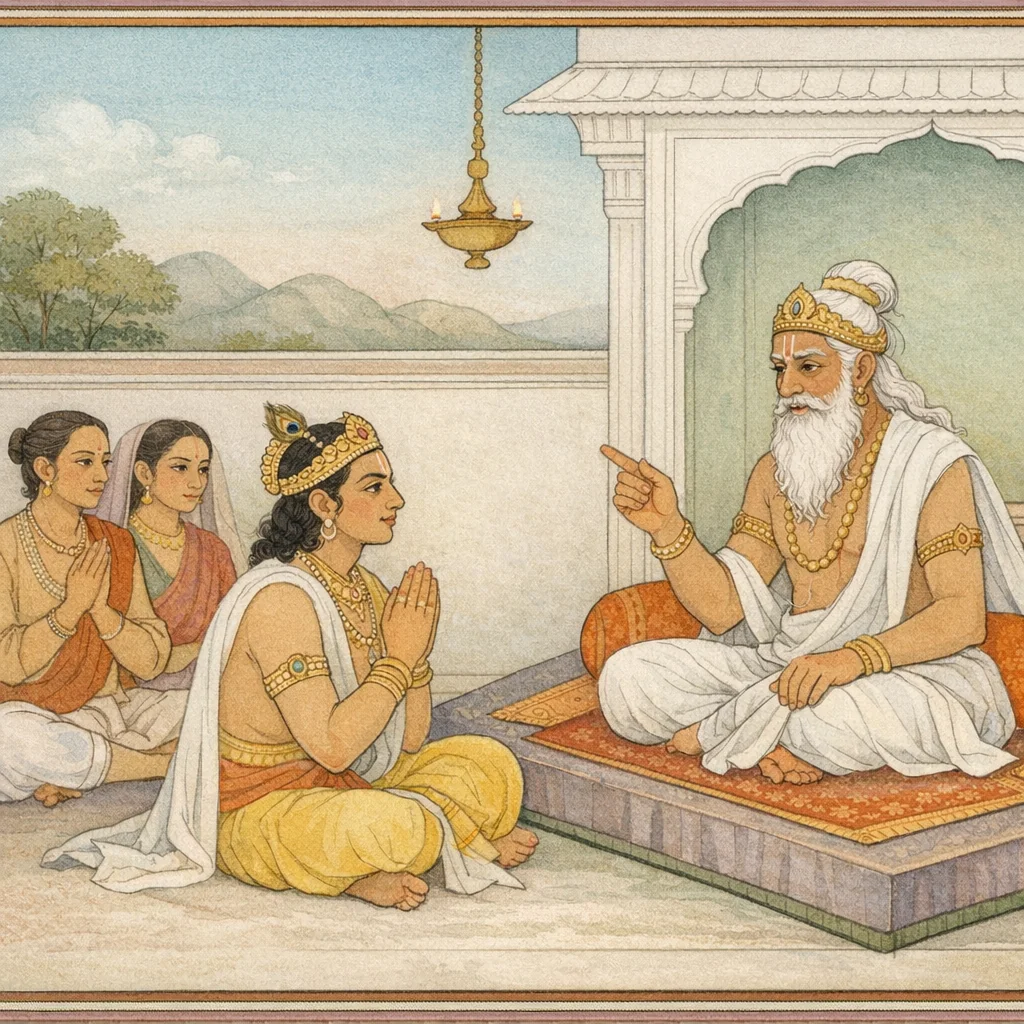
Bhīṣma narrates how Gautama, introduced into King Virūpākṣa’s residence, is questioned about lineage and conduct; he answers minimally, then discloses a socially complex biography (born in Madhyadeśa, living among Śabaras, married to a Śūdrā remarried woman). Virūpākṣa reflects on proper conduct toward a visitor sent by his close associate Kāśyapa and resolves to honor him. On a Kārttikī occasion, the king receives a thousand learned brāhmaṇas with prescribed ritual propriety, seats them, feeds them from fine vessels, and distributes extensive gifts—gold, silver, gems, pearls, and other valuables—allowing recipients to take goods as they wish. After the assembly disperses, Gautama departs carrying a heavy load of gold, becomes exhausted and hungry, and rests beneath a banyan. A bird named Rājadharma arrives, offers welcoming attention, relieves his fatigue, and provides food. Once rested, Gautama privately recognizes that greed led him to take an impractical burden and, lacking provisions for the road, he begins to contemplate harming the very bird who aided him, marking the chapter’s ethical pivot from public charity to personal self-governance.
Chapter Arc: युधिष्ठिर, युद्धोत्तर शान्ति की खोज में, सत्पुरुषों के दर्शन से ‘आनृशंस्य’ (करुणा/अहिंसा) को पहचानने की बात कहकर प्रश्न उठाते हैं—फिर ‘नृशंस’ अर्थात अत्यन्त नीच-क्रूर पुरुष की पहचान कैसे हो? → वे नृशंस को काँटे, कूप और अग्नि की तरह मार्ग का भय बताते हैं—जिससे मनुष्य बचकर चलता है; और चेताते हैं कि नृशंस व्यक्ति इस लोक और परलोक दोनों में दाह (दुःख) देता है, अतः उसके धर्म-निर्णय (लक्षण-निर्णय) को स्पष्ट किया जाए। → भीष्म नृशंसता के तीखे संकेत एक-एक कर खोलते हैं—घृणित स्पृहा, कर्मों में विधित्सा, अपमान करने की प्रवृत्ति; दूसरों के गुप्त दोषों को उघाड़ना, समान दोष होते हुए भी जीविका/स्वार्थ के लिए दूसरों को चोट पहुँचाना; और दिखावे के लिए (लोगों के देखते) उत्तम भोजन-भोग का प्रदर्शन—ये सब नृशंस के चिह्न हैं। → भीष्म निष्कर्ष देते हैं कि ऐसा नृशंस पुरुष ‘सदा विवर्जनीय’ है—जो विवेकवान है उसे उससे दूर रहना चाहिए।
Shlokas
Verse 1
अपन ह< बक। ] अति्ऑशाड< चतुःषष्ट्यधिकशततमो< ध्याय: नृशंस अर्थात् अत्यन्त नीच पुरुषके लक्षण युधिछिर उवाच आनृशंस्यं विजानामि दर्शनेन सतां सदा । नृशंसान्न विजानामि तेषां कर्म च भारत,युधिष्ठिरने पूछा--भरतनन्दन! सदा श्रेष्ठ पुरुषोंके सेवन और दर्शनसे मैं इस बातको तो जानता हूँ कि कोमलतापूर्ण बर्ताव कैसे किया जाता है? परंतु नृशंस मनुष्यों और उनके कर्मोका मुझे विशेष ज्ञान नहीं है
Yudhiṣṭhira said: “O Bhārata, by continually associating with and beholding the virtuous, I understand what gentle, non-cruel conduct (ānṛśaṃsya) is. But I do not truly understand the cruel (nṛśaṃsa) people, nor the kinds of deeds they commit.”
Verse 2
कण्टकान् कूपमरग्निं च वर्जयन्ति यथा नरा: । तथा नृशंसकर्माणं वर्जयन्ति नरा नरम्,जैसे मनुष्य रास्तेमें मिले हुए काँटों, कुओं और आगको बचाकर चलते हैं, उसी प्रकार मनुष्य नृशंस कर्म करनेवाले पुरुषको भी दूरसे ही त्याग देते हैं
Yudhiṣṭhira said: “Just as people avoid thorns, a well, and fire when they come upon them on the road, so too do people keep their distance from a man whose deeds are cruel—shunning him from afar.”
Verse 3
नृशंसो दह्दाते नित्यं प्रेत्य चेह च भारत । तस्मात् त्वं ब्रूहि कौरव्य तस्य धर्मविनिश्चयम्,भारत! कुरुनन्दन! नृशंस मनुष्य इसलोक और परलोकमें भी सदा ही शोककी आगसे जलता रहता है; अतः आप मुझे नृशंस मनुष्य और उसके धर्म-कर्मका यथार्थ परिचय दीजिये
Yudhiṣṭhira said: “O Bhārata, a cruel man is ever consumed—both here in this world and after death. Therefore, O Kauravya, tell me the true determination of his dharma: what constitutes the conduct and moral law of the nṛśaṃsa (the ruthless person), and how it is to be understood.”
Verse 4
भीष्म उवाच स्पृहा स्याद् गर्हिता चैव विधित्सा चैव कर्मणाम् | आक्रोष्टा क्रुश्यते चैव वज्चितो बुद्धयते स च,भीष्मजीने कहा--राजन्! जिसके मनमें बड़ी घृणित इच्छाएँ रहती हैं, जो हिंसाप्रधान कुत्सित कर्मोको आरम्भ करना चाहता है, स्वयं दूसरोंकी निन्दा करता है और दूसरे उसकी निन््दा करते हैं, जो अपनेको दैवसे वज्चित समझता और पापमें प्रवृत्त होता है, दिये हुए दानका बारंबार बखान करता है, जिसके मनमें विषमता भरी रहती है, जो नीच कर्म करनेवाला, दूसरोंकी जीविकाका नाश करनेवाला और शठ है, भोग्य वस्तुओंको दूसरोंको दिये बिना ही अकेले भोगता है, जिसके भीतर अभिमान भरा हुआ है, जो विषयोंमें आसक्त और अपनी प्रशंसाके लिये व्यर्थ ही बढ़-बढ़कर बातें बनानेवाला है, जिसके मनमें सबके प्रति संदेह बना रहता है, जो कौएकी तरह वंचक दृष्टि रखनेवाला है, जिसमें कृपणता कूट- कूटकर भरी है, जो अपने ही वर्गके लोगोंकी प्रशंसा करता, सदा आश्रमोंसे द्वेष रखता और वर्णसंकरता फैलाता है, सदा हिंसाके लिये ही जिसका घूमना-फिरना होता है, जो गुणको भी अवगुणके समान समझता और बहुत झूठ बोलता है, जिसके मनमें उदारता नहीं है और जो अत्यन्त लोभी है, ऐसा मनुष्य ही नृशंस कर्म करनेवाला कहा गया है
Bhishma said: “A man is marked by blameworthy craving and by the urge to undertake improper deeds. He abuses others and is abused in return; and, feeling himself cheated or deprived by fate, he becomes embittered and turns his mind toward wrongdoing.”
Verse 5
दत्तानुकीर्तिविंषम: क्षुद्रो नैकतिक: शठ: । असंविभागी मानी च तथा सझ्ी विकत्थन:,भीष्मजीने कहा--राजन्! जिसके मनमें बड़ी घृणित इच्छाएँ रहती हैं, जो हिंसाप्रधान कुत्सित कर्मोको आरम्भ करना चाहता है, स्वयं दूसरोंकी निन्दा करता है और दूसरे उसकी निन््दा करते हैं, जो अपनेको दैवसे वज्चित समझता और पापमें प्रवृत्त होता है, दिये हुए दानका बारंबार बखान करता है, जिसके मनमें विषमता भरी रहती है, जो नीच कर्म करनेवाला, दूसरोंकी जीविकाका नाश करनेवाला और शठ है, भोग्य वस्तुओंको दूसरोंको दिये बिना ही अकेले भोगता है, जिसके भीतर अभिमान भरा हुआ है, जो विषयोंमें आसक्त और अपनी प्रशंसाके लिये व्यर्थ ही बढ़-बढ़कर बातें बनानेवाला है, जिसके मनमें सबके प्रति संदेह बना रहता है, जो कौएकी तरह वंचक दृष्टि रखनेवाला है, जिसमें कृपणता कूट- कूटकर भरी है, जो अपने ही वर्गके लोगोंकी प्रशंसा करता, सदा आश्रमोंसे द्वेष रखता और वर्णसंकरता फैलाता है, सदा हिंसाके लिये ही जिसका घूमना-फिरना होता है, जो गुणको भी अवगुणके समान समझता और बहुत झूठ बोलता है, जिसके मनमें उदारता नहीं है और जो अत्यन्त लोभी है, ऐसा मनुष्य ही नृशंस कर्म करनेवाला कहा गया है
Bhishma said: “O king, a man is called cruel and given to ruthless deeds when he repeatedly proclaims his own gifts, is petty-minded, one-sided in judgment, and deceitful; when he refuses to share, is swollen with pride, clings to sense-pleasures, and boasts vainly for the sake of praise.”
Verse 6
सर्वातिशड्की पुरुषो बलीश: कृपणो5थवा । वर्गप्रशंसी सततमाश्रमद्वेषसंकरी,भीष्मजीने कहा--राजन्! जिसके मनमें बड़ी घृणित इच्छाएँ रहती हैं, जो हिंसाप्रधान कुत्सित कर्मोको आरम्भ करना चाहता है, स्वयं दूसरोंकी निन्दा करता है और दूसरे उसकी निन््दा करते हैं, जो अपनेको दैवसे वज्चित समझता और पापमें प्रवृत्त होता है, दिये हुए दानका बारंबार बखान करता है, जिसके मनमें विषमता भरी रहती है, जो नीच कर्म करनेवाला, दूसरोंकी जीविकाका नाश करनेवाला और शठ है, भोग्य वस्तुओंको दूसरोंको दिये बिना ही अकेले भोगता है, जिसके भीतर अभिमान भरा हुआ है, जो विषयोंमें आसक्त और अपनी प्रशंसाके लिये व्यर्थ ही बढ़-बढ़कर बातें बनानेवाला है, जिसके मनमें सबके प्रति संदेह बना रहता है, जो कौएकी तरह वंचक दृष्टि रखनेवाला है, जिसमें कृपणता कूट- कूटकर भरी है, जो अपने ही वर्गके लोगोंकी प्रशंसा करता, सदा आश्रमोंसे द्वेष रखता और वर्णसंकरता फैलाता है, सदा हिंसाके लिये ही जिसका घूमना-फिरना होता है, जो गुणको भी अवगुणके समान समझता और बहुत झूठ बोलता है, जिसके मनमें उदारता नहीं है और जो अत्यन्त लोभी है, ऐसा मनुष्य ही नृशंस कर्म करनेवाला कहा गया है
Bhīṣma said: “O King, a man who is consumed by excessive suspicion—foolish and mean-spirited—who constantly praises only his own clique, who harbors hatred toward the āśramas (the ordered disciplines of life), and who promotes social confusion and mixture that undermines rightful order: such a person is to be recognized as one inclined to cruel and unrighteous conduct.”
Verse 7
हिंसाविहार: सततमविशेषगुणागुण: । बह्ललीको5मनस्वी च लुब्धो>त्यर्थ नृशंसकृत्,भीष्मजीने कहा--राजन्! जिसके मनमें बड़ी घृणित इच्छाएँ रहती हैं, जो हिंसाप्रधान कुत्सित कर्मोको आरम्भ करना चाहता है, स्वयं दूसरोंकी निन्दा करता है और दूसरे उसकी निन््दा करते हैं, जो अपनेको दैवसे वज्चित समझता और पापमें प्रवृत्त होता है, दिये हुए दानका बारंबार बखान करता है, जिसके मनमें विषमता भरी रहती है, जो नीच कर्म करनेवाला, दूसरोंकी जीविकाका नाश करनेवाला और शठ है, भोग्य वस्तुओंको दूसरोंको दिये बिना ही अकेले भोगता है, जिसके भीतर अभिमान भरा हुआ है, जो विषयोंमें आसक्त और अपनी प्रशंसाके लिये व्यर्थ ही बढ़-बढ़कर बातें बनानेवाला है, जिसके मनमें सबके प्रति संदेह बना रहता है, जो कौएकी तरह वंचक दृष्टि रखनेवाला है, जिसमें कृपणता कूट- कूटकर भरी है, जो अपने ही वर्गके लोगोंकी प्रशंसा करता, सदा आश्रमोंसे द्वेष रखता और वर्णसंकरता फैलाता है, सदा हिंसाके लिये ही जिसका घूमना-फिरना होता है, जो गुणको भी अवगुणके समान समझता और बहुत झूठ बोलता है, जिसके मनमें उदारता नहीं है और जो अत्यन्त लोभी है, ऐसा मनुष्य ही नृशंस कर्म करनेवाला कहा गया है
Bhishma said: “O King, the truly cruel man is one whose life is constantly given to violence; who cannot distinguish virtue from vice; who is excessively deceitful and without steadiness of mind; and who is intensely greedy—thus becoming a doer of ruthless, inhuman acts.”
Verse 8
धर्मशीलं गुणोपेतं पापमित्यवगच्छति । आत्मशीलप्रमाणेन न विश्वसिति कस्यचित्,वह धर्मात्मा और गुणवान् पुरुषको ही पापी मानता है और अपने स्वभावको आदर्श मानकर किसीपर विश्वास नहीं करता है
Bhishma says: Such a person comes to regard even one who is virtuous in conduct and endowed with good qualities as ‘sinful’. Taking his own temperament as the sole standard, he places trust in no one.
Verse 9
परेषां यत्र दोष: स्यात् तद् गुहां सम्प्रकाशयेत् । समानेष्वेव दोषेषु वृत्त्यर्थमुपघातयेत्,जहाँ दूसरोंकी बदनामी होती हो, वहाँ उनके गुप्त दोषोंको भी प्रकट कर देता है और अपने तथा दूसरेके अपराध बारबर होनेपर भी वह आजीविकाके लिये दूसरेका ही सर्वनाश करता है
“Wherever he can bring disgrace upon others, he exposes even their hidden faults. And even when his own offense is equal to another’s, for the sake of livelihood he strikes down the other, bringing ruin upon him.”
Verse 10
तथोपकारिणं चैव मन्यते वज्चितं परम् | दत्त्वापि च धनं काले संतपत्युपकारिणे,जो उसका उपकार करता है, उसको वह अपने जालमें फँसा हुआ समझता है और उपकारीको भी यदि कभी धन देता है तो उसके लिये बहुत समयतक पश्चात्ताप करता रहता है
Bhishma said: “Even the one who has helped him, he regards as thoroughly deceived—caught in his own snare. And even if, at some time, he gives wealth to his benefactor, he continues to brood over it and repent for a long while.”
Verse 11
भक्ष्यं पेयमथालेहां यच्चान्यत् साधु भोजनम् । प्रेक्षमाणेषु यो5श्रीयान्रशंसमिति त॑ वदेत्,जो मनुष्य दूसरोंके देखते रहनेपर भी उत्तम भक्ष्य, पेय, लेह्म तथा दूसरे-दूसरे भोज्य पदार्थोंको अकेला ही खा जाता है, उसको भी नृशंस ही कहना चाहिये
Bhishma said: “Whether it is solid food, drink, licked delicacies, or any other fine fare—if a person, while others are watching, eats the best portion alone, he should be called ‘nṛśaṃsa’ (cruel and base-hearted).”
Verse 12
ब्राह्मणेभ्य: प्रदायाग्रं यः सुहृद्धिः सहा श्रुते । स प्रेत्य लभते स्वर्गमिह चानन्त्यमश्लुते,जो पहले ब्राह्मणको देकर पीछे अपने सुहृदोंके साथ स्वयं भोजन करता है, वह इस लोकमें अनन्त सुख भोगता है और मृत्युके पश्चात् स्वर्गलोकमें जाता है
Bhīṣma said: One who first offers the foremost share to the Brāhmaṇas and only thereafter eats together with his well-wishers enjoys unending happiness in this very life, and after death attains heaven.
Verse 13
एष ते भरतश्रेष्ठ नृशंस: परिकीर्तित: । सदा विवर्जनीयो हि पुरुषेण विजानता,भरतश्रेष्ठ! इस प्रकार तुम्हारे प्रश्नके अनुसार यहाँ नृशंस मनुष्यका परिचय दिया गया है। विज्ञ पुरुषको चाहिये कि वह सदा उससे बचकर रहे
Bhishma said: “O best of the Bharatas, this is the cruel (nṛśaṁsa) man as I have described to you. A discerning person should always avoid him.”
Verse 163
इस प्रकार श्रीमहाभारत शान्तिपर्वके अन्तर्गत आपद्धर्मपर्चमें लोभनिरूपणविषयक एक सौ तिरसठवाँ अध्याय पूरा हुआ
Thus ends the one hundred and sixty-third chapter of the Āpaddharma section within the Śānti Parva of the Śrī Mahābhārata, a chapter devoted to examining greed (lobha).
Verse 164
इति श्रीमहाभारते शान्तिपर्वणि आपद्धर्मपर्वणि नृशंसाख्याने चतुःषष्ट्यधिकशततमो<ध्याय:
Thus, in the Śrī Mahābhārata, within the Śānti Parvan—specifically the section on conduct in times of distress (Āpaddharma)—ends the one-hundred-and-sixty-fourth chapter, known as the narrative called “Nṛśaṃsa.”
Frequently Asked Questions
Gautama’s dilemma is the collision between acquisitiveness and ethical obligation: after accepting more wealth than he can sustain, hunger and fatigue tempt him toward harming a benefactor, testing whether need can justify betrayal and violence.
The chapter contrasts external righteousness (public gifting and ritual hospitality) with internal discipline: dharma requires moderation in receiving, practical foresight, and gratitude; without self-restraint, even a learned person can rationalize wrongdoing.
The implied result is evaluative rather than explicitly phalaśruti: the narrative sets up that dharma ‘protects’ by correcting moral error, suggesting that understanding rājadharma includes recognizing how protection operates through ethical restraint and gratitude, not merely through wealth or status.