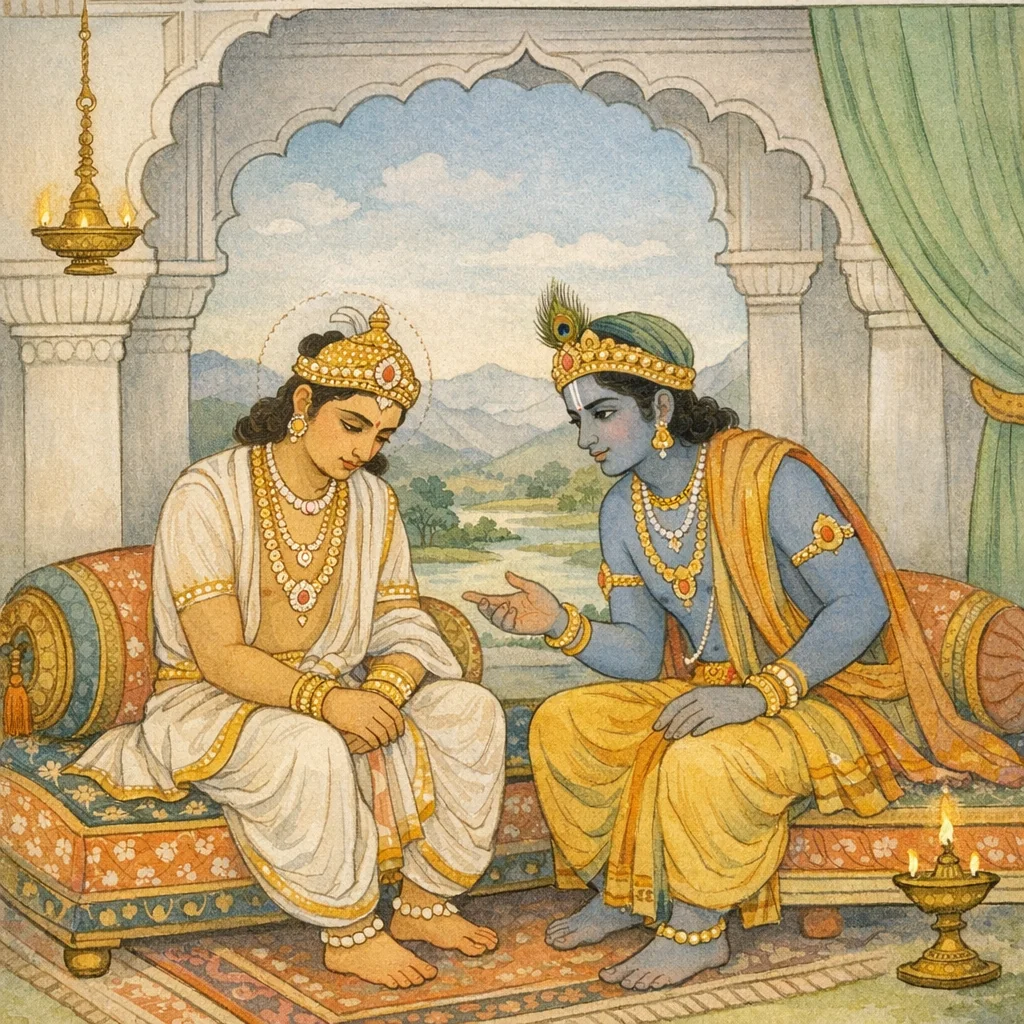
Adhyaya 16
Jarāsandha-prastāvaḥ — Nīti-cintā ca Jarāsandhasya janma-vṛttāntaḥ (The Jarāsandha Prelude: Strategic Counsel and Birth Account)
Upa-parva: Jarāsandha-vadha-nīti (Strategic Counsel on Jarāsandha)
The chapter opens with Vāsudeva endorsing Arjuna’s displayed judgment as appropriate for a Bhārata-lineage prince, then articulates a rationale for timely, disciplined action: the time of death is unknown, and immortality is not attained by non-engagement; therefore, one should proceed with heart-steadying resolve via methodical nīti. The discourse highlights avoiding direct approach to a stronger force when formations are uneven, preferring structured deployment and proximity-based advantage. Yudhiṣṭhira then inquires about Jarāsandha—his strength and extraordinary resilience. Kṛṣṇa responds with a dynastic account beginning with King Bṛhadratha of Magadha, his two wives, and the absence of an heir despite rites. A sage’s boon is mediated through a consecrated mango fruit divided between the queens, leading to pregnancy and the birth of two living halves. The halves are discarded by attendants; the rākṣasī Jarā retrieves and joins them, producing a single, exceptionally strong child. Jarā then presents the child to Bṛhadratha, explaining the circumstances, thereby establishing the etiological basis for Jarāsandha’s name and exceptional constitution.
Chapter Arc: राजसूय-यज्ञ का स्वप्न सामने है, पर उसके द्वार पर जरासंध का अडिग पर्वत खड़ा है। युधिष्ठिर का मन उत्साहहीन होकर संन्यास की ओर झुकता है—और सभा में एक क्षण को विजय का संकल्प डगमगा जाता है। → युधिष्ठिर अपने प्रियतम सहारों—भीम और अर्जुन को ‘दो नेत्र’ और कृष्ण को ‘मन’ कहकर भी स्वीकारते हैं कि जरासंध की सेना और पराक्रम यम के समान दुर्जेय हैं। वे कहते हैं कि राजसूय ‘दुराहर’ है; आरम्भ करने पर भी विफलता का भय है, और न करने पर भी अयोग्यता का कलंक। → कृष्ण क्षत्रिय-धर्म का कठोर प्रकाश सभा में रखते हैं: शत्रु-विजय ही क्षत्रिय की वृत्ति है; दैन्य और मोह—ये दोनों विनाशक दोष हैं जिन्हें जय चाहने वाले राजा को त्यागना चाहिए। वे बताते हैं कि प्रमाद-रूप छिद्र से बलवान शत्रु भी क्षीण होता है—अर्थात् जरासंध भी अजेय नहीं, अवसर और नीति से जीता जा सकता है। → कृष्ण लक्ष्य को धर्म-रक्षा से जोड़ते हैं: राजसूय की सिद्धि के लिए जरासंध-विनाश और बंदी राजाओं का परिरक्षण—यह यज्ञार्थ कर्म भी है और लोक-रक्षा भी। वे युधिष्ठिर को संन्यास-प्रवृत्ति से हटाकर आरम्भ, पुरुषार्थ और नीति-युक्त अभियान की ओर मोड़ते हैं। → युधिष्ठिर का संकल्प पुनः जागता है—अब प्रश्न यह रह जाता है कि जरासंध तक पहुँचने और उसे गिराने का ‘द्वार’ कौन-सा होगा, और कौन-से वीर इस कार्य के लिए अग्रसर होंगे।
Shlokas
Verse 1
(दाक्षिणात्य अधिक पाठका १ श्लोक मिलाकर कुल २६ श्लोक हैं) ऑपन---ह< बक। ] अत्ऑका:< घोडशो< ध्याय: जरासंधको जीतनेके विषयमें युधिष्ठिरके उत्साहहीन होनेपर अर्जुनका उत्साहपूर्ण उद्गार युधिषछिर उवाच सम्राड्गुणमभीप्सन् वै युष्मान् स्वार्थपरायण: । कथं प्रहिणुयां कृष्ण सो5हं केवलसाहसात्,युधिष्ठिर बोले--श्रीकृष्ण! मैं सम्राट्के गुणोंको प्राप्त करनेकी इच्छा रखकर स्वार्थसाधनमें तत्पर हो केवल साहसके भरोसे आपलोगोंको जरासंधके पास कैसे भेज दूँ?
Yudhiṣṭhira said: “Kṛṣṇa, though I long to gain the virtues befitting an emperor and am intent on accomplishing my own aim, how could I send you all to Jarāsandha on the strength of mere audacity? To seek sovereignty at the cost of your safety would be a reckless, self-serving deed.”
Verse 2
भीमार्जुनावुभौ नेत्रे मनो मन्ये जनार्दनम् | मनश्नक्षुविहीनस्य कीदृशं जीवितं भवेत्,भीमसेन और अर्जुन मेरे दोनों नेत्र हैं और जनार्दन आपको मैं अपना मन मानता हूँ। अपने मन और नेत्रोंको खो देनेपर मेरा यह जीवन कैसा हो जायगा?
Yudhiṣṭhira said: “Bhīma and Arjuna are to me my two eyes, and Janārdana (Kṛṣṇa) I regard as my very mind. If one were bereft of mind and sight, what kind of life could remain?”
Verse 3
जरासंधबल प्राप्य दुष्पारं भीमविक्रमम् । यमो<पि न विजेता55जौ तत्र वः कि विचेष्टितम्,जरासंधकी सेनाका पार पाना कठिन है। उसका पराक्रम भयानक है। युद्धमें उस सेनाका सामना करके यमराज भी विजयी नहीं हो सकते, फिर वहाँ आपलोगोंका प्रयत्न क्या कर सकता है?
Yudhiṣṭhira said: “To confront the might of Jarāsandha—hard to cross and terrible in valor—even Yama himself could not win there. What, then, could your effort accomplish in such a place?”
Verse 4
(कथं जित्वा पुनर्यूयमस्मान् सम्प्रति यास्यथ ।) अस्मिंस्त्वर्थान्तिरे युक्तमनर्थ: प्रतिपद्यते तस्मान्न प्रतिपत्तिस्तु कार्या युक्ता मता मम,आपलोग किस प्रकार उसे जीतकर फिर हमारे पास लौट सकेंगे? यह कार्य हमारे लिये इष्ट फलके विपरीत फल देनेवाला जान पड़ता है। इसमें लगे हुए मनुष्यको निश्चय ही अनर्थकी प्राप्ति होती है। इसलिये अबतक हम जिसे करना चाहते थे, उस राजसूययज्ञकी ओर ध्यान देना उचित नहीं जान पड़ता
Yudhiṣṭhira said: “How, after conquering him, will you return to us? This undertaking seems to yield a result contrary to what we desire. One who becomes entangled in such a different course inevitably meets with misfortune. Therefore, in my judgment, it is not proper to proceed toward what we had intended—the Rājasūya sacrifice.”
Verse 5
यथाहं विमृशाम्येकस्तत् तावच्छुयतां मम । संन्यासं रोचये साधु कार्यस्यास्य जनार्दन | प्रतिहन्ति मनो मे5द्य राजसूयो दुराहर:,जनार्दन! इस विषयमें मैं अकेले जैसा सोचता हूँ, मेरे उस विचारको आप सुनें। मुझे तो इस कार्यको छोड़ देना ही अच्छा लगता है। राजसूयका अनुष्ठान बहुत कठिन है। अब यह मेरे मनको निरुत्साह कर रहा है
Yudhiṣṭhira said: “Janārdana, hear the thought I have reached as I ponder this matter alone. To renounce this undertaking seems to me the better course. The Rājasūya sacrifice is exceedingly difficult to accomplish; today it checks my resolve and fills my mind with reluctance.”
Verse 6
वैशग्पायन उवाच पार्थ: प्राप्य धनु: श्रेष्ठमक्षय्ये च महेषुधी । रथं ध्वजं सभां चैव युधिष्ठिरमभाषत,वैशम्पायनजी कहते हैं--जनमेजय! कुन्तीनन्दन अर्जुन उत्तम गाण्डीव धनुष, दो अक्षय तूणीर, दिव्य रथ, ध्वजा और सभा प्राप्त कर चुके थे; इससे उत्साहित होकर वे युधिष्ठिरसे बोले
Vaiśampāyana said: Having obtained the finest bow, along with two inexhaustible great quivers, and also a chariot, a banner, and the assembly-hall, Pārtha (Arjuna) then addressed Yudhiṣṭhira.
Verse 7
अर्जुन उवाच धनु: शस्त्र शरा वीर्य पक्षो भूमिर्यशो बलम् | प्राप्तमेतन््मया राजन दुष्प्रापं यदभीप्सितम्,अर्जुनने कहा--राजन्! धनुष, शस्त्र, बाण, पराक्रम, श्रेष्ठ सहायक, भूमि, यश और बलकी प्राप्ति बड़ी कठिनाईसे होती है; किंतु ये सभी दुर्लभ वस्तुएँ मुझे अपनी इच्छाके अनुकूल प्राप्त हुई हैं
Arjuna said: O King, a bow, weapons, arrows, valor, excellent allies, land, fame, and strength—these are hard to obtain. Yet all these rare attainments, which I longed for, have come to me in accordance with my desire.
Verse 8
कुले जन्म प्रशंसन्ति वैद्या: साधु सुनिष्ठिता: । बलेन सदृशं नास्ति वीर्य तु मम रोचते,अनुभवी दिद्वान् उत्तम कुलमें जन्मकी बड़ी प्रशंसा करते हैं; परंतु बलके समान वह भी नहीं है। मुझे तो बल-पराक्रम ही श्रेष्ठ जान पड़ता है
Arjuna said: The learned—those well established in right conduct—praise birth in a noble lineage. Yet nothing equals strength. For my part, it is valor and prowess that I find most compelling.
Verse 9
कृतवीर्यकुले जातो निर्वीर्य: कि करिष्यति | निर्वीर्ये तु कुले जातो वीर्यवांस्तु विशिष्यते,महापराक्रमी राजा कृतवीर्यके कुलमें उत्पन्न होकर भी जो स्वयं निर्बल है, वह क्या करेगा? निर्बल कुलमें जन्म लेकर भी जो बलवान और पराक्रमी है, वही श्रेष्ठ है
Arjuna said: What can a man accomplish if, though born in the lineage of Kṛtavīrya, he himself is without strength and valor? But even if one is born in a powerless family, the one who possesses true vigor and heroic energy stands out—distinguished by his own merit.
Verse 10
क्षत्रिय: सर्वशो राजन् यस्य वृत्तिरद्धिषज्जये | सर्वेर्गुणैविह्ीनो5पि वीर्यवान् हि तरेद् रिपून्,महाराज! शत्रुओंको जीतनेमें जिसकी प्रवृत्ति हो, वही सब प्रकारसे श्रेष्ठ क्षत्रिय है। बलवान पुरुष सब गुणोंसे हीन हो, तो भी वह शत्रुओंके संकटसे पार हो सकता है
Arjuna said: O great King, the kṣatriya whose very bent is toward conquering enemies is, in every way, the foremost kṣatriya. A man of strength, even if lacking other qualities, can still pass beyond the perils posed by foes.
Verse 11
सर्वैरपि गुणैर्युक्तो निर्वीर्य: कि करिष्यति । गुणीभूता गुणा: सर्वे तिष्ठन्ति हि पराक्रमे,जो निर्बल है, वह सर्वगुणसम्पन्न होकर भी क्या करेगा? पराक्रममें सभी गुण उसके अंग बनकर रहते हैं
Arjuna said: “Even if a man is endowed with every virtue, what can he accomplish if he lacks strength and energy? For all virtues truly find their effective embodiment and standing in valor—when courage and initiative are present, the other qualities become its limbs and instruments.”
Verse 12
जयस्य हेतु: सिद्धिर्हिं कर्म दैवं च संश्रितम् । संयुक्तो हि बलै: कश्रित् प्रमादान्नोपयुज्यते,महाराज! सिद्धि (मनोयोग) और प्रारब्धके अनुकूल पुरुषार्थ ही विजयका हेतु है। कोई बलसे संयुक्त होनेपर भी प्रमाद करे--कर्तव्यमें मन न लगावे, तो वह अपने उद्देश्यमें सफल नहीं हो सकता
Arjuna said: “Victory’s cause is truly success that rests on both right action and destiny. Even one endowed with strength, O great king, if he becomes negligent and does not apply himself to his duty, cannot attain his intended goal.”
Verse 13
तेन द्वारेण शत्रुभ्य: क्षीयते सबलो रिपु:,प्रमादरूप छिद्रके कारण बलवान शत्रु भी अपने शत्रुओंद्वारा मारा जाता है
Through that very ‘doorway’ (a breach), even an enemy who possesses strength and support is worn down by his foes. For negligence itself becomes a gap; because of such a flaw, even a powerful adversary is brought to ruin—slain by his own enemies.
Verse 14
दैन्यं यथा बलवति तथा मोहो बलान्विते । तावुभौ नाशकौ हेतू राज्ञा त्याज्यौ जयार्थिना,बलवान पुरुषमें जैसे दीनताका होना बड़ा भारी दोष है, वैसे ही बलिष्ठ पुरुषमें मोहका होना भी महान् दुर्गुण है। दीनता और मोह दोनों विनाशके कारण हैं; अतः विजय चाहनेवाले राजाके लिये वे दोनों ही त्याज्य हैं
Just as cowardly dejection is a grave fault in one who possesses strength, so too is delusion a great vice in a mighty man. Both dejection and delusion become causes of ruin; therefore, a king who seeks victory should abandon them both.
Verse 15
जरासंधविनाशं च राज्ञां च परिरक्षणम् | यदि कुर्याम यज्ञार्थ कि ततः: परमं भवेत्,यदि हम राजसूययज्ञकी सिद्धिके लिये जरासंधका विनाश तथा कैदमें पड़े हुए राजाओंकी रक्षा कर सकें तो इससे उत्तम और क्या हो सकता है?
“If, for the sake of accomplishing the Rājasūya sacrifice, we can bring about the destruction of Jarāsandha and also protect (that is, rescue) the kings, what could be better than that?”
Verse 16
अनारम्भे हि नियतो भवेदगुणनिश्चय: । गुणान्नि:संशयाद् राजन् नैर्गुण्यं मन्यसे कथम्,यदि हम यज्ञका आरम्भ नहीं करते हैं तो निश्चय ही हमारी अयोग्यता एवं दुर्बलता प्रकट होती है; अतः राजन! सुनिश्चित गुणकी उपेक्षा करके आप निर्गुणताका कलंक क्यों स्वीकार कर रहे हैं? इति श्रीमहाभारते सभापर्वणि राजसूयारम्भपर्वणि जरासंधवधमन्त्रणे षोडशो<ध्याय:
Arjuna said: “If we refrain from undertaking the rite, it will surely be taken as a settled judgment that we lack merit and capability. Therefore, O King, why do you disregard assured excellence and instead accept the stigma of being ‘without qualities’—that is, of failing to act when action is required?”
Verse 17
काषायं सुलभ पश्चान्मुनीनां शममिच्छताम् । साम्राज्यं तु भवेच्छक्यं वयं योत्स्यामहे परान्,ऐसा करनेपर तो शान्तिकी इच्छा रखनेवाले संन्यासियोंका गेरुआ वस्त्र ही हमें सुलभ होगा, परंतु हमलोग साम्राज्यको प्राप्त करनेमें समर्थ हैं; अतः हमलोग शत्रुओंसे अवश्य युद्ध करेंगे
Arjuna said: “If we were to act otherwise, what would become easy for us afterward would only be the ochre robe of renunciants who seek peace. But we are capable of attaining sovereignty; therefore we shall certainly fight our enemies.”
Frequently Asked Questions
Whether to delay action due to risk and uncertainty versus proceeding with a method-governed plan: the chapter argues for timely engagement guided by disciplined formations and targeted objectives rather than indiscriminate escalation.
Sound policy combines resolve with procedure: act without paralysis over uncertain outcomes, avoid approaching superior strength without advantageous configuration, and prioritize decisive levers of power while maintaining moral coherence.
No explicit phalaśruti is presented in the supplied passage; the chapter’s meta-value is primarily etiological and instructional—linking political strategy to a narrative explanation of Jarāsandha’s exceptional nature.