Adhyaya 5
भूमिगुण-प्रश्नः (Inquiry into the qualities of Earth and the classification of beings)
Upa-parva: Saṃjaya–Dhṛtarāṣṭra Saṃvāda: Bhūmi-guṇa-nirdeśa (Earth’s qualities and the taxonomy of beings)
Vaiśaṃpāyana reports that Vyāsa, having spoken, departs and Dhṛtarāṣṭra turns inward to contemplation. After a brief meditation and repeated sighing, the king questions Saṃjaya about the rulers assembled in Kurujāṅgala who, desiring earthly dominion, strike one another with varied weapons without abating. He asks for a factual account of the regions and cities from which these forces have come, noting Saṃjaya’s ‘knowledge-eye’ gained by Vyāsa’s favor. Saṃjaya replies respectfully and begins a structured exposition: beings are of two kinds—moving (trasā) and unmoving (sthāvara). Moving beings have three modes of birth (egg-born, sweat-born, womb-born), with womb-born regarded as superior; among these, humans and certain animals are prominent. He enumerates fourteen animal categories divided into seven forest-dwellers (e.g., lion, tiger, boar, buffalo, elephant, bear, monkey) and seven village/domiciled animals (e.g., cattle, goat, sheep, horse-type, mule, donkey), noting their Vedic association with yajña. He then classifies plants as five types (trees, shrubs, creepers, climbers, grasses and related forms). The discourse culminates in a cosmological-political thesis: all arises from earth and returns to earth; earth is the support and final resort of beings, and because whoever possesses earth possesses the world of moving and unmoving life, kings become mutually destructive through greed for bhūmi.
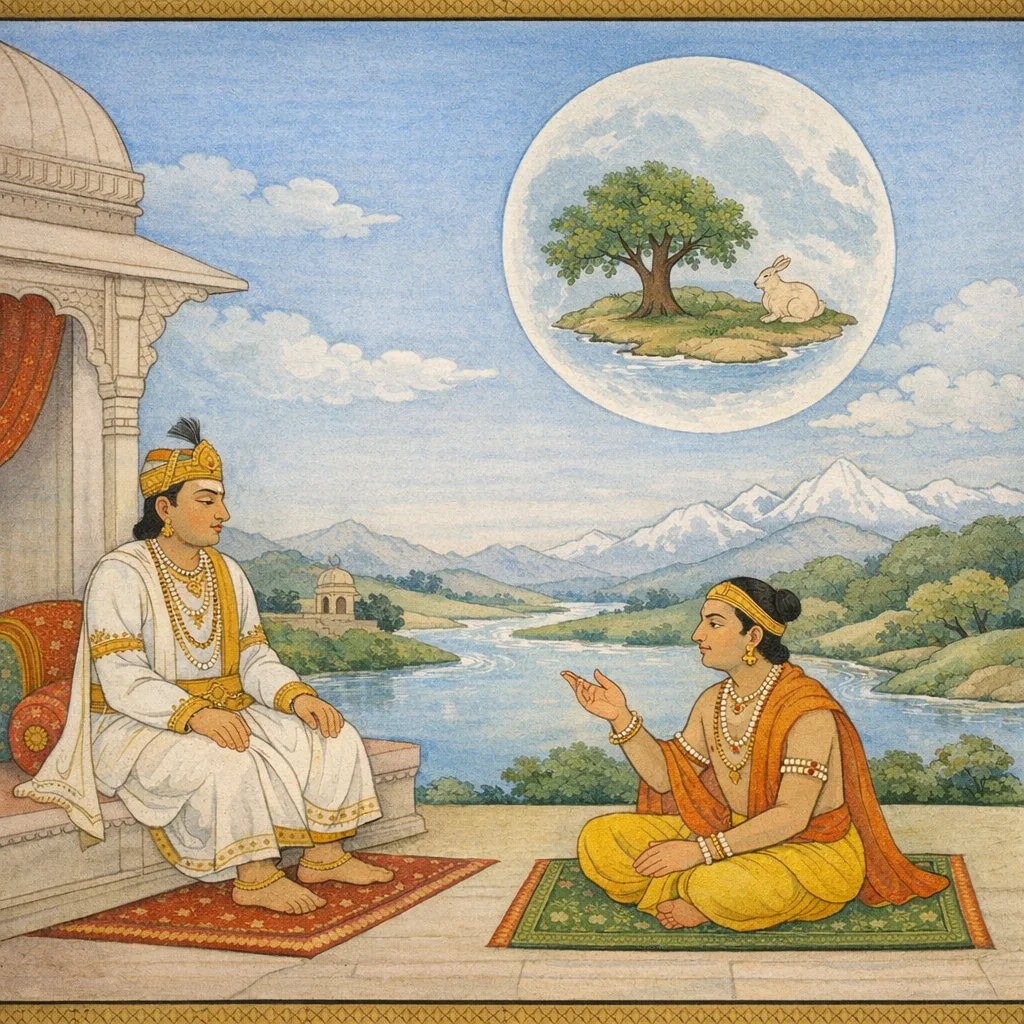
Chapter Arc: धृतराष्ट्र, युद्ध के निकट आते कोलाहल के बीच, संजय से एक अनोखा प्रश्न करते हैं—नदियों, पर्वतों, जनपदों के नाम और पृथ्वी का ‘प्रमाण’ क्या है; मानो दृष्टिहीन राजा समस्त जगत को शब्दों से देख लेना चाहता हो। → संजय उत्तर को युद्ध-वृत्तांत से नहीं, सृष्टि-वर्णन से आरम्भ करते हैं—पंचमहाभूत (भूमि, आप, तेज, वायु, आकाश) और उनके गुणों का स्मरण कराते हुए बताते हैं कि समस्त लोक इन्हीं आधारों पर प्रतिष्ठित हैं; फिर पृथ्वी के रम्य रूप—नदियों से आच्छादित, मेघ-सदृश पर्वतों से मंडित, वृक्ष-पुष्प-फल और धन-धान्य से सम्पन्न—का विस्तार करते हैं। → वर्णन का शिखर ‘सुदर्शनद्वीप’ पर आता है—चन्द्रमण्डल में वह ऐसा दीखता है जैसे दर्पण में पुरुष अपना मुख देखे; उसके भीतर पिप्पल, महान् शश और सर्वौषधियों की परिकल्पना से संजय एक दिव्य-मानचित्र रच देते हैं। → संजय संकेत करते हैं कि शेष प्रदेश जलमय समझना चाहिए और आगे का विवरण ‘संक्षेप’ में सुनने को कहते हैं—जैसे विशाल भूगोल को एक सूत्र में बाँधकर धृतराष्ट्र की जिज्ञासा को तात्कालिक विराम देते हों। → ‘अब इससे भिन्न जो शेष है, उसे संक्षेप से सुनो’—यह वाक्य अगले अध्याय में भू-विभाग/द्वीप-समुद्र-रचना के आगे खुलने का संकेत देता है।
Shlokas
Verse 1
भीप्य्ज्न्् हु न्िय्ािपराध्य पज्चमो< ध्याय: पंचमहाभूतों तथा सुदर्शनद्वीपका संक्षिप्त वर्णन धृतराष्ट उवाच नदीनां पर्वतानां च नामधेयानि संजय । तथा जनपदानां च ये चान्ये भूमिमाश्रिता:,धृतराष्ट्र बोले--संजय! नदियों, पर्वतों तथा जनपदोंके और दूसरे भी जो पदार्थ इस भूतलपर अश्रित हैं, उन सबके नाम बताओ
Dhṛtarāṣṭra said: “Sañjaya, tell me the names of the rivers and the mountains, and likewise of the kingdoms and all other beings and things that dwell upon this earth.”
Verse 2
प्रमाणं च प्रमाणज्ञ पृथिव्या मम सर्वतः । निखिलेन समाचक्ष्व काननानि च संजय,प्रमाणवेत्ता संजय! तुम सारी पृथ्वीका पूरा प्रमाण (लम्बाई-चौड़ाईका माप) मुझे बताओ। साथ ही यहाँके वनोंका भी वर्णन करो
Dhṛtarāṣṭra said: “O Saṃjaya, knower of measures, tell me in full the extent of the earth on every side—its dimensions throughout—and also describe the forests that lie here.”
Verse 3
संजय उवाच पज्चेमानि महाराज महाभूतानि संग्रहात् । जगतीस्थानि सर्वाणि समान्याहुर्मनीषिण:,संजय बोले--महाराज! इस पृथ्वीपर रहनेवाली जितनी भी वस्तुएँ हैं, वे सब-की-सब संक्षेपसे पंचमहाभूतस्वरूप हैं। इसीलिये मनीषी पुरुष उन सबको 'सम्-' कहते हैं
Sañjaya said: “O King, all things that exist here upon the earth are, in brief, constituted of the five great elements. Therefore, discerning sages describe them as sharing a common basis—being alike in their elemental nature.”
Verse 4
इस प्रकार श्रीमह्ाभारत भीष्मपर्वके अन्तर्गत जम्बूखण्डविनिर्माणपर्वमें भूमिगुणवर्णनविषयक चौथा अध्याय पूरा हुआ,भूमिरापस्तथा वायुरग्निराकाशमेव च । गुणोत्तराणि सर्वाणि तेषां भूमि: प्रधानत: आकाश, वायु, अग्नि, जल और भूमि--ये पंच महाभूत हैं। आकाशसे लेकर भूमितक जो पंचमहाभूतोंका कम है, उसमें पूर्वकी अपेक्षा उत्तरोत्तर सब भूतोंमें एक-एक गुण अधिक हो ते हैं। इन सब भूतोंमें भूमिकी प्रधानता है
Sañjaya said: “Earth, water, wind, fire, and space—these are the five great elements. In each successive element, beginning from space and proceeding toward earth, an additional quality is present compared to the previous one; and among them all, earth is regarded as foremost.”
Verse 5
शब्द: स्पर्शक्ष रूपं च रसो गन्धक्ष॒ पठचम: । भूमेरेते गुणा: प्रोक्ता ऋषिभिस्तत्त्ववेदिभि:,शब्द, स्पर्श, रूप, रस और गन्ध--इन पांचोंको तत्त्ववेत्ता महर्षियोंने पृथ्वीका गुण बताया है इति श्रीमहा भारते भीष्मपर्वणि जम्बूखण्डविनिर्माणपर्वणि सुदर्शनद्वीपवर्णने पडठ्चमो<ध्याय:
Sañjaya said: “Sound, touch, form, taste, and smell as the fifth—these are declared by seers who know reality to be the qualities of the earth.”
Verse 6
चत्वारो5प्सु गुणा राजन् गन्धस्तत्र न विद्यते । शब्द: स्पर्शश्व॒ रूपं च तेजसो5थ गुणास्त्रय: । शब्द: स्पर्शश्ष॒ वायोस्तु आकाशे शब्द एव तु,राजन! जलमें चार ही गुण हैं। उसमें गन्धका अभाव है। तेजके शब्द, स्पर्श तथा रूप --ये तीन गुण हैं। वायुके शब्द और स्पर्श दो ही गुण हैं और आकाशका एकमात्र शब्द ही गुण है
Sañjaya said: “O King, in water there are four sensory qualities; scent is not present there. Fire has three qualities—sound, touch, and form. Wind has only two—sound and touch. And in space there is but one quality alone: sound.”
Verse 7
एते पञ्च गुणा राजन् महाभूतेषु पञठ्चसु । वर्तन्ते सर्वलोकेषु येषु भूता: प्रतिष्ठिता:,राजन! ये पाँच गुण सम्पूर्ण लोकोंके आश्रय-भूत पंचमहाभूतोंमें रहते हैं। जिनमें समस्त प्राणी प्रतिष्ठित हैं
Sañjaya said: O King, these five qualities operate within the five great elements. They pervade all the worlds, and upon these elements all living beings are established.
Verse 8
अन्योन्यं नाभिवर्तन्ते साम्यं भवति वै यदा,ये पाँचों गुण जब साम्यावस्थामें रहते हैं, तब एक-दूसरेसे संयुक्त नहीं होते हैं
Sañjaya said: When the qualities come to an equal balance, they do not overpower or combine with one another; they remain in equilibrium.
Verse 9
यदा तु विषमी भावमाविशन्ति परस्परम् | तदा देहैदेहवन्तो व्यतिरोहन्ति नान्यथा,जब ये विषमभावको प्राप्त होते हैं, तब एक-दूसरेसे मिल जाते हैं। उस समय ही देहधारी प्राणी अपने शरीरोंसे संयुक्त होते हैं, अन्यथा नहीं
Sañjaya said: But when they enter into a state of imbalance toward one another, then embodied beings clash and interlock through their very bodies—never otherwise. The verse points to how inner disturbance and disharmony between persons precipitate outward collision, making physical conflict the visible consequence of a prior moral and psychological disequilibrium.
Verse 10
आनुपूर्व्या विनश्यन्ति जायन्ते चानुपूर्वश: । सर्वाण्यपरिमेयाणि तदेषां रूपमैश्वरम्,ये सब भूत क्रमसे नष्ट होते और क्रमसे ही उत्पन्न होते हैं (पृथ्वी आदिके क्रमसे इनका लय होता है और आकाश आदिके क्रमसे इनका प्रादुर्भाव)। ये सब अपरिमेय हैं। इनका रूप ईश्वरकृत है
Sañjaya said: All these beings perish in due sequence, and in due sequence they are born again. All are beyond measure; their forms are fashioned by the Lord.
Verse 11
तत्र तत्र हि दृश्यन्ते धातवः पाउचभौतिका: । तेषां मनुष्यास्तकेण प्रमाणानि प्रचक्षते,भिन्न-भिन्न लोकोंमें पांचभौतिक धातु दृष्टिगोचर होते हैं। मनुष्य तर्कके द्वारा उनके प्रमाणोंका प्रतिपादन करते हैं
Sañjaya said: In various realms, the material constituents born of the five elements are indeed seen. Human beings, relying on reasoning, set forth the proofs for them—thus grounding their understanding of the world in inference and evidence rather than mere assertion.
Verse 12
अचिन्त्या: खलु ये भावा न तांस्तर्केण साधयेत् । प्रकृतिभ्य: परं यत् तु तदचिन्त्यस्य लक्षणम्,परंतु जो अचिन्त्य भाव हैं, उन्हें तर्कसे सिद्ध करनेकी चेष्टा नहीं करनी चाहिये। जो प्रकृतिसे परे है, वही अचिन्त्यस्वरूप है
Sañjaya said: Truly, those realities that lie beyond thought should not be forced into proof by mere reasoning. Whatever transcends the constituents of material nature (prakṛti) is itself the mark of what is called “inconceivable” (acintya)—a reminder that ethical and spiritual truth is not always reducible to argument.
Verse 13
सुदर्शन प्रवक्ष्यामि द्वीपं तु कुरुनन्दन | परिमण्डलो महाराज द्वीपोडसौ चक्रसंस्थित:,कुरुनन्दन! अब मैं सुदर्शन नामक द्वीपका वर्णन करूँगा। महाराज! वह द्वीप चक्रकी भाँति गोलाकार स्थित है
Sañjaya said: “O joy of the Kurus, I shall now describe the island called Sudarśana. O great king, that island is perfectly circular, set in form like a wheel.”
Verse 14
नदीजलप्रतिच्छन्न: पर्वतैश्नाभ्रसंनिभै: | प्रैश्न विविधाकारै रम्यैर्जनपदैस्तथा,वह नाना प्रकारकी नदियोंके जलसे आच्छादित, मेघके समान उच्चतम पर्वतोंसे सुशोभित, भाँति-भाँतिके नगरों, रमणीय जनपदों तथा फल-फूलसे भरे हुए वृक्षोंसे विभूषित है। यह द्वीप भाँति-भाँतिकी सम्पदाओं तथा धन-धान्यसे सम्पन्न है। उसे सब ओरसे लवणसमुद्रने घेर रखा है
Sañjaya said: That land is covered with the waters of many rivers and adorned with lofty mountains resembling clouds. It is further graced with diverse and delightful regions and settlements, rich with trees laden with fruits and flowers. Abounding in many kinds of prosperity—wealth, grain, and resources—it is encircled on all sides by the salt ocean.
Verse 15
वृक्षै: पुष्पफलोपेतै: सम्पन्नधनधान्यवान् । लवणेन समुद्रेण समनन््तात् परिवारित:,वह नाना प्रकारकी नदियोंके जलसे आच्छादित, मेघके समान उच्चतम पर्वतोंसे सुशोभित, भाँति-भाँतिके नगरों, रमणीय जनपदों तथा फल-फूलसे भरे हुए वृक्षोंसे विभूषित है। यह द्वीप भाँति-भाँतिकी सम्पदाओं तथा धन-धान्यसे सम्पन्न है। उसे सब ओरसे लवणसमुद्रने घेर रखा है
Sañjaya said: This land is adorned with trees laden with flowers and fruits, and it abounds in wealth and grain. It is encircled on all sides by the salt ocean—portrayed as a prosperous, well-ordered realm whose natural abundance and secure boundaries reflect the ideal of a flourishing world sustained by right governance and harmony with nature.
Verse 16
यथा हि पुरुष: पश्येदादर्शे मुखमात्मन: । एवं सुदर्शनद्वीपो दृश्यते चन्द्रमण्डले,जैसे पुरुष दर्पणमें अपना मुँह देखता है, उसी प्रकार सुदर्शनद्वीप चन्द्रमण्डलमें दिखायी देता है
Sañjaya said: Just as a man sees his own face reflected in a mirror, so too the island called Sudarśana is seen reflected in the orb of the Moon. The comparison underscores that what is perceived may be a reflection rather than a separate, graspable reality, inviting careful discernment in understanding wondrous reports.
Verse 17
द्विरंशे पिप्पलस्तत्र द्विरेशे च शशों महान् । सर्वौषधिसमावाय: सर्वत: परिवारित:,इसके दो अंशमें पिप्पल और दो अंशमें महान् शश दृष्टिगोचर होता है। इनके सब ओर सम्पूर्ण ओषधियोंका समुदाय फैला हुआ है
Sañjaya said: “In that vision, a pippala (aśvattha) tree is seen occupying two portions, and likewise a great hare is seen occupying two portions. All around it lies an assemblage of every kind of medicinal herb, encircling it on all sides.”
Verse 18
आपफस्ततोडन््या विज्ञेया: शेष: संक्षेप उच्यते । ततोअन्य उच्यते चायमेनं संक्षेपत: शृूणु,इन सबको छोड़कर शेष स्थान जलमय समझना चाहिये। इससे भित्न संक्षिप्त भूमिखण्ड बताया जाता है। उस खण्डका मैं संक्षेपसे वर्णन करता हूँ, उसे सुनिये
Sañjaya said: “Know that, on all sides, the remaining expanse is water. Now I shall state, in brief, what remains besides that—a compact tract of land. Listen as I describe that region concisely.”
Frequently Asked Questions
He highlights the paradox of rulers abandoning life for territory yet remaining unsated in violence, raising the ethical question of whether political legitimacy and desire for dominion can justify escalating mutual harm.
By grounding political conflict in the universality of bhūmi as support of all life, the chapter instructs that sovereignty should be evaluated against interdependence and restraint, not merely conquest; greed for land is identified as a systemic cause of disorder.
A direct phalaśruti is not stated here; instead, the meta-commentary is implicit: understanding the cosmological basis of life and the motives of conflict functions as a corrective lens for judgment, aligning political perception with śāstric categories rather than passion-driven interpretation.