Adhyaya 38
Narmadā-māhātmya: Amarakāṇṭaka, Jāleśvara, Kapilā–Viśalyakaraṇī, and the Supreme Purifying Power of Darśana
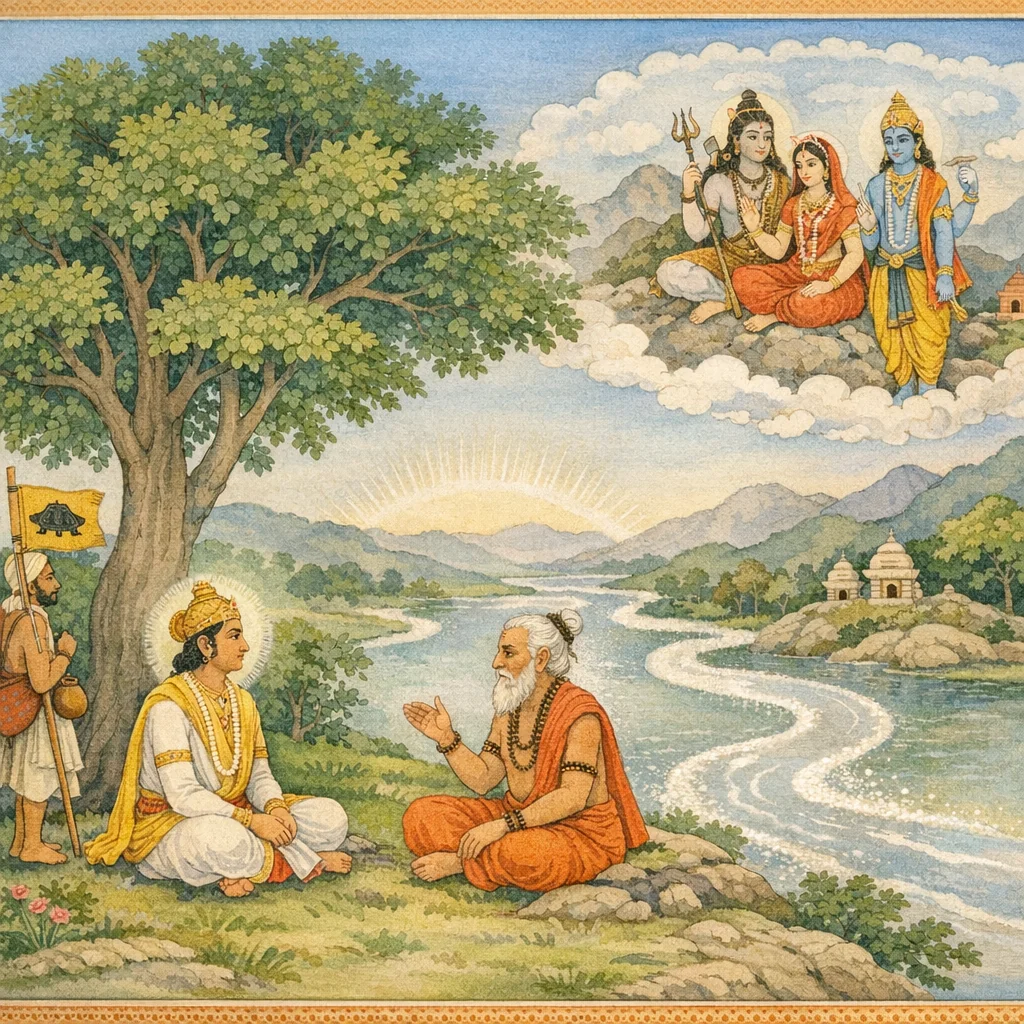
Concluding Adhyāya 37 and continuing Sūta’s transmission, this chapter begins a focused Narmadā-māhātmya through Mārkaṇḍeya’s account for Yudhiṣṭhira. Asked why Narmadā is proclaimed foremost after other dharmas and tīrthas are heard, Mārkaṇḍeya says she springs from Rudra’s body and ferries all beings across. A river hierarchy is given: Gaṅgā sanctifies at Kanakhala, Sarasvatī at Kurukṣetra, but Narmadā purifies everywhere; her waters cleanse by mere darśana, surpassing the time-bound purifications of Sarasvatī and Yamunā. Amarakāṇṭaka is then praised as tri-loka-famous, where sages and celestials attained siddhi; bathing with restraint and a one-night fast liberates whole lineages. Countless nearby tīrthas are noted, with vows of brahmacarya, ahiṃsā, and sense-control, promising heavenly reward, then righteous rebirth and sovereignty. Jāleśvara lake (piṇḍa and sandhyā pleasing the ancestors), the Kapilā and Viśalyakaraṇī (removing afflictions), and Kāverī are extolled; fasting and dwelling on the banks lead to Rudra-loka, eclipse visits multiply merit, and circumambulation yields sacrifice-equivalent fruit. The chapter culminates in a vision of divine co-presence at Amarakāṇṭaka—Maheśvara with Devī, and Brahmā, Viṣṇu, Indra—affirming purāṇic synthesis and preparing further tīrtha exposition.
Shlokas
Verse 1
इति श्रीकूर्मपुराणे षट्साहस्त्र्यां संहितायामुपरिविभागे सप्तत्रिंशो ऽध्यायः सूत उवाच एषा पुण्यतमा देवी देवगन्धर्वसेविता / नर्मदा लोकविख्याता तीर्थानामुत्तमा नदी
Thus, in the Śrī Kūrma Purāṇa, in the six-thousand-verse Saṃhitā, in the latter division, the thirty-seventh chapter ends. Sūta said: “This Goddess (as a river) is most purifying, served and revered by gods and Gandharvas. She is the Narmadā, renowned throughout the worlds—the foremost river among all tīrthas.”
Verse 2
तस्याः शृणुध्वं माहात्म्यं मार्कण्डेयेन भाषितम् / युधिष्ठिराय तु शुभं सर्वपापप्रणाशनम्
Listen to her sacred greatness, as spoken by Mārkaṇḍeya—an auspicious account for Yudhiṣṭhira, and a destroyer of all sins.
Verse 3
युधिष्ठिर उवाच श्रुतास्तु विविधा धर्मास्त्वत्प्रसादान्महामुने / माहात्म्यं च प्रयागस्य तीर्थानि विविधानि च
Yudhiṣṭhira said: “O great sage, by your grace I have heard of many kinds of dharmas; and also of the sacred greatness of Prayāga, and of the various tīrthas as well.”
Verse 4
नर्मदा सर्वतीर्थानां मुख्या हि भवतेरिता / तस्यास्त्विदानीं माहात्म्यं वक्तुमर्हसि सत्तम
You have declared that the Narmadā is indeed the foremost among all tīrthas. Therefore, O best of the virtuous, you should now relate her greatness.
Verse 5
मार्कण्डेय उवाच नर्मदा सरितां श्रेष्ठा रुद्रदेहाद् विनिः सृता / तारयेत् सर्वभूतानि स्थावराणि चराणि च
Mārkaṇḍeya said: “Among rivers, the Narmadā is the foremost; she has issued forth from Rudra’s own body. She carries across all beings—both the immovable and the moving.”
Verse 6
नर्मदायास्तु माहात्म्यं पुराणे यन्मया श्रुतम् / इदानीं तत्प्रवक्ष्यामि शृणुष्वैकमनाः शुभम्
Now I shall declare to you—O auspicious one, listen with a single-pointed mind—the greatness of the Narmadā as I have heard it in the Purāṇas.
Verse 7
पुण्या कनखले गङ्गा कुरुक्षेत्रे सरस्वती / ग्रामे वा यदि वारण्ये पुण्या सर्वत्र नर्मदा
At Kanakhala, the Gaṅgā is supremely sanctifying; at Kurukṣetra, the Sarasvatī sanctifies. Yet whether in village or in forest, the Narmadā sanctifies everywhere.
Verse 8
त्रिभिः सारस्वतं तोयं सप्ताहेन तु यामुनम् / सद्यः पुनाति गाङ्गेयं दर्शनादेव नार्मदम्
The waters of the Sarasvatī purify in three days; those of the Yamunā in a week. The Gaṅgā purifies at once, and the Narmadā purifies merely by being seen.
Verse 9
कलिङ्गदेशपश्चार्धे पर्वते ऽमरकण्टके / पुण्या च त्रिषु लोकेषु रमणीया मनोरमा
To the west of the land of Kaliṅga, upon Mount Amarakāṇṭaka, there is a sacred tīrtha famed in the three worlds—delightful, enchanting, and supremely beautiful.
Verse 10
सदेवासुरगन्धर्वा ऋषयश्च तपोधनाः / तपस्तप्त्वा तु राजेन्द्र सिद्धिं तु परमां गताः
O best of kings, the sages rich in ascetic power, together with Devas, Asuras, and Gandharvas, performed austerities and attained the supreme perfection—paramā siddhi.
Verse 11
तत्र स्नात्वा नरो राजन् नियमस्थो जितेन्द्रियः / उपोष्य रजनीमेकां कुलानां तारयेच्छतम्
O King, whoever bathes there, established in sacred observances and having conquered the senses, and fasts for a single night, liberates a hundred lineages of his family.
Verse 12
योजनानां शतं साग्रं श्रूयते सरिदुत्तमा / विस्तारेण तु राजेन्द्र योजनद्वयमायता
O best of kings, that most excellent river is said to extend a little over a hundred yojanas; and in breadth, O Rājendra, it measures two yojanas.
Verse 13
षष्टितीर्थसहस्राणि षष्टिकोट्यस्तथैव च / पर्वतस्य समन्तात् तु तिष्ठन्त्यमरकण्टके
Sixty thousand sacred fords (tīrthas), and likewise sixty crores besides, stand all around that mountain at Amarakantaka.
Verse 14
ब्रह्मचारी शुचिर्भूत्वा जितक्रोधो जितेन्द्रियः / सर्वहिंसानिवृत्तस्तु सर्वभूतहिते रतः
Let the brahmacārin live in continence, becoming pure; conquering anger and mastering the senses; refraining from all violence, and delighting in the welfare of all beings.
Verse 15
एवं सर्वसमाचारो यस्तु प्राणान् समुत्सृजेत् / तस्य पुण्यफलं राजन् शृणुष्वावहितो नृप
O King—listen attentively. Whoever, being established in such complete right conduct, relinquishes his life-breath, for him I shall now describe the meritorious fruit.
Verse 16
शतवर्षसहस्राणि स्वर्गे मोदति पाण्डव / सप्सरोगणसंकीर्णो दिव्यस्त्रीपरिवारितः
O Pāṇḍava, he rejoices in heaven for thousands upon thousands of centuries, surrounded by hosts of Apsarās and attended by divine women.
Verse 17
दिव्यगन्धानुलिप्तश्च दिव्यपुष्पोपशोभितः / क्रीडते देवलोके तु दैवतैः सह मोदते
Anointed with celestial fragrances and adorned with heavenly flowers, he sports in the world of the Devas and rejoices there in the company of the deities.
Verse 18
ततः स्वर्गात् परिभ्रष्टो राजा भवति धार्मिकः / गृहं तु लभते ऽसौ वै नानारत्नसमन्वितम्
Thereafter, having fallen back from heaven, that king becomes righteous on earth; and indeed he obtains a home adorned with many kinds of jewels.
Verse 19
स्तम्भैर्मणिमयैर्दिव्यैर्वज्रवैदूर्यभूषितम् / आलेख्यवाहनैः शुभ्रैर्दासीदाससमन्वितम्
It was supported by divine pillars made of precious gems, adorned with diamond-like brilliance and vaidūrya (cat’s-eye) jewels; furnished with bright, exquisitely decorated conveyances, and attended by maidservants and servants.
Verse 20
राजराजेश्वरः श्रीमान् सर्वस्त्रीजनवल्लभः / जीवेद् वर्षशतं साग्रं तत्र भोगसमन्वितः
He becomes a sovereign among kings—prosperous and illustrious, beloved of all women—and there he lives for a full hundred years and more, endowed with every enjoyment.
Verse 21
अग्निप्रवेशे ऽथ जले अथवानशने कृते / अनिवर्तिका गतिस्तस्य पवनस्याम्बरे यथा
Whether one enters fire, or water, or undertakes death by fasting, the course of that life-breath becomes irreversible—like the wind moving through the sky.
Verse 22
पश्चिमे पर्वततटे सर्वपापविनाशनः / ह्रदो जलेश्वरो नाम त्रिषु लोकेषु विश्रुतः
On the western slope of the mountain is a lake that destroys all sins. It is called Jaleśvara, and its renown is celebrated throughout the three worlds.
Verse 23
तत्र पिण्डप्रदानेन संध्योपासनकर्मणा / दशवर्षाणि पितरस्तर्पिताः स्युर्न संशयः
There, by offering the piṇḍa (funeral rice-ball) and by performing the daily rite of Sandhyā worship, one’s ancestors remain satisfied for ten years—of this there is no doubt.
Verse 24
दक्षिणे नर्मदाकूले कपिलाख्या महानदी / सरलार्जुनसंच्छन्ना नातिदूरे व्यवस्थिता
On the southern bank of the Narmadā there is a great river called Kapilā; not far away it lies, shaded by groves of sarala and arjuna trees.
Verse 25
सा तु पुण्या महाभागा त्रिषु लोकेषु विश्रुता / तत्र कोटिशतं साग्रं तीर्थानां तु युधिष्ठिर
That sacred place is holy and greatly blessed, renowned throughout the three worlds. There, O Yudhiṣṭhira, are more than a hundred koṭis of tīrthas (pilgrimage-fords).
Verse 26
तस्मिंस्तीर्थे तु ये वृक्षाः पतिताः कालपर्ययात् / नर्मदातोयसंस्पृष्टास्ते यान्ति परमां गतिम्
In that tīrtha, even the trees that have fallen with the turning of time—once touched by the waters of the Narmadā—attain the supreme destination.
Verse 27
द्वितीया तु महाभागा विशल्यकरणी शुभा / तत्र तीर्थे नरः स्नात्वा विशल्यो भवति क्षणात्
The second tīrtha is the auspicious, greatly blessed Viśalyakaraṇī. By bathing at that sacred ford, a person becomes at once “without shafts”—freed from harm, pain, and afflictions.
Verse 28
कपिला च विशल्या च श्रूयते राजसत्तम / ईश्वरेण पुरा प्रोक्ता लोकानां हितकाम्यया
O best of kings, it is heard that (these teachings) are called “Kapilā” and “Viśalyā.” In ancient times the Lord Īśvara taught them, desiring the welfare of all worlds.
Verse 29
अनाशकं तु यः कुर्यात् तस्मिंस्तीर्थे नराधिप / सर्वपापविशुद्धात्मा रुद्रलोकं स गच्छति
O king, whoever undertakes a fast at that tīrtha becomes purified of all sins and attains Rudra’s world.
Verse 30
तत्र स्नात्वा नरो राजन्नश्वमेधफलं लभेत् / ये वसन्त्युत्तरे कूले रुद्रलोके वसन्ति ते
O King, one who bathes there obtains the fruit of an Aśvamedha sacrifice. Those who dwell on the northern bank dwell, indeed, in Rudra’s world.
Verse 31
सरस्वत्यां च गङ्गायां नर्मदायां युधिष्ठिर / समं स्नानं च दानं च यथा मे शङ्करो ऽब्रवीत्
O Yudhiṣṭhira, in the Sarasvatī, the Gaṅgā, and the Narmadā alike, bathing and charitable giving are of equal merit—just as Śaṅkara once told me.
Verse 32
परित्यजति यः प्रणान् पर्वते ऽमरकण्टके / वर्षकोटिशतं साग्रं रुद्रलोके महीयते
Whoever gives up his life on Mount Amarakantaka is honored in Rudra’s world for a full hundred crores of years, and even beyond.
Verse 33
नर्मदायां जलं पुण्यं फेनोर्मिसमलङ्कृतम् / पवित्रं शिरसा वन्द्य सर्वपापैः प्रमुच्यते
The water of the Narmadā is holy, adorned with foam and waves. It is purifying and worthy to be revered with bowed head; by honoring it, one is freed from all sins.
Verse 34
नर्मदा सर्वतः पुण्या ब्रह्महत्यापहारिणी / अहोरात्रोपवासेन मुच्यते ब्रह्महत्यया
The Narmadā is holy in every way and removes the sin of brahmin-slaying. By fasting for a full day and night, one is released from the guilt of brahmin-slaying.
Verse 35
जालेश्वरं तीर्थवरं सर्वपापविनाशनम् / तत्र गत्वा नियमवान् सर्वकामांल्लभेन्नरः
Jāleśvara is the foremost of sacred fords, the destroyer of all sins. Having gone there and living with disciplined observances, a person attains the fulfillment of all desired aims.
Verse 36
चन्द्रसूर्योपरागे तु गत्वा ह्यमरकण्टकम् / अश्वमेधाद् दशगुणं पुण्यमाप्नोति मानवः
But if, during a lunar or solar eclipse, a person goes to Amarakantaka, he attains merit ten times greater than that of the Aśvamedha sacrifice.
Verse 37
एष पुण्यो गिरिवरो देवगन्धर्वसेवितः / नानाद्रुमलताकीर्णो नानापुष्पोपशोभितः
This is a holy and most excellent mountain, frequented by the gods and the Gandharvas; it is filled with many kinds of trees and creepers, and it shines with the beauty of diverse flowers.
Verse 38
तत्र संनिहितो राजन् देव्या सह महेश्वरः / ब्रह्मा विष्णुस्तथा चेन्द्रो विद्याधरगणैः सह
There, O King, Maheśvara abides in manifest presence together with the Goddess; and Brahmā, Viṣṇu, and Indra as well—along with the hosts of Vidyādharas—are present there.
Verse 39
प्रदक्षिणं तु यः कुर्यात् पर्वतं ह्यमरकण्टकम् / पौण्डरीकस्य यज्ञस्य फलं प्राप्नोति मानः
Whoever performs the ritual circumambulation of the Amarakantaka mountain attains the merit, the very fruit, of the Pauṇḍarīka sacrifice.
Verse 40
कावेरी नाम विपुला नदी कल्पषनाशिनी / तत्र स्नात्वा महादेवमर्चयेद् वृषभध्वजम् / संगमे नर्मदायास्तु रुद्रलोके महीयते
There is a vast river named Kāverī, the destroyer of sins accumulated over ages. Having bathed there, one should worship Mahādeva, the Bull-bannered Lord. And at the confluence with the Narmadā, one is honored in Rudra’s world.
Frequently Asked Questions
It states Sarasvatī purifies in three days, Yamunā in a week, Gaṅgā instantly, while Narmadā purifies merely by being seen (darśana-mātra), and is sanctifying everywhere (village or forest), not only at select locations.
Brahmacarya (continence), purity, conquest of anger, mastery of senses, non-violence, and welfare-mindedness; bathing with observances and a one-night fast is highlighted, and relinquishing life under such conduct is linked to extended honor in Rudra’s world.
Jāleśvara lake destroys sins and supports pitṛ rites (piṇḍa and sandhyā satisfy ancestors for ten years); Kapilā on Narmadā’s southern bank anchors vast tīrtha presence; Viśalyakaraṇī removes afflictions immediately; Kāverī destroys age-accumulated sins and, at its confluence with Narmadā, leads to honor in Rudra-loka.
It explicitly places Maheśvara with the Goddess in manifest presence while also affirming Brahmā, Viṣṇu, and Indra (with Vidyādharas) at the same sacred mountain, framing pilgrimage as shared across devotional traditions.