Adhyaya 10
The True Liṅga as Formless Brahman — Self-Luminous Īśa and the Yoga of Liberation
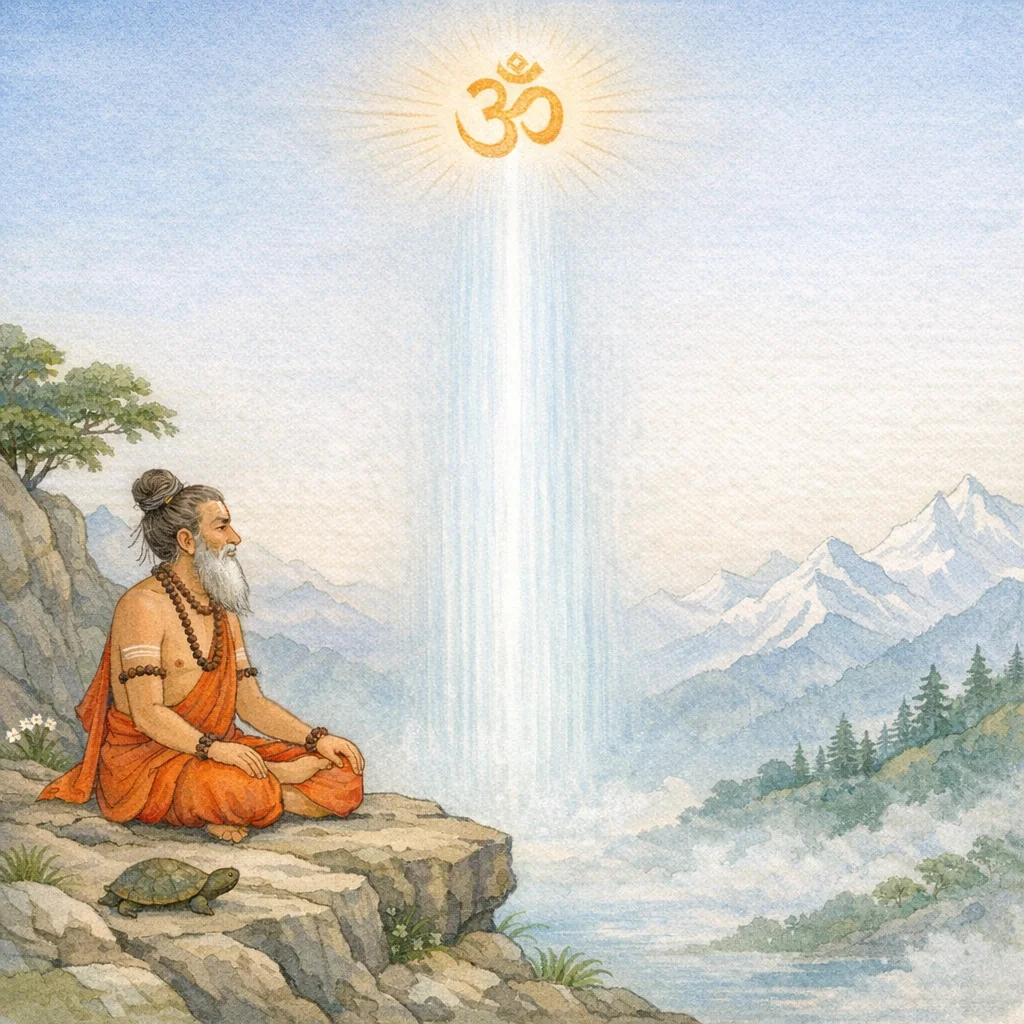
Following the formal close of the previous chapter, the teaching continues in the Īśvara-gītā, where the Lord defines the ultimate “liṅga” not as a material emblem but as the formless, unmanifest Brahman—self-luminous consciousness beyond the guṇas and the causal ground of all. This Supreme cannot be grasped by ordinary means of knowing; only stainless, subtle knowledge free from conceptual division reveals the Lord as one’s own Ātman. The realized yogin—through non-dual contemplation or unwavering bhakti that beholds the One as one form or many—abides inwardly serene and established in the Self. Liberation is described with Vedāntic and yogic names (nirvāṇa, brahmaikatā, kaivalya), culminating in the explicit naming of the Supreme as Paramaśiva/Mahādeva. Using the motif of the “self-luminous light” where sun, moon, and fire do not shine, the chapter marks transcendence and closes by urging solitary, uninterrupted yoga practice, preparing for later chapters on upāya, discipline, and the lived integration of jñāna, bhakti, and yogic steadiness.
Shlokas
Verse 1
इति श्रीकूर्मपाराणे षट्साहस्त्र्यां संहितायामुपरिविभागे (ईश्वरगीतासु) नवमो ऽध्यायः ईश्वर उवाच अलिङ्गमेकमव्यक्तं लिङ्गं ब्रह्मेति निश्चितम् / स्वयञ्ज्योतिः परं तत्त्वं परे व्योम्नि व्यवस्थितम्
In the Śrī Kūrma Purāṇa, in the six-thousand-verse compendium, in the latter division, within the Īśvara-gītā: (thus ends) the ninth chapter. The Lord said: “The One, formless and unmanifest—this alone is the true liṅga; it is decisively known as Brahman. Self-luminous, it is the Supreme Reality, established in the highest expanse (of pure consciousness).”
Verse 2
अव्यक्तं कारणं यत्तदक्षरं परमं पदम् / निर्गुणं शुद्धविज्ञानं तद् वै पश्यन्ति सूरयः
That unmanifest Reality, the causal source—imperishable, the supreme abode—beyond the guṇas and of the nature of pure consciousness: that indeed the wise behold.
Verse 3
तन्निष्ठाः शान्तसंकल्पा नित्यं तद्भावभाविताः / पश्यन्ति तत् परं ब्रह्म यत्तल्लिङ्गमिति श्रुतिः
Those who are firmly established in That, whose intentions are stilled, and who are constantly permeated by the contemplation of That—such yogins behold that Supreme Brahman, of which the Śruti declares: “That is its (true) sign.”
Verse 4
अन्यथा नहि मां द्रष्टुं शक्यं वै मुनिपुङ्गवाः / नहि तद् विद्यते ज्ञानं यतस्तज्ज्ञायते परम्
Otherwise, O best of sages, it is truly not possible to behold Me. For there is no ordinary knowledge by which That Supreme can be known.
Verse 5
एतत्तत्परमं ज्ञानं केवलं कवयो विदुः / अज्ञानमितरत् सर्वं यस्मान्मायामयं जगत्
This alone is the supreme knowledge—so the seers know. Everything else is ignorance, because the world is constituted of māyā (appearance and delusion).
Verse 6
यज्ज्ञानं निर्मलं सूक्ष्मं निर्विकल्पं यदव्ययम् / ममात्मासौ तदेवेमिति प्राहुर्विपश्चितः
That knowledge which is stainless, subtle, free from all conceptual distinctions, and imperishable—this indeed is My very Self (Ātman): so declare the wise.
Verse 7
ये ऽप्यनेकं प्रपश्यन्ति ते ऽपि पश्यन्ति तत्परम् / आश्रिताः परमां निष्ठां बुद्ध्वैकं तत्त्वमव्ययम्
Even those who perceive multiplicity still behold That Supreme Reality. Taking refuge in the highest steadfastness, they realize the one, imperishable Principle.
Verse 8
ये पुनः परमं तत्त्वमेकं वानेकमीश्वरम् / भक्त्या मां संप्रपश्यन्ति विज्ञेयास्ते तदात्मकाः
But those who, through devotion, clearly behold Me as the Supreme Reality—whether as the one Lord or as the Lord manifest in many forms—should be known as having their very self grounded in That.
Verse 9
साक्षादेव प्रपश्यन्ति स्वात्मानं परमेश्वरम् / नित्यानन्दं निर्विकल्पं सत्यरूपमिति स्थितिः
They behold directly the Supreme Lord as their very own Self—ever-blissful, free from all mental constructions, and of the nature of Truth; this is the established state.
Verse 10
भजन्ते परमानन्दं सर्वगं यत्तदात्मकम् / स्वात्मन्यवस्थिताः शान्ताः परे ऽव्यक्ते परस्य तु
Abiding in their own Self, serene and inwardly established, they worship that Supreme Bliss which is all-pervading and of the very nature of That—indeed, the Supreme One’s highest, unmanifest Reality.
Verse 11
एषा विमुक्तिः परमा मम सायुज्यमुत्तमम् / निर्वाणं ब्रह्मणा चैक्यं कैवल्यं कवयो विदुः
This is the supreme liberation: the highest union with Me—nirvāṇa, oneness with Brahman, and kaivalya, as the sages understand it.
Verse 12
तस्मादनादिमध्यान्तं वस्त्वेकं परमं शिवम् / स ईश्वरो महादेवस्तं विज्ञाय विमुच्यते
Therefore, know the single Supreme Reality—Paramashiva—without beginning, middle, or end. He is the Lord, Mahadeva; by realizing Him, one is set free.
Verse 13
न तत्र सूर्यः प्रविभातीह चन्द्रो न नक्षत्राणि तपनो नोत विद्युत् / तद्भासेदमखिलं भाति नित्यं तन्नित्यभासमचलं सद्विभाति
There the sun does not shine, nor the moon, nor the stars; neither lightning nor the fire of the world shines. By That light alone everything here shines—ever. That Immutable Reality, eternally self-luminous, alone truly shines.
Verse 14
नित्योदितं संविदा निर्विकल्पं शुद्धं बृहन्तं परमं यद्विभाति / अत्रान्तरं ब्रह्मविदो ऽथ नित्यं पश्यन्ति तत्त्वमचलं यत् स ईशः
That Supreme Reality ever shines—self-luminous as pure Consciousness—free from all conceptual distinctions, stainless, vast, and highest. Within this very inner space, the knowers of Brahman continually behold the unmoving Truth: that indeed is Īśa, the Lord.
Verse 15
नित्यानन्दममृतं सत्यरूपं शुद्धं वदन्ति पुरुषं सर्ववेदाः / तदेवेदमिति प्रणवेनेशितारं धायायन्ति वेदार्थविनिश्चितार्थाः
All the Vedas declare the Supreme Person to be eternal bliss, deathless (amṛta), of the very form of Truth, and perfectly pure. Realizing, “That alone is this (all that is seen),” those who have ascertained the Vedas’ intended meaning meditate on the Lord through the Pranava (Oṁ).
Verse 16
न भूमिरापो न मनो न वह्निः प्राणो ऽनिलो गगनं नोत बुद्धिः / न चेतनो ऽन्यत् परमाकाशमध्ये विभाति देवः शिव एव केवलः
There is neither earth nor water, neither mind nor fire; neither vital-breath (prāṇa) nor wind, neither sky nor even intellect. Nor is there any other conscious principle. In the midst of the supreme ether of Reality, the Lord alone shines—Śiva, and Śiva alone.
Verse 17
इत्येतदुक्तं परमं रहस्यं ज्ञानामृतं सर्ववेदेषु गूढम् / जानाति योगी विजने ऽथ देशे युञ्जीत योगं प्रयतो ह्यजस्रम्
Thus has been declared this supreme secret—the nectar of liberating knowledge, hidden within all the Vedas. A yogin realizes it in a solitary place; therefore, with disciplined effort, one should steadily practice Yoga without interruption.
Frequently Asked Questions
It defines the true liṅga as the formless, unmanifest Brahman—self-luminous Supreme Reality—rather than a merely external symbol; the ‘sign’ (liṅga) is the Śruti-indicated mark of the Absolute itself.
The chapter presents realization as directly beholding the Supreme Lord as one’s own Self (Ātman): liberation is abiding as that ever-blissful, construction-free Truth, expressed as oneness with Brahman (brahmaikatā) and kaivalya.
Yes. It affirms that devotees who behold the Supreme clearly—either as the one Lord or as the Lord in many forms—are established in the Supreme Truth, indicating a convergence of bhakti with the non-dual culmination.
It recommends disciplined, uninterrupted yoga—ideally in solitude—along with inward stabilization, contemplation of the Supreme, and meditation on the Lord through the pranava (Oṁ).