Adhyaya 8
Tāmasa Sarga, the Androgynous Division of Brahmā, and the Lineages of Dharma and Adharma
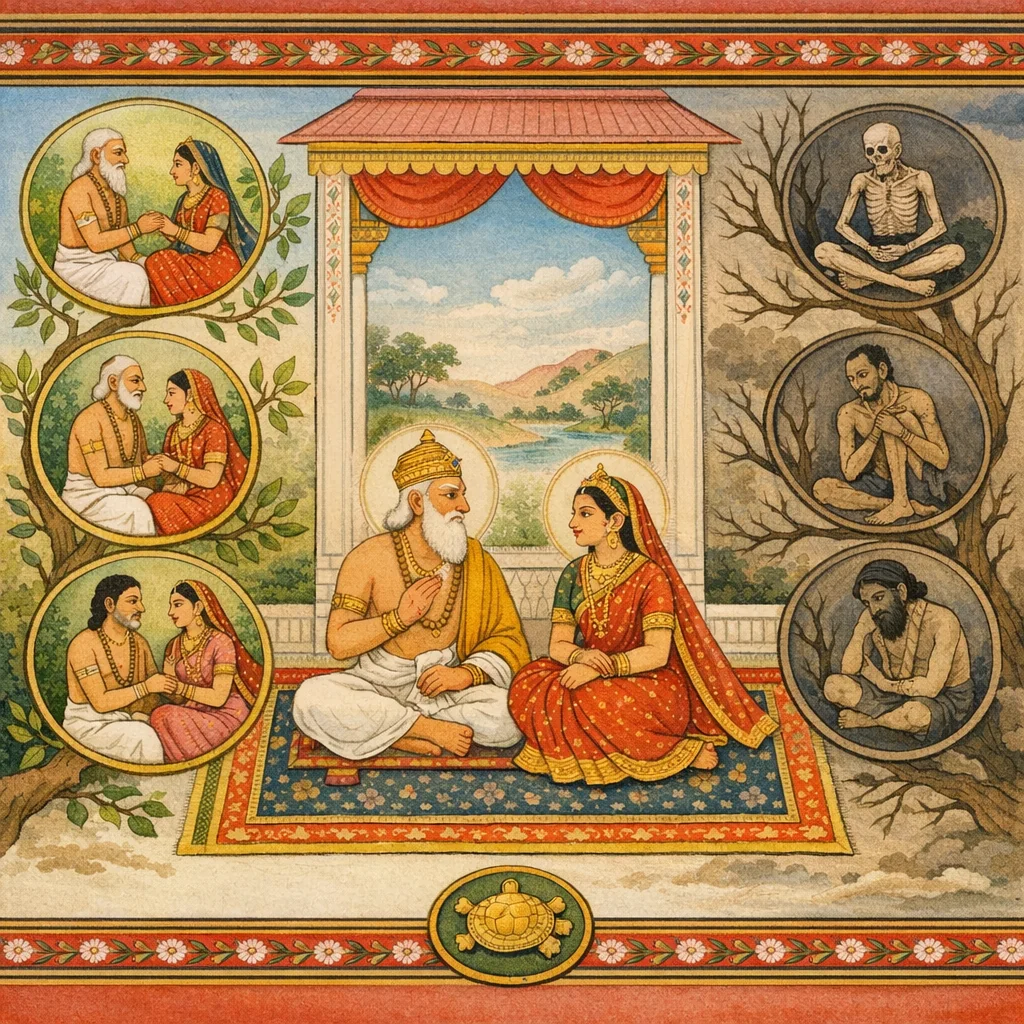
Continuing the creation narrative, Kūrma says Brahmā’s newly produced beings do not multiply, causing Brahmā distress, whereupon buddhi—decisive intelligence—manifests. Brahmā perceives a governing tāmasa principle that veils rajas and sattva, until rajas joined with sattva repels tamas and a complementary pair arises, establishing generative polarity. As unrighteousness and violence increase, Brahmā casts off the dark embodiment, assumes a radiant form, divides into male and female, and produces Virāj/Virāṭ and Śatarūpā. The account then turns to the Svāyambhuva Manvantara genealogy: Manu and Śatarūpā, their sons Priyavrata and Uttānapāda, and the marriages that extend creation through Dakṣa and Ruci. Dakṣa’s daughters are listed; Dharma’s unions generate personified virtues and their auspicious progeny, while a counter-line from Adharma yields hiṃsā, falsehood, fear, hell, death, disease, and grief—suffering beings described as ūrdhvaretas. The chapter concludes by naming this a tāmasa creation that nevertheless serves to regulate dharma, preparing the text to move from origins into enduring cosmic and social order.
Shlokas
Verse 1
इति श्रीकूर्मपुराणे षट्साहस्त्र्यां संहितायां पूर्वविभागे सप्तमो ऽध्यायः श्रीकूर्म उवाच एवं भूतानि सृष्टानि स्थावराणि चराणि च / यदा चास्य प्रजाः सृष्टा न व्यवर्धन्त धीमतः
Thus, in the Śrī Kūrma Purāṇa, in the Ṣaṭsāhasrī Saṃhitā, in the Pūrvabhāga, the seventh chapter concludes. Śrī Kūrma said: “In this manner beings were created—both the immobile and the mobile. Yet when his creatures had been brought forth, they did not multiply, though he was wise.”
Verse 2
तमोमात्रावृतो ब्रह्मा तदाशोचत दुः खितः / ततः स विदधे बुद्धिमर्थनिश्चयगामिनीम्
Enveloped solely by the darkness of tamas, Brahmā grieved in distress. Thereupon he brought forth buddhi—the intellect that moves toward decisive discernment of meaning and purpose.
Verse 3
अथात्मनि समद्राक्षीत् तमोमात्रां नियामिकाम् / रजः सत्त्वं च संवृत्य वर्तमानां स्वधर्मतः
Then he beheld within the Self a governing principle made of tamas alone—one that veils both rajas and sattva—yet continues to operate according to its own intrinsic law.
Verse 4
तमस्तद् व्यनुदत् पश्चात् रजः सत्त्वेन संयुतः / तत् तमः प्रतिनुन्नं वै मिथुनं समजायत
Thereafter, rajas—conjoined with sattva—drove away that tamas. And when that tamas was thus struck back, a complementary pair (mithuna) indeed came into being.
Verse 5
अधर्माचरणो विप्रा हिंसा चाशुभलक्षणा / स्वां तनुं स ततो ब्रह्मा तामपोहत भास्वराम्
O brāhmaṇas, when the practice of unrighteousness arose—together with violence, marked by inauspicious signs—then Brahmā cast off that dark embodiment from himself and, in its place, assumed a radiant form.
Verse 6
द्विधाकरोत् पुनर्देहमर्धेन पुरुषो ऽभवत् / अर्धेन नारी पुरुषो विराजमसृजत् प्रभुः
Then the Lord again divided His own body into two: with one half He became male, and with the other half He became female; and that sovereign Male brought forth Virāj.
Verse 7
नारीं च शतरूपाख्यां योगिनीं ससृजे शुभाम् / सा दिवं पृथिवीं चैव महम्ना व्याप्य संस्थिता
He also created the auspicious yoginī named Śatarūpā, a woman of many forms; and she, pervading both heaven and earth with her greatness, stood established throughout them.
Verse 8
योगैश्वर्यबलोपेता ज्ञानविज्ञानसंयुता / यो ऽभवत् पुरुषात् पुत्रो विराडव्यक्तजन्मनः
Endowed with the lordly powers of Yoga and great strength, and furnished with both knowledge and realized wisdom, he became the son born from Puruṣa: Virāṭ, whose origin is from the Unmanifest.
Verse 9
स्वायंभुवो मनुर्देवः सो ऽभवत् पुरुषो मुनिः / सा देवी शतरूपाख्या तपः कृत्वा सुदुश्चरम्
Svāyambhuva Manu—divine in nature—became the sage among men, a true puruṣa in conduct. And that goddess named Śatarūpā undertook austerities exceedingly difficult to perform.
Verse 10
भर्तारं ब्रह्मणः पुत्रं मनुमेवानुपद्यत / तस्माच्च शतरूपा सा पुत्रद्वयमसूयत
Śatarūpā accepted Manu—Brahmā’s son—as her husband; and from Manu, that Śatarūpā bore two sons.
Verse 11
प्रियव्रतोत्तानपादौ कन्याद्वयमनुत्तमम् / तयोः प्रसूतिं दक्षाय मनुः कन्यां ददौ पुनः
Priyavrata and Uttānapāda had two unsurpassed daughters. Of those two, Manu again gave his daughter Prasūti in marriage to Dakṣa.
Verse 12
प्रजापतिरथाकूतिं मानसो जगृहे रुचिः / आकूत्यां मिथुनं जज्ञे मानसस्य रुचेः शुभम् / यज्ञश्च दक्षिणा चैव याभ्यां संवर्धितं जगत्
Then the mind-born Prajāpati Ruci took Ākūti as his wife. From Ākūti was born an auspicious pair to the mind-born Ruci—Yajña and Dakṣiṇā—through whom the world was nourished and made to flourish.
Verse 13
यज्ञस्य दक्षिणायां तु पुत्रा द्वादश जज्ञिरे / यामा इति समाक्यता देवाः स्वायंभुवे ऽन्तरे
From Dakṣiṇā, the consort of Yajña, twelve sons were born; in the Svāyambhuva Manvantara they were known as the deities called the Yāmas.
Verse 14
प्रसूत्यां च तथा दक्षश्चतस्त्रो विंशतिं तथा / ससर्ज कन्या नामानि तासां सम्यम् निबोधत
And from Prasūti, Dakṣa begot twenty-four daughters. Now hear, in proper order, the names of those maidens.
Verse 15
श्रद्धा लक्ष्मीर्धृतिस्तुष्टिः पुष्टिर्मेधा क्रिया तथा / बुद्धिर्लज्जावपुः शान्तिः सिद्धिः कीर्तिस्त्रयोदशी
Faith, Lakṣmī (prosperity), steadfastness, contentment, nourishment, intelligence, and right action; discernment, modesty, comeliness, peace, accomplishment (siddhi), and fame—these are the thirteen auspicious qualities.
Verse 16
पत्न्यर्थं प्रतिजग्राह धर्मो दाक्षायणीः शुभाः / ताभ्यः शिष्टा यवीयस्य एकादश सुलोचनाः
For the sake of wives, Dharma accepted the auspicious daughters of Dakṣa, the Dakṣāyaṇīs; and from them there were born—of the younger line—eleven virtuous, fair‑eyed daughters.
Verse 17
ख्यातिः सत्यथ संभूतिः स्मृतिः प्रीतिः क्षमा तथा / संततिश्चानसूया च ऊर्जा स्वाहा स्वधा तथा
Khyāti, and also Satī; Saṃbhūti; Smṛti; Prīti; and Kṣamā; likewise Saṃtati and Anasūyā; and also Ūrjā, Svāhā, and Svadhā.
Verse 18
भृगुर्भवो मरीचिश्च तथा चैवाङ्गिरा मुनिः / पुलस्त्यः पुलहश्चैव क्रतुः परमधर्मवित्
Bhṛgu, Bhava, and Marīci, and likewise the sage Aṅgiras; Pulastya and Pulaha, and also Kratu—each a supreme knower of Dharma.
Verse 19
अत्रिर्वसिष्ठो वह्निश्च पितरश्च यथाक्रमम् / ख्यात्याद्या जगृहुः कन्या मुनयो मुनिसत्तमाः
Atri, Vasiṣṭha, Vahni (Agni), and the Pitṛs, in due order, took in marriage the maidens beginning with Khyāti—those sages, the best among seers.
Verse 20
श्रद्धाया आत्मजः कामो दर्पो लक्ष्मीसुतः स्मृतः / धृत्यास्तु नियमः पुत्रस्तुष्ट्याः संतोष उच्यते
From Faith (Śraddhā) Desire (Kāma) is born. Pride (Darpa) is remembered as the son of Lakṣmī, Fortune. From Steadfastness (Dhṛti) arises Niyama, disciplined observance, as a son; and from Contentment (Tuṣṭi) Satisfaction (Saṃtoṣa) is declared to spring forth.
Verse 21
पुष्ट्या लाभः सुतश्चापि मेधापुत्रः श्रुतस्तथा / क्रियायाश्चाभवत् पुत्रो दण्डः समय एव च
From Puṣṭi was born a son named Lābha (Gain). Likewise, from Medhā was born Śruta (learning received by sacred hearing). And from Kriyā were born the sons Daṇḍa (disciplining authority) and Samaya (agreed convention and law).
Verse 22
बुद्ध्या बोधः सुतस्तद्वदप्रमादो व्यजायत / लज्जाया विनयः पुत्रो वपुषो व्यवसायकः
From Intelligence (Buddhi) was born Bodha, awakened right-understanding; and from that same line arose Apramāda, vigilant heedfulness. From Modesty (Lajjā) was born Vinaya, humility and good conduct; and from a well-formed body (Vapuṣ) was born Vyavasāya, determined effort and enterprise.
Verse 23
क्षेमः शान्तिसुतश्चापि सुखं सिद्धिरजायत / यशः कीर्तिसुतस्तद्वदित्येते धर्मसूनवः
From Śānti (Peace) was born Kṣema (welfare), and also Sukha (happiness) and Siddhi (accomplishment). Likewise, from Kīrti (glory) was born Yaśas (renown). These are said to be the sons of Dharma.
Verse 24
कामस्य हर्षः पुत्रो ऽभूद् देवानन्दो व्यजायत / इत्येष वै सुखोदर्कः सर्गो धर्मस्य कीर्तितः
From Kāma was born a son named Harṣa (Joy), and from him Devānanda (the bliss of the Devas) came forth. Thus is proclaimed this lineage of Dharma—an emanation that culminates in happiness and auspicious fruition.
Verse 25
जज्ञे हिंसा त्वधर्माद् वै निकृतिं चानृतं सुतम् / निकृत्यनृतयोर्जज्ञे भयं नरक एव च
From Adharma indeed was born Hiṃsā (violence), and his sons were Nikṛti (deceitful wrongdoing) and Anṛta (falsehood). From Nikṛti and Anṛta, in turn, were born Bhaya (fear) and Naraka (hell).
Verse 26
माया च वेदना चैव मिथुनं त्विदमेतयोः / भयाज्जज्ञे ऽथ वै माया मृत्युं भूतापहारिणम्
Māyā and Vedanā (pain/sensation) became a paired couple. Then, from fear, Māyā indeed gave birth to Death—Mṛtyu, the taker-away of living beings.
Verse 27
वेदना च सुतं चापि दुः खं जज्ञे ऽथ रौरवात् / मृत्योर्व्याधिजराशोकतृष्णाक्रोधाश्च जज्ञिरे
From Raurava there arose Pain (Vedanā) and also its offspring, Suffering (Duḥkha). From Death (Mṛtyu) were born disease, old age, grief, craving, and anger.
Verse 28
दुः खोत्तराः स्मृता ह्येते सर्वे चाधर्मलक्षणाः / नैषां भार्यास्ति पुत्रो वा सर्वे ते ह्यूर्ध्वरेतसः
These are remembered as ending in suffering, and all of them bear the marks of adharma. They have neither wife nor son; indeed, all of them are “ūrdhvaretas”—those whose generative power is turned upward (celibate/ascetic by condition).
Verse 29
इत्येष तामसः सर्गो जज्ञे धर्मनियामकः / संक्षेपेण मया प्रोक्ता विसृष्टिर्मुनिपुङ्गवा
Thus arose this tāmasa creation—an ordering force that regulates dharma. In brief have I declared this process of emanation, O foremost of sages.
Frequently Asked Questions
It links the impasse to the dominance of tamas and resolves it through the arising of buddhi and the action of rajas conjoined with sattva, which repels tamas and produces mithuna (paired polarity), enabling propagation.
It functions as a moral-cosmological counterline: Adharma generates violence, deceit, falsehood, fear, hell, and death—mapping how suffering arises and thereby reinforcing dharma as the stabilizing principle of cosmic and social order.
Svāyambhuva Manu and Śatarūpā anchor the human-cosmic genealogy; their line connects to Priyavrata and Uttānapāda, and extends through marital alliances involving Dakṣa, Ruci, Ākūti, Yajña, and Dakṣiṇā.