Adhyaya 33
Vārāṇasī (Avimukta) Māhātmya and the Catalogue of Guhya-Tīrthas
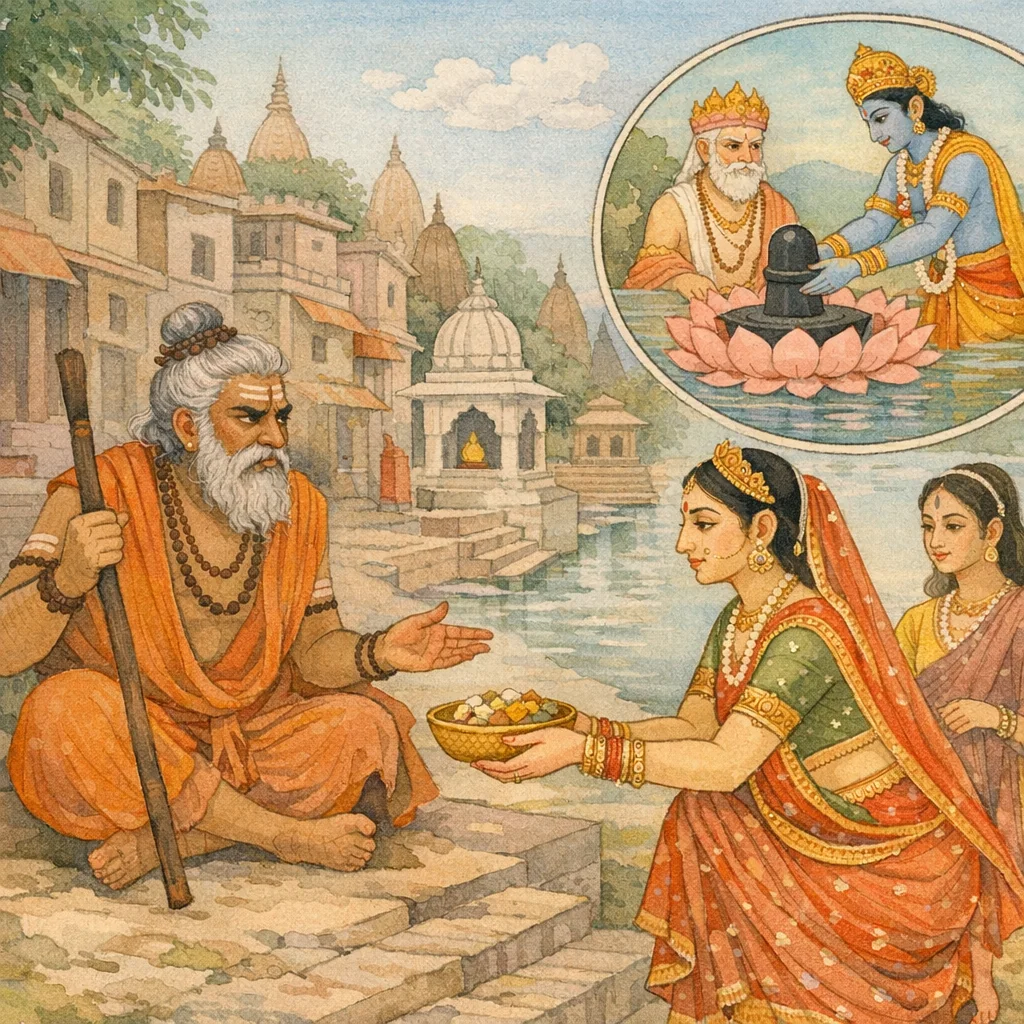
After the previous chapter ends, Sūta relates how Bhagavān Vyāsa (Pārāśarya), with sages such as Jaimini, sets out on pilgrimage to many secret sacred fords (guhya-tīrthas) and holy abodes (āyatanas). A long catalogue follows—Prayāga and places said to be even more auspicious—along with tīrthas linked to deities and powers such as Agni, Vāyu, Yama, Soma, Sūrya, Gaurī, and others. The narrative then turns to a local sacred episode: at Brahma-tīrtha an ancient liṅga becomes central, and Viṣṇu establishes a divine liṅga, affirming Śaiva–Vaiṣṇava harmony through shared reverence. Returning to Avimukta (Kāśī/Vārāṇasī), Vyāsa performs snāna, worship, fasts, śrāddha, and piṇḍa-offerings, dismisses his disciples, and lives with strict discipline (tri-sandhyā bathing, alms, brahmacarya). When alms become scarce he grows angry, but the Goddess intervenes: Śivā appears, gives alms, reproves his anger, and grants regulated permission for ceremonial entry on the 14th and 8th lunar days. The chapter concludes that hearing or reciting Avimukta’s greatness yields the highest state, and it prescribes proper ancestral and divine rites—especially on riverbanks and in temples—culminating in japa and purity as direct means to liberation (mokṣa), leading into the next emphasis on disciplined practice, kṣetra-dharma, and the saving power of devotion joined with restraint.
Shlokas
Verse 1
इति श्रीकूर्मपुराणे षट्साहस्त्र्यां संहितायां पूर्वविभागे द्वात्रिंशो ऽध्यायः सूत उवाच ततः सर्वाणि गुह्यानि तीर्थान्यायतनानि च / जगाम भगवान् व्यासो जैमिनिप्रमुखैर्वृतः
Thus, in the Śrī Kūrma Purāṇa, in the six-thousand-verse Saṃhitā, in the Pūrva-bhāga, the thirty-second chapter concludes. Sūta said: Thereafter, the revered Bhagavān Vyāsa—surrounded by sages headed by Jaimini—set out for all the hidden sacred fords (guhya-tīrthas) and holy shrines (āyatanas).
Verse 2
प्रयागं परमं तीर्थं प्रयागादधिकं शुभम् / विश्वरूपं तथा तीर्थं तालतीर्थमनुत्तमम्
Prayāga is the supreme sacred ford; and there is an auspicious holy place even more blessed than Prayāga. Likewise, the Viśvarūpa Tīrtha, and the unsurpassed Tāla-Tīrtha, are also to be revered.
Verse 3
आकाशाख्यं महातीर्थं तीर्थं चैवार्षभं परम् / स्वर्नोलं च महातीर्थं गौरीतीर्थमनुत्तमम्
“There is the great sacred ford called Ākāśākhya; and likewise the supreme Ṛṣabha-tīrtha. Also there is Svarṇola, a great tīrtha, and the unsurpassed Gaurī-tīrtha.”
Verse 4
प्राजापत्यं तथा तीर्थं स्वर्गद्वारं तथैव च / जम्बुकेश्वरमित्युक्तं धर्माख्यं तीर्थमुत्तमम्
That sacred ford is called Prājāpatya; it is also known as Svargadvāra, the “Gateway to Heaven.” It is spoken of as Jambukeśvara as well—an unsurpassed tīrtha famed by the name Dharma.
Verse 5
गयातीर्थं महातीर्थं तीर्थं चैव महानदी / नारायणं परं तीर्थं वायुतीर्थमनुत्तमम्
Gayā-tīrtha is a holy ford, truly a great tīrtha; and the Mahānadī too is a sacred tīrtha. Nārāyaṇa is the supreme tīrtha, and the Vāyu-tīrtha is unsurpassed.
Verse 6
ज्ञानतीर्थं परं गुह्यं वाराहं तीर्थमुत्तमम् / यमतीर्थं महापुण्यं तीर्थं संवर्तकं शुभम्
Jñāna-tīrtha is supreme and deeply secret; and Vārāha-tīrtha is the most excellent of sacred fords. Yama-tīrtha is of great merit, and Saṁvartaka-tīrtha is auspicious.
Verse 7
अग्नितीर्थं द्विजश्रेष्ठाः कलशेश्वरमुत्तमम् / नागतीर्थं सोमतीर्थं सूर्यतीर्थं तथैव च
O best of the twice-born, there are Agni-tīrtha and the excellent Kalaśeśvara; and likewise Nāga-tīrtha, Soma-tīrtha, and Sūrya-tīrtha as well.
Verse 8
पर्वताख्यं महागुह्यं मणिकर्णमनुत्तमम् / घटोत्कचं तीर्थवरं श्रीतीर्थं च पितामहम्
“I shall describe Parvatākhya; the greatly secret tīrtha called Mahāguhya; the unsurpassed Maṇikarṇa; Ghaṭotkaca, the best of sacred fords; and also Śrī-tīrtha and Pitāmaha-tīrtha.”
Verse 9
गङ्गातीर्थं तु देवेशं ययातेस्तीर्थमुत्तमम् / कापिलं चैव सोमेशं ब्रह्मतीर्थमनुत्तमम्
“There is Gaṅgā-tīrtha and Deveśa; the most excellent sacred ford of King Yayāti; also Kāpilā-tīrtha with Someśa; and the unsurpassed Brahma-tīrtha.”
Verse 10
अत्र लिङ्गं पुरानीय ब्रह्मा स्नातुं यदा गतः / तदानीं स्थापयामास विष्णुस्तल्लिङ्गमैश्वरम्
Here stood an ancient, sacred Liṅga. When Brahmā went to bathe, at that very moment Viṣṇu established that divine Liṅga of the Lord (Īśvara).
Verse 11
ततः स्नात्वा समागत्य ब्रह्मा प्रोवाच तं हरिम् / मयानीतमिदं लिङ्गं कस्मात् स्थापितवानसि
Then, after bathing and returning, Brahmā spoke to Hari (Viṣṇu): “This Liṅga that I brought—why have you installed it?”
Verse 12
तमाह विष्णुस्त्वत्तो ऽपि रुद्रे भक्तिर्दृढा मम / तस्मात् प्रतिष्ठितं लिङ्गंनाम्ना तव भविष्यति
Viṣṇu said: “O Rudra, my devotion to you is steadfast, beyond all else. Therefore this established Liṅga shall be known by your very name.”
Verse 13
भूतेश्वरं तथा तीर्थं तीर्थं धर्मसमुद्भवम् / गन्धर्वतीर्थं परमं वाह्नेयं तीर्थमुत्तमम्
Likewise there are the sacred ford of Bhūteśvara; the holy place called Dharmasamudbhava; the supreme Gandharva-tīrtha; and the excellent Vāhneya-tīrtha, the fire-related pilgrimage ford.
Verse 14
दौर्वासिकं व्योमतीर्थं चन्द्रतीर्थं द्विजोत्तमाः / चित्राङ्गदेश्वरं पुण्यं पुण्यं विद्याधरेश्वरम्
O best of the twice-born, there are the Durvāsas-tīrtha, the Vyoma-tīrtha, and the Candra-tīrtha; also the holy Citrāṅga-deśvara and the holy Vidyādhareśvara—each supremely meritorious.
Verse 15
केदारतीर्थमुग्राख्यं कालञ्जरमनुत्तमम् / सारस्वतं प्रभासं च भद्रकर्णं ह्रदं शुभम्
(He also spoke of) the Kedāra tīrtha, famed as Ugra; the unsurpassed Kālañjara; Sārasvata; Prabhāsa; and the auspicious lake called Bhadrakarṇa.
Verse 16
लौकिकाख्यं महातीर्थं तीर्थं चैव वृषध्वजम् / हिरण्यगर्भं गोप्रेक्ष्यं तीर्थं चैव वृषध्वजम्
There is the great tīrtha known as Laukikā; and also the tīrtha called Vṛṣadhvaja. There are Hiraṇyagarbha and Goprekṣya—these too are tīrthas; and likewise the tīrtha named Vṛṣadhvaja.
Verse 17
उपशान्तं शिवं चैव व्याघ्रेश्वरमनुत्तमम् / त्रिलोचनं महातीर्थं लोलार्कं चोत्तराह्वयम्
Also found are Upashānta and Śiva; the unsurpassed Vyāghreśvara; Trilocana, the great tīrtha; and Lolārka, also known by the name Uttara.
Verse 18
कपालमोचनं तीर्थं ब्रह्महत्याविनाशनम् / शुक्रेश्वरं महापुण्यमानन्दपुरमुत्तमम्
There is the tīrtha called Kapālamocana, which destroys the sin of brahmin-slaying; and there is Śukreśvara, of exceedingly great merit; as well as the supreme holy place named Ānandapura.
Verse 19
एवमादीनि तीर्थानि प्राधान्यात् कथितानि तु / न शक्यं विस्तराद् वक्तुं तीर्थसंख्या द्विजात्तमाः
Thus these and other tīrthas have been described only in brief, according to their chief importance. But, O best of the twice-born, it is not possible to recount in full the entire number of pilgrimage places.
Verse 20
तेषु सर्वेषु तीर्थेषु स्नात्वाभ्यर्च्य पिनाकिनम् / उपोष्य तत्र तत्रासौ पाराशर्यो महामुनिः
Having bathed at all those sacred tīrthas and worshipped Pinākin—Śiva, bearer of the Pināka bow—the great sage Pārāśarya observed holy fasts in each and every place.
Verse 21
तर्पयित्वा पितॄन् देवान् कृत्वा पिण्डप्रिदानकम् / जगाम पुनरेवापि यत्र विश्वेश्वरः शिवः
Having satisfied the Pitṛs and the gods with tarpaṇa libations and having performed the offering of piṇḍas, he went again to the place where Śiva—Viśveśvara, Lord of the universe—was present.
Verse 22
स्नात्वाभ्यर्च्य परं लिङ्गं शिष्यैः सह महामुनिः / उवाच शिष्यान् धर्मात्मा स्वान् देशान् गन्तुमर्हथा
Having bathed and, together with his disciples, worshipped the Supreme Liṅga, the great sage—steadfast in dharma—addressed his disciples: “Now you should depart to your own regions.”
Verse 23
ते प्रणम्य महात्मानं जग्मुः पैलादयो द्विजाः / वासं च तत्र नियतो वाराणस्यां चकार सः
Having bowed to that great-souled one, the twice-born sages—beginning with Paila—departed. And he, resolute and disciplined, made his abode there in Vārāṇasī.
Verse 24
शान्तो दान्तस्त्रिषवणंस्नात्वाभ्यर्च्य पिनाकिनम् / भैक्षाहारो विशुद्धात्मा ब्रह्मचर्यपरायणः
Calm and self-controlled, bathing at the three daily sandhyās and worshipping Pinākin, he should live on alms, remain pure in heart, and be devoted to brahmacarya, the discipline of sacred continence.
Verse 25
कदाचिद् वसता तत्र व्यासेनामिततेजसा / भ्रममाणेन भिक्षा तु नैव लब्धा द्विजोत्तमाः
Once, while the sage Vyāsa of immeasurable splendor was staying there, though he wandered about seeking alms, he obtained no food—O best of the twice-born.
Verse 26
ततः क्रोधावृततनुर्नराणामिह वासिनाम् / विघ्नं सृजामि सर्वेषां येन सिद्धिर्विहीयते
Then, with my very being enveloped by anger toward the people dwelling here, I create obstacles for everyone, by which their spiritual attainment is made to fall away.
Verse 27
तत्क्षणे सा महादेवी शङ्करार्धशरीरिणी / प्रादुरासीत् स्वयं प्रीत्या वेषं कृत्वा तु मानुषम्
At that very moment, the Great Goddess—she who is one body with Śaṅkara as his other half—manifested of her own accord, joyfully assuming a human guise.
Verse 28
भो भो व्यास महाबुद्धे शप्तव्या भवता न हि / गृहाण भिक्षां मत्तस्त्वमुक्त्वैवं प्रददौ शिवा
“O Vyāsa, O great-minded one! You should not curse. Take alms from me.” Having spoken thus, Śivā (Pārvatī) gave him the alms.
Verse 29
उवाच च महादेवी क्रोधनस्त्वं भवान् यतः / इह क्षेत्रे न वस्तव्यं कृतघ्नो ऽसि त्वया सदा
Then the Great Goddess said: “Since you are prone to anger, you must not dwell in this sacred kṣetra; for you are ever ungrateful.”
Verse 30
एवमुक्तः स भगवान् ध्यानाज्ज्ञात्वा परां शिवाम् / उवाच प्रणतो भूत्वा स्तुत्वा च प्रवरैः स्तवैः
Thus addressed, the Blessed Lord—having known the Supreme Śivā through meditation—bowed in reverence; and, after praising Her with excellent hymns, he spoke.
Verse 31
चतुर्दश्यामथाष्टम्यां प्रवेशं देहि शाङ्करि / एवमस्त्वित्यनुज्ञाय देवी चान्तरधीयत
“O Śāṅkarī, Consort of Śaṅkara, grant (us) leave for the ceremonial entry on the fourteenth lunar day and again on the eighth.” Assenting—“So be it”—the Goddess granted permission and then vanished from sight.
Verse 32
एवं स भगवान् व्यासो महायोगी पुरातनः / ज्ञात्वा क्षेत्रगुणान् सर्वान् स्थितस्तस्याथ पार्श्वतः
Thus the venerable Vyāsa—an ancient great yogin—having understood all the qualities of the sacred field (kṣetra), then stood by his side.
Verse 33
एवं व्यासं स्थितं ज्ञात्वा क्षेत्रं सेवन्ति पण्डिताः / तस्मात् सर्वप्रयत्नेन वाराणस्यां वसेन्नरः
Knowing that Vyāsa abides thus in this holy seat, the learned revere and serve this sacred field (kṣetra). Therefore, with every effort, a man should dwell in Vārāṇasī.
Verse 34
सूत उवाच यः पठेदविमुक्तस्य माहात्म्यं शृणुयादपि / श्रावयेद् वा द्विजान् शान्तान् सो ऽपियातिपराङ्गतिम्
Sūta said: Whoever recites the greatness of Avimukta (Kāśī), or even hears it, or causes peaceful twice-born sages to hear it—he too attains the highest state.
Verse 35
श्राद्धे वा दैविके कार्ये रात्रावहनि वा द्विजाः / नदीनां चैव तीरेषु देवतायतनेषु च
O twice-born ones, whether in śrāddha rites for the ancestors or in offerings meant for the gods, whether by night or by day—these acts should be performed on the banks of rivers and also within the temples and sanctuaries of the deities.
Verse 36
स्नात्वा समाहितमना दम्भमात्सर्यवर्जितः / जपेदीशं नमस्कृत्य स याति परमां गतिम्
Having bathed, with a collected mind, free from hypocrisy and envy, one should bow to the Lord Īśvara and then perform japa; such a person attains the supreme state, the highest liberation.
Frequently Asked Questions
It functions as a sacred map (tīrtha-māhātmya) that links place to practice—snāna, vrata, śrāddha, and worship—showing how geography becomes a structured path of purification culminating in the “highest state.”
Through the Brahma-tīrtha liṅga episode, where Viṣṇu establishes a divine liṅga and frames the act as devotion to Rudra, presenting liṅga-worship and Vaiṣṇava piety as mutually affirming rather than competing.
The chapter asserts that reciting or hearing Avimukta’s greatness grants the highest attainment, and it depicts Vyāsa’s disciplined residence there—snāna, japa, brahmacarya, and temple/riverbank rites—as paradigmatic kṣetra-sādhana.
It instructs that ancestral rites (śrāddha) and offerings for the gods should be performed on riverbanks and within temples/sanctuaries, and that after bathing one should perform japa with a mind free from hypocrisy and envy.