Adhyaya 27
Yuga-Dharma: The Four Ages, Decline of Dharma, and the Rise of Social Order
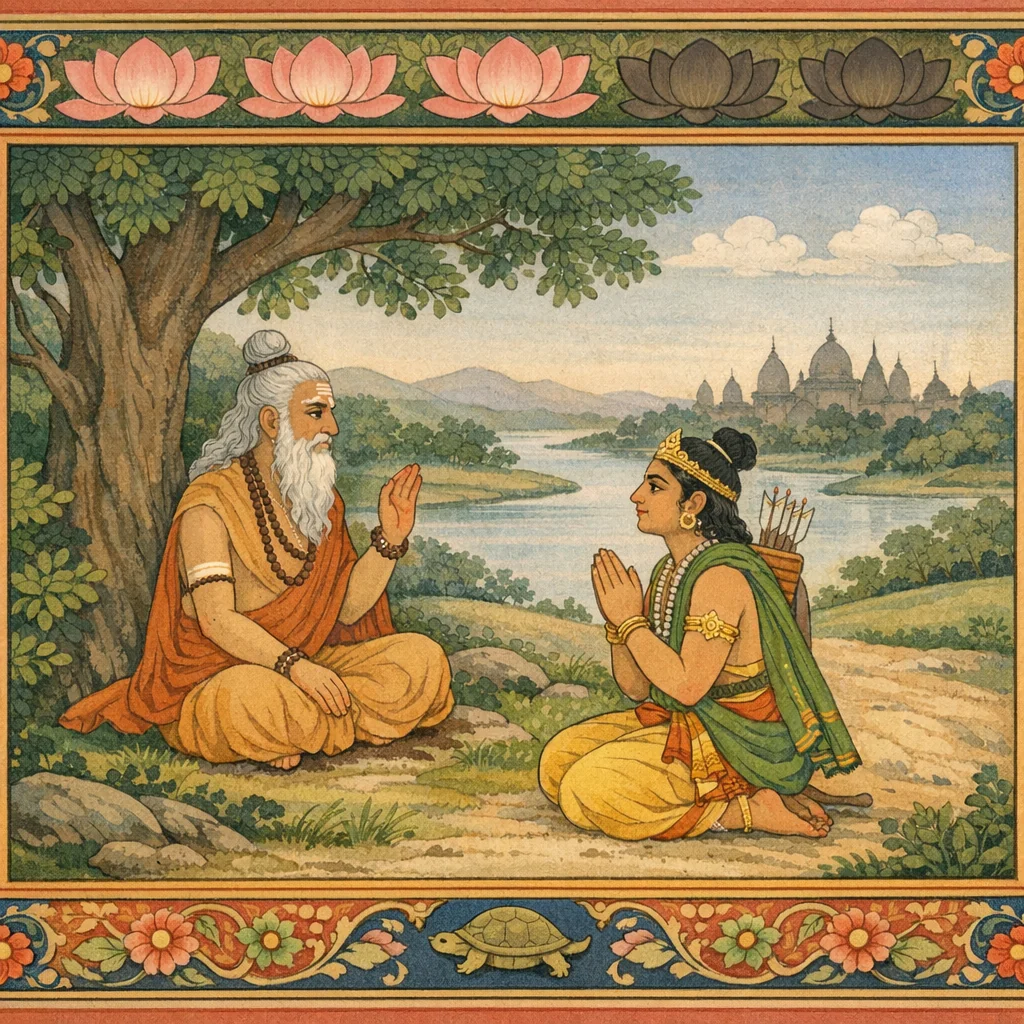
After Kṛṣṇa departs to His supreme abode, Arjuna—grief-stricken after completing the final rites—meets Vyāsa on the road and seeks counsel. Vyāsa declares the advent of the dreadful Kali-yuga and his resolve to go to Vārāṇasī, praised as the foremost refuge and expiation of sins in Kali. At Arjuna’s request he briefly sets forth yuga-dharma: the four ages and their chief disciplines (dhyāna in Kṛta, jñāna in Tretā, yajña in Dvāpara, and dāna in Kali), the presiding deities of each yuga, and the abiding validity of Rudra’s worship in all times. The chapter then describes dharma’s steady decline (from four “feet” to one) and the changing human condition—natural harmony in Kṛta; in Tretā the rise and loss of wish-fulfilling “house-trees,” the birth of greed, exposure to heat and cold, and the turn to coverings, trade, and agriculture. As social strife grows, Brahmā institutes kṣatriyas, varṇāśrama, and non-violent sacrifice. In Dvāpara, doctrinal fragmentation and the division of the Veda spread; disillusionment gives rise to reflection, vairāgya, and discriminative knowledge amid rajas and tamas. The chapter closes by reaffirming dharma’s destabilization in Dvāpara and its near-vanishing in Kali, preparing for further instruction on sustaining dharma in an age of decline.
Shlokas
Verse 1
इति श्रीकूर्मपुराणे षट्साहस्त्र्यां संहितायां पूर्वविभागे षड्विंशो ऽध्यायः ऋषय ऊचुः कृतं त्रेता द्वापरं च कलिश्चेति चतुर्युगम् / एषां स्वभावं सूताद्य कथयस्व समासतः
Thus, in the Śrī Kūrma Purāṇa, in the Ṣaṭsāhasrī Saṃhitā, in the Pūrva-bhāga—(here begins) the chapter. The sages said: “Kṛta, Tretā, Dvāpara, and Kali—these are the four ages (the caturyuga). O Sūta, tell us concisely the characteristic nature of each.”
Verse 2
सूत उवाच गते नारायणे कृष्णे स्वमेव परमं पदम् / पार्थः परमधर्मात्मा पाण्डवः शत्रुतापनः
Sūta said: When Nārāyaṇa—Kṛṣṇa—had departed to His own supreme abode, Pārtha (Arjuna), the Pāṇḍava of highest righteousness, the scorcher of enemies, (then…).
Verse 3
कृत्वा चेवोत्तरविधिं शोकेन महतावृतः / अपश्यत् पथि गच्छन्तं कृष्णद्वैपायनं मुनिम्
Having duly performed the concluding rites, and being enveloped by profound grief, he saw on the road the sage Kṛṣṇa-Dvaipāyana (Vyāsa) walking along.
Verse 4
शिष्यैः प्रशिष्यैरभितः संवृतं ब्रह्मवादिनम् / पपात दण्डवद् भूमौ त्यक्त्वा शोकं तदार्ऽजुनः
Then Arjuna—casting off his grief—prostrated himself like a staff upon the ground before that expounder of Brahman, who was surrounded on all sides by disciples and grand-disciples.
Verse 5
उवाच परमप्रीतः कस्माद् देशान्महामुने / इदानीं गच्छसि क्षिप्रं कं वा देशं प्रति प्रभो
Overjoyed, he said: “O great sage, from what region have you come? And now, why do you depart so quickly—toward which country are you going, O revered one?”
Verse 6
संदर्शनाद् वै भवतः शोको मे विपुलो गतः / इदानीं मम यत् कार्यं ब्रूहि पद्मदलेक्षण
Truly, by beholding you, my vast sorrow has departed. Now tell me what I should do, O lotus-petalled-eyed one.
Verse 7
तमुवाच महायोगी कृष्णद्वैपायनः स्वयम् / उपविश्य नदीतिरे शिष्यैः परिवृतो मुनिः
Then the great yogin Kṛṣṇa-Dvaipāyana (Vyāsa) himself spoke to him, seated on the riverbank, the sage surrounded by his disciples.
Verse 8
इदं कलियुगं घोरं संप्राप्तं पाण्डुनन्दन / ततो गच्छामि देवस्य वाराणसीं महापुरीम्
“This dreadful Kali age has now arrived, O son of Pāṇḍu. Therefore I shall depart for Vārāṇasī, the great sacred city of the Lord.”
Verse 9
अस्मिन् कलियुगे घोरे लोकाः पापानुवर्तिनः / भविष्यन्ति महापापा वर्णाश्रमविवर्जिताः
In this dreadful Kali-yuga, people will follow the path of sin; they will become greatly sinful, abandoning the disciplines of varṇa and āśrama—the traditional order of sacred duties.
Verse 10
नान्यत् पश्यामि जन्तूनांमुक्त्वा वाराणसीं पुरीम् / सर्वपापप्रशमनं प्रायश्चित्तं कलौ युगे
For living beings, I see no other expiation—apart from the city of Vārāṇasī—capable of quelling all sins in the Kali age.
Verse 11
कृतं त्रेता द्वापरं च सर्वेष्वेतेषु वै नराः / भविष्यन्ति महात्मानो धार्मिकाः सत्यवादिनः
In the Kṛta, Tretā, and Dvāpara ages—in all these yugas—there will indeed be men of great soul, righteous in conduct and devoted to truth.
Verse 12
त्वं हि लोकेषु विख्यातो धृतिमाञ् जनवत्सलः / पालयाद्य परं धर्मं स्वकीयं मुच्यसे भयात्
You are renowned among the worlds—steadfast and compassionate toward your people. Therefore protect now the highest Dharma, your own ordained duty; by this you will be freed from fear.
Verse 13
एवमुक्तो भगवता पार्थः परपुरञ्जयः / पृष्टवान् प्रणिपत्यासौ युगधर्मान् द्विजोत्तमाः
Thus addressed by the Blessed Lord, Pārtha—the conqueror of enemy cities—bowed down and then asked about the dharmas appropriate to the different yugas, O best of the twice-born.
Verse 14
तस्मै प्रोवाच सकलं मुनिः सत्यवतीसुतः / प्रणम्य देवमीशानं युगधर्मान् सनातनान्
Then the sage, the son of Satyavatī (Vyāsa), having bowed to the Lord Īśāna, expounded in full the eternal dharmas appropriate to the various yugas.
Verse 15
वक्ष्यामि ते समासेन युगधर्मान् नरेश्वर / न शक्यते मया पार्थ विस्तरेणाभिभाषितुम्
O king of men, I shall tell you in brief the duties proper to the ages (yuga-dharmas). O son of Pṛthā, I am not able to expound them in full detail.
Verse 16
आद्यं कृतयुगं प्रोक्तं ततस्त्रेतायुगं बुधैः / तृतीयं द्वापरं पार्थ चतुर्थं कलिरुच्यते
The first age is proclaimed as the Kṛta Yuga; thereafter the wise speak of the Tretā Yuga. The third is the Dvāpara, O Pārtha, and the fourth is called the Kali Yuga.
Verse 17
ध्यानं परं कृतयुगे त्रेतायां ज्ञानमुच्यते / द्वापरे यज्ञमेवाहुर्दानमेव कलौ युगे
In the Kṛta Yuga, the supreme discipline is meditation (dhyāna); in the Tretā, it is said to be spiritual knowledge (jñāna). In the Dvāpara, they declare sacrifice (yajña) to be foremost; and in the Kali Yuga, giving (dāna) alone is taught as the chief practice.
Verse 18
ब्रह्मा कृतयुगे देवस्त्रेतायां भगवान् रविः / द्वापरे दैवतं विष्णुः कलौ रुद्रो महेश्वरः
In the Kṛta Yuga, Brahmā is the presiding deity; in the Tretā Yuga, the blessed Sun, Ravi, is the Lord. In the Dvāpara Yuga, Viṣṇu is the deity to be worshipped; and in the Kali Yuga, Rudra—Maheśvara—is the presiding Lord.
Verse 19
ब्रह्मा विष्णुस्तथा सूर्यः सर्व एव कलिष्वपि / पूज्यते भगवान् रुद्रश्चतुर्ष्वपि पिनाकधृक्
Brahmā, Viṣṇu, and Sūrya—indeed all the deities—are worshipped in the four yugas; and in all four as well, the Blessed Lord Rudra, bearer of the Pināka bow, is worshipped.
Verse 20
आद्ये कृतयुगे धर्मश्चतुष्पादः सनातनः / त्रेतायुगे त्रिपादः स्याद् द्विपादो द्वापरे स्थितः / त्रिपादहीनस्तिष्ये तु सत्तामात्रेण तिष्ठति
In the first age, the Kṛta Yuga, the eternal Dharma stands upon all four feet. In the Tretā Yuga it becomes three-footed; in the Dvāpara it remains two-footed. But in the Tiṣya (Kali) age, bereft of three feet, it endures only by the bare fact of its existence.
Verse 21
कृते तु मिथुनोत्पत्तिर्वृत्तिः साक्षाद् रसोल्लसा / प्रजास्तृप्ताः सदा सर्वाः सदानन्दाश्च भोगिनः
In the Kṛta age, the union of male and female arose naturally, and the very way of life was directly suffused with rasa—vital sweetness and harmony. All beings were ever satisfied, and as enjoyers they remained continually joyful.
Verse 22
अधमोत्तमत्वं नास्त्यासां निर्विशेषाः पुरञ्जय / तुल्यमायुः सुखं रूपं तासां तस्मिन् कृते युगे
O Purañjaya, among them there is no sense of ‘inferior’ or ‘superior’; they are without distinction. In that Kṛta Yuga, their lifespan, happiness, and bodily form are all alike.
Verse 23
विशोकाः सत्त्वबहुला एकान्तबहुलास्तथा / ध्याननिष्ठास्तपोनिष्ठा महादेवपरायणाः
Free from grief, rich in sattva, delighting in solitude, steadfast in meditation and in austerity—such persons are wholly devoted to Mahādeva.
Verse 24
ता वै निष्कामचारिण्यो नित्यं मुदितमानसाः / पर्वतोदधिवासिन्यो ह्यनिकेतः परन्तप
They indeed move about free from selfish desire, their minds ever cheerful; dwelling among mountains and by the ocean, they are without any fixed home—O scorcher of foes.
Verse 25
रसोल्लासा कालयोगात् त्रेताख्ये नश्यते ततः / तस्यां सिद्धौ प्रणष्टायामन्या सिद्धिरवर्तत
By the conjunction of Time’s influence, the attainment called Rasollāsā then disappears in the age known as Tretā. When that siddhi is lost, another siddhi comes to prevail in its place.
Verse 26
अपां सौक्ष्म्ये प्रतिहते तदा मेघात्मना तु वै / मेघेभ्यः स्तनयित्नुभ्यः प्रवृत्तं वृष्टिसर्जनम्
When the waters’ subtle, vapor-like state is checked, they indeed assume the form of clouds; and from the thunder-bearing clouds the outpouring of rain begins.
Verse 27
सकृदेव तया वृष्ट्या संयुक्ते पृथिवीतले / प्रादुरासंस्तदा तासां वृक्षा वै गृहसंज्ञिताः
As soon as that rain touched the earth’s surface, there appeared trees—indeed called ‘houses’—as natural dwellings for them.
Verse 28
सर्वप्रत्युपयोगस्तु तासां तेभ्यः प्रजायते / वर्तयन्ति स्म तेभ्यस्तास्त्रेतायुगमुखे प्रजाः
From them, and through them, arises every practical use and mutual benefit; and at the dawn of the Tretā-yuga, people indeed ordered their life and society according to those institutions and duties.
Verse 29
ततः कालेन महता तासामेव विपर्यतात् / रागलोभात्मको भावस्तदा ह्याकस्मिको ऽभवत्
Then, after a long passage of time, through the very reversal (decline) of their condition, there suddenly arose in them a disposition marked by attachment and greed.
Verse 30
विपर्ययेण तासां तु तेन तत्कालभाविना / प्रणश्यन्ति ततः सर्वे वृक्षास्ते गृहसंज्ञिताः
But when their condition turns contrary—through that change belonging to that time—all those trees known as the ‘house-trees’ then perish entirely.
Verse 31
ततस्तेषु प्रनष्टेषु विभ्रान्ता मैथुनोद्भवाः / अभिध्यायन्ति तां सिद्धिं सत्याभिध्यायिनस्तदा
Then, when those supports had vanished, the beings born of sexual union—bewildered and astray—began to meditate upon that higher attainment; at that time they became contemplators of Truth.
Verse 32
प्रादुर्बभूवुस्तासां तु वृक्षास्ते गृहसंज्ञिताः / वस्त्राणि ते प्रसूयन्ते फलान्याभरणानि च
Then, for them there appeared trees known as “house-trees”; from these were produced garments, and their fruits too became ornaments.
Verse 33
तेष्वेव जायते तासां गन्धवर्णरसान्वितम् / अमाक्षिकं महावीर्यं पुटके पुटके मधु
From those very plant-essences arose honey endowed with fragrance, color, and taste—bee-less honey of great potency—appearing in each and every little cell or hollow of the plant.
Verse 34
तेन ता वर्तयन्ति स्म त्रेतायुगमुखे प्रिजाः / हृष्टपुष्टास्तया सिद्ध्या सर्वा वै विगतज्वराः
By that dharma and discipline the people lived and conducted themselves at the very dawn of the Tretā-yuga; and through that accomplished perfection they all became joyful and well-nourished, indeed wholly free from fever and affliction.
Verse 35
ततः कालान्तरेणैव पुनर्लोभावृतास्तदा / वृक्षांस्तान् पर्यगृह्णन्त मधु चामाक्षिकं बलात्
Then, after some time had passed, they were again enveloped by greed; they surrounded those trees and forcibly seized the honey and its store.
Verse 36
तासां तेनापचारेण पुनर्लोभकृतेन वै / प्रणष्टामधुना सार्धं कल्पवृक्षाः क्वचित् क्वचित्
Because of that offence committed against them—and again through greed—the wish-fulfilling Kalpavṛkṣa trees, along with their honey, vanished here and there.
Verse 37
शीतवर्षातपैस्तीव्रै स्ततस्ता दुः खिता भृशम् / द्वन्द्वैः संपीड्यमानास्तु चक्रुरावरणानि च
Tormented intensely by severe cold, rain, and scorching heat, they became greatly distressed; and, pressed on all sides by these pairs of opposites, they also fashioned coverings for protection.
Verse 38
कृत्वा द्वन्द्वप्रतीघातान् वार्तोपायमचिन्तयन् / नष्टेषु मधुना सार्धं कल्पवृक्षेषु वै तदा
Having countered the pairs of opposites and reflected on the means of livelihood and commerce, then—when the wish-fulfilling Kalpavṛkṣa trees had perished along with their honey—he set his mind on a practical course of action.
Verse 39
ततः प्रादुर्बभौ तासां सिद्धिस्त्रेतायुगे पुनः / वार्तायाः साधिका ह्यन्या वृष्टिस्तासां निकामतः
Thereafter, in the Tretā‑yuga, their siddhi—their means of accomplishment—manifested again. Another support of livelihood was vārtā, commerce and agriculture; and rains, according to their desire, came for them.
Verse 40
तासां वृष्ट्यूदकानीह यानि निम्नैर्गतानि तु / अवहन् वृष्टिसंतत्या स्त्रोतः स्थानानि निम्नगाः
Here, the rain-waters of those regions, having flowed down into the lower-lying tracts, were carried onward by the unbroken succession of rainfall; thus the lowlands became established as river-courses and channels.
Verse 41
ये पुनस्तदपां स्तोका आपन्नाः पृथिवीतले / अपां भूणेश्च संयोगादोषध्यस्तास्तदाभवन्
But those drops of that water which fell upon the face of the earth—through the union of the waters with the earth’s fertile substance—became medicinal herbs at that time.
Verse 42
अफालकृष्टाश्चानुप्ता ग्राम्यारण्याश्चतुर्दश / ऋतुपुष्पफलैश्चैव वृक्षगुल्माश्च जज्ञिरे
Without being ploughed or sown, fourteen classes of plants—both cultivated and forest-born—came into being; and trees and shrubs likewise arose, bearing flowers and fruits in their proper seasons.
Verse 43
ततः प्रादुरभूत् तासां रागो लोभश्च सर्वशः / अवश्यं भाविनार्ऽथे न त्रेतायुगवशेन वै
Then, in every way, attachment and greed arose among them; for what is destined to occur cannot be otherwise—indeed, it came to pass under the very influence of the Tretā-yuga.
Verse 44
ततस्ताः पर्यगृह्णन्त नदीक्षेत्राणि पर्वतान् / वृक्षगुल्मौषधीश्चैव प्रसह्य तु यथाबलम्
Then they proceeded to seize—by force and according to their respective strength—rivers, cultivated lands, mountains, and also trees, shrubs, and medicinal herbs.
Verse 45
विपर्ययेण तासां ता ओषध्यो विविशुर्महीम् / पितामहनियोगेन दुदोह पृथिवीं पृथुः
Then, in reverse order, those very herbs entered back into the earth; and, by the command of the Grandsire (Brahmā), King Pṛthu milked the Earth (Pṛthivī), drawing forth her yield.
Verse 46
ततस्ता जगृहुः सर्वा अन्योन्यं क्रोधमूर्छिताः / वसुदारधनाद्यांस्तु बलात् कालबलेन तु
Then all of them—delirious with anger—fell upon one another; and by sheer force they seized land, wives, wealth, and the like, truly driven by the overpowering might of Time (Kāla).
Verse 47
मर्यादायाः प्रतिष्ठार्थं ज्ञात्वैतद् भगवानजः / ससर्ज क्षत्रियान् ब्रह्मा ब्राह्मणानां हिताय च
Knowing this, the self-born Lord Brahmā (Aja) created the Kṣatriyas to establish the boundaries of dharma—social and moral order—and also for the welfare and protection of the Brāhmaṇas.
Verse 48
वर्णाश्रमव्यवस्थां च त्रेतायां कृतवान् प्रभुः / यज्ञप्रवर्तनं चैव पशुहिंसाविवर्जितम्
In the Tretā age, the Lord established the ordered system of varṇas and āśramas, and He also set in motion the practice of yajña—sacrifice free from the violence of animal-killing.
Verse 49
द्वापरेष्वथ विद्यन्ते मतिभेदाः सदा नृणाम् / रागो लोभस्तथा युद्धं तत्त्वानामविनिश्चयः
But in the Dvāpara age, differences of opinion are always found among people; passion (rāga) and greed arise, along with conflict and war, and there is no firm ascertainment of the true principles (tattvas).
Verse 50
एको वेदश्चतुष्पादस्त्रेतास्विह विधीयते / वेदव्यासैश्चतुर्धा तु व्यस्यते द्वापरादिषु
In this world, in the Tretā age the Veda is established as one, yet four-footed (fourfold); but in the Dvāpara age and the ages that follow, it is arranged into four divisions by the Veda-compilers, the Vyāsas.
Verse 51
ऋषिपुत्रैः पुनर्भेदाद् भिद्यन्ते दृष्टिविभ्रमैः / मन्त्रब्राह्मणविन्यासैः स्वरवर्णविपर्ययैः
Again, by further divisions made by the sons of the seers, the traditions are broken apart—through deluded understanding, through altered arrangement of the mantra and brāhmaṇa portions, and through reversals and errors in accent and phonemes.
Verse 52
संहिता ऋग्यजुः साम्नां संहन्यन्ते श्रुतर्षिभिः / सामान्याद् वैकृताच्चैवदृष्टिभेदैः क्वचित् क्वचित्
The Saṃhitā compilations of the Ṛg, Yajus, and Sāman are arranged by the seer-sages of Śruti; and in various places they become diversified through differences of viewpoint—both from what is common and from what is modified.
Verse 53
ब्राह्मणं कल्पसूत्राणि मन्त्रप्रवचनानि च / इतिहासपुराणानि धर्मशास्त्राणि सुव्रत
O you of excellent vows, the Brāhmaṇas, the Kalpa-sūtras, the expositions of Mantras, the Itihāsas and Purāṇas, and the Dharma-śāstras—these are the authoritative śāstras that uphold dharma.
Verse 54
अवृष्टिर्मरणं चैव तथैव वायाध्युपद्रवाः / वाङ्मनः कायजैर्दुः सैर्निर्वेदो जायते नृणाम्
From drought, from death, and likewise from calamities caused by violent winds, and from sufferings arising in speech, mind, and body—nirveda, disillusionment with the world, is born in human beings.
Verse 55
निर्वेदाज्जायते तेषां दुः खमोक्षविचारणा / विचारणाच्च वैराग्यं वैराग्याद् दोषदर्शनम्
From nirveda arises in them reflection on suffering and mokṣa, liberation; from that reflection comes vairāgya, dispassion, and from dispassion arises doṣa-darśana, clear seeing of the faults of worldly life.
Verse 56
दोषाणां दर्शनाच्चैव द्वापरे ज्ञानसंभवः / एषा रजस्तमोयुक्ता वृत्तिर्वै द्वापरे स्मृता
Indeed, because faults are perceived, in the Dvāpara age discriminative knowledge (viveka) arises. This way of life—mingled with rajas and tamas—is remembered as the characteristic disposition of Dvāpara.
Verse 57
आद्ये कृते तु धर्मो ऽस्ति स त्रेतायां प्रवर्तते / द्वापरे व्याकुलीभूत्वा प्रणश्यति कलौ युगे
In the first age—Kṛta—Dharma truly stands firm; in Tretā it continues to operate. In Dvāpara it becomes disturbed and unstable, and in the age of Kali it nearly perishes.
Frequently Asked Questions
Kṛta: meditation (dhyāna); Tretā: spiritual knowledge (jñāna); Dvāpara: sacrifice (yajña); Kali: giving/charity (dāna) as the chief discipline.
Dharma is said to stand fully in Kṛta (four-footed), decline to three in Tretā, two in Dvāpara, and in Kali remain only minimally—deprived of three supports—indicating near-collapse of stable righteousness.
Vyāsa states he sees no other expiation in Kali comparable to Vārāṇasī for quelling sins, presenting it as a uniquely potent tīrtha when ordinary disciplines weaken due to yuga conditions.
It assigns yuga-wise presiding deities (Brahmā in Kṛta, Sūrya in Tretā, Viṣṇu in Dvāpara, Rudra in Kali) while also affirming that multiple deities are worshipped in all yugas and that Rudra is worshipped in all four.
As greed and attachment arise, beings seize resources and fight over land, wives, and wealth; in response Brahmā institutes kṣatriyas to protect order and establishes varṇāśrama and regulated sacrifice to stabilize dharma.