Adhyaya 20
Ikṣvāku-vaṃśa (Genealogy) culminating in Rāma; Setu-liṅga Māhātmya; Continuation through Kuśa and Lava
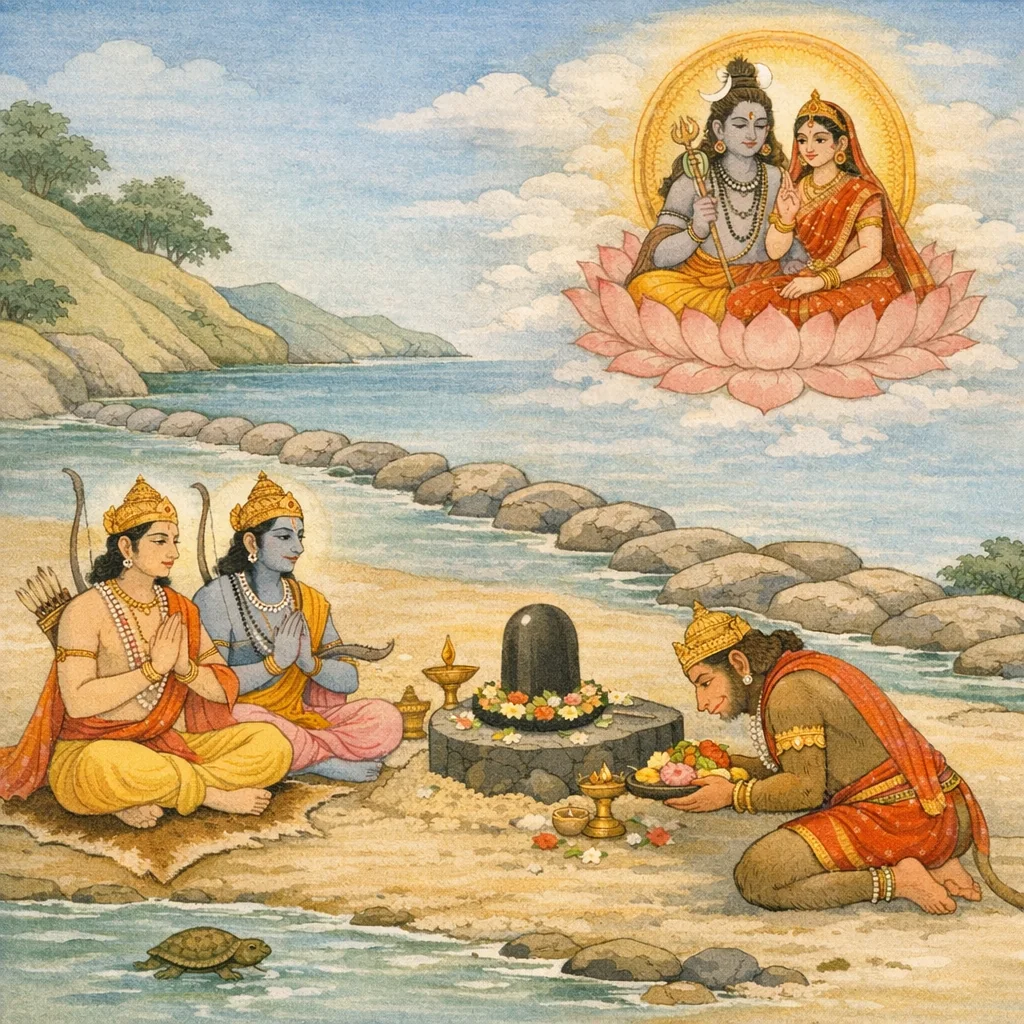
The chapter continues the Purāṇic historical stream, listing the Ikṣvāku line from Tridhanvā through Sagara and Bhagīratha, and highlighting Gaṅgā’s descent upheld by Śiva. The genealogy reaches Raghu, Daśaratha, and Rāma, then briefly recounts key Rāmāyaṇa events: Sītā’s svayaṃvara and the breaking of the bow, Kaikeyī’s boon and Rāma’s exile, Sītā’s abduction, alliance with Sugrīva, Hanumān’s mission, the bridge to Laṅkā, and Rāvaṇa’s death. The narrative then turns to tīrtha-foundation: at Setu, Rāma installs a liṅga and worships Mahādeva; Śiva appears with Pārvatī and grants boons—darśana and ocean-bathing there destroy sins, rites performed there become imperishable, and Śiva will abide there as long as the world endures. It concludes with Rāma’s righteous reign, Aśvamedha-linked worship of Śaṅkara, the continuation of the line through Kuśa and Lava, and a promise of the fruit of hearing the Ikṣvāku genealogy, preparing for further dynastic or dharma narration.
Shlokas
Verse 1
इति श्रीकूर्मपुराणे षट्साहस्त्र्यां संहितायां पूर्वविभागे एकोनविशो ऽध्यायः सूत उवाच त्रिधन्वा राजपुत्रस्तु धर्मेणापालयन्महीम् / तस्य पुत्रो ऽभवद् विद्वांस्त्रय्यारुण इति स्मृतः
Thus, in the Śrī Kūrma Purāṇa—within the Ṣaṭsāhasrī Saṃhitā, in the Pūrvabhāga—(the chapter colophon is concluded). Sūta said: The prince Tridhanvā ruled the earth in accordance with dharma; and his son, a learned man, was known by the name Trayyāruṇa.
Verse 2
तस्य सत्यव्रतो नाम कुमारो ऽभून्महाबलः / भार्या सत्यधना नाम हरिश्चन्द्रमजीजनत्
He had a mighty son named Satyavrata. Satyavrata’s wife, named Satyadhanā, gave birth to Hariścandra.
Verse 3
हरिश्चन्द्रस्य पुत्रो ऽभूद् रोहितो नाम वीर्यवान् / हरितो रोहितस्याथ धुन्धुस्तस्य सुतो ऽभवत्
Hariścandra had a son named Rohita, a hero of great valor. Rohita’s son was Harita, and Harita’s son was Dhundhu.
Verse 4
विजयश्च सुदेवश्च धुन्धुपुत्रौ बभूवतुः / विजयस्याभवत् पुत्रः कारुको नाम वीर्यवान्
Dhundhu had two sons—Vijaya and Sudeva. From Vijaya was born a son named Kāruka, a man of great valor.
Verse 5
कारुकस्य वृकः पुत्रस्तस्माद् बाहुरजायत / सगरस्तस्य पुत्रौऽभूद् राजा परमधार्मिकः
Kāruka had a son named Vṛka; from him was born Bāhu. And Bāhu’s son was Sagara, the king famed as supremely righteous.
Verse 6
द्वे भार्ये सगरस्यापि प्रभा भानुमती तथा / ताभ्यामाराधितः प्रादादौर्वाग्निर्वरमुत्तमम्
King Sagara too had two wives—Prabhā and Bhānumatī. Pleased by the worship offered by both, the sage Aurva—embodied as the fiery power (Aurvāgni)—granted them an excellent boon.
Verse 7
एकं भानुमती पुत्रमगृह्णादसमञ्जसम् / प्रभा षष्टिसहस्त्रं तु पुत्राणां जगृहे शुभा
Bhānumatī bore a single son—Asamañjasa; while the auspicious lady Prabhā gave birth to sixty thousand sons.
Verse 8
असमञ्सस्य तनयो ह्यंशुमान् नाम पार्थिवः / तस्य पुत्रो दिलीपस्तु दिलीपात् तु भगीरथः
Asamañjasa’s son was the king named Aṃśumān. His son was Dilīpa; and from Dilīpa was born Bhagīratha.
Verse 9
येन भागीरथी गङ्गा तपः कृत्वावतारिता / प्रसादाद् देवदेवस्य महादेवस्य धीमतः
By the grace of the wise Mahādeva, the God of gods—after austerities were performed—the Bhāgīrathī Gaṅgā was brought down into the world.
Verse 10
भगीरथस्य तपसा देवः प्रीतमना हरः / बभार शिरसा गङ्गां सोमान्ते सोमभूषणः
Pleased at heart by Bhagiratha’s austerity, Lord Hara (Śiva) bore the Gaṅgā upon his head—he whose crest is adorned with the Moon.
Verse 11
भगीरथसुतश्चापि श्रुतो नाम बभूव ह / नाभागस्तस्य दायादः सिन्धुद्वीपस्ततो ऽभवत्
It is said that Bhagīratha’s son was named Śruta. His heir was Nābhāga, and thereafter, in that lineage, Sindhudvīpa was born.
Verse 12
अयुतायुः सुतस्तस्य ऋतुपर्णस्तु तत्सुतः / ऋतुपर्णस्य पुत्रो ऽभूत् सुदासो नाम धार्मिकाः / सौदासस्तस्य तनयः ख्यातः कल्माषपादकः
His son was Ayutāyu; Ayutāyu’s son was Ṛtuparṇa. Ṛtuparṇa had a righteous son named Sudāsa; and Sudāsa’s son was renowned as Saudāsa, also called Kalmāṣapāda.
Verse 13
वसिष्ठस्तु महातेजाः क्षेत्रे कल्माषपादके / अश्मकं जनयामसा तमिक्ष्वाकुकुलध्वजम्
Then the radiant sage Vasiṣṭha, in the kṣetra (consort) of Kalmāṣapāda, begot Aśmaka—who became a banner of the Ikṣvāku dynasty.
Verse 14
अश्मकस्योत्कलायां तु नकुलो नाम पार्थिवः / स हि रामभयाद् राजा वनं प्राप सुदुः खितः
In Utkalā, within Aśmaka’s realm, there was a king named Nakula. Stricken with fear of Rāma, that ruler—deeply afflicted—went into the forest.
Verse 15
विभ्रत् स नारीकवचं तस्माच्छतरथो ऽभवत् / तस्माद् बिलिबिलिः श्रीमान्वृद्धशर्माचतत्सुतः
Bearing the nārī-kavaca, a women’s protective cuirass, from him was born Śataratha. From Śataratha arose the illustrious Bilibili; and Vṛddhaśarman too was his son.
Verse 16
तस्माद् विश्वसहस्तस्मात् खट्वाङ्ग इति विश्रुतः / दीर्घबाहुः सुतस्तस्य रघुस्तस्मादजायत
From that Viśvasaha was born one renowned as Khaṭvāṅga. His son was Dīrghabāhu; and from him was born Raghu.
Verse 17
रघोरजः समुत्पन्नो राजा दशरथस्ततः / रामो दाशरथिर्वोरो धर्मज्ञो लोकविश्रुतः
From Raghu’s royal line arose King Daśaratha; and from him was born Rāma, Daśaratha’s heroic son—knower of dharma and renowned throughout the worlds.
Verse 18
भरतो लक्ष्मणश्चैव शत्रुघ्नश्च महाबलः / सर्वे शक्रसमा युद्धे विष्णुशक्तिसमन्विताः / जज्ञे रावणनाशार्थं विष्णुरंशेन विश्वकृत्
Bharata, Lakṣmaṇa, and mighty Śatrughna were born—all equal to Indra in battle and endowed with the power of Viṣṇu. And for the destruction of Rāvaṇa, the Creator of the world himself took birth as a portion of Viṣṇu.
Verse 19
रामस्य सुभगा भार्या जनकस्यात्मजा शुभा / सीता त्रिलोकविख्याता शीलौदार्यगुणान्विता
Sītā—Rāma’s fortunate wife, the auspicious daughter of King Janaka—is renowned throughout the three worlds, endowed with the virtues of noble conduct and magnanimity.
Verse 20
तपसा तोषिता देवी जनकेन गिरीन्द्रजा / प्रायच्छज्जानकीं सीतां राममेवाश्रिता पतिम्
Pleased by King Janaka’s austerities, the goddess—daughter of the lord of mountains—bestowed Jānakī Sītā, who had accepted Rāma alone as her husband and refuge.
Verse 21
प्रीतश्च भगवानीशस्त्रिशूली नीललोहितः / प्रददौ शत्रुनाशार्थं जनकायाद्भुतं धनुः
Pleased, the Blessed Lord Īśa—bearing the trident, the blue-and-red-hued Rudra—bestowed upon King Janaka a wondrous bow, meant for the destruction of enemies.
Verse 22
स राजा जनको विद्वान् दातुकामः सुतामिमाम् / अघोषयदमित्रघ्नो लोके ऽस्मिन् द्विजपुङ्गवाः
O foremost of Brahmins, that wise King Janaka—eager to give away this daughter in marriage—had it proclaimed throughout this world; that slayer of foes made the announcement everywhere.
Verse 23
इदं धनुः समादातुं यः शक्नोति जगत्त्रये / देवो वा दानवो वापि स सीतां लब्धुमर्हति
Whoever, in all the three worlds, is able to take up this bow—whether a god or even a demon—he is worthy to win Sītā.
Verse 24
विज्ञाय रामो बलवान् जनकस्य गृहं प्रभुः / भञ्जयामास चादाय गत्वासौ लीलयैव हि
Knowing the matter, the mighty Lord Rāma went to King Janaka’s house; taking up the bow, he broke it—truly as if in mere play.
Verse 25
उद्ववाह च तां कन्यां पार्वतीमिव शङ्करः / रामः परमधर्मात्मा सेनामिव च षण्मुखः
And Rāma—whose very nature was supreme righteousness—married that maiden, just as Śaṅkara wed Pārvatī; and he bore her along as Skanda (Ṣaṇmukha) bears his army.
Verse 26
ततो बहुतिथे काले राजा दशरथः स्वयम् / रामं ज्येष्ठं सुतं वीरं राजानं कर्तुमारभत्
Then, after a long time had passed, King Daśaratha himself began the undertaking of installing Rāma—his eldest and heroic son—as king.
Verse 27
तस्याथ पत्नी सुभगा कैकेयी चारुभाषिणी / निवारयामास पतिं प्राह संभ्रान्तमानसा
Then his wife—fortunate Kaikeyī, sweet of speech—restrained her husband and, with an agitated mind, spoke to him.
Verse 28
मत्सुतं भरतं वीरं राजानं कर्तुमर्हसि / पूर्वमेव वरो यस्माद् दत्तो मे भवता यतः
You should make my son, the valiant Bharata, the king—because earlier you had already granted me this boon.
Verse 29
स तस्या वचनं श्रुत्वा राजा दुः खितमानसः / बाढमित्यब्रवीद् वाक्यं तथा रामो ऽपि धर्मवित्
Hearing her words, the king, his mind burdened with sorrow, replied, “So be it.” In the same way, Rāma too, the knower of dharma, gave his assent.
Verse 30
प्रणम्याथ पितुः पादौ लक्ष्मणेन सहाच्युतः / ययौ वनं सपत्नीकः कृत्वा समयमात्मवान्
Then, having bowed at his father’s feet, the infallible one—accompanied by Lakṣmaṇa—departed for the forest with his wife, the self-controlled hero having kept the pledged agreement.
Verse 31
संवत्सराणां चत्वारि दश चैव महाबलः / उवास तत्र मतिमान् लक्ष्मणेन सह प्रभुः
For fourteen years, that mighty and discerning Lord dwelt there together with Lakṣmaṇa.
Verse 32
कदाचिद् वसतो ऽरण्ये रावणो नाम राक्षसः / परिव्राजकवेषेण सीतां हृत्वा ययौ पुरीम्
Once, while they were dwelling in the forest, a rākṣasa named Rāvaṇa—disguised in the guise of a wandering mendicant—abducted Sītā and went away to his city.
Verse 33
अदृष्ट्वा लक्ष्मणो रामः सीतामाकुलितेन्द्रियौ / दुः खशोकाभिसंतप्तौ बभूवतुररिन्दमौ
Not seeing Sītā, Rāma and Lakṣmaṇa—masters of their foes—became distraught in their senses, scorched by sorrow and grief.
Verse 34
ततः कदाचित् कपिना सुग्रीवेण द्विजोत्तमाः / वानराणामभूत् सख्यं रामस्याक्लिष्टकर्मणः
Then, at a certain time, O best of the twice-born, Rāma—whose deeds never grow weary—entered into friendship with Sugrīva, lord among the Vānara, and thus gained the alliance of the Vānara hosts.
Verse 35
सुग्रीवस्यानुगो वीरो हनुमान् न्म वानरः / वायुपुत्रौ महातेजा रामस्यासीत् प्रियः सदा
The heroic Vānara named Hanumān was an attendant of Sugrīva. Born as the son of Vāyu and endowed with great splendour, he was always dear to Rāma.
Verse 36
स कृत्वा परमं धैर्यं रामाय कृतनिश्चयः / आनयिष्यामि तां सीतामित्युक्त्वा विचचार ह
Summoning the highest courage and forming a firm resolve for Rāma’s cause, he declared, “I will bring Sītā back,” and then set forth to act.
Verse 37
महीं सागरपर्यन्तां सीतादर्शनतत्परः / जगाम रावणपुरीं लङ्कां सागरसंस्थिताम्
Intent on beholding Sītā, he traversed the earth up to the ocean’s edge and went to Laṅkā—the city of Rāvaṇa—situated amid the sea.
Verse 38
तत्राथ निर्जने देशे वृक्ष्मूले शुचिस्मिताम् / अपश्यदमलां सीतां राक्षसीभिः समावृताम्
There, in a lonely place, at the foot of a tree, he beheld the pure Sītā—her smile still gentle—surrounded on all sides by rākṣasī women.
Verse 39
अश्रुपूर्णेक्षणां हृद्यां संस्मरन्तीमनिन्दिताम् / राममिन्दीवरश्यामं लक्ष्मणं चात्मसंस्थितम्
With eyes brimming with tears, she—faultless and tender of heart—kept recalling Rāma, dark as a blue lotus, and Lakṣmaṇa, steadfast and composed within himself.
Verse 40
निवेदयित्वा चात्मानं सीतायै रहसि स्वयम् / असंशयाय प्रददावस्यै रामाङ्गुलीयकम्
Having privately revealed his identity to Sītā, he gave her Rāma’s ring, so that she might be free from all doubt.
Verse 41
दृष्ट्वाङ्गुलीयकं सीता पत्युः परमशोभनम् / मेने समागतं रामं प्रीतिविस्फारितेक्षणा
Seeing her husband’s supremely beautiful signet-ring, Sītā—her eyes widened with joy—believed that Rāma had indeed arrived.
Verse 42
समाश्वास्य तदा सीतां दृष्ट्वा रामस्य चान्तिकम् / नयिष्ये त्वां महाबाहुरुक्त्वा रामं ययौ पुनः
Then, having reassured Sītā and seeing Rāma close by, the mighty-armed one said, “I shall take you safely to him,” and went again to Rāma.
Verse 43
निवेदयित्वा रामाय सीतादर्शनमात्मवान् / तस्थौ रामेण पुरतो लक्ष्मणेन च पूजितः
Having reported to Rāma that he had seen Sītā, the self-possessed one stood before Rāma, honored by Lakṣmaṇa as well.
Verse 44
ततः स रामो बलवान् सार्धं हनुमता स्वयम् / लक्ष्मणेन च युद्धाय बुद्धिं चक्रे हि रक्षसाम्
Then the mighty Rāma—together with Hanumān himself and with Lakṣmaṇa—resolved upon the course of battle against the rākṣasas.
Verse 45
कृत्वाथ वानरशतैर्लङ्कामार्गं महोदधेः / सेतुं परमधर्मात्मा रावणं हतवान् प्रभुः
Then, having had a passage to Laṅkā made across the great ocean by hundreds of vānaras, the Lord—supremely devoted to dharma—constructed the Setu and slew Rāvaṇa.
Verse 46
सपत्नीकं च ससुतं सभ्रातृकमरिदमः / आनयामास तां सीतां वायुपुत्रसहायवान्
With the Wind-god’s son as his helper, the foe-subduer brought Sītā back, together with her co-wife, her son, and her brother.
Verse 47
सेतुमध्ये महादेवमीशानं कृत्तिवाससम् / स्थापयामास लिङ्गस्थं पूजयामास राघवः
In the midst of the Setu, Rāghava (Rāma) installed Mahādeva—Īśāna, the Lord clad in a hide—present there as a liṅga, and he worshipped Him.
Verse 48
तस्य देवो महादेवः पार्वत्या सह शङ्करः / प्रत्यक्षमेव भगवान् दत्तवान् वरमुत्तमम्
For him, Mahādeva—Śaṅkara, together with Pārvatī—appeared directly, and that Blessed Lord granted the highest boon.
Verse 49
यत् त्वया स्थापितं लिङ्गं द्रक्ष्यन्तीह द्विजातयः / महापातकसंयुक्तास्तेषां पापं विनश्यतु
May the sin of the twice-born who behold here the liṅga established by you—though burdened with great transgressions—be destroyed.
Verse 50
अन्यानि चैव पापानि स्नातस्यात्र महोदधौ / दर्शनादेव लिङ्गसल्य नाशं यान्ति न संशयः
For one who bathes here in the Great Ocean, other sins as well are destroyed; and merely by seeing this sacred sign and place, the thorn-like affliction connected with the liṅga is removed—of this there is no doubt.
Verse 51
यावत् स्थास्यन्ति गिरयो यावदेषा च मेदिनी / यावत् सेतुश्च तावच्च स्थास्याम्यत्र तिरोहितः
So long as the mountains endure, so long as this earth remains, and so long as the sacred Setu stands—so long indeed shall I abide here, concealed from ordinary sight.
Verse 52
स्नानं दानं जपः श्राद्धं भविष्यत्यक्ष्यं कृतम् / स्मरणादेव लिङ्गस्य दिनपापं प्रणश्यति
Bathing, charity, mantra-recitation, and ancestral śrāddha rites become imperishable in their fruit; and merely by remembering the Liṅga, the sins accumulated in a day are destroyed.
Verse 53
इत्युक्त्वा भगवाञ्छंभुः परिष्वज्य तु राघवम् / सनन्दी सगणो रुद्रस्तत्रैवान्तरधीयत
Having spoken thus, the Blessed Lord Śambhu embraced Rāghava; then Rudra—accompanied by Nandī and his attendant hosts of gaṇas—vanished from that very place.
Verse 54
रामो ऽपि पालयामास राज्यं धर्मपरायणः / अभिषिक्तो महातेजा भरतेन महाबलः
Rāma too governed the kingdom, wholly devoted to dharma; and that mighty hero, radiant with great splendor, was consecrated as king by Bharata, the great-armed one.
Verse 55
विशेषाढ् ब्राह्मणान् सर्वान् पूजयामसचेश्वरम् / यज्ञेन यज्ञहन्तारमश्वमेधेन शङ्करम्
Therefore, with special reverence, we honored all the Brāhmaṇas—and along with them, the Lord. By sacrifice (yajña) we worshiped Śaṅkara, who upholds the rite and can also bring sacrifice to an end; and especially through the Aśvamedha we adored him.
Verse 56
रामस्य तनयो जज्ञे कुश इत्यभिविश्रुतः / लवश्च सुमहाभागः सर्वतत्त्वार्थवित् सुधीः
To Rāma was born a son famed by the name Kuśa; and (another) Lava—most fortunate—wise and discerning, a knower of the meanings of all principles (tattvas) and their true import.
Verse 57
अतिथिस्तु कुशाज्जज्ञे निषधस्तत्सुतो ऽभवत् / नलस्तु निषधस्याभून्नभस्तमादजायत
From Kuśa was born Atithi; his son was Niṣadha. From Niṣadha was born Nala, and from him was born Nabhas.
Verse 58
नभसः पुण्डरीकाख्यः क्षेमधन्वा च तत्सुतः / तस्य पुत्रो ऽभवद् वीरो देवानीकः प्रतापवान्
From Nabhas was born one named Puṇḍarīka; and his son was Kṣemadhanvan. From him, in turn, was born a heroic son—Devānīka, renowned for his prowess.
Verse 59
अहीनगुस्तस्य सुतो सहस्वांस्तत्सुतो ऽभवत् / तस्माच्चन्द्रावलोकस्तु तारापीडस्तु तत्सुतः
From Ahīnagu was born a son named Sahasvān; thereafter his son was born. From him arose Candrāvaloka, and Candrāvaloka’s son was Tārāpīḍa.
Verse 60
तारापीडाच्चन्द्रगिरिर्भानुवित्तस्ततो ऽभवत् / श्रुतायुरभवत् तस्मादेते इक्ष्वाकुवंशजाः / सर्वे प्राधान्यतः प्रोक्ताः समासेन द्विजोत्तमाः
From Tārāpīḍa was born Candragiri; from him arose Bhānuvitta. From Bhānuvitta came Śrutāyu. Thus these are descendants of the Ikṣvāku line. All of them, O best of the twice-born, have been stated in brief as the principal figures.
Verse 61
य इमं शृणुयान्नित्यमिक्ष्वाकोर्वंशमुत्तमम् / सर्वपापविनिर्मुक्तो स्वर्गलोके महीयते
Whoever regularly listens to this excellent lineage of Ikṣvāku becomes freed from all sins and is honoured in the heavenly world.
Frequently Asked Questions
It functions as a compact Ikṣvāku genealogy and Rāma-cycle synopsis, culminating in a Setu-liṅga tīrtha-māhātmya that foregrounds Śiva’s grace within a Vaiṣṇava avatāra narrative—an emblematic Purāṇic samanvaya.
Śiva grants that darśana of the liṅga destroys even heavy sins; bathing in the ocean there removes other sins; acts like bathing, charity, japa, and śrāddha become imperishable in result; and mere remembrance of the liṅga destroys daily accumulated sins.