Adhyaya 78
Rudrākṣa-maṇi Lakṣaṇas: Origin in the Narmadā and Auspicious Color-Signs
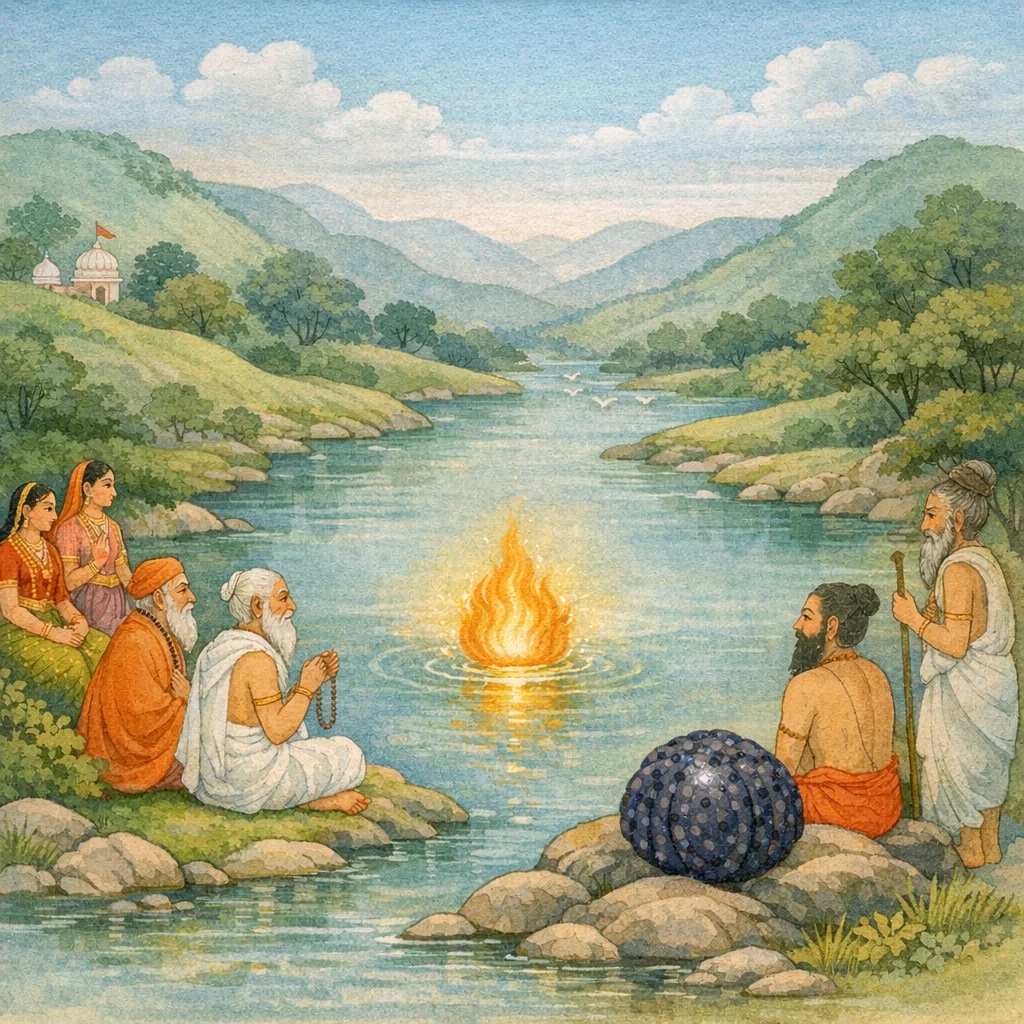
Continuing the Ācāra Khaṇḍa’s practical-spiritual teaching on sacred observances and consecrated materials, Sūta recounts an origin episode: a being takes the form of fire and, fulfilling a Dānava’s intent, casts that force into the low-lying tracts of the Narmadā. From there the rudrākṣa-gem (rudrākṣa-maṇi) manifests with clear marks—indragopa-like speckling, a slight parrot-tinged curvature, and a size like the pīlu fruit—while stressing that many outward varieties share one essential nature. The chapter then turns to omens: an exceedingly pure ‘paṭala’ (film), pale like the mid-month moon, is counted among auspicious signs; it may appear sapphire-like, bringing prosperity and attendants, and is also said to take on a vajra-like hue. This sets the stage for later sections that link ritual objects and visible signs with dharmic results and worldly-spiritual welfare.
Shlokas
Verse 1
सप्तसप्ततितमो ऽध्यायः सूत उवाच / हुतभुग्रूपमादाय दानवस्य यथेप्सितम् / नर्मदायां निचिक्षेप किञ्चिद्धीनादिभूमिषु
Sūta said: Taking on the form of fire and acting as the Dānava desired, he cast it into the Narmadā, in certain low-lying and similar tracts of land.
Verse 2
तत्रेन्द्रगोपकलितं शुकवक्रवर्णं संस्थानतः प्रकटपीलुसमानमात्रम् / नानाप्रकारविहितं रुधिराक्ष(ख्य) रत्नमुद्धृत्य तस्य खलु सर्वसमानमेव
There, the rudrākṣa-gem—speckled like the indragopa insect and tinged with a slightly curved, parrot-like hue—appears in form and size like the clearly seen pīlu fruit. Though fashioned in many varieties, when one takes up the so‑called “rudhirākṣa/rudrākṣa” jewel, its essential nature is indeed the same in all.
Verse 3
मध्येन्दुपाण्डुरमतीव विशुद्धवर्णं तच्चेन्द्रनीलसदृशं पटलं तुले स्यात् / सैश्वर्यभृत्यजननं कथितं तदैव पक्रञ्च तत्किल भवेत्सुरवज्रवर्णम्
A film (paṭala), exceedingly pure in hue—pale like the mid-moon—when it appears, is weighed among the signs as resembling indranīla, sapphire. It is said to bring prosperity and attendants; and further, that very state is declared to take on the color of the gods’ vajra, the thunderbolt.
Frequently Asked Questions
The text highlights visible lakṣaṇas: speckling like the indragopa insect, a parrot-like hue with slight curvature, and a form/size comparable to the clearly seen pīlu fruit—while noting that despite many varieties, the essential nature is regarded as the same.
A very pure, pale ‘paṭala’ likened to the mid-moon is treated as an auspicious sign; in the reckoning of signs it may appear sapphire-like (indranīla) and is said to cause prosperity and attendants, with the condition also described as taking on a vajra-like hue—marking elevated auspiciousness and support.