Adhyaya 40
Māheśvara-pūjā-vidhi: Nyāsa, Maṇḍala-āvāhana, Kalā-salutations, and Upacāra Worship
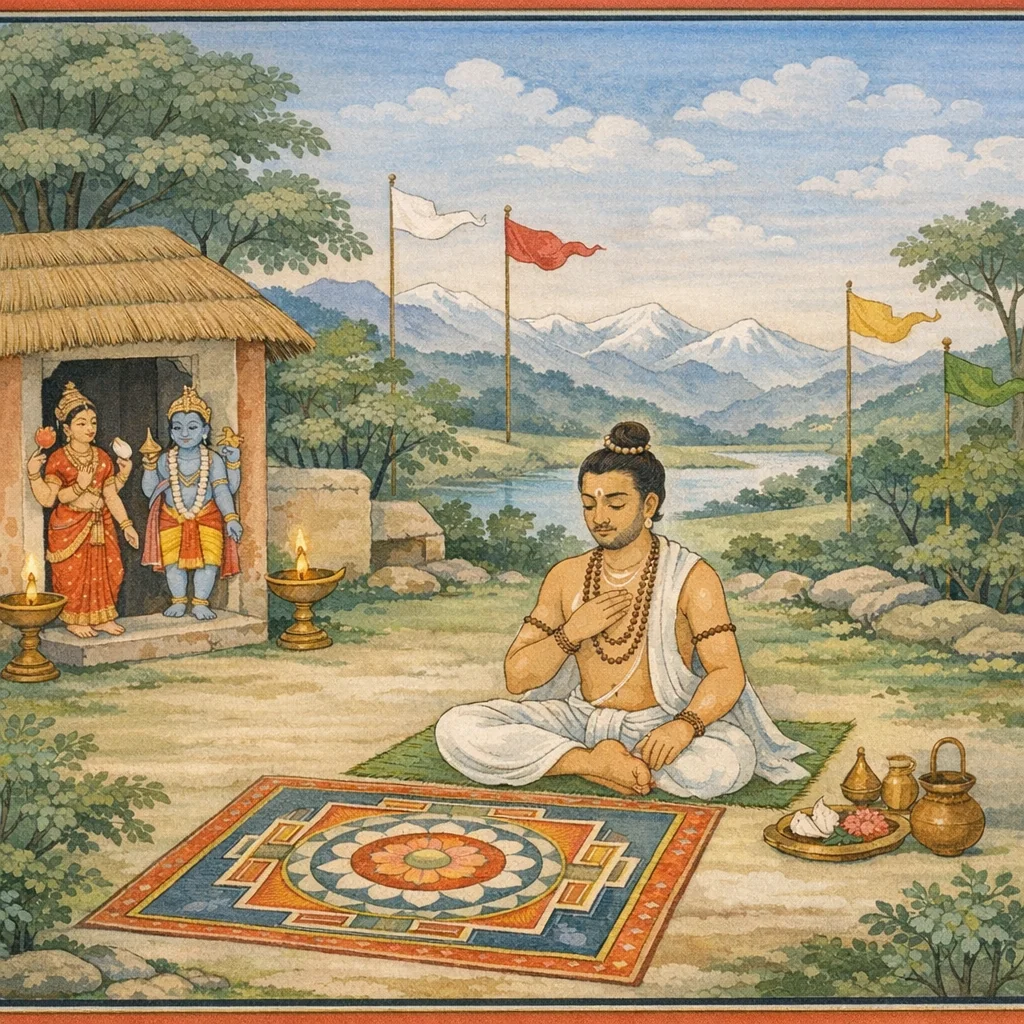
Continuing the instructional dialogue, Śaṅkara asks Hari to teach the Maheśvara-worship that grants siddhi. Hari gives a stepwise ritual outline: bathe and perform ācāmana, take the seat, do nyāsa, and worship Maheśvara in a maṇḍala by invoking Hara with his retinue. The rite expands through repeated “hāṃ” bīja-salutations to seat and doorway deities (Gaṇapati, Sarasvatī, Nandin, Mahākāla, Gaṅgā, Lakṣmī, Mahākālī, Astra) and a broad protective-theological grid (Vāstu-lord Brahmā, gurus, tattvic supports, chandas, śaktis, and aṅga-devatās). It then lists the kalās—eight aspects of Satya and sets linked to Vāmadeva, Tatpuruṣa, Aghora, and Īśāna—followed by salutations to dikpālas and cosmic lords. Finally it prescribes the core pūjā acts (invocation, making-present, withdrawal, consolidation), tattva-nyāsa, mudrās, meditation, and the full upacāra cycle (incense, lamp, naivedya, music, dance), concluding that root-mantra japa and this Māheśī rite are sin-destroying Rudra-worship and a preparation for later sections on fruits and safeguards.
Shlokas
Verse 1
नामैकोनचत्वारिंशो ऽध्यायः शङ्कर उवाच / माहेश्वरीं च मे पूजां वद शङ्खगदाधर / यां ज्ञात्वा मानवाः सिद्धिं गच्छन्ति परमेश्वर
Chapter Thirty-Nine. Śaṅkara said: “O bearer of the conch and mace, tell me of the Māheśvarī worship of Maheśvara; by knowing it, human beings attain siddhi, O Supreme Lord.”
Verse 2
हरिरुवाच / शृणु माहेश्वरीं पूजां कथ्यमानां वृषध्वज / आदौ स्नात्वा तथाचम्य ह्यासने चोपविश्य च
Hari said: “O Vṛṣadhvaja (Śiva), listen to the Māheśvarī worship as it is taught. First, having bathed and then performed ācamana (ritual sipping for purification), one should sit upon a seat.”
Verse 3
न्यासं कृत्वा मण्डले वै पूजयच्चे महेश्वरम् / मन्त्रैरेतैर्महेशान परिवारयुतं हरम्
Having performed nyāsa, one should worship Maheśvara within the ritual maṇḍala. With these mantras one invokes Hara—Maheśāna—together with his attendant retinue.
Verse 4
ॐ हां शिवासनदेवता आगच्छतेति / अनेनावाहयेद्रुद्र देवता आसनस्य याः
“Om hāṃ—‘O deities of Śiva’s seat, come!’” With this mantra one should invoke the Rudra-related deities who preside over the ritual seat.
Verse 5
ॐ हां गणपतये नमः / ॐ हां सरस्वत्यै नमः / ॐ हां नन्दिने नमः / ॐ हां महाकालाय नमः / ॐ हां गङ्गायै नमः / ॐ हां लक्ष्म्यै नमः / ॐ हां महाकलायै नमः / ॐ हां अस्त्राय नम इति
“Om hāṃ—salutations to Gaṇapati. Om hāṃ—salutations to Sarasvatī. Om hāṃ—salutations to Nandin. Om hāṃ—salutations to Mahākāla. Om hāṃ—salutations to Gaṅgā. Om hāṃ—salutations to Lakṣmī. Om hāṃ—salutations to Mahākālī. Om hāṃ—salutations to the Astra, the protective divine weapon”—thus.
Verse 6
एते द्वारे प्रपूज्या वै स्नानगन्धादिभिर्हर / ॐ हां ब्रह्मणे वास्त्वधिपतये नमः / ॐ हां गुरुभ्यो नमः / ॐ हां आधारशक्त्यै नमः / ॐ हां अनन्ताय नमः / ॐ हां धर्माय नमः / ॐ हां ज्ञानाय नमः / ॐ हां वैराग्याय नमः / ॐ हां ऐश्वर्याय नमः / ॐ हां अधर्माय नमः / ॐ हां अज्ञानाय नमः / ॐ हां अवैराग्याय नमः / ॐ हां अनैश्वर्याय नमः / ॐ हां उर्ध्वच्छन्दाय नमः / ॐ हां अधश्छन्दाय नमः / ॐ हां पद्माय नमः / ॐ हां कर्णिकायै नमः / ॐ हां वामायै नमः / ॐ हां ज्येष्ठायै नमः / ॐ हां रौद्यै नमः / ॐ काल्यै नमः / ॐ हां कलविकरण्यै नमः / ॐ बलप्रमथिन्यै नमः / ॐ हां सर्वभूतदमन्यै नमः / ॐ हां मनोन्मन्यै नमः / ॐ हां मण्डलत्रितयाय नमः / ॐ हां हौं हं शिवमूर्तये नमः / ॐ हां विद्याधिपतये नमः / ॐ हां हीं हौं शिवाय नमः / ॐ हां हृदयाय नमः / ॐ शिरसे नमः / ॐ हूं शिखायै नमः / ॐ हैं कवचाय नमः / ॐ हौं नेत्रत्रयाय नमः / ॐ हः अस्त्राय नमः / ॐ सद्योजाताय नमः
O Hara (Śiva), these deities stationed at the doorway should indeed be duly worshipped with bathing, fragrances, and related offerings. (One should then offer salutations:) “Om hāṃ—obeisance to Brahmā, the Lord of the Vāstu; obeisance to the Gurus; to the Supporting Power; to Ananta; to Dharma; to Knowledge; and to Śiva.”
Verse 7
ॐ हां सिद्ध्यै नमः / ॐ हां ऋद्ध्यै नमः / ॐ हां विद्युतायै नमः / ॐ हां लक्ष्म्यै नमः / ॐ हां बोधायै नमः / ॐ हां काल्यै नमः / ॐ हां स्वधायै नमः / ॐ हां प्रभायै नमः
Om—salutations with the seed-sound “hāṃ” to Siddhi (spiritual attainment); Om—salutations to Ṛddhi (prosperity); Om—salutations to Vidyutā (radiance); Om—salutations to Lakṣmī (fortune); Om—salutations to Bodhā (awakening); Om—salutations to Kālī; Om—salutations to Svadhā; Om—salutations to Prabhā (splendour).
Verse 8
सत्यस्याष्टौ कला ज्ञेयाः पूज्याः पूर्वादिषु स्थिताः
Know that Truth (Satya) has eight aspects (kalās); they are to be revered, being established in the directions beginning with the East.
Verse 9
ॐ हां वामदेवाय नमः / ॐ हां रजसे नमः / ॐ हां रक्षायै नमः / ॐ हां रत्यै नमः / ॐ हां कन्यायै नमः / ॐ हां कामायै नमः / ॐ हां जनन्यै नमः / ॐ हां क्रियायै नमः / ॐ हां वृद्ध्यै नमः / ॐ हां कार्यायै नमः / ॐ रा(धा) त्र्यै नमः / ॐ हां भ्रामण्यै नमः / ॐ हां मोहिन्यै नमः / ॐ हां क्ष(त्व)रायै नमः / वामदेवकला ज्ञेयास्त्रयो दश वृषध्वज
“Om hāṃ, salutations to Vāmadeva. Om hāṃ, salutations to Rajas. Om hāṃ, salutations to Protection. Om hāṃ, salutations to Delight... These are to be known as the thirteen ‘Vāmadeva-kalās’, O bearer of the bull-emblem.”
Verse 10
ॐ हां तत्पुरुषाय नमः / ॐ हां निवृत्त्यै नमः / ॐ हां प्रतिष्ठायै नमः / ॐ हां विद्यायै नमः / ॐ हां शान्त्यै नमः / ज्ञेयास्तत्पुरुषस्यैव चतस्रो वृषभध्वज
“Om hāṃ—obeisance to Tatpuruṣa. Om hāṃ—obeisance to Nivṛtti. Om hāṃ—obeisance to Pratiṣṭhā. Om hāṃ—obeisance to Vidyā. Om hāṃ—obeisance to Śānti. Know these four as belonging to Tatpuruṣa alone, O Bull-bannered One.”
Verse 11
ॐ हां तृष्णायै नमः / कलाषट्कं ह्यखोरस्य विज्ञेयं भैरवं हर
Om—salutations, with the seed-sound “hāṃ,” to Tṛṣṇā, the craving-thirst. The six kalās of Aghora are to be understood as Bhairava—O Hara (Śiva).
Verse 12
ॐ हां ईशानाय नमः / ॐ हां समित्यै नमः / ॐ हां अङ्गदायै नमः / ॐ हां कृष्णायै नमः / ॐ हां मरीच्यै नमः / ॐ हां ज्वालायै नमः / ईशानस्य कलाः पञ्च जानीहि वृषभध्वज
Om—salutations with “hāṃ” to Īśāna; Om—salutations with “hāṃ” to Samitī; Om—salutations with “hāṃ” to Aṅgadā; Om—salutations with “hāṃ” to Kṛṣṇā; Om—salutations with “hāṃ” to Marīcī; Om—salutations with “hāṃ” to Jvālā. Know, O Bull-bannered Lord (Śiva), these as the five kalās of Īśāna.
Verse 13
ॐ हां शिवपरिवारेभ्यो नमः / ॐ हां इन्द्राय सुराधिपतये नमः / ॐ हां अग्नये तेजो ऽधिपतये नमः / ॐ हां यमाय प्रेताधिपतये नमः / ॐ हां निरृतये रक्षो ऽधिपतये नमः / ॐ हां वरुणाय जलाधिपतये नमः / ॐ हां वायवे प्राणाधिपतये नमः / ॐ हां सोमाय नेत्राधिपतये नमः / ॐ हां ईशानाय सर्वविद्याधिपतये नमः / ॐ हां अनन्ताय नागाधिपतये नमः / ॐ हां ब्रह्मणे सर्वलोकाधिपतये नमः / ॐ हां धूलिचण्डेश्वराय नमः
Om—salutations (with “hāṃ”) to Śiva’s retinue; to Indra, lord of the devas; to Agni, lord of radiance; to Yama, lord of the pretas; to Nirṛti, lord of the rākṣasas; to Varuṇa, lord of the waters; to Vāyu, lord of the life-breath; to Soma, lord of the eyes; to Īśāna, lord of all knowledge; to Ananta, lord of the nāgas; to Brahmā, lord of all worlds; and salutations to Dhūli-Caṇḍeśvara.
Verse 14
आवाहनं स्थापनं सन्निधानं च शङ्कर / सन्निरोधं तथा कुर्यात्सकलीकरणं तथा
O Śaṅkara, one should perform the invocation (āvāhana), the establishing (sthāpana), and the making-present (sannidhāna) of the deity; likewise one should carry out the withdrawal (sannirodha) and the rite of consolidation (sakālīkaraṇa).
Verse 15
तत्त्वन्यासं च मुद्राया दर्शनं द्यानमेव च / पाद्यमाचमनं ह्यर्घ्यं पुष्पाण्यभ्यङ्गदानकम्
One should also perform tattva-nyāsa (the placing of the principles), display the mudrās, and abide in meditation; then offer water for washing the feet (pādya), water for sipping (ācamanīya), and the reverential arghya, together with flowers, an oil-anointing (abhyaṅga), and gifts of charity (dāna).
Verse 16
तत उद्वर्तनं स्नानं सुगन्धं चानुलेपनम् / वस्त्रालं कारभोगांश्च ह्यङ्गन्यासं च धूपकम्
Then come the rubbing of the body with fragrant powders, bathing, the application of perfume and unguents, the offering of garments and ornaments (and other enjoyments), together with consecrating the limbs (aṅga-nyāsa) and offering incense.
Verse 17
दीपं नैवेद्यदानं च हस्तोद्वर्तनमेव च / पाद्यार्घ्याचमनं गन्धं ताम्बूलं गीतवादनम्
Offering a lamp and naivedya (consecrated food), giving gifts, anointing and rubbing the hands, presenting water for washing the feet, offering arghya and sipping-water (ācamanīya), applying fragrant substances, offering tāmbūla (betel), and performing singing and instrumental music—these are the prescribed acts of reverential service.
Verse 18
नृत्यं छत्रा दिकरणं मुद्राणां दर्शनं तता / रूपं ध्यानं जपञ्चाथ एकवद्भाव एव च
Dance, the ceremonial holding of umbrellas and the like, the display of mudrās (hand-gestures), as well as form (rūpa), meditation, japa, and single-pointed identification—becoming ‘as one’ with the deity—these too are recognized modes of worship.
Verse 19
मूलमन्त्रेण वै कुर्याज्जपपूजासमर्पणम् / माहेशी कथिता पूजा रुद्र पापविनासिनी
One should indeed offer japa and worship by means of the mūla-mantra, the principal mantra. This worship, taught as the Maheśī rite (Śiva-oriented), is Rudra-worship that destroys sins.
Frequently Asked Questions
The chapter’s krama is: purification (snāna, ācamana) → seating → nyāsa → maṇḍala worship and āvāhana of Hara with retinue → worship of doorway/seat deities with “hāṃ” salutations → perform invocation/establishing/making-present and later withdrawal and sakālīkaraṇa → tattva-nyāsa, mudrās, dhyāna → upacāra offerings (water, arghya, flowers, unguents, garments, incense, lamp, naivedya, tāmbūla) → music/dance and finally japa with the root mantra and one-pointed identification.
The text links siddhi to disciplined ritual embodiment: nyāsa and maṇḍala procedures sacralize body and space, while japa with the mūla-mantra concentrates mind and aligns speech with Śiva’s presence. The culmination—single-pointed identification—functions as the internalization of the invoked deity, presented here as the mechanism by which Rudra-worship destroys sin and stabilizes spiritual accomplishment.