Adhyaya 122
Māsopavāsa Vrata for Hari (From Āśvina Ekādaśī to Viṣṇu Utthāna): Saṅkalpa, Niyamas, and Pāraṇa
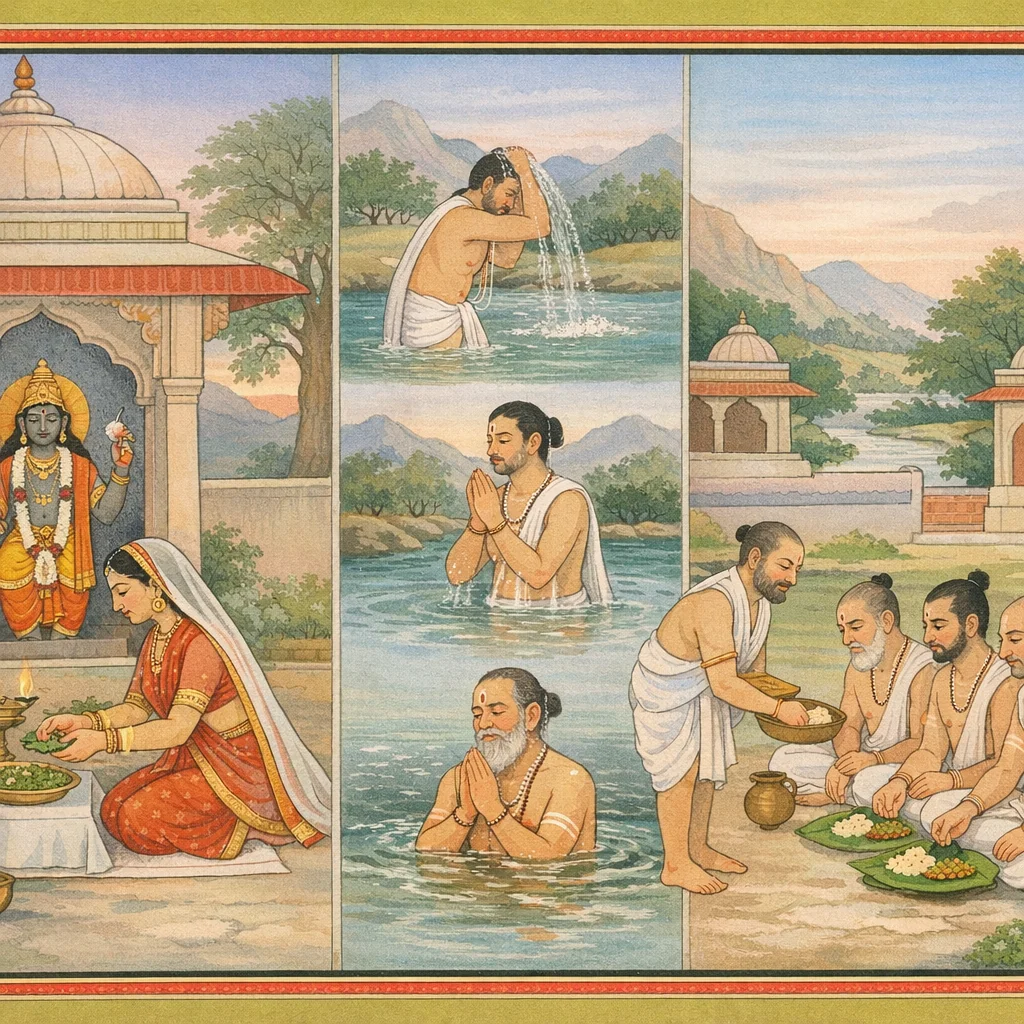
Brahmā teaches an eminent vow: a month-long fast dedicated to Viṣṇu (Hari), open to vānaprasthas, renunciants, and women. It begins after fasting on Āśvina-śukla Ekādaśī and continues for thirty days until Viṣṇu’s Utthāna, with a firm saṅkalpa to worship without eating. The votary especially observes the bright-fortnight Dvādaśīs of Āśvina and Kārtika, praying that even death before completion not be counted as a breach. Daily discipline includes worship of Hari, bathing thrice daily, abstaining from perfumes, and temple-specific bans such as oil massage and fragrant applications. On Dvādaśī one worships reverently, feeds brāhmaṇas, and then performs pāraṇa to conclude the vow. A compassionate exception allows milk and other light intake if one becomes unconscious mid-vow, without destroying the vrata, promising worldly welfare and liberation (mokṣa) and harmonizing strict vrata-ethics with practical dharma. The chapter leads into Ācāra discussions on calendrical observances, purity rules, and graded merits of Vaiṣṇava vratas.
Shlokas
Verse 1
नामकावशत्युत्तरशततमो ऽध्यायः ब्रह्मोवाच / व्रतं मासोपवासाख्यं सर्वोत्कृष्टं वदामिते / वानप्रस्थो यतिर्नारी कुर्यान्मासोपवासकम्
Brahmā said: I shall tell you of the vow called the month-long fast, the most excellent of all vows. A forest-dweller (vānaprastha), a renunciate (yati), and a woman may undertake this month-long fasting observance.
Verse 2
आश्विनस्य सिते पक्षे एकादश्यामुपोषितः / व्रतमेतत्तु गृह्णीयाद्यावत्त्रिंशद्दिनानि तु
Having fasted on Ekādaśī in the bright fortnight of Āśvina, one should take up this vow and observe it for as long as thirty days.
Verse 3
अद्यप्रभृत्यहं विष्णो यावदुत्थानकं तव / अर्चयेत्वामनश्रंस्तु दिनानि त्रिंशदेव तु
O Viṣṇu, from today onward—until Your Utthāna (awakening)—I shall worship You without eating; indeed, for thirty days.
Verse 4
कार्तिकाश्विनयोर्विष्णो द्वादश्योः शुक्लयोरहम् / म्रियेयद्यन्तराले तु व्रतभङ्गो न मे भवेत्
O Viṣṇu, on the bright-fortnight Dvādaśīs of Āśvina and Kārtika I observe this vow. Even if I were to die in the interval, may there be no breach of my vow.
Verse 5
हरिं यजोत्त्रिषवणस्नायी गन्धादिभिर्व्रती / गात्राभ्यङ्गं गन्धलेपं देवतायतने त्यजेत्
A votary who worships Hari and bathes at the three sacred times of day, observing restraint regarding perfumes and the like, should refrain—within a deity’s temple—from oil-massage of the body and from applying fragrant unguents.
Verse 6
द्वादश्यामथ संपूज्य प्रदद्याद्द्विजभोजनम् / ततश्च पारणं कुर्याद्धरेर्मासोपवासकृत्
Then, on the Dvādaśī day, after worshipping with due reverence, one should offer a meal to brāhmaṇas; thereafter, the observer of the month-long fast for Hari should perform the pāraṇa, the concluding breaking of the fast.
Verse 7
दुग्धादिप्राशनं कुर्याद्व्रतस्थो मूर्छितो ऽन्तरा / दुग्धाद्यैर्न व्रतं नश्येद्भुक्तिमुक्तिमवाप्नुयात्
If one observing a vow (vrata) becomes unconscious in the midst of the observance, one may take milk and similar light sustenance. By consuming milk and the like, the vow is not destroyed; rather, one attains both worldly well-being and liberation (mokṣa).
Frequently Asked Questions
The observance is undertaken after fasting on Āśvina-śukla Ekādaśī, followed by the saṅkalpa to worship Viṣṇu without eating for thirty days up to His Utthāna.
On Dvādaśī, after worship with due reverence, one should offer a meal to brāhmaṇas and then perform pāraṇa (the formal breaking of the fast) to complete the vrata.
The chapter includes a prayerful safeguard in the saṅkalpa: even if death occurs in the interval, the votary asks that there be no breach of the vow—emphasizing the primacy of intention and devotion.
It explicitly states the vow is not destroyed by taking milk and similar sustenance in such a condition; rather, the practitioner attains both worldly well-being and liberation-oriented fruit, indicating dharma’s accommodation for incapacity.