Adhyaya 16
Vaivāhika-utsava (Martial Procession of Lalitā’s Śakti-Senā) / वैवाहिकोत्सवः
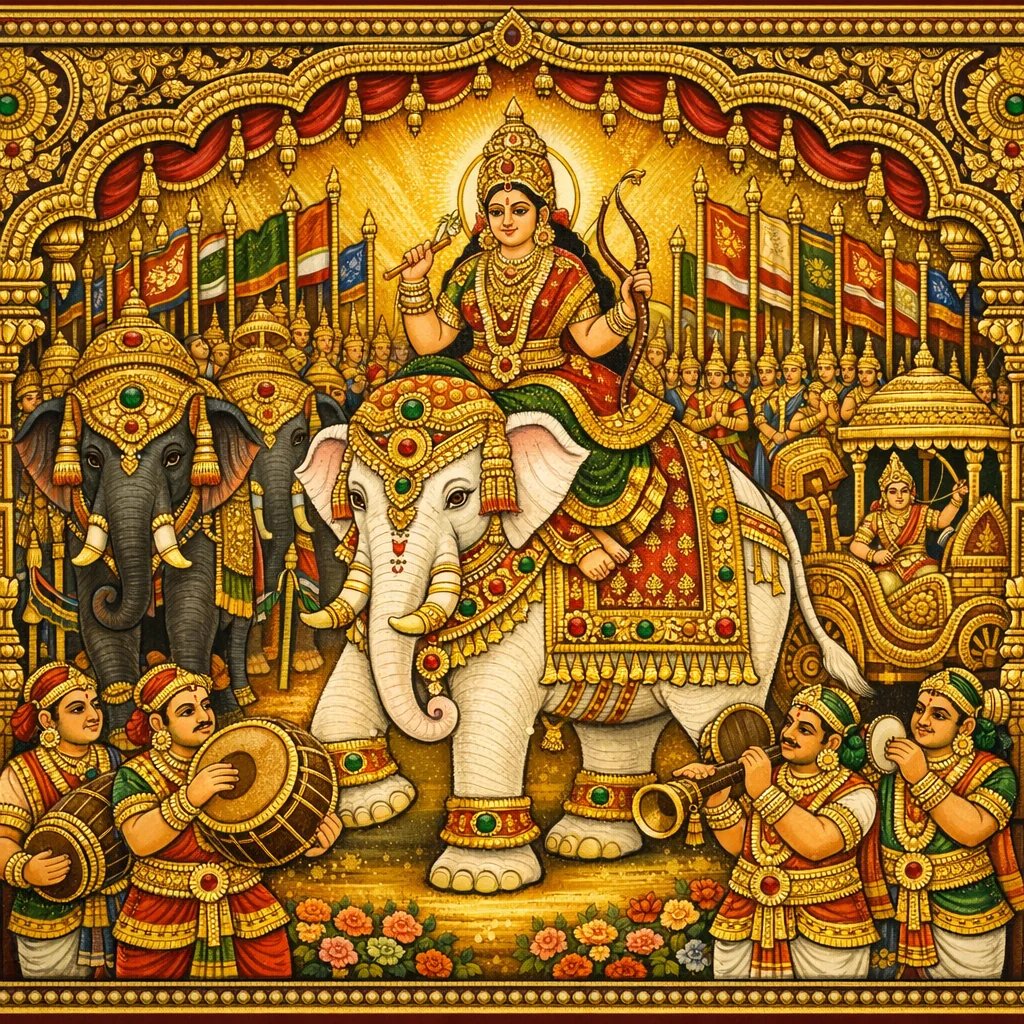
This segment of the Lalitopākhyāna (Uttara-bhāga) portrays Lalitā Parameśvarī mobilizing to defeat Bhaṇḍa, the “thorn of the three worlds” (trailokya-kaṇṭaka). Framed as a Hayagrīva–Agastya dialogue, it highlights a ritual, spectacular war-aesthetic: many percussion and wind instruments (mṛdaṅga, muraja, paṭaha, ānaka, paṇava, etc.) are fashioned or sounded, filling all directions with martial resonance. The text then introduces Śakti personifications—especially Saṃpatkarī Devī—accompanied by immense arrays of elephants, horses, and chariots, with named mounts and banners, suggesting a cosmic procession rather than a merely earthly battle. Through images of nāda (sound), senā-vyūha (ordered formations), and śaktayaḥ (personified powers), Lalitā’s sovereignty is made manifest as she advances toward the confrontation with Bhaṇḍāsura.
Shlokas
Verse 1
इति श्रीब्रह्माण्डमहापुराणे उत्तरभागे हयग्रीवागस्त्यसंवादे ललितोपाख्याने वैवाहिकोत्सवो नाम पञ्चदशो ऽध्यायः अथ सा जगतां माता ललिता परमेश्वरी / त्रैलोक्यकण्टकं भण्डं दैत्यं जेतुं विनिर्ययौ
Thus, in the Śrī Brahmāṇḍa Mahāpurāṇa, in the Uttara section, in the dialogue of Hayagrīva and Agastya, within the Lalitopākhyāna, is the fifteenth chapter called “The Nuptial Festival.” Then Lalitā Parameśvarī, Mother of the worlds, set forth to conquer Bhaṇḍa, the daitya who was a thorn to the three worlds.
Verse 2
चकार मर्दलाकारानंभोराशींस्तु सप्त ते / प्रभूतमर्द्दलध्वानैः पूरयामासुरंबरम्
They shaped the seven oceans as though into the form of mardala drums, and with abundant mardala reverberations they filled the sky.
Verse 3
मृदङ्गमुरजाश्चैव पटहो ऽतुकुलीङ्गणाः / सेलुकाझल्लरीराङ्घाहुहुकाहुण्डुकाघटाः
Mṛdaṅga and muraja, paṭaha and atukulīṅgaṇa; selukā, jhallarī, rāṅghā, huhukā, huṇḍukā, and ghaṭa—such instruments all resounded.
Verse 4
आनकाः पणवाश्चैव गोमुखाश्चार्धचन्द्रिकाः / यवमध्या मुष्टिमध्या मर्द्दलाडिण्डिमा अपि
Ānaka and paṇava, gomukha and ardhacandrikā; yavamadhyā and muṣṭimadhyā, and even mardala and ḍiṇḍima as well, all sounded forth.
Verse 5
झर्झराश्च बरीताश्च इङ्ग्यालिङ्ग्यप्रभेदजाः / उद्धकाश्चैतुहुण्डाश्च निःसाणा बर्बराः परे
Jharjharā and barītā, instruments born of the various iṅgyāliṅgya kinds; uddhakā and aituhuṇḍā, niḥsāṇā, and other ‘barbara’ instruments too, all resounded.
Verse 6
हुङ्कारा काकतुण्डाश्च वाद्यभेदास्तथापरे / दध्वनुः शक्तिसेनाभिराहताः समरोद्यमे
Huṅkāra-cries, the calls of the Kākatuṇḍas, and many other kinds of war-instruments resounded, struck into thunder as the armies of Śakti surged at the onset of battle.
Verse 7
ललितापरमेशान्या अङ्कुशास्त्रान्समुद्गता / संपत्करी नाम देवी चचाल सह शक्तिभिः
From Lalitā-Parameśvarī there arose the aṅkuśa-weapons; and the Goddess named Saṃpatkarī moved forth together with her Śaktis.
Verse 8
अनेककोटिमातङ्गतुरङ्गरथपङ्क्तिभिः / सेविता तरुणादित्यपाटला संपदीश्वरी
Attended by rows of countless millions of elephants, horses, and chariots, Saṃpadīśvarī shone, rosy-hued like the youthful sun.
Verse 9
मत्तमुद्दण्डसंग्रामरसिकं शैलसन्निभम् / रणकोलाहलं नाम सारुरोह मतङ्गजम्
She mounted the elephant named Raṇakolāhala—maddened and unbridled, delighting in battle, vast as a mountain.
Verse 10
तामन्वगा ययौ सेना महती धोरराविणी / लोलाभिः केतुमालाभिरुल्लिखन्ती धनाधनात्
After her marched a vast army, roaring dreadfully; with wavering garlands of banners it seemed to rake the very sky as it advanced.
Verse 11
तस्याश्च संपन्नाथायाः पीनस्तनसुसंकटः / कण्टको घनसंनाहो रुरुचे वक्षसिस्थितः
Upon the breast of that splendid Lady, amid her full and swelling bosom, a thorn like a dense cuirass shone brightly, set upon her chest.
Verse 12
कंपमाना खड्गलता व्यरुचत्तत्करे धृता / कुटिला कालनाथस्य भृकुटीव भयङ्करा
The trembling sword-vine, held fast in her hand, shone forth—crooked and dreadful, like the fearsome furrowed brow of Kalanātha, Lord of Time.
Verse 13
उत्पातवातसंपाताच्चलिता इव पर्वताः / तामन्वगा ययुः कोटिसंख्याकाः कुञ्जरोत्तमाः
Like mountains shaken by the onrush of an ominous wind, elephants of the highest breed—countless, in koṭis—moved forth, following after her.
Verse 14
अथ श्रीललितादेव्या श्रीपाशायुधसंभवा / अतित्वरितविक्रान्तिरश्वारूढाचलत्पुरः
Then, born of Śrī Lalitā Devī’s sacred weapon, the Śrīpāśa, the horse-mounted host—of exceedingly swift valor—moved forward at the front.
Verse 15
तया सह हयप्रायं सैन्यं हेषातरङ्गितम् / व्यचरत्खुरकुद्दालविदारितमहीतलम्
With her moved an army made chiefly of horses, surging with waves of neighing; the earth’s surface was torn open by hooves striking like mattocks.
Verse 16
वनायुजाश्च कांबोजाः पारदाः सिंधुदेशजाः / टङ्कणाः पर्वतीयाश्च पारसीकास्तथा परे
Those reared in the forests—the Kambojas, the Pāradas, and those born in the land of Sindhu; the Tankanas, the mountain folk, and other Persians as well are named.
Verse 17
अजानेया घट्टधरा दरदाः काल वन्दिजाः / वाल्मीकयावनोद्भूता गान्धर्वाश्चाथ ये हयाः
The horses called Ajāneya, Ghaṭṭadhara, Darada, and Kāla-vandija; and those sprung from Vālmīki–Yavana, as well as the steeds known as Gandharva.
Verse 18
प्राग्देशजाताः कैराता प्रान्तदेशोद्भवास्तथा / विनीताः साधुवोढारो वेगिनः स्थिरचेतसः
The Kairātas born in the eastern lands, and those arising from the border regions: disciplined and courteous, bearers of the sadhus, swift, and steadfast in mind.
Verse 19
स्वामिचित्तविशेषज्ञा महायुद्धसहिष्णवः / लक्षणैर्बहुभिर्युक्ता जितक्रोधा जितश्रमाः
They discern the subtle moods of their lord, endure the trials of great war; endowed with many auspicious marks, they have conquered anger and overcome fatigue.
Verse 20
पञ्चधारासु शक्षढ्या विनीताश्च प्लवान्विताः
Skilled amid the five streams, they are well-trained and endowed with the power of swift leaping.
Verse 21
फलशुक्तिश्रिया युक्ताः श्वेतशुक्तिसमन्विताः / देवपद्मं देवमणिं देवस्वस्तिकमेव च
They were endowed with the splendor of the phala-śukti, accompanied by the white śveta-śukti; and they bore the divine lotus, the divine gem, and the divine svastika as well.
Verse 22
अथ स्वस्तिकशुक्तिश्च गडुरं पुष्पगण्डिकाम् / एतानि शुभलक्ष्माणि ज्यराज्यप्रदानि च / वहन्तो वातजवना वाजिनस्तां समन्वयुः
Then the svastika-śukti, the gaḍura, and the garland of flowers—auspicious emblems that bestow victory and kingship—were borne along; and the steeds, swift as the wind, surrounded her in attendance.
Verse 23
अपराजितनामानमतितेजस्विनं चलम् / अत्यन्तोत्तुङ्गवर्ष्माणं कविकाविलसन्मुखम्
He was called Aparājita, exceedingly radiant and swift in motion; of towering stature, with a face that shone like that of a kavi, a sacred poet.
Verse 24
पार्श्वद्वये ऽपि पतितस्फुरत्केसरमण्डलम् / स्थूलवालधिविक्षेपक्षिप्यमाणपयोधरम्
On both flanks hung a circle of mane, fallen yet flashing with brilliance; and by the sweep of its thick tail, its chest seemed to be tossed and made to quiver.
Verse 25
जङ्घाकाण्डसमुन्नद्धमणिकिङ्किणिभासुरम् / वादयन्तमिवोच्चण्डैः खुरनिष्ठुरकुट्टनैः
It shone with gem-studded kiṅkiṇī fastened near the legs; and with the fierce, hard pounding of its hooves, it seemed as though it were sounding them like a musical instrument.
Verse 26
भूमण्डलमहावाद्यं विजयस्य समृद्धये / घोषमाणं प्रति मुहुः संदर्शितगतिक्रमम्
For the increase of victory’s fortune, the great drum of the earth-circle resounded again and again, repeatedly revealing the order of its movement.
Verse 27
आलोलचामरव्याजाद्वहन्तं पक्षती इव / भाण्डैर्मनोहरैर्युक्तं घर्घरीजालमण्डितम्
With the swaying chāmaras as a pretext, it seemed to be borne as if on wings—furnished with charming gear and adorned with a net of tinkling bells.
Verse 28
एषां घोषस्य कपटाद्धुङ्कुर्वतीमि वासुरान् / अश्वारूढा महादेवी समारूढा हयं ययौ
Under cover of that clamour, as though neighing at the asuras, the horse-mounted Mahādevī mounted her steed and rode forth.
Verse 29
चतुर्भिर्वाहुभिः पाशमङ्कुशं वेत्रमेव च / हयवल्गां च दधती बहुविक्रमशोभिनी
With her four arms she bore the noose, the goad, the whip, and the horse’s reins—radiant with manifold valour.
Verse 30
तरुणादित्यसङ्काशा ज्वलत्काञ्चीतरङ्गिणी / सञ्चचाल हयारूढा नर्तयन्तीव वाजिनम्
Radiant as the young sun, shimmering with the waves of her blazing girdle, she moved upon her horse as though making the steed dance.
Verse 31
अथ श्रीदण्डनाथाया निर्याणपटहध्वनिः / उद्दण्डसिन्धुनिस्वानश्चकार बधिरं जगत्
Then the departure-drum of Śrī Daṇḍanātha resounded like the roaring of a raging ocean, as though it had made the whole world deaf.
Verse 32
वज्रबाणैः कठोरैश्चभिन्दन्त्यः ककुभो दश / अन्युद्धतभुजाश्मानः शक्तयः काश्चिदुच्छ्रिताः
With hard vajra-arrows they pierced the ten directions; and some śakti-spears were lifted high, like boulders upon impetuous arms.
Verse 33
काश्चिच्छ्रीदण्डनाथायाः सेनानासीरसङ्गताः / खड्गं फलकमादाय पुप्लुवुश्चण्डसक्तयः
In Śrī Daṇḍanātha’s host, some fierce warriors, taking sword and shield, leapt forward with terrible might.
Verse 34
अत्यन्तसैन्यसम्बाधं वेत्रसंताडनैः शतैः / निवारयन्त्यो वेत्रिण्यो व्युच्छलन्ति स्मशक्तयः
Amid the crushing press of troops, the whip-bearers held them back with hundreds of lashes; yet the śakti-wielders kept surging forward in leaps.
Verse 35
अथ तुङ्गध्वजश्रेणीर्महिषाङ्का मृगाङ्किकाम् / सिहाङ्काश्चैव बिभ्राणाः शक्तयो व्यचलन्पुरा
Then the ranks of lofty banners moved forth; the śakti-bearers advanced through the city, bearing emblems of buffalo, deer, and lion.
Verse 36
ततः श्रीदण्डनाथायाः श्वेतच्छत्रं सहस्रशः / स्फुरत्कराः प्रचलिताः शक्तयः काश्चिदाददुः
Then, for Śrī Daṇḍanāthā, thousands upon thousands of white parasols arose; certain Śaktis, with flashing hands in motion, took them up and bore them.
Frequently Asked Questions
Lalitā Parameśvarī sets out to conquer Bhaṇḍa (trailokya-kaṇṭaka), accompanied by a vast Śakti-senā, with the narrative highlighting the ceremonial-martial soundscape of many instruments and the ordered advance of divine forces.
Saṃpatkarī Devī is highlighted as moving with Lalitā’s powers, attended by enormous ranks of elephants, horses, and chariots; her depiction emphasizes abundance, splendor, and battle-readiness as a personification of prosperity harnessed for cosmic restoration.
The catalogue functions as nāda-metadata: sound becomes a cosmological signal of sovereignty and impending dharmic conflict, transforming the march into a ritualized cosmic event where vibration, order, and power converge before the battle with Bhaṇḍāsura.