Adhyaya 55
यज्ञसमापन-दक्षिणा-आवभृथस्नान-वर्णनम् (Completion of the Sacrifice, Gifts, and Avabhṛtha Bath)
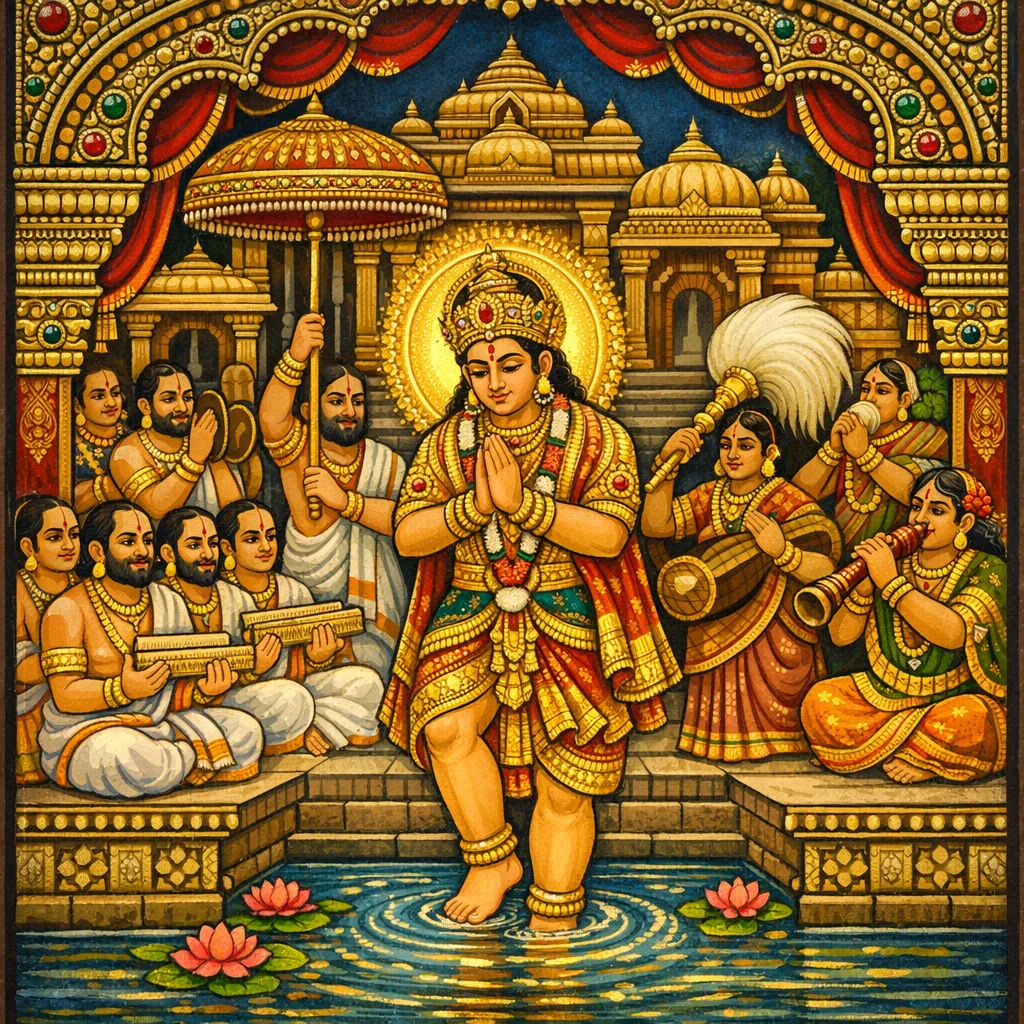
In Anushanga Pada, Adhyaya 55, an excellent king (rājasattama) performs a properly regulated yajña with ṛtviks and sadasyas praised as vedapāragas, masters of the Veda. With the vedi (altar), vessels, and śāstric procedure fully in order, the sacrifice proceeds as an ideal model of Vedic ritual. When the rites are completed in due sequence, the king bestows dakṣiṇā upon the officiants and lavishly gives wealth to Brahmins and petitioners beyond expectation, then prostrates before elders to seek pardon and blessing. A public procession follows—bards (sūta, māgadha, vandin), music, umbrellas, fans, and civic adornment—ending at the Sarayū river for the avabhṛtha-snāna, the post-sacrificial bath. Returning to the city amid Vedic chants and auspicious music, the king’s ritual completion, generous redistribution, and public acclaim together affirm dharma and royal legitimacy.
Shlokas
Verse 1
इति श्रीब्रह्माण्डे महापुराणे वायुप्रोक्ते मध्यमभागे तृतीय उपोद्धातपादे कपिलाश्रमस्थाश्वानयनं नाम चतुष्पञ्चाशत्तमो ऽध्यायः // ५४// äः अभिनन्द्याशिषात्यर्थं लालयन्प्रशशंस ह
Thus, in the Śrī Brahmāṇḍa Mahāpurāṇa, in the middle section spoken by Vāyu, within the third introductory division, is the fifty-fifth chapter called “Bringing the Horse from Kapila’s Āśrama.” Then he greeted him with joy, bestowed abundant blessings, fondly embraced him, and praised him.
Verse 2
अथ ऋत्विक्सदस्यैश्च सहितो राजसत्तमः / उपाक्रमत तं यज्ञे विधिवद्वेदपारगैः
Then the best of kings, accompanied by the officiating priests and the assembled elders, duly commenced that sacrifice, guided by those well-versed in the Vedas.
Verse 3
ततः प्रववृते यज्ञः सर्वसंपद्गुणान्वितः / सम्यगौर्ववसिष्ठाद्यैर्मुनिभिः संप्रवर्त्तितः
Thereupon the yajña began, endowed with every prosperity and virtue, duly set in motion by sages such as Aurva and Vasiṣṭha.
Verse 4
हिरण्मयमयी वेदिः पात्राण्युच्चावचानि च / सुसमृद्धं यथाशास्त्रं यज्ञे सर्वं बभूव ह
The altar was of gold, and vessels of many kinds—high and low—were present; in the yajña everything was abundantly arranged according to the śāstras.
Verse 5
एवं प्रवर्त्तितं यज्ञमृत्विजः सर्व एव ते / क्रमात्समापयामासुर्यजमानपुरस्सराः
Thus the yajña, once set in motion, was brought to completion in due order by all the ṛtvij priests, with the yajamāna leading.
Verse 6
समापयित्वा तं यज्ञं राजा विधिविदां वरः / यथावद्दक्षिणां चैव ऋत्विजां प्रददौ तदा
Having completed that yajña, the king—foremost among those who know the rites—then duly bestowed the proper dakṣiṇā upon the ṛtvij priests.
Verse 7
अथ ऋत्विक्सदस्यानां ब्राह्मणानां तथार्थिनाम् / तत्काङ्क्षितादभ्यधिकं प्रददौ वसु सर्वशः
Then, to the ṛtvij priests, the assembly members, the brāhmaṇas, and all who sought, he granted wealth of every kind—more than they had desired.
Verse 8
एवं संतर्प्य विप्रादीन्दक्षिणाभिर्यथाक्रमम् / क्षमापयामास गुरून्सदस्यान्प्रणिपत्य च
Thus, having duly satisfied the brahmanas and others with gifts of dakṣiṇā in proper order, he bowed down and sought forgiveness from the gurus and the members of the assembly.
Verse 9
ब्राह्मणाद्यैस्ततो वर्णैरृत्विग्भिश्च समन्वितः / वारकीयाकदंबैश्च सूतमागधवन्दिभिः
Then he was attended by brahmanas and the other social orders, accompanied by the officiating priests (ṛtvij), by bands of vārakīyas, and surrounded by sūtas, māgadhas, and bards of praise.
Verse 10
अन्वीयमानः सस्त्रीकः श्वेतच्छत्रविराजितः / दोधूयमानचमरो वालव्यजनराजितः
He proceeded attended with his consort; radiant beneath a white parasol, adorned with swaying cāmara whisks and splendid tail-fans (vālavyajana).
Verse 11
नानावादित्रनिर्घोषैर्बधिरीकृतदिङ्मुखः / स गत्वा सरयूतीरं यथाशाश्त्रं यथाविधि
With the clamour of many instruments, the quarters seemed made deaf; and he went to the bank of the Sarayū in accordance with śāstra and the prescribed rite.
Verse 12
चकारावभृथस्नानं मुदितः सहबन्धुभिः / एवं स्नात्वा सपत्नीकः सुहृद्भिर्ब्राह्मणैः सह
Rejoicing with his kinsmen, he performed the avabhṛtha bath; and having thus bathed, he remained with his wife, his friends, and the brahmanas.
Verse 13
वीणावेणुमृदङ्गादिनानावादित्रनिःस्वनैः / मङ्गल्यैर्वेदघोषैश्च सह विप्रजनेरितैः
Amid the resonant sounds of many instruments—vīṇā, flute, mṛdaṅga, and more—together with auspicious Vedic chants raised by the brahmins.
Verse 14
संस्तूयमानः परितः सूतमागधबन्दिभिः / प्रविवेश पुरीं रम्यां हृष्टपुष्टजनायुतम्
Praised on every side by sūtas, māgadhas, and court bards, he entered the lovely city, thronged with people joyful and well-prospered.
Verse 15
श्वेतव्यजन सच्छत्रपताकाध्वजमालिनीम् / सिक्तसंमृष्टभूभागापणशोभासमन्विताम्
That city was adorned with white fans, fair parasols, pennants and garlands of banners; its streets were sprinkled and swept clean, and it shone with the splendor of its markets.
Verse 16
कैलासाद्रिप्रकाशाभिरुज्ज्वलां सौधपङ्क्तिभिः / स तत्रागरुधूपोत्थगन्धामोदितदिङ्मुखम्
The city shone with rows of mansions radiant as Mount Kailāsa; there, the fragrance rising from agaru incense gladdened every quarter.
Verse 17
विकीर्यमाणः परितः पौरनारीजनैर्मुहुः / लाजवर्षेण सानन्दं वीक्षमाणश्च नागरैः
The women of the city again and again scattered around him a rain of lāja (parched grain), while the townsfolk looked on with delight.
Verse 18
उपदाभिरनेकाभिस्तत्रतत्र वणिग्जनैः / संभाव्यमानः शनकैर्जगम स्वपुरं प्रति
Honored here and there by merchants with many gifts, he went on slowly toward his own city.
Verse 19
स प्रविश्य गृहं रम्यं सर्वमण्डलमण्डितम् / सम्यक्संभावयामास सुहृदो ब्राह्मणानपि
Entering his lovely home, adorned with every mandala, he duly honored his friends and the Brahmanas as well.
Verse 20
संसेव्यमानश्च तदा नानादेशेश्वरैर्नृपैः / सभायां राजशार्दूलो रेमे शक्र इवापरः
Then, attended by kings who ruled many lands, that tiger among monarchs rejoiced in the royal hall like another Śakra, Indra himself.
Verse 21
एवं सुहृद्भिः सहितः पूरयित्वा मनोरथम् / सगरः सह भार्याभ्यां रेमे नृपवरोत्तमः
Thus, accompanied by his friends and having fulfilled his heart’s desire, Sagara—the foremost of kings—rejoiced together with his two queens.
Verse 22
अंशुमन्तं ततः पौत्रं मुदा विनयशालिनम् / वसिष्ठानुमते राजा यौवराज्ये ऽभ्यषेचयत्
Thereafter, with Vasiṣṭha’s consent, the king joyfully anointed his grandson Aṃśumān—humble and well-disciplined—as Yuvarāja, the crown prince.
Verse 23
पौरजानपदानां तु बन्धूनां सुहृदामपि / स प्रियो ऽभवदत्यर्थमुदारैश्च गुणैर्नृपः
To the townsfolk and the people of the provinces, to kinsmen and true friends alike, that king became exceedingly dear through his noble virtues.
Verse 24
प्रजास्तमन्वरज्यन्त बालमप्यमितौजसम् / नवं च शुक्लपक्षादौशीतांशुमचिरोदितम्
The people came to follow and cherish even that boy of immeasurable splendor, like the new moon newly risen at the start of the bright fortnight.
Verse 25
स तेन सहितः श्रीमान्सुत्दृद्भिश्च नृपोत्तमः / भार्याभ्यामनुरूपाभ्यां रममाणो ऽवसच्चिरम्
That illustrious foremost king, together with him and with his stalwart sons, dwelt long in delight with two wives well suited to him.
Verse 26
युवैव राजशार्दूलः साक्षाद्धर्म इवापरः / पालयामास वसुधां सशैलवनकाननाम्
Though still young, that tiger among kings was like Dharma himself in another form; he protected the earth with its mountains, forests, and wild groves.
Verse 27
एवं महानहिमदीधितिवंशमौलिरत्नाय यमानवपुरुत्तरकोसलेशः / पूर्णेन्दुवत्सकललोकमनो ऽभिरामः सार्द्ध प्रजाभिरखिलाभिरलं जहर्ष
Thus the lord of Northern Kosala in Yamanavapura—crown-jewel of the Mahā-nahima-dīdhiti line—delighting the hearts of all worlds like the full moon, rejoiced exceedingly together with all his subjects.
Frequently Asked Questions
In the provided verses, the emphasis is not a Vamsha catalogue but a ritual closure sequence (yajña → dakṣiṇā → avabhṛtha). Any lineage data would likely be contextual or in adjacent chapters rather than explicitly enumerated in this excerpt.
The chapter stresses vedapāragā officiants, a properly prepared vedi and vessels (pātrāṇi), orderly completion (kramāt samāpanam), prescribed dakṣiṇā to ṛtviks/sadasyas, and the avabhṛtha-snāna—together forming the canonical closure and validation of the sacrifice.
Sarayū anchors the rite in sacred geography, while the procession with bards, Vedic chants, and civic decoration externalizes ritual success into public order—encoding how dharma is made visible and politically operative after the sacrificial act.