Adhyaya 43
Bhārgava-Stuti and Kṛṣṇa’s Vara (Devotional Hymn and Boon to the Bhargava)
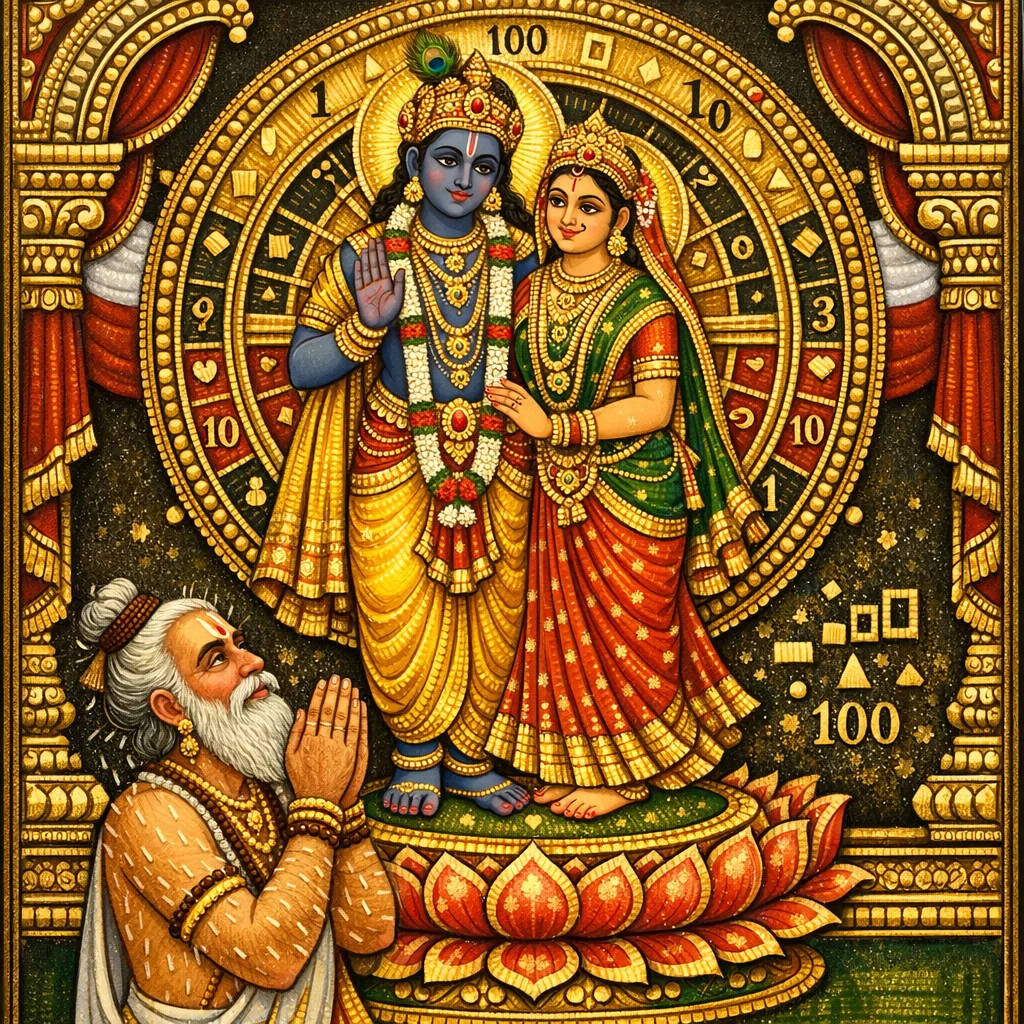
Vasiṣṭha narrates this chapter to a king in a didactic courtly setting. Rāma—linked here with the Bhārgava/Jāmadagnya line—rises with folded hands and offers a lofty stuti that unites philosophical opposites: the praised reality is both nirviśeṣa and viśeṣavat, advaya yet appearing as dvaita, nirguṇa yet manifest as saguṇa. The hymn then turns to cosmo-theology, associating that principle with guṇa-manifestation, kāla/saṅkhyā ordering (time and number), and universal causality. Bhakti is explicit in the praise of Kṛṣṇa and Rādhā: Rādhā is lauded as the axis of creation–maintenance–dissolution, and Kṛṣṇa as the all-pervading saccidānanda revealed in loving līlā with her. After the stuti, Vasiṣṭha notes the devotee’s fulfillment (hair standing on end, grasp of tattva). Kṛṣṇa then speaks compassionately, declares the Bhārgava “siddha,” confirms earlier boons, and prescribes dharma in action: mercy to the distressed, cultivation of yoga, and restraint/subjugation of enemies.
Shlokas
Verse 1
इति श्रीब्रह्माण्डे महापुराणे वायुप्रोक्ते मध्यभागे तृतीय उपोद्धातपादे भार्गवचरिते द्विचत्वारिंशत्तमो ऽध्यायः // ४२// वसिष्ठ उवाच एवं सुस्निग्धचित्तेषु तेषु तिष्ठत्सु भूपते / भवान्युत्संगतो रामः समुत्थाय कृताजलिः
Thus, in the Śrī Brahmāṇḍa Mahāpurāṇa… ends Chapter 42. Vasiṣṭha said: O king, as they all stood there with hearts full of tenderness, Rāma rose from Bhavānī’s lap and stood with palms joined in reverence.
Verse 2
तुष्टाव प्रयतो भूत्वा निर्विशेष विशेषवत् / अद्वयं द्वैतमापन्नं निर्गुणं सगुणात्मकम्
With disciplined reverence he offered praise: to the One who is without distinction yet appears as the manifold; who is non-dual yet seems to enter duality; who is nirguṇa, yet manifests as saguṇa.
Verse 3
राम उवाच प्रकृतिविकृतिजातं विश्वमेतद्विधातुं मम कियदनुभातं वैभवं तत्प्रमातुम् / अविदिततनुनामाभीष्टवस्त्वेकधामाभवदथ भव भामा पातु मां पूर्णकामा
Rama said: This universe, born of Prakriti and Vikriti—who can measure how far my majesty extends in ordering it? O Bhama, Goddess of fulfilled desire, whose name and form are unknown, the single abode of all that is sought—protect me.
Verse 4
प्रकटितगुणाभानं कालसंख्याविधानं सकलभवनिदानं कीर्त्यते यत्प्रधानम् / तदिह निखिलतातः संबभूवोक्षपातः कृतकृतकनिपातः पातु मामद्य मातः
That which reveals the radiance of the gunas, ordains time and number, and is the cause of all worlds is praised as Pradhana. O Mother, that primal source has manifested here; may the accomplisher of all deeds protect me today.
Verse 5
दनुजकुलविनाशीलेखपाताविनाशी प्रथमकुलविकाशी सर्वविद्याप्रकाशी / प्रसभरचितकाशी भक्तदत्ताखिलाशीरवतु विजितपाशी मांसदा षण्मुखाशी
May Mamsada, the six-faced Goddess—destroyer of the Danuja clans, eraser of the script of ruin; awakener of the primal line, illuminator of all vidyas; swift creator of Kashi, bestower of every blessing upon devotees, conqueror of all bonds—protect me.
Verse 6
हरनिकट निवासी कृष्णसेवाविलासी प्रणतजनविभासी गोपकन्याप्रहासी / हरकृतबहुमानो गोपिकेशैकतानो विदितबहुविधानो जायतां कीर्तिहा नौ
He who dwells near Hari, delighting in service to Krishna; who illumines the bowed devotees and laughs in play with the gopa maidens. Honored greatly by Hari, single-minded toward the Lord of the gopis, known in many ways—may Kirtihā bring auspiciousness to us.
Verse 7
प्रभुनियतमाना यो नुन्नभक्तान्तरायो त्दृतदुरितनिकायो ज्ञानदातापरायोः / सकलगुणगरिष्ठो राधिकाङ्केनिविष्टो मम कृतमपराधं क्षन्तुमर्हत्वगाधम्
He who abides in the Lord’s ordinance, who drives away the obstacles of devotees, who bears (and removes) the mass of sins, who is intent on granting jnana; supreme in every virtue, resting in Radhika’s lap—may he deem it fit to forgive my deep offense.
Verse 8
या राधा जगदुद्भवस्थितिलयेष्वाराध्यते वा जनैः शब्दं बोधयतीशवक्त्रंविगलत्प्रेमामृतास्वादनम् / रासेशी रसिकेश्वरी रमणत्दृन्निष्ठानिजानन्दिनी नेत्री सा परिपातु मामवनतं राधेति य कीर्त्यते
May that Radha—worshiped by people in the mysteries of the world’s creation, sustenance, and dissolution, and who through sacred speech makes known the taste of love’s nectar flowing from the Lord’s mouth—protect me as I bow. She is the Lady of the Rasa-dance, the Sovereign of the lovers of divine relish, steadfast in the Beloved’s gaze, the guide into her own bliss, praised by the name “Radha.”
Verse 9
यस्या गर्भसमुद्भवो ह्यतिविराड्यस्यांशभूतो विराट् यन्नाभ्यंबुरुहोद्भवेन विधिनैकान्तोपदिष्टेन वै सृष्टं सर्वमिदं चराचरमयं विश्वं च यद्रोमसु ब्रह्माण्डानि विभान्ति तस्य जननी शश्वत्प्रसन्नास्तु सा
From her womb arises the transcendent Ativirāṭ, and Virāṭ himself is but her portion. From the lotus of her navel was born the Creator, who—having received the secret, exclusive instruction—fashioned this entire universe of moving and unmoving beings. In the pores of her body countless brahmāṇḍas shine forth; may she, the Mother of that Supreme One, be ever gracious.
Verse 10
पायाद्यः स चराचरस्य जगतो व्यापी विभुः सच्चिदानन्दाब्धिः प्रकटस्थितो विलसति प्रेमान्धया राधया / कृष्णः पूर्णतमो ममोपरि दयाक्लिन्नान्तरः स्तात्सदा येनाहं सुकृती भवामि च भवाम्यानन्दलीनान्तरः
May he protect me—Krishna, the all-pervading Lord of the moving and unmoving universe, the ocean of Being, Consciousness, and Bliss—who, manifest before the world, sports with Radha, blinded by love. May that most perfect Krishna ever keep his heart melted with compassion toward me, so that I become rich in merit and my inner being dissolves into joy.
Verse 11
वसिष्ठ उवाच स्तुत्वैवं जामदग्न्यस्तु विरराम ह तत्परम् / विज्ञाताखिलतत्त्वार्थो हृष्टरोमा कृतार्थवत्
Vasiṣṭha said: Having praised in this way, the son of Jamadagni (Paraśurāma) fell silent, wholly intent. Knowing the meaning of all principles, his hairs stood on end in joy, and he seemed as one fulfilled.
Verse 12
अथोवाच प्रसन्नात्मा कृष्णः कमललोचनः / भार्गवं प्रणतं भक्त्या कृपापात्रं पुरस्थितम्
Then Krishna—serene of heart, lotus-eyed—spoke to Bhārgava (Paraśurāma), who stood before him bowed in devotion, a worthy vessel of grace.
Verse 13
कृष्म उवाच सिद्धो ऽसि भार्गवेन्द्र त्वं प्रसादान्मम संप्रतम् / अद्य प्रभृति वत्सास्मिंल्लोके श्रेष्ठतमो भव
Kṛṣma said: “O Bhārgavendra, by my grace you are now perfected. From this day onward, dear child, be the most excellent in this world.”
Verse 14
तुभ्यं वरो मया दत्तः पुरा विष्णुपदाश्रमे / तत्सर्वं क्रमतो भाव्यं समा बह्वीस्त्वया विभो
Formerly, in the hermitage of Viṣṇupada, I granted you a boon. All of it shall come to pass in due order; O mighty one, you have passed through many years.
Verse 15
दया विधेया दीनेषु श्रेय उत्तममिच्छता / योगश्च सादनीयो वै शत्रूणां निग्रहस्तथा
One who seeks the highest good should show compassion to the afflicted. One should cultivate yoga, and likewise restrain and subdue enemies.
Verse 16
त्वत्समो नास्ति लोके ऽस्मिंस्तेजसा च बलेन च / ज्ञानेन यशसा वापि सर्वश्रेष्ठतमो भवान्
In this world none equals you in radiance or in strength. In knowledge and in fame as well, you are the most excellent of all.
Verse 17
अथ स्वगृहमासाद्य पित्रोः शुश्रूषणं कुरु / तपश्चर यथाकालं तेन सिद्धिः करस्थिता
Then return to your own home and attend upon your parents. Practice austerity at the proper times; by that, attainment will rest in your very hand.
Verse 18
राधोत्संगात्समुत्थाप्य गणेशं राधिकेश्वरः / आलिङ्ग्य गाढं रासेण मैत्रीं तस्य चकार ह
Lifting Gaṇeśa up from Rādhā’s lap, Rādhikeśvara embraced him tightly in the spirit of the rāsa and thus formed friendship with him.
Verse 19
अथोभावपि संप्रीतौ तदा रामगणेश्वरौ / कृष्णाज्ञया महाभागौ बभूवतुररिन्दम
Then Rāma and Gaṇeśvara were both greatly delighted; by Kṛṣṇa’s command, O subduer of foes, the two became most blessed.
Verse 20
एतस्मिन्नन्तरे देवी राधा कृष्णप्रिया सती / उभाभ्यां च वरं प्रादात्प्रसन्नास्या मुदान्विता
Just then the goddess Rādhā, the chaste beloved of Kṛṣṇa, with a radiant face and filled with joy, granted a boon to them both.
Verse 21
राधोवाच / सर्वस्य जगतो वन्द्यौ दुराधर्षौं प्रियावहौ / मद्भक्तौ च विशेषेण भवन्तौ भवतां सुतौ
Rādhā said: “You two are worthy of worship by the whole world, unconquerable and bringers of love; and especially, you are My devotees, and you are My sons.”
Verse 22
भवतोर्नाम चौच्चार्य यत्कार्यं यः समारभेत् / सिद्धिं प्रयातु ततसर्वं मत्प्रसादाद्धि तस्य तु
Whoever, uttering both your names, begins any undertaking—may all of it attain success, indeed, by My grace.
Verse 23
अथोवाच जगन्माता भवानी भववल्लभा / वत्स राम प्रसन्नाहं तुभ्यं कं प्रददे वरम् / तं प्रब्रूहि महाभाग भयं त्यक्त्वा सुदूरतः / राम उवाच जन्मान्त रसहस्रेषु येषुयेषु व्रजाम्यहम्
Then the Mother of the worlds, Bhavānī, beloved of Bhava (Śiva), spoke: “Child Rāma, I am pleased. What boon shall I grant you? O greatly blessed one, cast fear far away and speak.” Rāma said: “Through thousands of births, in whatever wombs I may go…”
Verse 24
कृष्णयोर्भवयोर्भक्तो भविष्यामीति देहि मे / अभेदेन च पश्यामि कृष्णौ चापि भवौ तथा
“Grant me this: that I may be a devotee of both Kṛṣṇa and Bhava (Śiva); and that I may behold Kṛṣṇa and Bhava as non-different.”
Verse 25
पार्वत्युवाच एवमस्तु महाभाग भक्तो ऽसि भवकृष्णयोः / चिरञ्जीवी भवाशु त्वं प्रसादान्मम सुव्रत
Pārvatī said: “So be it, O greatly blessed one; you are a devotee of Bhava and of Kṛṣṇa. O keeper of noble vows, by My grace become swiftly a cirañjīvī, long-lived.”
Verse 26
अथोवाच धराधीशः प्रसन्नस्तमुमापतिः / प्रणतं भार्गवेन्द्रं तु वरार्हं जगदीश्वरः
Then Umāpati, Lord of the worlds and sovereign of the earth, pleased at heart, spoke to Bhārgavendra who bowed in reverence, worthy of a boon.
Verse 27
शिव उवाच रामभक्तो ऽसि मे वत्स यस्ते दत्तो वरो मया / स भविष्यति कार्त्स्येन सत्यमुक्तं न चान्यथा
Śiva said: “Child, you are a devotee of My Rāma; the boon I have granted you shall come to pass in full. This is spoken in truth, and not otherwise.”
Verse 28
अद्यप्रभृति लोके ऽस्मिन् भवतो बलवत्तरः / न को ऽपि भवताद्वत्स तेजस्वी च भवत्परः
From this day onward in this world, you are the mightiest; dear child, none is as radiant as you, and none surpasses you.
Verse 29
वसिष्ठ उवाच अथ कृष्णो ऽप्यनुज्ञाप्य शिवं च नगनन्दिनीम् / गोलोकं प्रययौ युक्तः श्रीदाम्ना चापि राधया
Vasiṣṭha said— then Kṛṣṇa, having sought leave of Śiva and the Mountain’s Daughter (Pārvatī), departed for Goloka, accompanied by Śrīdāma and also by Rādhā.
Verse 30
अथ रामो ऽपि धर्मात्मा भवानीं च भवं तथा / संपूज्य चाभिवाद्याथ प्रदक्षिणमुपा क्रमीत्
Then Rāma, righteous in soul, duly worshipped Bhavānī and Bhava (Śiva), bowed in reverence, and thereafter began the pradakṣiṇā.
Verse 31
गणेशं कार्त्तिकेयं च नत्वापृच्छ्य च भूपते / अकृतव्रणसंयुक्तो निश्चक्राम गृहान्तरात्
O king, having bowed to Gaṇeśa and Kārttikeya and taken leave, he came forth from the inner chambers, bearing no wound at all.
Verse 32
निष्क्रम्यमाणो रामस्तु नन्दीश्वरमुखैर्गणैः / नमस्कृतो ययौ राजन्स्वगृहं परया मुदा
O king, as Rāma was departing, the gaṇas led by Nandīśvara bowed to him; and he went to his own home in supreme joy.
Frequently Asked Questions
It teaches a nirguṇa–saguṇa reconciliation: the supreme is nondual (advaya) yet can appear as relational duality (dvaita) for devotion, allowing philosophical absoluteness and personal bhakti (especially Rādhā-Kṛṣṇa devotion) to coexist without contradiction.
The stuti references universal causality (the source of all worlds), guṇa-manifestation, and the structuring of reality through kāla and saṅkhyā (time and number), alongside imagery of Virāṭ and lotus-born creation (Brahmā) and the plurality of brahmāṇḍas.
Kṛṣṇa emphasizes compassion toward the distressed (dayā), disciplined cultivation of yoga, and controlled opposition to hostile forces (śatru-nigraha), presenting liberation-oriented insight as inseparable from ethical and social responsibility.