Adhyaya 31
Paraśurāma’s Vow and Jamadagni’s Teaching on Kṣamā (Forbearance)
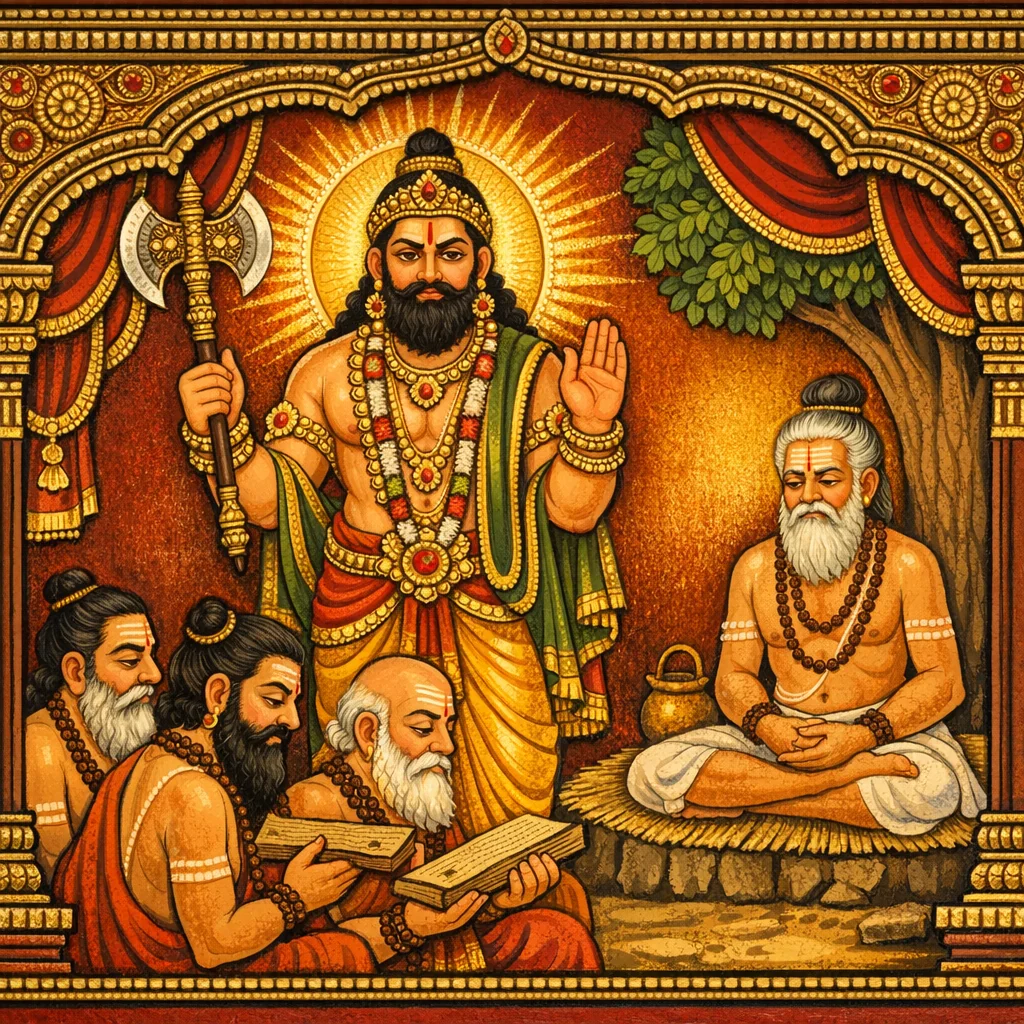
Framed as a dialogue, King Sagara asks the sage Vasiṣṭha about Bhārgava (Paraśurāma) and his response to a king’s wrongdoing. Vasiṣṭha recounts that after Bhṛgu’s departure, Paraśurāma, speaking in wrath, denounces the king’s misguided conduct and attributes human deeds—auspicious or inauspicious—to the overpowering force of daiva (fate). Before the assembled ṛṣis he publicly vows to slay Kārttavīrya in battle to settle his father’s enmity, declaring that even divine protection will not thwart his resolve. Jamadagni then admonishes his son and teaches the “eternal dharma of the good,” defining sādhus as those who do not grow angry even when insulted or struck, and praising kṣamā (forbearance) as a spiritual treasure that yields imperishable worlds. He warns that killing a ruler brings grave sin and urges restraint and tapas. Paraśurāma replies by trying to reconcile his father’s teaching on śama (calm) with the demands of justice and his vow, setting up the ethical tension between kṣatriya-like retribution and brāhmaṇa ideals of forgiveness.
Shlokas
Verse 1
इति श्रीब्रह्माण्डे महापुराणे वायुप्रोक्ते मध्याभागे तृतीय उपोद्धातपादे भार्गवचरिते त्रिंशत्तमो ऽध्यायः // ३०// सगर उवाच ब्रह्मपुत्र महाभाग वद भार्गवचेष्टितम् / यच्चकार महावीर्य्यो राज्ञः क्रुद्धो हि कर्मणा
Thus, in the holy Brahmāṇḍa Mahāpurāṇa, in the middle section spoken by Vāyu, in the third introductory division, within the Bhārgava narrative, begins the thirtieth chapter. Sagara said: “O noble son of Brahmā, tell me of Bhārgava’s deeds—what did that mighty hero do, angered by the king’s action?”
Verse 2
वसिष्ठ उवाच गते तस्मिन्महाभागे भृगो पितृपरायणः / रामः प्रोवाच संक्रुद्धो मुञ्चञ्छ्वासान्मुहर्मुहुः
Vasiṣṭha said: “After Bhṛgu, the noble one devoted to the Pitṛs, had departed, Rāma spoke in fierce anger, again and again releasing heavy breaths.”
Verse 3
परशुराम उवाच अहो पश्यत मूढत्वंराज्ञो ह्युत्पथगामिनः / कार्त्तवीर्यस्य यो विद्वांश्चक्रे ब्रह्मवधोद्यमम्
Paraśurāma said: “Alas, behold the folly of King Kārttavīrya, who strayed onto a wrongful path: though learned, he set about the dreadful act of slaying a brāhmaṇa.”
Verse 4
दैवं हि बलवन्मन्ये यत्प्रभावाच्छरीरिणः / शुभं वाप्यशुभं सर्वे प्रकुर्वन्ति विमोहिताः
I deem Daiva—the divine ordinance—truly mighty; by its power all embodied beings, deluded, perform deeds both auspicious and inauspicious.
Verse 5
शृणवन्तु ऋषयः सर्वे प्रतिज्ञा क्रियते मया / कार्त्तवीर्यं निहत्याजौ पितुर्वैरं प्रसाधये
Let all the sages hear: I make this vow—having slain Kārttavīrya in battle, I shall fulfill my father’s vengeance.
Verse 6
यदि राजा सुरैः सर्वैरिन्द्राद्दैर्दानवैस्तथा / रक्षिष्यते तथाप्येनं संहरिष्यामि नान्यथा
Even if that king were guarded by all the gods with Indra at their head, and by the dānavas as well, still I shall destroy him—no otherwise.
Verse 7
एवमुक्तं समाकर्ण्य रामेण समुहात्मना / जमदग्निरुवाचेदं पुत्रं साहसभाषिणम्
Hearing these words spoken by resolute-souled Rāma, Jamadagni addressed his son, who had spoken so boldly, as follows.
Verse 8
जमदग्निरुवाच श्रुणु राम प्रवक्ष्यामि सतां धर्मं सनातनम् / यच्छ्रुत्वा मानवाः सर्वे जायन्ते धर्मकारिणः
Jamadagni said: “Listen, O Rāma; I shall proclaim the eternal Dharma of the righteous—hearing it, all people become doers of Dharma.”
Verse 9
साधवो ये महाभागाः संसारान्मोक्षकाङ्क्षिणाः / न कस्मैचित्प्रकुप्यन्ति निन्दितास्ताडिता अपि
The greatly blessed sadhus who long for moksha beyond samsara do not grow angry with anyone, even when reviled and struck.
Verse 10
क्षमाधना महाभागा ये च दान्तास्तपस्विनः / तेषां चैवाक्षया लोकाः सततं साधुकारिणाम्
The greatly blessed, whose wealth is forbearance—self-restrained ascetics—attain realms that are ever imperishable, for they are doers of good.
Verse 11
यस्तु दुष्टैस्तु दण्डाद्यैर्वचसापि च ताडितः / न च क्षोभमवाप्नोति स साधुः परिकीर्त्थते
He whom the wicked strike with rod and the like, and even with harsh words, yet who does not become disturbed—he is proclaimed a sadhu.
Verse 12
ताडयेत्ताडयन्तं यो न च साधुः स पापभाक् / क्षमयार्ऽहणतां प्राप्ताः साधवो ब्राह्मणा वयम्
He who strikes back the one who strikes him is no sadhu; he becomes a bearer of sin. We are brahmanas and sadhus, made worthy of reverence through forbearance.
Verse 13
नरनाथवधे तात पातकं सुमहद्भवेत् / तस्मान्निवारये त्वाद्य क्षमां कुरु तपश्चर
My child, to slay a king brings exceedingly great sin; therefore today I restrain you—show forgiveness and practice tapas, holy austerity.
Verse 14
वसिष्ठ उवाच एवं पित्रा समादिष्टं विज्ञाय नृपनन्दन / रामः प्रोवाच पितरं क्षमाशीलमरिन्दमम्
Vasistha said: O son of the king, having understood what was commanded by his father, Rama spoke to his father, who was forgiving by nature and a subduer of enemies.
Verse 15
परशुराम उवाच शृणु तात महाप्राज्ञ वि५प्तिं मम सांप्रतम् / भवता शम उद्दिष्टः साधूनां सुमहात्मनाम्
Parashurama said: Listen, O father, O greatly wise one, to my submission now. You have advised peace, which is characteristic of the virtuous and great souls.
Verse 16
म शमः साधुदीनेषु गुरुष्वीश्वरभावनैः / कर्त्तव्यो दुष्टचेष्टेषु न शमः सुखदो भवेत्
That peace should be practiced towards the virtuous, the distressed, and Gurus with a sense of divinity. However, towards those of evil conduct, peace does not yield happiness.
Verse 17
तस्मादस्य वधः कार्यः कार्त्तवीर्यस्य वै मया / देह्याज्ञां माननीयाद्य साधये वैरमात्मनः
Therefore, the killing of this Karttavirya must indeed be done by me. Give me permission, O honorable one; today I shall settle this enmity.
Verse 18
जमदग्निरुवाच शृणु राम महाभाग वचो मम समाहितः / करिष्यसि यथा भावि तथा नैवान्यथा भवेत्
Jamadagni said: Listen, O Rama, O highly fortunate one, to my words with attention. You will do as destiny dictates; it cannot happen otherwise.
Verse 19
इतो व्रजत्वं ब्रह्माणां बृच्छ तात हिताहितम् / स यद्वदिष्यति विभुस्तत्कर्त्ता नात्र संशयः
Go now, dear child, and ask Brahmā what is wholesome and what is harmful. Whatever the mighty Lord declares—do that; of this there is no doubt.
Verse 20
वसिष्ठ उवाच एवमुक्तः स पितरं नमस्कृत्य महामतिः / जगाम ब्रह्मणो लोकमगम्यं प्राकृतैर्जनैः
Vasiṣṭha said: Thus addressed, the great-minded one bowed to his father in reverence and went to Brahmā’s world, unreachable to ordinary mortals.
Verse 21
ददर्श ब्रह्मणो लोकं शातकैंभविनिर्मितम् / स्वर्णप्राकारसंयुक्तं मणिस्तंभैर्विमूषितम्
He beheld Brahmā’s world, fashioned of pure śātakumbha gold—encircled by golden ramparts and adorned with pillars of jewels.
Verse 22
तत्रापश्यत्समासीनं ब्रह्माणममितौजसम् / रत्नसिंहासने रम्ये रत्नभूषणभूषितम्
There he saw Brahmā of immeasurable splendor, seated upon a lovely throne of gems, adorned with radiant jewel-ornaments.
Verse 23
सिद्धेन्द्रैश्च मुनीन्द्रैश्च वेष्टितं ध्यानतत्परैः / विद्याधरीणां नृत्यं च पश्यन्तं सस्मितं मुदा
He was encircled by siddha-lords and sage-lords intent on meditation, and with a joyful smile he watched the dance of the Vidyādharīs.
Verse 24
तपसा फलदातारं कर्त्तारं जगतां विभुम् / परिपूर्णतमं ब्रह्म ध्यायतं यतमानसम्
By austerity, with a disciplined mind, meditate upon the all-perfect Brahman—the giver of fruits, the maker of the worlds, the all-pervading Lord.
Verse 25
गुह्ययोगं प्रवोचन्तं भक्तवृन्देषु संततम् / दृष्ट्वा तमव्ययं भक्त्या प्रणनाम भृगूद्वहः
Seeing the Imperishable One, who ever expounded the secret yoga among the hosts of devotees, the foremost of the Bhṛgus bowed down in devotion.
Verse 26
स दृष्ट्वा विनतं राममाशीर्भिरभिनन्द्य च / पप्रच्छ कुशलं वत्स कथमागमनं कृथाः
Seeing Rama bowed in humility, he blessed and welcomed him, and asked: “My child, are you well? How have you come here?”
Verse 27
संपृष्टो विधिना रामः प्रोवाचाखिलमादितः / वृत्तान्तं कार्त्तवीर्यस्य पितुः स्वस्य महात्मनः
Questioned in due manner, Rama told everything from the beginning—the full account of his great-souled father, Kārttavīrya.
Verse 28
तच्छ्रुत्वा सकलं ब्रह्मा विज्ञातार्थो ऽपि मानद / उवाच रामं धर्मिष्ठं परिणामसुखावहम्
Having heard it all, though he already knew its import, Brahmā, bestower of honor, spoke to Rama, most steadfast in dharma, words that would bring happiness in the end.
Verse 29
प्रतिज्ञा दुर्लभा वत्स यां भवन्कृतवान्रुषा / सृष्टि रेषा भगवतः संभवेत्कृपया बटो
O child, rare indeed is the vow you made in anger; this creation can arise only by the Bhagavan’s grace, dear boy.
Verse 30
जगत्सृष्टं मया तात संक्लेशेन तदाज्ञया / तन्नाशकारिणी चैव प्रतिज्ञा भवता कृता
My son, by His command I created the world with great toil; yet you have made a vow that would bring about its destruction.
Verse 31
त्रिःसप्तकृत्वो निर्भूपां कर्तुमिच्छसि मेदिनीम् / एकस्य राज्ञो दोषेण पितुः परिभवेन च
Because of one king’s fault and the humiliation of your father, you wish to make the earth kingless twenty-one times.
Verse 32
ब्रह्मक्षत्र्रियविट्शूद्रैः सृष्टिरेषा सनातनी / आविर्भूता तिरोभूता हरेरेव पुनः पुनः
This eternal creation—of brahmins, kshatriyas, vaishyas, and shudras—manifests and withdraws again and again by Hari alone.
Verse 33
अव्यर्था त्वत्प्रतिज्ञा तु भवित्री प्राक्तनेन च / यद्वायासेन ते कार्यसिद्धिर्भवितुमर्हति
Your vow will not be in vain; by the power of former karma, even if through toil, your task is fit to be fulfilled.
Verse 34
शिवलोकं प्रयाहि त्वं शिवस्याज्ञामवाप्नुहि / पृथिव्यां बहवो भूपाः संति शङ्करकिङ्कराः
Go to Śivaloka and obtain Śiva’s command. On earth there are many kings who are servants of Śaṅkara.
Verse 35
विनैवाज्ञां महेशस्य को वा तान्हन्तुमीश्वरः / बिभ्रतः कवचान्यङ्गे शक्तीश्चापि दुरासदाः
Without Maheśa’s command, who could slay them? They wear armor upon their bodies, and their powers too are hard to assail.
Verse 36
उपायं कुरु यत्नेन जयबीजं शुभावहम् / उपाये तु समारब्धे सर्वे सिध्यन्त्युपक्रमाः
With earnest effort, devise a means that is the seed of victory and brings auspicious good. When the means is set in motion, all undertakings succeed.
Verse 37
श्रीकृष्णमन्त्रं कवचं गृह्ण वत्स गुरोर्हरात् / दुर्ल्लङ्घ्यं वैष्णवं तेजः शिवशक्तिर्विजेष्यति
Child, receive from the guru Hara (Śiva) the kavaca—the protective mantra of Śrī Kṛṣṇa. The unassailable Vaiṣṇava radiance shall be overcome by Śiva-Śakti.
Verse 38
त्रैलोक्यविजयं नाम कवचं परमाद्भुतम् / यथाकथं च विज्ञाप्य शङ्करं लभदुर्लभम्
This kavaca named “Victory over the Three Worlds” is supremely wondrous. Somehow, petition Śaṅkara and obtain this rare boon.
Verse 39
प्रसन्नः स गुणैस्तुभ्यं कृपालुर्दीनवत्सलः / दिव्यपाशुपतं चापि दास्यत्येव न संशयः
Pleased by your virtues, he is compassionate and tender toward the afflicted. Without doubt, he will surely grant the divine Pāśupata weapon as well.
Frequently Asked Questions
It advances the Bhārgava (Bhrigu-line) narrative through Paraśurāma and situates his conflict with Kārttavīrya within a broader royal-historical memory that Sagara seeks to understand as part of dynastic causality.
Jamadagni teaches sādhudharma centered on kṣamā (forbearance): the truly good do not become angry even when insulted or harmed, and such restraint is praised as spiritually fruitful and ethically superior.
Paraśurāma invokes daiva as a force that drives embodied beings toward good or evil, yet he also asserts personal agency through an explicit vow; Jamadagni counters by prioritizing restraint and warning of heavy sin in regicide—creating a deliberate ethical conflict the narrative must resolve.