Adhyaya 30
Reṇukā-vilāpa and the Aftermath of Jamadagni’s Slaying (अर्जुनोपाख्यान-प्रसङ्गः)
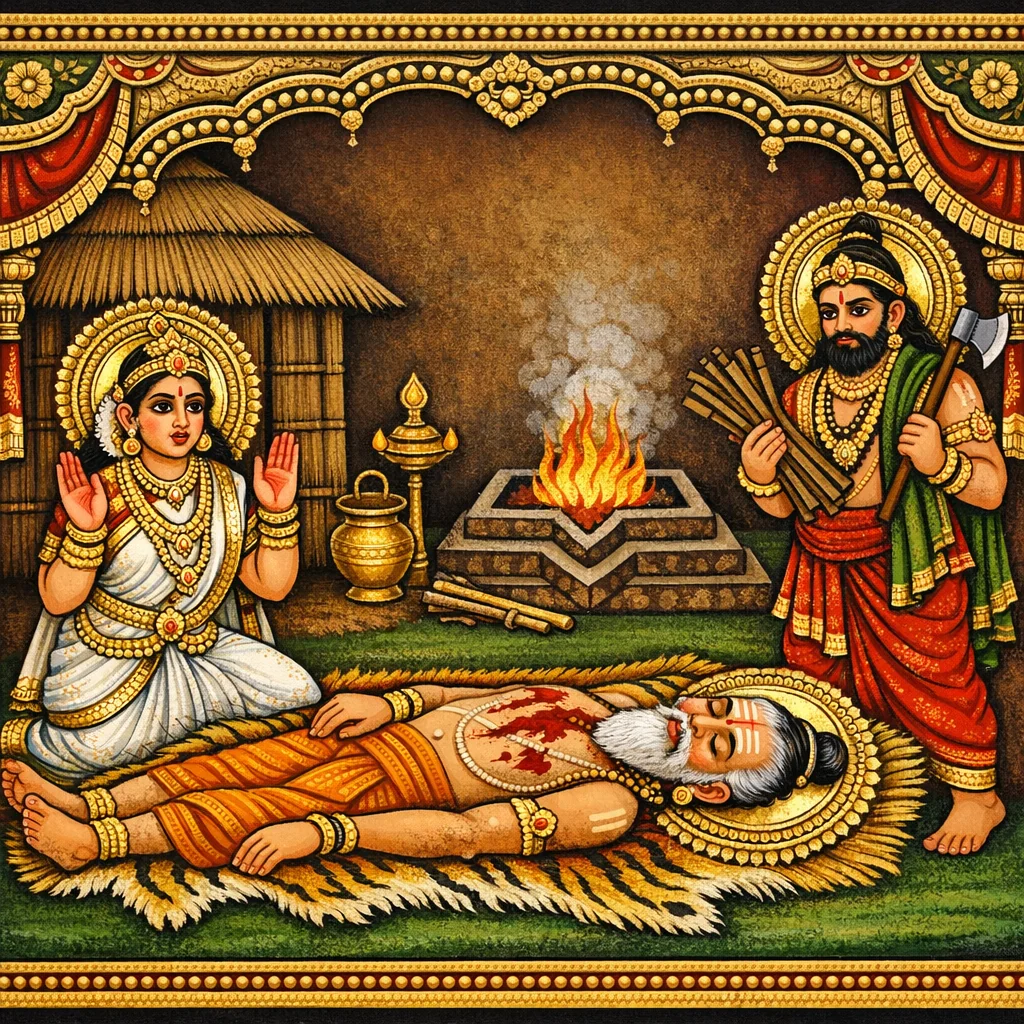
This adhyāya continues the Arjuna-upākhyāna, highlighting the ethical shock of Jamadagni’s slaying and the king’s inward collapse. Vasiṣṭha describes the ruler’s agitation and self-reproach as he realizes that brahmasva-haraṇa (seizing brahmin property) and brahma-hatyā (violence against a brahmin) bring ruin in both this world and the next. The scene shifts to the āśrama: Reṇukā suddenly appears at the king’s return and sees Jamadagni’s bloodied, motionless body. Her lament unfolds in ritualized grief—praising his gentleness and dharma-knowledge, blaming fate, and pleading to remain his companion even in death, affirming the sanctity of the marital bond. The verses culminate with Rāma (Paraśurāma) returning from the forest with fuel, setting up the ensuing consequences. Genealogically, the episode is a hinge: a crime against a brahmin-sage triggers dharmic retaliation and reshapes kṣatriya legitimacy, a recurring Purāṇic way of explaining dynastic turns.
Shlokas
Verse 1
इति श्रीब्रह्माण्डे महापुराणे वायुप्रोक्ते मध्यमभागे तृतीय उपोद्धातपादेर्ऽजुनोपाख्याने एकोनत्रिंशत्तमो ऽध्यायः // २९// वासिष्ठ उवाच श्रुस्वैतत्सकलं राजा जमदग्निवधादिकम् / उद्विग्नचेताः सुभृशं चिन्तयामास नैकधा
Thus, in the holy Brahmāṇḍa Mahāpurāṇa, in the middle section spoken by Vāyu, within the third introductory part of the Arjuna narrative, ends Chapter Twenty-Nine. Vasiṣṭha said: Hearing all this, beginning with the slaying of Jamadagni, the king’s mind grew greatly agitated, and he pondered deeply in many ways.
Verse 2
अहो मे सुनृसंसस्य लोकयोरुभयोरपि / ब्रह्मस्वहरणे वाञ्छा तद्धत्या चातिगर्हिता
Alas, how ruthless I am! In both worlds I shall be condemned—my desire to seize a brahmin’s wealth, and the slaying of him besides, are grievously shameful.
Verse 3
अहो नाश्रौषमस्याहं ब्राह्मणस्य विजानतः / वचनं तर्हि तां जह्यां विमूढात्मा गतत्रपः
Alas, I did not heed the words of that discerning brahmin; then and there I should have let him go—yet I, deluded and shameless, did not.
Verse 4
इति संचितयन्नंव हृदयेन विदूयता / स्वपुरं प्रतिचक्राम सबलः सानुगस्ततः
Thus reflecting, his heart burned with anguish; then, with his forces and attendants, he turned back and returned to his own city.
Verse 5
पुरीं प्रतिगते राज्ञि तस्मिन्सपरिवारके / आश्रमात्सहसा राजन्विनिश्चक्राम रेणुका
When the king returned to the city with all his household, O king, Renukā suddenly came forth from the āśrama.
Verse 6
अथ सक्षतसर्वाङ्गं रुधिरेण परिप्लुतम् / निश्चेष्टं परितं भूमौ ददर्श पतिमात्मनः
Then she beheld her own husband—his whole body wounded, drenched in blood—lying motionless upon the ground.
Verse 7
ततः सा विहतं मत्वा भर्त्तारं गतचेतनम् / अन्वाहतेवाशनिना मूर्छितान्यपतद्भुवि
Then, thinking her husband slain and bereft of consciousness, as though struck by a thunderbolt, she swooned and fell upon the earth.
Verse 8
चिरादिव पुनर्भूमेरुत्थायातीव दुःखिता / पतित्वोत्थाय सा भूयः सुस्वरं प्ररुरोद ह
After a long while she rose from the ground, overwhelmed with sorrow; and having fallen and risen again, she once more wept aloud in a clear, plaintive voice.
Verse 9
विललाप च सात्यर्थं धरणीधूलिधूसरा / अश्रुपूर्ममुखी दीना पतिता शोकसागरे
Dust-grey from the earth, her face brimming with tears, wretched and as though plunged into an ocean of grief, she lamented bitterly and at length.
Verse 10
हा नाथ पिय धर्मज्ञ दाक्षिण्यामृतसागर / हा धिगत्यन्तशान्त त्वं नैव काङ्क्षेत चेदृशम्
Alas, O Lord—beloved knower of dharma, ocean of the nectar of compassion! Shame—though utterly serene, would you truly desire such a fate?
Verse 11
आश्रमादभिनिष्क्रान्तः सहसा व्यसानर्णवे / क्षिप्त्वानाथामगाधे मां क्व च यातो ऽसि मानद
You suddenly left the hermitage and plunged into an ocean of calamity; casting me, helpless, into this bottomless deep—O giver of honor, where have you gone?
Verse 12
सतां साप्तपदे मैत्रे मुषिताहं त्वया सह / यासि यत्र त्वमेकाकी तत्र मां नेतुमर्हसि
The friendship of the virtuous, sealed by the seven steps, seems stolen from me along with you; wherever you go alone, you ought to take me there as well.
Verse 13
दृष्ट्वा त्वामीदृशावस्थमचिराद्धृदयं मम / न दीर्यते महाभाग कठिनाः खलु योषितः
Seeing you in such a state, my heart does not break at once, O greatly blessed one; truly, women are hard and enduring.
Verse 14
इत्येवं विलपन्ती सा रुदती च मुहुर्मुहुः / चुक्रोश रामरामेति भृशं दुःखपरिप्लुता
Thus she lamented, weeping again and again; overwhelmed by sorrow, she cried out loudly, “Rama! Rama!”
Verse 15
तावद्रामो ऽपि स वनात्समिद्भारसमन्वितः / अकृतव्रणसंयुक्तः स्वाश्रमाय न्यवर्त्तत
Then Rama too returned from the forest, bearing a load of sacred kindling (samidha); uninjured, he went back to his own ashram.
Verse 16
अपश्यद्भयशंसीनि निमित्तानि बहूनि सः / पश्यन्नुद्विग्नहृदयस्तूर्णं प्रापाश्रमं विभुः
He saw many omens foretelling fear; his heart grew anxious, and the mighty one swiftly reached the ashram.
Verse 17
तमायान्तमभिप्रेक्ष्य रुदती सा भृशातुरा / नविभूतेव शोकेन प्रारुदद्रेणुका पुनः
Seeing him approach, she, sorely distressed, began to weep; as though bereft of sense by grief, Renuka cried out again.
Verse 18
रामस्य पुरतो राजन्भर्तृव्यसनपीडिता / उभाभ्यामपि हस्ताभ्यामुदरं समताडयत्
O king, before Rama, she—tormented by her husband’s calamity—struck her belly with both hands.
Verse 19
मार्गे विदितवृत्तान्तः सम्यग्रामो ऽपि मातरम् / कुररीमिव शोकार्त्ता दृष्ट्वा दुःखमुपेयिवान्
Though he had learned the whole matter on the way, Rama, seeing his mother grief-stricken like a kurari bird, was himself overcome with sorrow.
Verse 20
धैर्यमारोप्य मेधावी दुःशशोकपरिप्लुतः / नेत्राभ्यामश्रुपूर्णाभ्यां तस्थौ भूमावर्धोमुखः
Summoning his fortitude, the wise one was overwhelmed by grievous sorrow. With both eyes brimming with tears, he stood upon the ground, his face bowed down.
Verse 21
तं तथागतमालोक्य रामं प्राहाकृतव्रणः / किमिदं भृगुशार्दूल नैतत्वय्युपपाद्यते
Seeing Rama come in such a state, the wounded-hearted spoke: “O tiger among the Bhṛgus, what is this? Such a thing does not befit you.”
Verse 22
न त्वादृशा महाभाग भृशं शोचन्ति कुत्रचित् / धृतिमन्तो महान्तस्तु दुःखं कुर्वति न व्यये
O greatly blessed one, men like you do not grieve excessively anywhere. The great, steadfast in resolve, do not let sorrow become a cause of their decline.
Verse 23
शोकः सर्वेन्द्रियाणां हि परिशोषप्रदायकः / त्यज शोकं महाबाहो न तत्पात्रं भवदृशाः
Sorrow indeed withers all the senses. O mighty-armed one, cast off grief; it is not fitting for one such as you.
Verse 24
एहिकामुष्मिकार्थानां नूनमेकान्तरोधकः / शोकस्तस्यावकाशं त्वं कथं त्दृदि नियच्छसि
This grief is surely a complete obstruction to the aims of both this world and the next. How then do you grant it firm space within your heart?
Verse 25
तत्त्वं धैर्यधनो भूत्वा परिसांत्वय मातरम् / रुदतीं बत वैधव्यशं कापहतचेतनाम्
Therefore, becoming rich in patience, console your mother who is weeping, alas, struck by the grief of widowhood and whose consciousness is lost.
Verse 26
नैवागमनमस्तीह व्यतिक्रान्तस्य वस्तुनः / तस्मादतीतमखिलं त्यक्त्वा कृत्यं विचिन्तय
There is no return here for a thing that has passed away. Therefore, abandoning all the past, think of what needs to be done.
Verse 27
इत्येवं सांत्वमानश्च तेन दुःशसमन्वितः / रामः संस्तंभयामास शनैरात्मानमात्मना
Thus being consoled, though filled with unbearable grief, Rama slowly steadied himself by his own self.
Verse 28
दुःखशोकपरीता हि रेणुका त्वरुदन्मुहः / त्रिःसप्तकृत्वो हस्ताभ्यामुदरं समताडयत्
Renuka, indeed surrounded by sorrow and grief, cried repeatedly; twenty-one times she beat her belly with her hands.
Verse 29
तावत्तदन्तिकं रामः समभ्येत्याश्रुलोचनः / रुदतीमलमंबेति सांत्वयामास मातरम्
Then Rama, with tearful eyes, approached near her and consoled his weeping mother, saying 'Enough, Mother'.
Verse 30
उवाचापनयन्दुःखाद्भर्तृशोकपरायणाम् / त्रिःसप्तकृत्वो यदिदं त्वया वक्षः समाहतम्
He spoke to remove the grief of her who was immersed in sorrow for her husband: 'Since you have beaten your chest twenty-one times...'
Verse 31
तावतसंख्यमहं तस्मात्क्षत्त्रजारमशेषतः / हनिष्ये भुवि सर्वत्र सत्यमेतद्ब्रविमि ते
'...Therefore, I shall destroy the Kshatriya race from the earth exactly that many times. I speak this truth to you.'
Verse 32
तस्मात्त्वं शोकमुत्सृज्य धैर्यमातिष्ट सांप्रतम् / नास्त्येव नूनमायातमतिक्रान्तस्य वस्तुनः
'Therefore, abandon your grief and take courage now. Truly, there is no return for what has passed away.'
Verse 33
इत्युक्ता रेणुका तेन भृशं दुःखान्वितापि सा / कृच्छ्राद्धैर्यं समालंब्य तथेति प्रत्यभाषत
Thus addressed by him, Renuka, though deeply afflicted with sorrow, gathered her courage with difficulty and replied, 'Let it be so.'
Verse 34
ततो रामो महाबाहुः पितुः सह सहोदरैः / अग्नौ सत्कर्त्तुमारेभे देहं राजन्यथविधि
Then the mighty-armed Rama, along with his brothers, began to perform the funeral rites for his father's body in the fire according to the scriptures, O King.
Verse 35
भर्तृशोकपरिताङ्गी रेणुकापि दृढव्रता / पुत्रान्सर्वान्समाहूय त्विदं वचनमब्रवीत्
Renukā, her limbs weighed down by grief for her husband and steadfast in her vow, summoned all her sons and spoke these words.
Verse 36
रेणुकोवाच / अहं व-पितरं पुत्राः स्वर्गतं पुण्यशीलिनम् / अनुगन्तुमिहेच्छामि तन्मे ऽनुज्ञातुमर्हथ
Renukā said: “My sons, your father, virtuous and full of merit, has gone to heaven. I wish to follow him—grant me your consent.”
Verse 37
असह्यदुःशं वैधव्यं सहमाना कथं पुनः / भर्त्रा विरहिता तेन प्रवर्त्तिष्ये विनिन्दिता
Bearing the unbearable anguish of widowhood, how could I live on? Separated from my husband, how could I go forth, scorned by the world?
Verse 38
तस्मादनुगमिष्यामि भर्त्तारं दयितं मम / यथा तेन प्रवर्त्तिष्ये परत्रापि सहानिशम्
Therefore I shall follow my beloved husband, so that even in the world beyond I may abide with him, day and night.
Verse 39
ज्वलन्तमिममेवाग्निं संप्रविश्य चिरादिव / भर्तुर्मम भविष्यामि पितृलोकप्रियातिथिः
Entering this very blazing fire, as though after a long while, I shall become for my husband a beloved guest in the realm of the Ancestors (Pitṛloka).
Verse 40
अनुवादमृते पुत्रा भवद्भिस्तत्र कर्मणि / प्रतिभूय न वक्तव्यं यदि मत्प्रियमिच्छथ
O sons, in that matter do not step forth as sureties and speak without leave, if you desire what is dear to me.
Verse 41
इत्येवमुक्त्वा वचनं रेणुका दृढनिश्चया / अग्निं प्रविश्य भर्त्तारमनुगन्तुं मनोदधे
Having spoken thus, Renukā, firm in resolve, set her mind on entering the fire to follow after her husband.
Verse 42
एतस्मिन्नेव काले तु रेणुकां तनयैः सह / समाभाष्यातिगंभीरा वागुवाचाशरीरीणी
At that very time, addressing Renukā together with her sons, a profoundly grave, bodiless voice spoke.
Verse 43
हे रेणुके स्वतनयैर्गिरं मे ऽवहिता शृणु / मा कार्षीः साहसं भद्रे प्रवक्ष्यामि प्रियं तव
O Renukā, with your own sons, listen attentively to my words. O noble lady, do not commit this rash act; I shall tell you what is dear and for your good.
Verse 44
साहसो नैव कर्त्तव्यः केनाप्यात्महितैषिणा / न मर्त्तव्यन्त्वया सर्वो जीवन्भद्राणि पश्यति
No one who seeks their own true good should commit such rashness. You must not die; only the living behold all auspicious blessings.
Verse 45
तस्माद्धैर्यधना भूत्वा भव त्वं कालकाङ्क्षिणी / निमित्तमन्तरीकृत्य किञ्चिदेव शुचिस्मिते
Therefore, making fortitude your wealth, O you who await the destined time, O pure-smiling one—remain steadfast; taking the sign as the intervening cause, wait only a little while.
Verse 46
अचिरेणैव भर्त्ता ते भविष्यति सचेतनः / उत्पन्नजीवितेन त्वं कामं प्राप्स्यसि शोभने / भवित्री चिररात्राय बहुकल्याण भाजनम्
O fair one, before long your husband will again be conscious; with life restored, you shall attain the joy you desire, and until the long night’s end you will become a vessel of many blessings.
Verse 47
वसिष्ठ उवाच इति तद्वचनं श्रुत्वा धृतिमालंब्य रेणुका / तद्वाक्यगौरवाद्धर्षमवापुस्तनयाश्च ते
Vasiṣṭha said: hearing those words, Reṇukā took refuge in steadfastness; and by the weight and dignity of that speech, her sons too attained joy.
Verse 48
ततोनीत्वा पितुर्देहमाश्रमाभ्यन्तरं मुनेः / शाययित्वा निवाते तु परितः समुपाविशन्
Then they carried their father’s body into the sage’s hermitage; laying it in a still, windless place, they sat down all around.
Verse 49
तेषां तत्रोपविष्टानामप्रहृष्टात्मचेतसाम् / निमत्तानि शुभान्यासन्ननेकानि महान्ति च
As they sat there, their hearts and minds not yet uplifted, many great and auspicious signs appeared.
Verse 50
तेन ते किञ्चिदाश्वस्तचेतसो मुनिपुङ्गवाः / निषेदुः सहिता मात्रा काङ्क्षन्तो जीवितं पितुः
Thus those foremost sages grew somewhat comforted at heart. Sitting together with their mother, they longed for their father’s life to endure.
Verse 51
एतस्मिन्नन्तरे राजन्भृगुवंशधरो मुनिः / विधेर्बलेन मतिमांस्तत्रागच्छद्यदृच्छया
Just then, O king, a wise sage of the lineage of Bhṛgu, by the power of destiny, happened to arrive there.
Verse 52
अथर्वणां विधिः सा क्षाद्वेदवेदाङ्गपारगः / सर्वशास्त्रार्थवित्प्राज्ञः सकलासुरवन्दितः
He was Vidhi among the Atharvans, truly versed in the Vedas and Vedāṅgas; a wise knower of the meaning of all śāstras, revered by all the asuras.
Verse 53
मृतसंजीविनीं विद्यां यो वेद मुनिदुर्लभाम् / यथाहतान्मृतान्देवैरुत्थापयति दानवान्
Whoever knows the Mṛtasañjīvinī lore, rare even among sages, can raise up the dānavas slain and left dead by the devas, restoring them to life.
Verse 54
शास्त्रमोशनसं येन राज्ञां राज्यफलप्रदम् / प्रणीतमनुजीवन्ति सर्वे ऽद्यापीह पार्थिवाः
By him was composed the Śāstramośana, a royal treatise that bestows upon kings the fruits of sovereignty; and even today all earthly rulers live and govern in accord with it.
Verse 55
स तदाश्रममासाद्य प्रविष्टो ऽन्तर्महामुनिः / ददर्श तदवस्थांस्तान्सर्वान्दुःखपरिप्लुतान्
The great sage reached that āśrama, entered within, and beheld them all overwhelmed and flooded with sorrow.
Verse 56
अथ ते तु भृगुं दृष्ट्वा वंशम्य पितरं मुदा / उत्थायास्मै ददुश्चापि सत्कृत्य परमासनम्
Then, seeing Bhṛgu—the forefather of their line—they rose in joy, honored him, and offered him the highest seat.
Verse 57
स चाशीर्भिस्तु तान्सर्वानभिनन्द्य महामुनिः / पप्रच्छ किमिदं वृत्तं तत्सर्वं ते न्यवेदयन्
The great sage blessed and greeted them all, then asked, “What has happened here?” They related the entire matter to him.
Verse 58
तच्छ्रुत्वा स भृगुः शीघ्रं जलमादाय मन्त्रवित् / संजीविन्या विनया तं सिषेच प्रोच्चरन्निदम्
Hearing this, Bhṛgu—knower of mantras—quickly took water and, by the Saṃjīvinī rite, sprinkled him while uttering these words.
Verse 59
यज्ञस्य तपसो वीय ममापि शुभमस्ति चेत् / तेनासौ जीवताच्छीघ्रं प्रसुप्त इवचोत्थितः
If the power of sacrifice and austerity—and whatever auspicious merit is mine—be true, then by that might let him swiftly live again, rising as one who awakens from sleep.
Verse 60
एवमुक्ते शुभे वाक्ये भृगुणा साधुकारिणा / समुत्तस्थावथार्चीकः साक्षाद्ग्ररुरिवापरः
When Bhṛgu spoke those auspicious words, praising what is righteous, Ārcīka rose at once, like a second Garuḍa manifest before their eyes.
Verse 61
दृष्ट्वा तत्र स्थितं वन्द्यं भृगुं स्वस्य पितामहम् / ननाम भक्त्या नृपते कृताञ्जलिरुवाच ह
Seeing Bhṛgu standing there—venerable and his own forefather—he bowed in devotion; then, with palms joined, he spoke (O King).
Verse 62
जमदग्निरुवाच धन्यो ऽहं कृतकृत्यो ऽहं सफलं जीवितं च मे
Jamadagni said: “Blessed am I; my duty is fulfilled; my very life has borne fruit.”
Verse 63
यत्पश्ये चरणौ ते ऽद्य सुरासुरनमस्कृतौ / भगवन्किं करोम्यद्य शुश्रूषां तव मानद
Today I behold your feet, revered by devas and asuras alike. O Bhagavan, what shall I do today? O giver of honor, I long to serve you.
Verse 64
पुनीह्यात्मकुलं स्वस्य चरणांबुकणैर्विभो / इत्युक्त्वा सहसाऽनीतं रामेणार्ध्यं मुदान्वितः
O Vibhu, purify my lineage with the droplets of water from your feet. Saying this in joy, he offered the arghya that Rama promptly brought.
Verse 65
प्रददौ पादयोस्तस्य भक्त्यान मितकन्धरः / तज्जलं शिरसाधत्त सकुटुंबो महामनाः
Mitakandhara, in devotion, offered water for washing at his two feet. The great-souled one, together with his family, bore that water upon his head in reverence.
Verse 66
अथ सत्कृत्य स भृगुं पप्रच्छ विनयान्वितः / भगवन् किं कृतं तेन राज्ञा दुष्टेन पातकम्
Then, having duly honored Bhrigu, he asked with humility: “O Bhagavan, what sin was committed by that wicked king?”
Verse 67
यस्यातिथ्यं हि कृतवानहं सम्यग्विधानतः / साधुबुद्ध्यास दुष्टात्मा किं चकार महामते
He whom I, thinking him virtuous, received as a guest according to proper rite—O great sage—what did that evil-souled man do?
Verse 68
वसिष्ठ उवाच एवं स पृष्टो मतिमान्भृगुः सर्वविदीश्वरः / चिरं ध्यात्वा समालोच्य कारणं प्राह भूपते
Vasishtha said: Thus questioned, the wise Bhrigu, lord of all knowledge, long meditated and reflected, and then, O king, spoke the cause.
Verse 69
भृगुरुवाच शृणु तात महाभाग बीजमस्य हि कर्मणः / यश्च वै कृतवान्पापं सर्वज्ञस्य तवानघ
Bhrigu said: “Listen, dear and fortunate one, to the seed of this deed. O blameless one—of the sin committed against you, the all-knowing.”
Verse 70
शप्तः पुरा वसिष्ठेन नाशार्थं स महीपतिः / द्विजापराधतो मूढ वीर्यं ते विनशिष्यते
That king was cursed long ago by Vasistha for his destruction: 'O fool, due to your offense against a Brahmin, your valor shall perish.'
Verse 71
तत्कथं वचनं तस्य भविष्यत्यन्यथा मुनेः / अयं रामो महावीर्यं प्रसह्यनृपपुङ्गवम्
How then can the word of that sage prove false? This Rama of great valor, having forcibly overpowered the best of kings...
Verse 72
हनिष्यति महाबाहो प्रतिज्ञां कृतवान्पुरा / यस्मादुरः प्रतिहतं त्वया मातर्ममाग्रतः
...will kill him, O mighty-armed one. He made a vow long ago: 'Since, O Mother, you beat your breast in front of me...'
Verse 73
एकविंशतिवारं हि भृशं दुःखपरीतया / त्रिः सप्तकृत्वो निःक्षत्रां करिष्ये पृथिवीमिमाम्
...twenty-one times, overwhelmed by intense grief. I shall rid this earth of Kshatriyas twenty-one times.'
Verse 74
अतो ऽयं वार्यमाणो ऽपि त्वाया पित्रा निरन्तरम् / भाविनोर्ऽथस्य च बलात्करिष्यत्येव मानद
Therefore, even though constantly restrained by you and his father, he will certainly do this by the force of destiny, O giver of honor.
Verse 75
स तु राजा महाभागो वृद्धानां पर्युपासिता / दत्तात्रेयाद्धरेरंशाल्लब्धबोधो महामतिः
That greatly fortunate king constantly served and revered the elders. Through Dattātreya, an emanation of Hari, he gained true awakening and became a man of lofty wisdom.
Verse 76
साक्षाद्भक्तो महात्मा च तद्वधे पातकं भवेत् / एवमुक्त्वा महाराज स भृगुर्ब्रह्मणः सुतः / यथागतं ययौ विद्वान्भविष्यत्कालपर्ययात्
He is a manifest devotee and a great soul; to slay him would be sin. Having spoken thus, O great king, the sage Bhṛgu, son of Brahmā, knowing the coming turns of time, departed as he had arrived.
Frequently Asked Questions
Rather than listing a pedigree, it advances vaṃśānucarita by showing how a ruler’s offense against a brahmin-sage (Jamadagni) becomes a dynastic turning point, motivating retaliatory action associated with Rāma (Paraśurāma) and reshaping kṣatriya legitimacy.
They are presented as catastrophes affecting both worlds (ihaloka and paraloka): the king’s self-reproach frames these acts as socially and metaphysically corrosive, explaining why Purāṇic history treats violence against brahmin sanctity as a trigger for political collapse and karmic retribution.
It functions as an affective-ethical bridge: her grief amplifies the adharma of the killing, sacralizes the āśrama space, and cues the reader for the imminent arrival of Rāma (Paraśurāma), thereby linking personal tragedy to larger historical-cosmological order.