Adhyaya 17
Citraketu Offends Śiva, Is Cursed by Pārvatī, and Is Glorified as a Vaiṣṇava
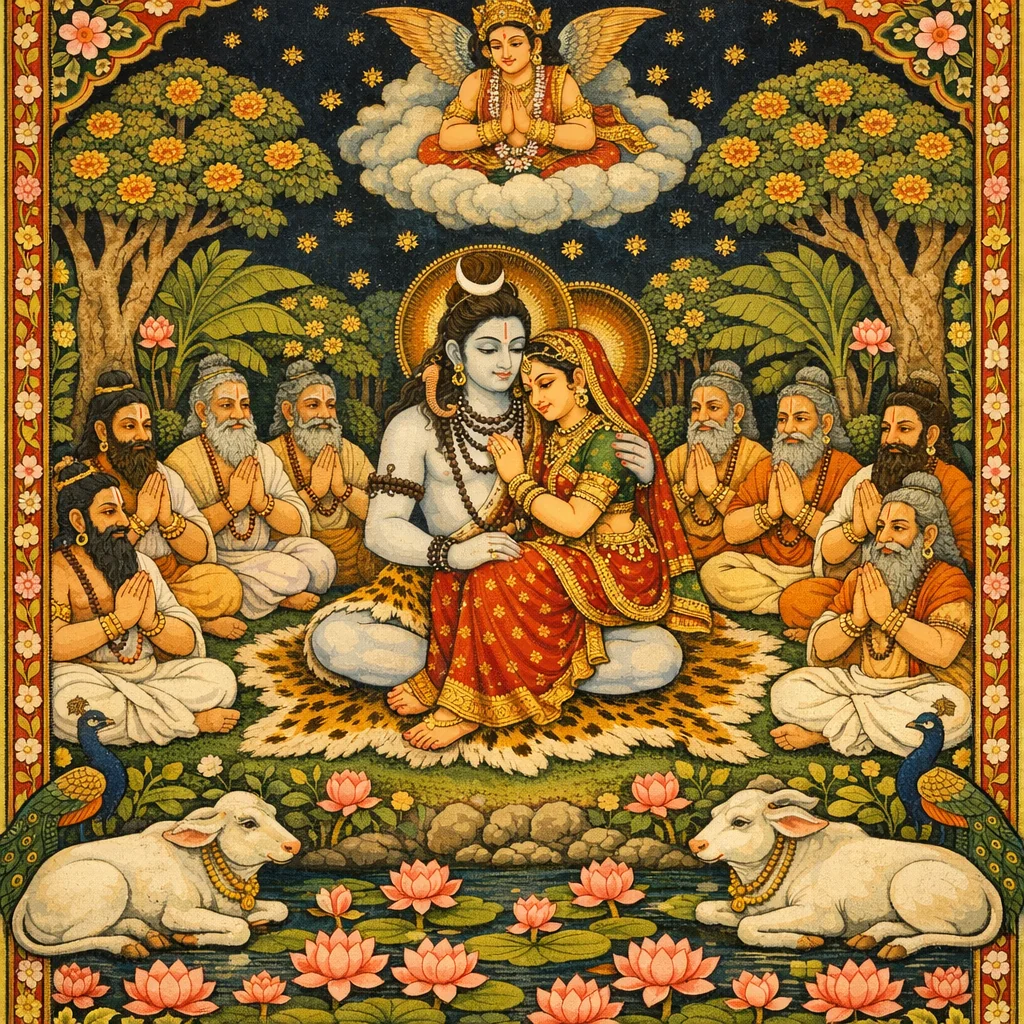
After receiving the Lord’s mercy and attaining extraordinary mystic powers, Citraketu wanders as leader of the Vidyādharas, singing Hari’s glories through the realms of the Siddhas and Cāraṇas and the valleys of Sumeru. The story turns when he sees Lord Śiva in a saintly assembly, seated with Pārvatī on his lap; judging by outward propriety, Citraketu laughs and criticizes Śiva’s conduct. Śiva, profound and restrained, remains silent, but Pārvatī, offended, curses Citraketu to be born among the asuras. Citraketu at once descends, offers reverence, and accepts the curse without retaliation, explaining Bhāgavata teachings on karma, the relativity of curse and boon, and the Lord’s impartiality amid dualities. Astonished, Śiva instructs Pārvatī on the greatness of Vaiṣṇavas—fearless, detached, and equal-minded—and the text then points ahead: Citraketu’s asuric birth becomes the prelude to his manifestation as Vṛtrāsura, setting the stage for the Indra–Vṛtra narrative and its devotion beyond externals.
Shlokas
Verse 1
श्रीशुक उवाच यतश्चान्तर्हितोऽनन्तस्तस्यै कृत्वा दिशे नम: । विद्याधरश्चित्रकेतुश्चचार गगने चर: ॥ १ ॥
Śrī Śukadeva Gosvāmī said: Offering obeisances to the direction in which Ananta, the Supreme Lord, had disappeared, Citraketu, chief of the Vidyādharas, began to roam through outer space.
Verse 2
स लक्षं वर्षलक्षाणामव्याहतबलेन्द्रिय: । स्तूयमानो महायोगी मुनिभि: सिद्धचारणै: ॥ २ ॥ कुलाचलेन्द्रद्रोणीषु नानासङ्कल्पसिद्धिषु । रेमे विद्याधरस्त्रीभिर्गापयन् हरिमीश्वरम् ॥ ३ ॥
Praised by great sages and by the Siddhas and Cāraṇas, Citraketu, the mighty mahā-yogī, wandered for millions upon millions of years, his strength and senses never declining. Roaming the valleys of Mount Sumeru, where many mystic perfections are attained by mere resolve, he enjoyed with the women of Vidyādhara-loka while singing the glories of Hari, the Supreme Lord.
Verse 3
स लक्षं वर्षलक्षाणामव्याहतबलेन्द्रिय: । स्तूयमानो महायोगी मुनिभि: सिद्धचारणै: ॥ २ ॥ कुलाचलेन्द्रद्रोणीषु नानासङ्कल्पसिद्धिषु । रेमे विद्याधरस्त्रीभिर्गापयन् हरिमीश्वरम् ॥ ३ ॥
Praised by great sages and by the Siddhas and Cāraṇas, Citraketu, the mighty mahā-yogī, wandered for millions upon millions of years, his strength and senses never declining. Roaming the valleys of Mount Sumeru, where many mystic perfections are attained by mere resolve, he enjoyed with the women of Vidyādhara-loka while singing the glories of Hari, the Supreme Lord.
Verse 4
एकदा स विमानेन विष्णुदत्तेन भास्वता । गिरिशं ददृशे गच्छन् परीतं सिद्धचारणै: ॥ ४ ॥ आलिङ्गयाङ्कीकृतां देवीं बाहुना मुनिसंसदि । उवाच देव्या: शृण्वन्त्या जहासोच्चैस्तदन्तिके ॥ ५ ॥
Once, as Citraketu traveled through the sky in a brilliantly effulgent airplane granted by Lord Viṣṇu, he saw Girīśa (Lord Śiva) surrounded by Siddhas and Cāraṇas. In an assembly of great sages, Śiva sat with Goddess Pārvatī upon his lap, embracing her with his arm. Within Pārvatī’s hearing, Citraketu laughed loudly and spoke nearby.
Verse 5
एकदा स विमानेन विष्णुदत्तेन भास्वता । गिरिशं ददृशे गच्छन् परीतं सिद्धचारणै: ॥ ४ ॥ आलिङ्गयाङ्कीकृतां देवीं बाहुना मुनिसंसदि । उवाच देव्या: शृण्वन्त्या जहासोच्चैस्तदन्तिके ॥ ५ ॥
Once, as Citraketu traveled through the sky in a brilliantly effulgent airplane granted by Lord Viṣṇu, he saw Girīśa (Lord Śiva) surrounded by Siddhas and Cāraṇas. In an assembly of great sages, Śiva sat with Goddess Pārvatī upon his lap, embracing her with his arm. Within Pārvatī’s hearing, Citraketu laughed loudly and spoke nearby.
Verse 6
चित्रकेतुरुवाच एष लोकगुरु: साक्षाद्धर्मं वक्ता शरीरिणाम् । आस्ते मुख्य: सभायां वै मिथुनीभूय भार्यया ॥ ६ ॥
Citraketu said: “He is indeed the guru of the world, the teacher of dharma for embodied beings, the foremost among them. Yet how astonishing that, in the assembly of great sages, he sits embracing his wife Pārvatī.”
Verse 7
जटाधरस्तीव्रतपा ब्रह्मवादिसभापति: । अङ्कीकृत्य स्त्रियं चास्ते गतह्री: प्राकृतो यथा ॥ ७ ॥
Lord Śiva, with matted locks, has performed fierce austerities and presides over the assembly of Vedic followers. Yet among the saints he sits with his wife upon his lap, embracing her like a shameless ordinary man.
Verse 8
प्रायश: प्राकृताश्चापि स्त्रियं रहसि बिभ्रति । अयं महाव्रतधरो बिभर्ति सदसि स्त्रियम् ॥ ८ ॥
Ordinary conditioned people usually embrace their wives in private. Yet Mahādeva, the bearer of the great vow, is openly embracing his wife in the midst of an assembly of great saints—how wondrous!
Verse 9
श्रीशुक उवाच भगवानपि तच्छ्रुत्वा प्रहस्यागाधधीर्नृप । तूष्णीं बभूव सदसि सभ्याश्च तदनुव्रता: ॥ ९ ॥
Śukadeva Gosvāmī continued: “O King, hearing Citraketu’s words, Lord Śiva, whose wisdom is unfathomable, merely smiled and remained silent in the assembly; and all present followed the Lord and said nothing.”
Verse 10
इत्यतद्वीर्यविदुषि ब्रुवाणे बह्वशोभनम् । रुषाह देवी धृष्टाय निर्जितात्माभिमानिने ॥ १० ॥
Unaware of the prowess of Śiva and Pārvatī, Citraketu harshly criticized them with words that were wholly displeasing. Therefore the goddess Pārvatī, angered, spoke as follows to the audacious Citraketu, who in pride thought himself superior to Śiva in controlling the senses.
Verse 11
श्रीपार्वत्युवाच अयं किमधुना लोके शास्ता दण्डधर: प्रभु: । अस्मद्विधानां दुष्टानां निर्लज्जानां च विप्रकृत् ॥ ११ ॥
The goddess Pārvatī said: Alas, has this upstart now received a post from which to punish shameless persons like us? Has he been appointed ruler, carrier of the rod of punishment? Is he now the only master of everything?
Verse 12
न वेद धर्मं किल पद्मयोनि- र्न ब्रह्मपुत्रा भृगुनारदाद्या: । न वै कुमार: कपिलो मनुश्च ये नो निषेधन्त्यतिवर्तिनं हरम् ॥ १२ ॥
Alas, Lord Brahmā, who has taken his birth from the lotus flower, does not know the principles of religion, nor do the great saints like Bhṛgu and Nārada, nor the four Kumāras, headed by Sanat-kumāra. Manu and Kapila have also forgotten the religious principles. I suppose it to be because of this that they have not tried to stop Lord Śiva from behaving improperly.
Verse 13
एषामनुध्येयपदाब्जयुग्मं जगद्गुरुं मङ्गलमङ्गलं स्वयम् । य: क्षत्रबन्धु: परिभूय सूरीन् प्रशास्ति धृष्टस्तदयं हि दण्ड्य: ॥ १३ ॥
This Citraketu is the lowest of kṣatriyas, for he has impudently overridden Brahmā and the other demigods by insulting Lord Śiva, upon whose lotus feet they always meditate. Lord Śiva is personified religion and the spiritual master of the entire world, and therefore Citraketu must be punished.
Verse 14
नायमर्हति वैकुण्ठपादमूलोपसर्पणम् । सम्भावितमति: स्तब्ध: साधुभि: पर्युपासितम् ॥ १४ ॥
This person is puffed up because of his achievements, thinking, “I am the best.” He does not deserve to approach the shelter of Lord Viṣṇu’s lotus feet, which are worshiped by all saintly persons, for he is impudent, thinking himself greatly important.
Verse 15
अत: पापीयसीं योनिमासुरीं याहि दुर्मते । यथेह भूयो महतां न कर्ता पुत्र किल्बिषम् ॥ १५ ॥
O impudent one, my dear son, now take birth in a low, sinful family of demons so that you will not commit such an offense again toward exalted, saintly persons in this world.
Verse 16
श्रीशुक उवाच एवं शप्तश्चित्रकेतुर्विमानादवरुह्य स: । प्रसादयामास सतीं मूर्ध्ना नम्रेण भारत ॥ १६ ॥
Śrī Śukadeva said: O Bhārata, when Pārvatī cursed Citraketu, he descended from his celestial craft, bowed his head in deep humility, and fully satisfied the saintly Satī.
Verse 17
चित्रकेतुरुवाच प्रतिगृह्णामि ते शापमात्मनोऽञ्जलिनाम्बिके । देवैर्मर्त्याय यत्प्रोक्तं पूर्वदिष्टं हि तस्य तत् ॥ १७ ॥
Citraketu said: O Mother Ambikā, with folded palms I accept this curse upon me; for whatever the devas allot to a mortal is indeed ordained according to his past deeds.
Verse 18
संसारचक्र एतस्मिञ्जन्तुरज्ञानमोहित: । भ्राम्यन् सुखं च दु:खं च भुङ्क्ते सर्वत्र सर्वदा ॥ १८ ॥
In this wheel of saṁsāra, the living being, deluded by ignorance, wanders about and everywhere, at all times, tastes happiness and distress born of his past deeds.
Verse 19
नैवात्मा न परश्चापि कर्ता स्यात् सुखदु:खयो: । कर्तारं मन्यतेऽत्राज्ञ आत्मानं परमेव च ॥ १९ ॥
In this material world, neither the living being himself nor others are the cause of happiness and distress; yet, through gross ignorance, he imagines himself and others to be the doers.
Verse 20
गुणप्रवाह एतस्मिन् क: शाप: को न्वनुग्रह: । क: स्वर्गो नरक: को वा किं सुखं दु:खमेव वा ॥ २० ॥
In this world, flowing on as the stream of the guṇas, what is a curse and what is a blessing? What is heaven and what is hell? What is truly happiness and what is distress, when all moves like ceaseless waves?
Verse 21
एक: सृजति भूतानि भगवानात्ममायया । एषां बन्धं च मोक्षं च सुखं दु:खं च निष्कल: ॥ २१ ॥
The Supreme Lord is one; by His own ātma-māyā He creates all beings. Though untouched, He manifests bondage and liberation, happiness and distress.
Verse 22
न तस्य कश्चिद्दयित: प्रतीपो न ज्ञातिबन्धुर्न परो न च स्व: । समस्य सर्वत्र निरञ्जनस्य सुखे न राग: कुत एव रोष: ॥ २२ ॥
The Supreme Lord is equal to all beings: none is especially dear or hateful to Him, none His friend or relative. Being niranjana, He is unattached to so-called happiness; thus there is no question of anger at distress.
Verse 23
तथापि तच्छक्तिविसर्ग एषां सुखाय दु:खाय हिताहिताय । बन्धाय मोक्षाय च मृत्युजन्मनो: शरीरिणां संसृतयेऽवकल्पते ॥ २३ ॥
Yet, through the outflow of His potency, the Lord arranges for embodied beings—according to karma—happiness and distress, good and ill, bondage and liberation, birth and death, so that the course of saṁsāra continues.
Verse 24
अथ प्रसादये न त्वां शापमोक्षाय भामिनि । यन्मन्यसे ह्यसाधूक्तं मम तत्क्षम्यतां सति ॥ २४ ॥
O angry mother, I do not seek to appease you for release from the curse. O Satī, whatever in my words you deem improper, please forgive it.
Verse 25
श्रीशुक उवाच इति प्रसाद्य गिरिशौ चित्रकेतुररिन्दम । जगाम स्वविमानेन पश्यतो: स्मयतोस्तयो: ॥ २५ ॥
Śrī Śukadeva said: O Parīkṣit, subduer of foes, after pleasing Girīśa (Śiva) and Pārvatī, Citraketu boarded his vimāna and departed; seeing his fearlessness even after the curse, they smiled in wonder.
Verse 26
ततस्तु भगवान् रुद्रो रुद्राणीमिदमब्रवीत् । देवर्षिदैत्यसिद्धानां पार्षदानां च शृण्वताम् ॥ २६ ॥
Thereafter, as the great sage Nārada, the demons, the residents of Siddhaloka, and his own attendants listened, the supremely powerful Bhagavān Rudra spoke these words to his wife, Rudrāṇī Pārvatī.
Verse 27
श्रीरुद्र उवाच दृष्टवत्यसि सुश्रोणि हरेरद्भुतकर्मण: । माहात्म्यं भृत्यभृत्यानां नि:स्पृहाणां महात्मनाम् ॥ २७ ॥
Lord Śiva said: O beautiful Pārvatī, have you beheld the glory of the Vaiṣṇavas? They are servants of the servants of Hari, whose deeds are wondrous, and such great souls remain free from longing for material happiness.
Verse 28
नारायणपरा: सर्वे न कुतश्चन बिभ्यति । स्वर्गापवर्गनरकेष्वपि तुल्यार्थदर्शिन: ॥ २८ ॥
Those devoted solely to Nārāyaṇa fear no condition of life. To them heaven, liberation, and hell are all the same, for they seek only the Lord’s service.
Verse 29
देहिनां देहसंयोगाद् द्वन्द्वानीश्वरलीलया । सुखं दु:खं मृतिर्जन्म शापोऽनुग्रह एव च ॥ २९ ॥
When embodied beings come into contact with material bodies, by the līlā of the Lord’s external energy dualities arise—happiness and distress, birth and death, curse and favor—natural by-products of such contact in the material world.
Verse 30
अविवेककृत: पुंसो ह्यर्थभेद इवात्मनि । गुणदोषविकल्पश्च भिदेव स्रजिवत्कृत: ॥ ३० ॥
Just as one may mistake a flower garland for a snake, so, for want of true discernment, a person imagines divisions within the self and discriminates between ‘good’ and ‘bad’, taking happiness as good and distress as bad.
Verse 31
वासुदेवे भगवति भक्तिमुद्वहतां नृणाम् । ज्ञानवैराग्यवीर्याणां न हि कश्चिद् व्यपाश्रय: ॥ ३१ ॥
Those who carry devotion to Bhagavān Vāsudeva, Śrī Kṛṣṇa, naturally attain perfect knowledge and detachment from the material world; therefore they have no taste for this world’s so-called happiness or so-called distress.
Verse 32
नाहं विरिञ्चो न कुमारनारदौ न ब्रह्मपुत्रा मुनय: सुरेशा: । विदाम यस्येहितमंशकांशका न तत्स्वरूपं पृथगीशमानिन: ॥ ३२ ॥
Neither I (Śiva), nor Brahmā, nor the Aśvinī-kumāras, nor Nārada, nor the great sages who are Brahmā’s sons, nor even the gods can truly comprehend the Supreme Lord’s pastimes and Person. Though we are but His parts, we imagine ourselves separate controllers, and thus His real identity remains beyond us.
Verse 33
न ह्यस्यास्ति प्रिय: कश्चिन्नाप्रिय: स्व: परोऽपि वा । आत्मत्वात्सर्वभूतानां सर्वभूतप्रियो हरि: ॥ ३३ ॥
He deems no one especially dear and no one inimical; none is His own and none is alien. For Hari is the inner Self of all beings—thus He is the auspicious friend of every living entity, near and beloved to all.
Verse 34
तस्य चायं महाभागश्चित्रकेतु: प्रियोऽनुग: । सर्वत्र समदृक् शान्तो ह्यहं चैवाच्युतप्रिय: ॥ ३४ ॥ तस्मान्न विस्मय: कार्य: पुरुषेषु महात्मसु । महापुरुषभक्तेषु शान्तेषु समदर्शिषु ॥ ३५ ॥
This greatly fortunate Citraketu is a dear, faithful devotee of the Lord; he is peaceful and sees all beings equally. In the same way, I too am very dear to Acyuta (Nārāyaṇa). Therefore one should not be astonished at the deeds of the mahātmās, the supreme devotees of Nārāyaṇa: free from attachment and envy, they are ever serene and equal toward all.
Verse 35
तस्य चायं महाभागश्चित्रकेतु: प्रियोऽनुग: । सर्वत्र समदृक् शान्तो ह्यहं चैवाच्युतप्रिय: ॥ ३४ ॥ तस्मान्न विस्मय: कार्य: पुरुषेषु महात्मसु । महापुरुषभक्तेषु शान्तेषु समदर्शिषु ॥ ३५ ॥
This greatly fortunate Citraketu is a dear, faithful devotee of the Lord; he is peaceful and sees all beings equally. In the same way, I too am very dear to Acyuta (Nārāyaṇa). Therefore one should not be astonished at the deeds of the mahātmās, the supreme devotees of Nārāyaṇa: free from attachment and envy, they are ever serene and equal toward all.
Verse 36
श्रीशुक उवाच इति श्रुत्वा भगवत: शिवस्योमाभिभाषितम् । बभूव शान्तधी राजन् देवी विगतविस्मया ॥ ३६ ॥
Śrī Śukadeva Gosvāmī said: O King, hearing the words spoken by Bhagavān Śiva to Umā, the goddess’ astonishment vanished, and her intelligence became calm and steady.
Verse 37
इति भागवतो देव्या: प्रतिशप्तुमलन्तम: । मूर्ध्ना स जगृहे शापमेतावत्साधुलक्षणम् ॥ ३७ ॥
Though the great devotee Citraketu was fully able to curse the goddess in return, he did not; bowing his head before Śiva and his consort, he humbly accepted the curse—this is the saintly mark of a Vaiṣṇava.
Verse 38
जज्ञे त्वष्टुर्दक्षिणाग्नौ दानवीं योनिमाश्रित: । वृत्र इत्यभिविख्यातो ज्ञानविज्ञानसंयुत: ॥ ३८ ॥
Cursed by Bhavānī (Durgā), that same Citraketu accepted birth in a demoniac species. At Tvaṣṭā’s sacrifice he appeared from the southern sacrificial fire in an asura form, yet he remained endowed with jñāna and vijñāna, and became famed as Vṛtrāsura.
Verse 39
एतत्ते सर्वमाख्यातं यन्मां त्वं परिपृच्छसि । वृत्रस्यासुरजातेश्च कारणं भगवन्मते: ॥ ३९ ॥
My dear King Parīkṣit, you asked me how Vṛtrāsura, though a great devotee, took birth in a demoniac family. Therefore I have explained everything to you about this cause.
Verse 40
इतिहासमिमं पुण्यं चित्रकेतोर्महात्मन: । माहात्म्यं विष्णुभक्तानां श्रुत्वा बन्धाद्विमुच्यते ॥ ४० ॥
This is the sacred history of the mahātmā Citraketu. One who hears it from a pure devotee—along with the glory of Viṣṇu’s devotees—is freed from the bondage of conditioned material life.
Verse 41
य एतत्प्रातरुत्थाय श्रद्धया वाग्यत: पठेत् । इतिहासं हरिं स्मृत्वा स याति परमां गतिम् ॥ ४१ ॥
One who rises at dawn and, with faith, restrains speech and mind, and recites this sacred history while remembering Śrī Hari, attains the supreme destination—the Lord’s dhāma.
Frequently Asked Questions
Citraketu judged Śiva’s external posture—embracing Pārvatī in a public assembly—through conventional social decorum, not recognizing Śiva’s transcendental position and the non-material nature of divine conduct. The mistake is not merely ‘speaking’ but presuming moral superiority and criticizing an exalted personality without understanding tattva (reality), which the Bhāgavata frames as a form of offense rooted in partial knowledge.
Śiva’s silence demonstrates the restraint and profundity of a mahātmā: he does not react from ego, nor does he need to defend himself. In Bhāgavata ethics, such silence also exposes the critic’s immaturity and allows the event to become instructive—culminating in a teaching moment where Śiva later glorifies the Vaiṣṇava quality of fearlessness and detachment.
He immediately offered obeisance, accepted the curse with folded hands, and refrained from counter-cursing despite having mystic power to do so. This is praised as the standard of Vaiṣṇava conduct: humility, non-retaliation, and philosophical clarity that happiness and distress unfold under karma and daiva, while devotion remains the devotee’s true shelter.
Citraketu teaches that embodied life moves like waves in a flowing river—dualities arise and pass—so ‘curse’ and ‘favor’ are not ultimate realities. He attributes happiness and distress to the unfolding of past deeds under higher administration, and he stresses that the Supreme Lord is impartial; dualities pertain to the conditioned state under māyā, not to the Lord’s own nature.
The chapter explicitly connects Citraketu’s curse to his later birth as Vṛtrāsura, showing that external birth-status does not define devotion. A devotee may accept an apparently unfavorable embodiment due to a curse or karmic arrangement, yet retain transcendental knowledge and bhakti. This sets up the later narrative where Vṛtrāsura’s devotion becomes exemplary despite his demonic form.
Śiva teaches that devotees of Nārāyaṇa are servants of the Lord’s servants, uninterested in material happiness, and fearless in any condition. For them, heaven, hell, and even liberation are secondary to service. Such devotees naturally possess knowledge and detachment, and they remain peaceful and equal to all—hence Citraketu’s unshaken acceptance is evidence of genuine Vaiṣṇava stature.