Adhyaya 23
The Song of the Avantī Brāhmaṇa (Avanti-brāhmaṇa-gītā): Mind as the Root of Suffering and Equanimity Amid Insult
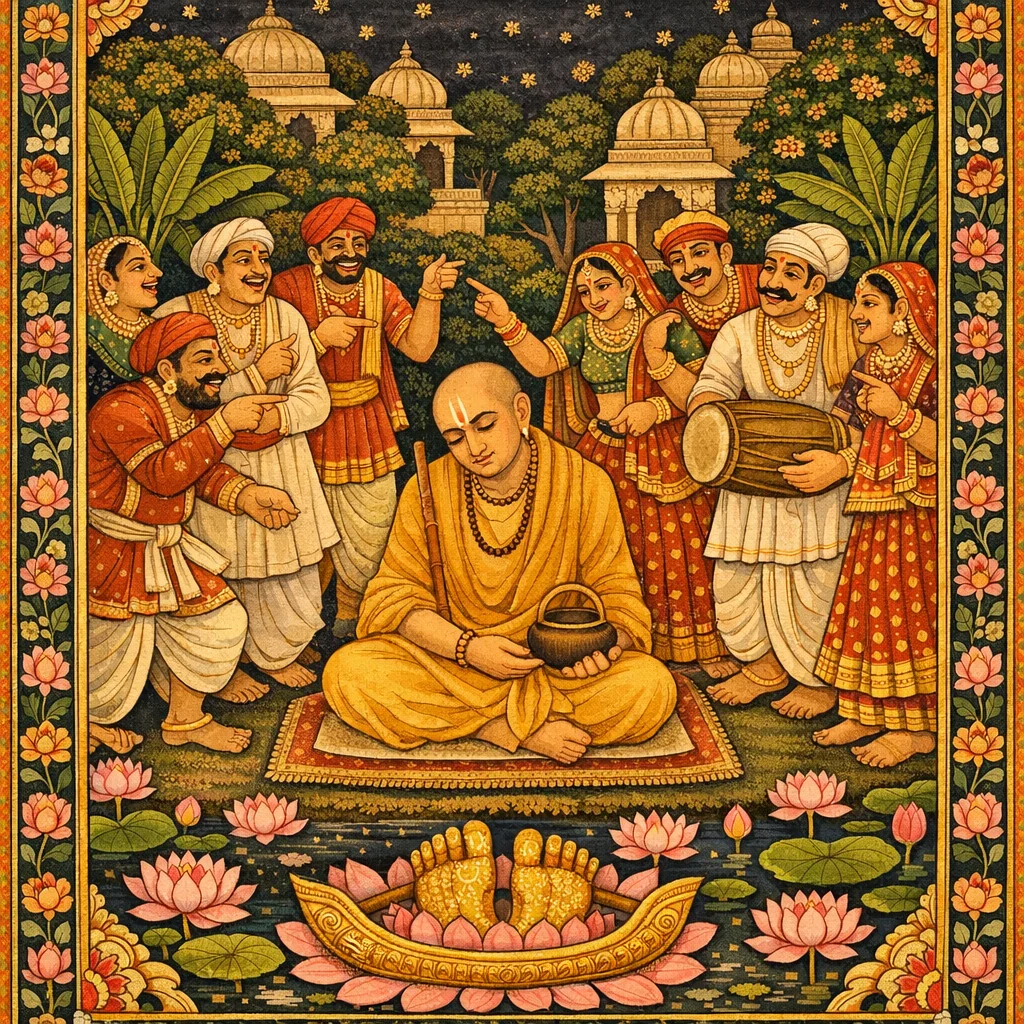
After Uddhava respectfully asks Kṛṣṇa for higher instruction, the Lord raises a practical challenge: harsh speech and public insult can unsettle even saintly people. To show the yogic remedy, Kṛṣṇa recounts the life of a wealthy Avantī brāhmaṇa-merchant whose miserliness, anger, and neglect of dharma estrange his family and the devas, until he loses all wealth and support. Shaken into renunciation, he accepts sannyāsa and wanders silently, yet endures repeated humiliations—his mendicant items are stolen, he is mocked, beaten, and falsely accused. Refusing retaliation, he sees his suffering as providential and sings his “song”: neither people, gods, the body, planets, karma, nor time truly cause happiness and distress; the mind alone manufactures duality through guṇa-driven perception and false ego. He concludes that conquering the mind is the essence of yoga, and that taking shelter of Kṛṣṇa’s lotus feet enables one to cross ignorance. Kṛṣṇa then applies the lesson to Uddhava: fix your intelligence on Him, control the mind, and transcend dualities, setting the stage for the more systematic yogic teachings that follow.
Shlokas
Verse 1
श्रीबादरायणिरुवाच स एवमाशंसित उद्धवेन भागवतमुख्येन दाशार्हमुख्य: । सभाजयन् भृत्यवचो मुकुन्द- स्तमाबभाषे श्रवणीयवीर्य: ॥ १ ॥
Śukadeva Gosvāmī said: Thus respectfully requested by Śrī Uddhava, the foremost of devotees, Lord Mukunda, chief of the Dāśārhas, first honored His servant’s words and then began to reply, for His glorious deeds are most worthy of being heard.
Verse 2
श्रीभगवानुवाच बार्हस्पत्य स नास्त्यत्र साधुर्वै दुर्जनेरितै: । दुरक्तैर्भिन्नमात्मानं य: समाधातुमीश्वर: ॥ २ ॥
Lord Śrī Kṛṣṇa said: O disciple of Bṛhaspati, in this world there is virtually no saintly person who can steady his own mind again after it has been disturbed by the insulting words of uncivilized men.
Verse 3
न तथा तप्यते विद्ध: पुमान् बाणैस्तु मर्मगै: । यथा तुदन्ति मर्मस्था ह्यसतां परुषेषव: ॥ ३ ॥
Sharp arrows that pierce the chest and reach the heart do not cause as much suffering as the arrows of harsh, insulting words spoken by uncivilized men, which lodge within the heart and keep tormenting it.
Verse 4
कथयन्ति महत्पुण्यमितिहासमिहोद्धव । तमहं वर्णयिष्यामि निबोध सुसमाहित: ॥ ४ ॥
My dear Uddhava, in this matter a most pious history is spoken of. I shall now describe it to you; listen with a well-composed and attentive mind.
Verse 5
केनचिद् भिक्षुणा गीतं परिभूतेन दुर्जनै: । स्मरता धृतियुक्तेन विपाकं निजकर्मणाम् ॥ ५ ॥
Once a certain mendicant renunciant was insulted in many ways by impious men. Yet, steady in resolve, he remembered that he was tasting the ripened fruit of his own karma.
Verse 6
अवन्तिषु द्विज: कश्चिदासीदाढ्यतम: श्रिया । वार्तावृत्ति: कदर्यस्तु कामी लुब्धोऽतिकोपन: ॥ ६ ॥
In the land of Avantī there once lived a brāhmaṇa, exceedingly wealthy and endowed with every opulence, who made his living by trade. Yet he was miserly—lustful, greedy, and very prone to anger.
Verse 7
ज्ञातयोऽतिथयस्तस्य वाङ्मात्रेणापि नार्चिता: । शून्यावसथ आत्मापि काले कामैरनर्चित: ॥ ७ ॥
In his home, devoid of piety and of lawful enjoyment, neither relatives nor guests were honored even with words. Nor, at the proper times, did he allow sufficient satisfaction even for his own body.
Verse 8
दु:शीलस्य कदर्यस्य द्रुह्यन्ते पुत्रबान्धवा: । दारा दुहितरो भृत्या विषण्णा नाचरन् प्रियम् ॥ ८ ॥
Because of his harsh nature and miserliness, his sons, relatives, wife, daughters, and servants grew inimical toward him. Disgusted at heart, they no longer treated him with affection.
Verse 9
तस्यैवं यक्षवित्तस्य च्युतस्योभयलोकत: । धर्मकामविहीनस्य चुक्रुधु: पञ्चभागिन: ॥ ९ ॥
Thus the presiding deities of the five household sacrifices became angry with that miserly brāhmaṇa, who guarded his wealth like a Yakṣa, had no good destination in this world or the next, and was bereft of both dharma and rightful enjoyment.
Verse 10
तदवध्यानविस्रस्तपुण्यस्कन्धस्य भूरिद । अर्थोऽप्यगच्छन्निधनं बह्वायासपरिश्रम: ॥ १० ॥
O magnanimous Uddhava, by neglecting those deities he let his store of piety collapse, and all his wealth also vanished; the fruits of his repeated, exhausting endeavors were lost entirely.
Verse 11
ज्ञातयो जगृहु: किञ्चित् किञ्चिद् दस्यव उद्धव । दैवत: कालत: किञ्चिद् ब्रह्मबन्धोर्नृपार्थिवात् ॥ ११ ॥
My dear Uddhava, some of the wealth of that so-called brāhmaṇa was taken by relatives, some by thieves, some by providence, some by the force of time, some by ordinary men, and some by government authorities.
Verse 12
स एवं द्रविणे नष्टे धर्मकामविवर्जित: । उपेक्षितश्च स्वजनैश्चिन्तामाप दुरत्ययाम् ॥ १२ ॥
At last, when his property was completely lost, he—who had pursued neither dharma nor rightful enjoyment—was neglected by his own family, and he fell into unbearable anxiety.
Verse 13
तस्यैवं ध्यायतो दीर्घं नष्टरायस्तपस्विन: । खिद्यतो बाष्पकण्ठस्य निर्वेद: सुमहानभूत् ॥ १३ ॥
Having lost all his wealth, the ascetic suffered deep pain and lamentation; his throat choked with tears as he long contemplated his fate. Then a mighty spirit of renunciation arose within him.
Verse 14
स चाहेदमहो कष्टं वृथात्मा मेऽनुतापित: । न धर्माय न कामाय यस्यार्थायास ईदृश: ॥ १४ ॥
The brāhmaṇa said: Alas, what great misery! I have tormented myself in vain; such toil for wealth was meant neither for dharma nor for rightful enjoyment.
Verse 15
प्रायेणार्था: कदर्याणां न सुखाय कदाचन । इह चात्मोपतापाय मृतस्य नरकाय च ॥ १५ ॥
Generally, the wealth of misers never yields happiness. In this life it brings self-torment, and after death it drags one to hell.
Verse 16
यशो यशस्विनां शुद्धं श्लाघ्या ये गुणिनां गुणा: । लोभ: स्वल्पोऽपि तान् हन्ति श्वित्रो रूपमिवेप्सितम् ॥ १६ ॥
The pure fame of the renowned and the praiseworthy virtues of the virtuous are destroyed by even a little greed, just as a trace of white leprosy ruins desired beauty.
Verse 17
अर्थस्य साधने सिद्धे उत्कर्षे रक्षणे व्यये । नाशोपभोग आयासस्त्रासश्चिन्ता भ्रमो नृणाम् ॥ १७ ॥
In earning, attaining, increasing, guarding, spending, losing, and enjoying wealth, people undergo toil, fear, anxiety, and delusion.
Verse 18
स्तेयं हिंसानृतं दम्भ: काम: क्रोध: स्मयो मद: । भेदो वैरमविश्वास: संस्पर्धा व्यसनानि च ॥ १८ ॥ एते पञ्चदशानर्था ह्यर्थमूला मता नृणाम् । तस्मादनर्थमर्थाख्यं श्रेयोऽर्थी दूरतस्त्यजेत् ॥ १९ ॥
Theft, violence, lying, hypocrisy, lust, anger, bewilderment, pride, discord, enmity, distrust, envy and rivalry, and the calamities born of women, gambling, and intoxication—these fifteen evils are said to spring from greed for wealth. Therefore, one who seeks the highest good should keep far away from such “wealth,” which is in truth a source of misfortune.
Verse 19
स्तेयं हिंसानृतं दम्भ: काम: क्रोध: स्मयो मद: । भेदो वैरमविश्वास: संस्पर्धा व्यसनानि च ॥ १८ ॥ एते पञ्चदशानर्था ह्यर्थमूला मता नृणाम् । तस्मादनर्थमर्थाख्यं श्रेयोऽर्थी दूरतस्त्यजेत् ॥ १९ ॥
Theft, violence, false speech, hypocrisy, lust, anger, bewilderment, pride, quarrel, enmity, distrust, envy, and the perils born of attachment to women, gambling, and intoxication—these fifteen anarthas, rooted in greed for wealth, defile men. Therefore one who seeks true welfare should keep far away from material riches, that so‑called “value” which is in truth the abode of harm.
Verse 20
भिद्यन्ते भ्रातरो दारा: पितर: सुहृदस्तथा । एकास्निग्धा: काकिणिना सद्य: सर्वेऽरय: कृता: ॥ २० ॥
Over a single coin, even brothers, wife, parents, and friends—once united in affection—at once break their bonds and become enemies.
Verse 21
अर्थेनाल्पीयसा ह्येते संरब्धा दीप्तमन्यव: । त्यजन्त्याशु स्पृधो घ्नन्ति सहसोत्सृज्य सौहृदम् ॥ २१ ॥
For even a small sum, such relatives and friends become agitated and their anger flares. As rivals they swiftly abandon all goodwill, casting off friendship in an instant—even to the point of murder.
Verse 22
लब्ध्वा जन्मामरप्रार्थ्यं मानुष्यं तद्द्विजाग्र्यताम् । तदनादृत्य ये स्वार्थं घ्नन्ति यान्त्यशुभां गतिम् ॥ २२ ॥
Those who attain human birth—prayed for even by the devas—and within it the status of a foremost brāhmaṇa, yet neglect this sacred opportunity, slay their own true interest and surely reach an inauspicious end.
Verse 23
स्वर्गापवर्गयोर्द्वारं प्राप्य लोकमिमं पुमान् । द्रविणे कोऽनुषज्जेत मर्त्योऽनर्थस्य धामनि ॥ २३ ॥
Having attained this human world, the very gateway to both heaven and liberation, what mortal would willingly cling to material property, the abode of anartha?
Verse 24
देवर्षिपितृभूतानि ज्ञातीन् बन्धूंश्च भागिन: । असंविभज्य चात्मानं यक्षवित्त: पतत्यध: ॥ २४ ॥
One who does not duly share his wealth with the devas, sages, forefathers and living beings, nor with relatives, friends and rightful claimants—even with his own self—guards it like a Yakṣa and falls down.
Verse 25
व्यर्थयार्थेहया वित्तं प्रमत्तस्य वयो बलम् । कुशला येन सिध्यन्ति जरठ: किं नु साधये ॥ २५ ॥
Discerning persons use their wealth, youth, and strength to attain perfection; but I, in heedless frenzy, squandered them in useless striving for more money. Now that I am old, what can I accomplish?
Verse 26
कस्मात् सङ्क्लिश्यते विद्वान् व्यर्थयार्थेहयासकृत् । कस्यचिन्मायया नूनं लोकोऽयं सुविमोहित: ॥ २६ ॥
Why should an intelligent man suffer through repeated, futile efforts for wealth? Indeed, this whole world is thoroughly bewildered by someone’s illusory potency.
Verse 27
किं धनैर्धनदैर्वा किं कामैर्वा कामदैरुत । मृत्युना ग्रस्यमानस्य कर्मभिर्वोत जन्मदै: ॥ २७ ॥
For one being swallowed by death, what use are wealth or its givers, sense pleasure or its providers? And what use are fruitive deeds that merely cause one to take birth again in this material world?
Verse 28
नूनं मे भगवांस्तुष्ट: सर्वदेवमयो हरि: । येन नीतो दशामेतां निर्वेदश्चात्मन: प्लव: ॥ २८ ॥
Surely Bhagavān Hari, who contains within Himself all the devas, is pleased with me; for He has brought me to this suffering condition and made me taste detachment—the boat that carries one across the ocean of material life.
Verse 29
सोऽहं कालावशेषेण शोषयिष्येऽङ्गमात्मन: । अप्रमत्तोऽखिलस्वार्थे यदि स्यात् सिद्ध आत्मनि ॥ २९ ॥
If there is any time remaining in my life, I will perform austerities and force my body to subsist on the bare necessities. Without further confusion I shall pursue that which constitutes my entire self-interest in life, and I shall remain satisfied within the self.
Verse 30
तत्र मामनुमोदेरन् देवात्रिभुवनेश्वरा: । मुहूर्तेन ब्रह्मलोकं खट्वाङ्ग: समसाधयत् ॥ ३० ॥
Thus may the presiding demigods of these three worlds kindly show their mercy upon me. Indeed, Mahārāja Khaṭvāṅga was able to achieve the spiritual world in a single moment.
Verse 31
श्रीभगवानुवाच इत्यभिप्रेत्य मनसा ह्यावन्त्यो द्विजसत्तम: । उन्मुच्य हृदयग्रन्थीन् शान्तो भिक्षुरभून्मुनि: ॥ ३१ ॥
Lord Śrī Kṛṣṇa continued: His mind thus determined, that most excellent Avantī brāhmaṇa was able to untie the knots of desire within his heart. He then assumed the role of a peaceful and silent sannyāsī mendicant.
Verse 32
स चचार महीमेतां संयतात्मेन्द्रियानिल: । भिक्षार्थं नगरग्रामानसङ्गोऽलक्षितोऽविशत् ॥ ३२ ॥
He wandered about the earth, keeping his intelligence, senses and life air under control. To beg charity he traveled alone to various cities and villages. He did not advertise his advanced spiritual position and thus was not recognized by others.
Verse 33
तं वै प्रवयसं भिक्षुमवधूतमसज्जना: । दृष्ट्वा पर्यभवन् भद्र बह्वीभि: परिभूतिभि: ॥ ३३ ॥
O kind Uddhava, seeing him as an old, dirty beggar, rowdy persons would dishonor him with many insults.
Verse 34
केचित्त्रिवेणुं जगृहुरेके पात्रं कमण्डलुम् । पीठं चैकेऽक्षसूत्रं च कन्थां चीराणि केचन । प्रदाय च पुनस्तानि दर्शितान्याददुर्मुने: ॥ ३४ ॥
Some would seize his tri-veṇu staff, and some would take the kamandalu he used as his begging bowl. Some stole his deerskin seat, some his japa beads, and some his torn, ragged cloth. Showing these items to him, they would pretend to return them, only to hide them again.
Verse 35
अन्नं च भैक्ष्यसम्पन्नं भुञ्जानस्य सरित्तटे । मूत्रयन्ति च पापिष्ठा: ष्ठीवन्त्यस्य च मूर्धनि ॥ ३५ ॥
As he sat on a riverbank to eat the food gathered by begging, those most sinful men would urinate upon it, and they even dared to spit upon his head.
Verse 36
यतवाचं वाचयन्ति ताडयन्ति न वक्ति चेत् । तर्जयन्त्यपरे वाग्भि: स्तेनोऽयमिति वादिन: । बध्नन्ति रज्ज्वा तं केचिद् बध्यतां बध्यतामिति ॥ ३६ ॥
Though he had vowed silence, they tried to force him to speak, and if he did not, they beat him with sticks. Others berated him, saying, “This man is a thief.” Still others bound him with rope, shouting, “Tie him up! Tie him up!”
Verse 37
क्षिपन्त्येकेऽवजानन्त एष धर्मध्वज: शठ: । क्षीणवित्त इमां वृत्तिमग्रहीत् स्वजनोज्झित: ॥ ३७ ॥
They mocked and insulted him: “This man is a hypocrite and a cheat, waving the banner of religion. Having lost his wealth and been cast out by his own people, he has taken up piety as a livelihood.”
Verse 38
अहो एष महासारो धृतिमान् गिरिराडिव । मौनेन साधयत्यर्थं बकवद् दृढनिश्चय: ॥ ३८ ॥ इत्येके विहसन्त्येनमेके दुर्वातयन्ति च । तं बबन्धुर्निरुरुधुर्यथा क्रीडनकं द्विजम् ॥ ३९ ॥
Some ridiculed him, saying, “Just see this ‘mighty’ sage—steadfast like the Himalayas! By silence he pursues his aim with firm resolve, like a heron.” Others would foul the air around him, and sometimes some would chain that twice-born brāhmaṇa and keep him captive like a pet animal.
Verse 39
अहो एष महासारो धृतिमान् गिरिराडिव । मौनेन साधयत्यर्थं बकवद् दृढनिश्चय: ॥ ३८ ॥ इत्येके विहसन्त्येनमेके दुर्वातयन्ति च । तं बबन्धुर्निरुरुधुर्यथा क्रीडनकं द्विजम् ॥ ३९ ॥
Some mocked him: “Behold this mighty sage—steadfast like the Himalayas! By the vow of silence he pursues his aim with firm resolve, like a heron.” Others passed foul air upon him, and at times some bound that twice-born brāhmaṇa in chains and held him captive like a pet animal.
Verse 40
एवं स भौतिकं दु:खं दैविकं दैहिकं च यत् । भोक्तव्यमात्मनो दिष्टं प्राप्तं प्राप्तमबुध्यत ॥ ४० ॥
Thus the brāhmaṇa understood that all suffering—arising from other beings, from higher forces of nature, and from his own body—was unavoidable, for it had been allotted to him by providence; therefore whatever came to him had to be endured.
Verse 41
परिभूत इमां गाथामगायत नराधमै: । पातयद्भि: स्व धर्मस्थो धृतिमास्थाय सात्त्विकीम् ॥ ४१ ॥
Though insulted by those base men who tried to bring about his downfall, he remained steady in his spiritual duty. Fixing his resolve in the mode of goodness, he began to chant the following song.
Verse 42
द्विज उवाच नायं जनो मे सुखदु:खहेतु- र्न देवतात्मा ग्रहकर्मकाला: । मन: परं कारणमामनन्ति संसारचक्रं परिवर्तयेद् यत् ॥ ४२ ॥
The brāhmaṇa said: These people are not the cause of my happiness and distress. Nor are the demigods, my own body, the planets, my past work, or time. Rather, the mind alone is declared the supreme cause, for it turns the wheel of saṁsāra.
Verse 43
मनो गुणान् वै सृजते बलीय- स्ततश्च कर्माणि विलक्षणानि । शुक्लानि कृष्णान्यथ लोहितानि तेभ्य: सवर्णा: सृतयो भवन्ति ॥ ४३ ॥
The powerful mind sets the material modes into motion, and from them arise diverse activities—white in goodness, black in ignorance, and red in passion. From the actions performed in each mode, corresponding conditions of life develop.
Verse 44
अनीह आत्मा मनसा समीहता हिरण्मयो मत्सख उद्विचष्टे । मन: स्वलिङ्गं परिगृह्य कामान् जुषन् निबद्धो गुणसङ्गतोऽसौ ॥ ४४ ॥
Though present within the material body along with the struggling mind, the Paramātmā does not endeavor, for He is already filled with transcendental illumination. As my friend, He simply stands as witness from His spiritual position. But I, the infinitesimal jīva, have embraced this mind—the mirror reflecting the world—and, enjoying the objects of desire, I become bound by contact with the guṇas of nature.
Verse 45
दानं स्वधर्मो नियमो यमश्च श्रुतं च कर्माणि च सद्व्रतानि । सर्वे मनोनिग्रहलक्षणान्ता: परो हि योगो मनस: समाधि: ॥ ४५ ॥
Charity, one’s prescribed duty, niyama and yama, hearing the scriptures, pious works, and purifying vows—all culminate in mastery of the mind. Indeed, the highest yoga is the mind’s samādhi, its steady absorption in the Supreme Lord.
Verse 46
समाहितं यस्य मन: प्रशान्तं दानादिभि: किं वद तस्य कृत्यम् । असंयतं यस्य मनो विनश्यद् दानादिभिश्चेदपरं किमेभि: ॥ ४६ ॥
If one’s mind is perfectly composed and peaceful, tell me—what need is there for ritual charity and other pious rites? And if one’s mind remains uncontrolled, perishing in ignorance, what benefit can such practices possibly bring?
Verse 47
मनोवशेऽन्ये ह्यभवन् स्म देवा मनश्च नान्यस्य वशं समेति । भीष्मो हि देव: सहस: सहीयान् युञ्ज्याद वशे तं स हि देवदेव: ॥ ४७ ॥
Since time without beginning, the other ‘gods’—the senses—have been under the mind’s control, yet the mind itself submits to no one. Stronger than the strongest, it wields a fearsome, godlike power. Therefore, whoever brings the mind under control becomes master of all the senses.
Verse 48
तं दुर्जयं शत्रुमसह्यवेग- मरुन्तुदं तन्न विजित्य केचित् । कुर्वन्त्यसद्विग्रहमत्र मर्त्यै- र्मित्राण्युदासीनरिपून् विमूढा: ॥ ४८ ॥
Unable to conquer this hard-to-subdue enemy—the mind, whose urges are intolerable and which torments the heart—many people become utterly bewildered and stir up useless quarrels with others. Thus, in delusion, they label others as friends, enemies, or indifferent parties.
Verse 49
देहं मनोमात्रमिमं गृहीत्वा ममाहमित्यन्धधियो मनुष्या: । एषोऽहमन्योऽयमिति भ्रमेण दुरन्तपारे तमसि भ्रमन्ति ॥ ४९ ॥
Those who identify with this body—born of the material mind alone—become blinded in understanding, thinking in terms of “I” and “mine.” Deluded by “this is I, and that is another,” they wander in endless darkness.
Verse 50
जनस्तु हेतु: सुखदु:खयोश्चेत् किमात्मनश्चात्र हि भौमयोस्तत् । जिह्वां क्वचित् सन्दशति स्वदद्भि- स्तद्वेदनायां कतमाय कुप्येत् ॥ ५० ॥
If you claim that other people cause my happiness and distress, then what place is left for the soul in such a view? Happiness and distress belong not to the ātman but to the interactions of material bodies. If one bites his own tongue with his own teeth, in that pain at whom can he be angry?
Verse 51
दु:खस्य हेतुर्यदि देवतास्तु किमात्मनस्तत्र विकारयोस्तत् । यदङ्गमङ्गेन निहन्यते क्वचित् क्रुध्येत कस्मै पुरुष: स्वदेहे ॥ ५१ ॥
If you say that the demigods presiding over the senses cause suffering, still how could such suffering apply to the spirit soul? Acting and being acted upon are merely interactions of the changeable senses and their ruling deities. When one limb attacks another within the same body, at whom can the embodied person be angry?
Verse 52
आत्मा यदि स्यात् सुखदु:खहेतु: किमन्यतस्तत्र निजस्वभाव: । न ह्यात्मनोऽन्यद् यदि तन्मृषा स्यात् क्रुध्येत कस्मान्न सुखं न दु:खम् ॥ ५२ ॥
If the soul himself were the cause of happiness and distress, then no one else could be blamed, for happiness and distress would be the soul’s own nature. In this view nothing exists but the soul, and whatever seems other than the soul would be illusion. Therefore, since happiness and distress do not truly exist in such a concept, why become angry with oneself or with others?
Verse 53
ग्रहानिमित्तं सुखदु:खयोश्चेत् किमात्मनोऽजस्य जनस्य ते वै । ग्रहैर्ग्रहस्यैववदन्तिपीडां क्रुध्येत कस्मैपुरुषस्ततोऽन्य: ॥ ५३ ॥
And if we consider the idea that the planets are the immediate cause of happiness and suffering, what relation do they have to the soul, who is eternal and unborn? Planetary influence applies only to what has taken birth, and learned astrologers explain that the planets merely afflict one another. Therefore, since the jīva is distinct from the planets and from the material body, against whom should he pour out his anger?
Verse 54
कर्मास्तुहेतु: सुखदु:खयोश्चेत् किमात्मनस्तद्धिजडाजडत्वे । देहस्त्वचित् पुरुषोऽयं सुपर्ण: क्रुध्येत कस्मै न हि कर्ममूलम् ॥ ५४ ॥
Even if one claims that karma is the cause of happiness and distress, it still does not truly touch the ātman. The notion of action arises from the meeting of a conscious doer and an inert body that undergoes reactions. The body is lifeless and the soul is transcendental; since karma has no ultimate footing in either, at whom should one be angry?
Verse 55
कालस्तुहेतु: सुखदु:खयोश्चेत् किमात्मनस्तत्रतदात्मकोऽसौ । नाग्नेर्हि तापो न हिमस्य तत् स्यात् क्रुध्येत कस्मै न परस्य द्वन्द्वम् ॥ ५५ ॥
Even if time is accepted as the cause of happiness and distress, that experience still cannot apply to the ātman. Time is a manifestation of the Lord’s spiritual potency, and the jīvas are expansions of that same potency. Fire does not burn its own flame, nor does cold harm its own snow. The soul is beyond duality; therefore, at whom should one be angry?
Verse 56
न केनचित् क्वापि कथञ्चनास्य द्वन्द्वोपराग: परत: परस्य । यथाहम: संसृतिरूपिण: स्या- देवं प्रबुद्धो न बिभेति भूतै: ॥ ५६ ॥
The soul, supreme and beyond all, is never tainted by duality—nowhere, in no circumstance, and by no one. It is the false ego that fashions material existence and thus tastes happiness and distress. One who awakens to this truth fears nothing at all within the material creation.
Verse 57
एतां स आस्थाय परात्मनिष्ठा- मध्यासितां पूर्वतमैर्महर्षिभि: । अहं तरिष्यामि दुरन्तपारं तमो मुकुन्दाङ्घ्रिनिषेवयैव ॥ ५७ ॥
Taking shelter of this steadfast devotion to the Paramātmā, practiced by the ancient mahārṣis and ācāryas, I shall cross the ocean of darkness, whose far shore is so hard to reach, simply by serving the lotus feet of Mukunda, Śrī Kṛṣṇa.
Verse 58
श्रीभगवानुवाच निर्विद्य नष्टद्रविणे गतक्लम: प्रव्रज्य गां पर्यटमान इत्थम् । निराकृतोऽसद्भिरपि स्वधर्मा- दकम्पितोऽमूं मुनिराह गाथाम् ॥ ५८ ॥
Lord Śrī Kṛṣṇa said: Thus, when his wealth was lost, that sage became detached and cast off his dejection and fatigue. Taking sannyāsa, he left home and wandered over the earth. Even when insulted by foolish men, he did not waver from his duty and he sang this sacred song.
Verse 59
सुखदु:खप्रदो नान्य: पुरुषस्यात्मविभ्रम: । मित्रोदासीनरिपव: संसारस्तमस: कृत: ॥ ५९ ॥
No force other than one’s own inner delusion makes the soul taste happiness and distress. The notions of friend, neutral, and enemy—and the worldly life built upon them—are fashioned from the darkness of ignorance.
Verse 60
तस्मात् सर्वात्मना तात निगृहाण मनो धिया । मय्यावेशितया युक्त एतावान् योगसङ्ग्रह: ॥ ६० ॥
Therefore, my child, with intelligence fixed upon Me, completely restrain the mind. This is the very essence of the science of yoga.
Verse 61
य एतां भिक्षुणा गीतां ब्रह्मनिष्ठां समाहित: । धारयञ्छ्रावयञ्छृण्वन्द्वन्द्वैर्नैवाभिभूयते ॥ ६१ ॥
Whoever, with full attention, holds within the heart, recites to others, or hears this song of the sannyāsī—steadfast in realization of Brahman—will never again be overwhelmed by the dualities of happiness and distress.
Frequently Asked Questions
Because the story converts abstract yoga into lived proof: when insult, poverty, and social rejection arrive, the practitioner must locate causality correctly. The Avantī brāhmaṇa demonstrates nirodha in practice—he withdraws from reactive blame and fixes responsibility on the mind’s misidentification, thereby remaining steady in dharma and devotion.
He systematically rejects external causes (other people, demigods, the body and senses, planets, karma, and time) as ultimate explanations and identifies the mind as the primary constructor of duality. The mind, empowered by the guṇas and shaped by false ego, projects ‘friend/enemy’ narratives and thus perpetuates saṁsāra; pacifying it through higher fixation ends the tyranny of dualities.
Rowdy, impious townspeople insult him—stealing his staff and bowl, contaminating his food, mocking his silence, and even chaining him. Their behavior serves as the text’s stress-test: genuine renunciation is not validated by social honor but by inner steadiness, forgiveness, and unwavering orientation to the Supreme.
They function as an ethical taxonomy of lobha’s downstream effects—showing how wealth-obsession breeds social violence (theft, lying, enmity), psychological agitation (pride, anger, envy), and addiction (intoxication, gambling, sexual danger). The list supports the chapter’s renunciation logic: greed corrodes both dharma and peace, making mind-control and detachment necessary for real benefit (paramārtha).
It follows the devotional intimacy of Uddhava’s inquiry by addressing a concrete obstacle to sādhana—insult and mental disturbance—through a narrative parable. It then transitions forward by distilling the takeaway as the ‘essence of yoga’: fix intelligence on Kṛṣṇa and control the mind, setting the stage for subsequent chapters to elaborate systematic practices of yoga, knowledge, and devotion.