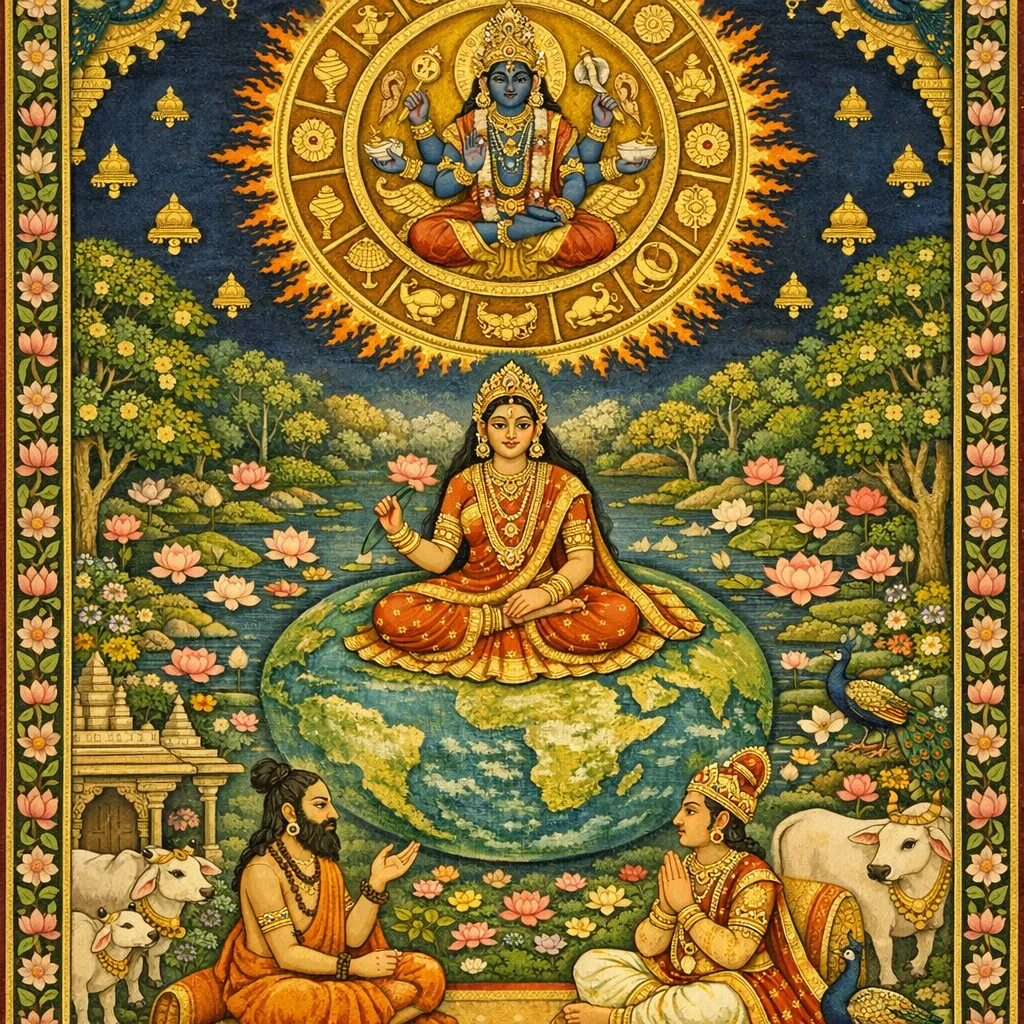
Adhyaya 3
The Earth Laughs at World-Conquering Kings; Yuga-Dharma and the Remedy for Kali
With Parīkṣit’s death near and detachment (vairāgya) urgent, Śukadeva relates the Earth’s satire: kings strive to conquer lands yet remain helpless before kāla (time) and mṛtyu (death). She exposes political ambition as desire-born misidentification with the perishable body, recalling how even famed monarchs and mighty demons were reduced by time to mere names. Śukadeva clarifies that royal histories are meant to awaken jñāna and vairāgya, not to be the final object of knowledge, and he urges steady hearing and chanting of Uttamaḥśloka’s (Śrī Kṛṣṇa’s) qualities. Asked how Kali-yuga’s pollution can be cleansed and how yugas and time work, he describes Satya, Tretā, Dvāpara, and Kali with dharma diminishing in each, then details Kali’s social breakdown and inner vices. The chapter culminates in its saving teaching: the Lord within the heart purifies more fully than auxiliary practices, and in Kali-yuga the supreme remedy is nāma-saṅkīrtana—chanting the Hare Kṛṣṇa mahā-mantra.
Shlokas
Verse 1
श्री शुक उवाच: दृष्ट्वात्मनि जये व्यग्रान् नृपान् हसति भूरियम् । अहो मा विजिगीषन्ति मृत्यो: क्रीडनका नृपा: ॥ १ ॥
Śukadeva Gosvāmī said: Seeing the kings of this earth busily striving to conquer her, the earth herself laughed and said, “Behold! These kings are but playthings in the hands of death, and yet they desire to conquer me.”
Verse 2
काम एष नरेन्द्राणां मोघ: स्याद् विदुषामपि । येन फेनोपमे पिण्डे येऽतिविश्रम्भिता नृपा: ॥ २ ॥
O rulers of men, material lust brings futility even to the learned. Driven by desire, kings place great faith in this body, a lump of flesh as fleeting as foam-bubbles on water.
Verse 3
पूर्वं निर्जित्य षड्वर्गं जेष्यामो राजमन्त्रिण: । तत: सचिवपौराप्तकरीन्द्रानस्य कण्टकान् ॥ ३ ॥ एवं क्रमेण जेष्याम: पृथ्वीं सागरमेखलाम् । इत्याशाबद्धहृदया न पश्यन्त्यन्तिकेऽन्तकम् ॥ ४ ॥
Kings and politicians imagine: “First we shall conquer the sixfold foes within (senses and mind); then we shall subdue our chief ministers and remove the thorny troubles of advisors, citizens, friends and relatives, and even the keepers of our elephants. Thus, step by step, we shall conquer the earth girdled by the sea.” Their hearts bound by expectation, they do not see death standing nearby.
Verse 4
पूर्वं निर्जित्य षड्वर्गं जेष्यामो राजमन्त्रिण: । तत: सचिवपौराप्तकरीन्द्रानस्य कण्टकान् ॥ ३ ॥ एवं क्रमेण जेष्याम: पृथ्वीं सागरमेखलाम् । इत्याशाबद्धहृदया न पश्यन्त्यन्तिकेऽन्तकम् ॥ ४ ॥
Kings and politicians imagine: “First we shall conquer the sixfold foes within (senses and mind); then we shall subdue our chief ministers and remove the thorny troubles of advisors, citizens, friends and relatives, and even the keepers of our elephants. Thus, step by step, we shall conquer the earth girdled by the sea.” Their hearts bound by expectation, they do not see death standing nearby.
Verse 5
समुद्रावरणां जित्वा मां विशन्त्यब्धिमोजसा । कियदात्मजयस्यैतन्मुक्तिरात्मजये फलम् ॥ ५ ॥
Having conquered the lands girdled by the sea, those proud kings even force their way into the ocean, as if to conquer the waters too. But what use is self-control aimed at political exploitation? The true fruit of self-mastery is liberation (moksha).
Verse 6
यां विसृज्यैव मनवस्तत्सुताश्च कुरूद्वह । गता यथागतं युद्धे तां मां जेष्यन्त्यबुद्धय: ॥ ६ ॥
O best of the Kurus, in former times Manu and his descendants abandoned me, leaving this world in battle as helplessly as they had entered it. Yet even today foolish men still strive to conquer me.
Verse 7
मत्कृते पितृपुत्राणां भ्रातृणां चापि विग्रह: । जायते ह्यसतां राज्ये ममताबद्धचेतसाम् ॥ ७ ॥
To conquer Me, those absorbed in matter fight among themselves. Bound in heart by possessiveness for political power, fathers oppose sons, and brothers contend with brothers.
Verse 8
ममैवेयं मही कृत्स्ना न ते मूढेति वादिन: । स्पर्धमाना मिथो घ्नन्ति म्रियन्ते मत्कृते नृपा: ॥ ८ ॥
Leaders challenge one another: “All this land is mine, not yours, you fool!” Thus, in rivalry, they attack each other and die for My sake.
Verse 9
श्रीशुक उवाच पृथु: पुरूरवा गाधिर्नहुषो भरतोऽर्जुन: । मान्धाता सगरो राम: खट्वाङ्गो धुन्धुहा रघु: ॥ ९ ॥ तृणबिन्दुर्ययातिश्च शर्याति: शन्तनुर्गय: । भगीरथ: कुवलयाश्व: ककुत्स्थो नैषधो नृग: ॥ १० ॥ हिरण्यकशिपुर्वृत्रो रावणो लोकरावण: । नमुचि: शम्बरो भौमो हिरण्याक्षोऽथ तारक: ॥ ११ ॥ अन्ये च बहवो दैत्या राजानो ये महेश्वरा: । सर्वे सर्वविद: शूरा: सर्वे सर्वजितोऽजिता: ॥ १२ ॥ ममतां मय्यवर्तन्त कृत्वोच्चैर्मर्त्यधर्मिण: । कथावशेषा: कालेन ह्यकृतार्था: कृता विभो ॥ १३ ॥
Śrī Śuka said: Kings such as Pṛthu, Purūravā, Gādhi, Nahuṣa, Bharata, Kārtavīrya Arjuna, Māndhātā, Sagara, Rāma, Khaṭvāṅga, Dhundhuhā, Raghu; Tṛṇabindu, Yayāti, Śaryāti, Śantanu, Gaya; Bhagīratha, Kuvalayāśva, Kakutstha, Naiṣadha, Nṛga; Hiraṇyakaśipu, Vṛtra, Rāvaṇa who made the whole world lament, Namuci, Śambara, Bhauma, Hiraṇyākṣa and Tāraka; and many other daityas and mighty kings—were all learned, heroic, all-conquering and hard to conquer. Yet, O almighty Lord, though they lived with intense possessiveness toward Me, time reduced them to mere remnants of story; none could establish a lasting rule.
Verse 10
श्रीशुक उवाच पृथु: पुरूरवा गाधिर्नहुषो भरतोऽर्जुन: । मान्धाता सगरो राम: खट्वाङ्गो धुन्धुहा रघु: ॥ ९ ॥ तृणबिन्दुर्ययातिश्च शर्याति: शन्तनुर्गय: । भगीरथ: कुवलयाश्व: ककुत्स्थो नैषधो नृग: ॥ १० ॥ हिरण्यकशिपुर्वृत्रो रावणो लोकरावण: । नमुचि: शम्बरो भौमो हिरण्याक्षोऽथ तारक: ॥ ११ ॥ अन्ये च बहवो दैत्या राजानो ये महेश्वरा: । सर्वे सर्वविद: शूरा: सर्वे सर्वजितोऽजिता: ॥ १२ ॥ ममतां मय्यवर्तन्त कृत्वोच्चैर्मर्त्यधर्मिण: । कथावशेषा: कालेन ह्यकृतार्था: कृता विभो ॥ १३ ॥
Śrī Śuka said: Kings such as Pṛthu, Purūravā, Gādhi, Nahuṣa, Bharata, Kārtavīrya Arjuna, Māndhātā, Sagara, Rāma, Khaṭvāṅga, Dhundhuhā, Raghu; Tṛṇabindu, Yayāti, Śaryāti, Śantanu, Gaya; Bhagīratha, Kuvalayāśva, Kakutstha, Naiṣadha, Nṛga; Hiraṇyakaśipu, Vṛtra, Rāvaṇa who made the whole world lament, Namuci, Śambara, Bhauma, Hiraṇyākṣa and Tāraka; and many other daityas and mighty kings—were all learned, heroic, all-conquering and hard to conquer. Yet, O almighty Lord, though they lived with intense possessiveness toward Me, time reduced them to mere remnants of story; none could establish a lasting rule.
Verse 11
श्रीशुक उवाच पृथु: पुरूरवा गाधिर्नहुषो भरतोऽर्जुन: । मान्धाता सगरो राम: खट्वाङ्गो धुन्धुहा रघु: ॥ ९ ॥ तृणबिन्दुर्ययातिश्च शर्याति: शन्तनुर्गय: । भगीरथ: कुवलयाश्व: ककुत्स्थो नैषधो नृग: ॥ १० ॥ हिरण्यकशिपुर्वृत्रो रावणो लोकरावण: । नमुचि: शम्बरो भौमो हिरण्याक्षोऽथ तारक: ॥ ११ ॥ अन्ये च बहवो दैत्या राजानो ये महेश्वरा: । सर्वे सर्वविद: शूरा: सर्वे सर्वजितोऽजिता: ॥ १२ ॥ ममतां मय्यवर्तन्त कृत्वोच्चैर्मर्त्यधर्मिण: । कथावशेषा: कालेन ह्यकृतार्था: कृता विभो ॥ १३ ॥
Śrī Śuka said: Kings such as Pṛthu, Purūravā, Gādhi, Nahuṣa, Bharata, Kārtavīrya Arjuna, Māndhātā, Sagara, Rāma, Khaṭvāṅga, Dhundhuhā, Raghu; Tṛṇabindu, Yayāti, Śaryāti, Śantanu, Gaya; Bhagīratha, Kuvalayāśva, Kakutstha, Naiṣadha, Nṛga; Hiraṇyakaśipu, Vṛtra, Rāvaṇa who made the whole world lament, Namuci, Śambara, Bhauma, Hiraṇyākṣa and Tāraka; and many other daityas and mighty kings—were all learned, heroic, all-conquering and hard to conquer. Yet, O almighty Lord, though they lived with intense possessiveness toward Me, time reduced them to mere remnants of story; none could establish a lasting rule.
Verse 12
श्रीशुक उवाच पृथु: पुरूरवा गाधिर्नहुषो भरतोऽर्जुन: । मान्धाता सगरो राम: खट्वाङ्गो धुन्धुहा रघु: ॥ ९ ॥ तृणबिन्दुर्ययातिश्च शर्याति: शन्तनुर्गय: । भगीरथ: कुवलयाश्व: ककुत्स्थो नैषधो नृग: ॥ १० ॥ हिरण्यकशिपुर्वृत्रो रावणो लोकरावण: । नमुचि: शम्बरो भौमो हिरण्याक्षोऽथ तारक: ॥ ११ ॥ अन्ये च बहवो दैत्या राजानो ये महेश्वरा: । सर्वे सर्वविद: शूरा: सर्वे सर्वजितोऽजिता: ॥ १२ ॥ ममतां मय्यवर्तन्त कृत्वोच्चैर्मर्त्यधर्मिण: । कथावशेषा: कालेन ह्यकृतार्था: कृता विभो ॥ १३ ॥
Śrī Śukadeva said: Kings such as Pṛthu, Purūravā, Gādhi, Nahuṣa, Bharata, Kārtavīrya Arjuna, Māndhātā, Sagara, Rāma, Khaṭvāṅga, Dhundhuhā, Raghu, Tṛṇabindu, Yayāti, Śaryāti, Śantanu, Gaya, Bhagīratha, Kuvalayāśva, Kakutstha, Naiṣadha, Nṛga, Hiraṇyakaśipu, Vṛtra, Rāvaṇa who made the whole world lament, Namuci, Śambara, Bhauma, Hiraṇyākṣa and Tāraka—along with many other asuras and mighty kings—were all learned, heroic, all-conquering and unconquerable. Yet, O almighty Lord, though they lived in intense possessiveness toward me, bound by mortal law they were carried off by time and left as mere remnants of story; none could establish an everlasting rule.
Verse 13
श्रीशुक उवाच पृथु: पुरूरवा गाधिर्नहुषो भरतोऽर्जुन: । मान्धाता सगरो राम: खट्वाङ्गो धुन्धुहा रघु: ॥ ९ ॥ तृणबिन्दुर्ययातिश्च शर्याति: शन्तनुर्गय: । भगीरथ: कुवलयाश्व: ककुत्स्थो नैषधो नृग: ॥ १० ॥ हिरण्यकशिपुर्वृत्रो रावणो लोकरावण: । नमुचि: शम्बरो भौमो हिरण्याक्षोऽथ तारक: ॥ ११ ॥ अन्ये च बहवो दैत्या राजानो ये महेश्वरा: । सर्वे सर्वविद: शूरा: सर्वे सर्वजितोऽजिता: ॥ १२ ॥ ममतां मय्यवर्तन्त कृत्वोच्चैर्मर्त्यधर्मिण: । कथावशेषा: कालेन ह्यकृतार्था: कृता विभो ॥ १३ ॥
Śrī Śukadeva said: Kings such as Pṛthu, Purūravā, Gādhi, Nahuṣa, Bharata, Kārtavīrya Arjuna, Māndhātā, Sagara, Rāma, Khaṭvāṅga, Dhundhuhā, Raghu, Tṛṇabindu, Yayāti, Śaryāti, Śantanu, Gaya, Bhagīratha, Kuvalayāśva, Kakutstha, Naiṣadha, Nṛga, Hiraṇyakaśipu, Vṛtra, Rāvaṇa who made the whole world lament, Namuci, Śambara, Bhauma, Hiraṇyākṣa and Tāraka—along with many other asuras and mighty kings—were all learned, heroic, all-conquering and unconquerable. Yet, O almighty Lord, though they lived in intense possessiveness toward me, bound by mortal law they were carried off by time and left as mere remnants of story; none could establish an everlasting rule.
Verse 14
कथा इमास्ते कथिता महीयसां विताय लोकेषु यश: परेयुषाम् । विज्ञानवैराग्यविवक्षया विभो वचोविभूतीर्न तु पारमार्थ्यम् ॥ १४ ॥
Śukadeva Gosvāmī said: O mighty Parīkṣit, I have recounted to you these histories of great kings who spread their fame through the worlds and then departed. O Lord, my true intent was to speak transcendental knowledge and renunciation. The tales of kings lend splendor and force to the narration, but they are not, by themselves, the ultimate truth.
Verse 15
यस्तूत्तम:श्लोकगुणानुवाद: सङ्गीयतेऽभीक्ष्णममङ्गलघ्न: । तमेव नित्यं शृणुयादभीक्ष्णं कृष्णेऽमलां भक्तिमभीप्समान: ॥ १५ ॥
One who longs for pure devotion to Śrī Kṛṣṇa should constantly hear the narrations of Lord Uttamaḥśloka’s glorious qualities, for their unceasing saṅkīrtana destroys all inauspiciousness. The devotee should listen to them daily, again and again, in regular assemblies and throughout the day.
Verse 16
श्रीराजोवाच केनोपायेन भगवन् कलेर्दोषान् कलौ जना: । विधमिष्यन्त्युपचितांस्तन्मे ब्रूहि यथा मुने ॥ १६ ॥
King Parīkṣit said: O Bhagavān, by what means can people living in Kali-yuga drive away the accumulated faults and contamination of this age? O great sage, please tell me this truthfully and clearly.
Verse 17
युगानि युगधर्मांश्च मानं प्रलयकल्पयो: । कालस्येश्वररूपस्य गतिं विष्णोर्महात्मन: ॥ १७ ॥
Please explain the yugas and the dharma of each, the measure of cosmic maintenance and dissolution (pralaya), and the course of Time—Time being the direct form of the Supreme Soul, Lord Viṣṇu.
Verse 18
श्रीशुक उवाच कृते प्रवर्तते धर्मश्चतुष्पात्तज्जनैर्धृत: । सत्यं दया तपो दानमिति पादा विभोर्नृप ॥ १८ ॥
Śukadeva Gosvāmī said: O King, in Kṛta (Satya) yuga dharma stands complete upon four legs and is carefully upheld by the people. Those four legs are truthfulness, mercy, austerity, and charity.
Verse 19
सन्तुष्टा: करुणा मैत्रा: शान्ता दान्तास्तितिक्षव: । आत्मारामा: समदृश: प्रायश: श्रमणा जना: ॥ १९ ॥
The people of Satya-yuga are mostly content, compassionate, friendly to all, peaceful, self-controlled, and tolerant. They delight within, see all with equal vision, and steadily strive for spiritual perfection.
Verse 20
त्रेतायां धर्मपादानां तुर्यांशो हीयते शनै: । अधर्मपादैरनृतहिंसासन्तोषविग्रहै: ॥ २० ॥
In Tretā-yuga, each leg of dharma is gradually diminished by one quarter, under the influence of the four pillars of adharma—lying, violence, dissatisfaction, and quarrel.
Verse 21
तदा क्रियातपोनिष्ठा नातिहिंस्रा न लम्पटा: । त्रैवर्गिकास्त्रयीवृद्धा वर्णा ब्रह्मोत्तरा नृप ॥ २१ ॥
O King, in Tretā-yuga people are devoted to sacred rites and austerity; they are neither overly violent nor enslaved to sensual pleasure. Their aims are chiefly the tri-varga—dharma, artha, and kāma—and by following the ordinances of the three Vedas they attain prosperity. Though society divides into four varṇas, most are brāhmaṇas.
Verse 22
तप:सत्यदयादानेष्वर्धं ह्रस्वति द्वापरे । हिंसातुष्टयनृतद्वेषैर्धर्मस्याधर्मलक्षणै: ॥ २२ ॥
In Dvāpara-yuga the religious qualities of austerity, truth, mercy and charity are reduced to one half by their irreligious counterparts — dissatisfaction, untruth, violence and enmity.
Verse 23
यशस्विनो महाशीला: स्वाध्यायाध्ययने रता: । आढ्या: कुटुम्बिनो हृष्टा वर्णा: क्षत्रद्विजोत्तरा: ॥ २३ ॥
In the Dvāpara age people are interested in glory and are very noble. They devote themselves to the study of the Vedas, possess great opulence, support large families and enjoy life with vigor. Of the four classes, the kṣatriyas and brāhmaṇas are most numerous.
Verse 24
कलौ तु धर्मपादानां तुर्यांशोऽधर्महेतुभि: । एधमानै: क्षीयमाणो ह्यन्ते सोऽपि विनङ्क्ष्यति ॥ २४ ॥
In the Age of Kali only one fourth of the religious principles remains. That last remnant will continuously be decreased by the ever-increasing principles of irreligion and will finally be destroyed.
Verse 25
तस्मिन् लुब्धा दुराचारा निर्दया: शुष्कवैरिण: । दुर्भगा भूरितर्षाश्च शूद्रदासोत्तरा: प्रजा: ॥ २५ ॥
In the Kali age people tend to be greedy, ill-behaved and merciless, and they fight one another without good reason. Unfortunate and obsessed with material desires, the people of Kali-yuga are almost all śūdras and barbarians.
Verse 26
सत्त्वं रजस्तम इति दृश्यन्ते पुरुषे गुणा: । कालसञ्चोदितास्ते वै परिवर्तन्त आत्मनि ॥ २६ ॥
The material modes — goodness, passion and ignorance — whose permutations are observed within a person’s mind, are set into motion by the power of time.
Verse 27
प्रभवन्ति यदा सत्त्वे मनोबुद्धीन्द्रियाणि च । तदा कृतयुगं विद्याज्ज्ञाने तपसि यद् रुचि: ॥ २७ ॥
When the mind, intelligence, and senses are firmly established in the mode of goodness, that time is to be known as Satya-yuga; then people delight in sacred knowledge and austerity.
Verse 28
यदा कर्मसु काम्येषु भक्तिर्यशसि देहिनाम् । तदा त्रेता रजोवृत्तिरिति जानीहि बुद्धिमन् ॥ २८ ॥
O most intelligent one, when embodied souls are devoted to their duties yet act with ulterior desires and seek fame and prestige, know that as Treta-yuga, wherein the mode of passion predominates.
Verse 29
यदा लोभस्त्वसन्तोषो मानो दम्भोऽथ मत्सर: । कर्मणां चापि काम्यानां द्वापरं तद् रजस्तम: ॥ २९ ॥
When greed, discontent, false pride, hypocrisy, and envy become prominent, along with attraction to selfish, fruit-seeking acts, that time is Dvāpara-yuga, ruled by the mixed modes of passion and ignorance.
Verse 30
यदा मायानृतं तन्द्रा निद्रा हिंसा विषादनम् । शोकमोहौ भयं दैन्यं स कलिस्तामस: स्मृत: ॥ ३० ॥
When cheating, lying, sloth, drowsiness, violence, depression, lamentation, bewilderment, fear, and poverty prevail, that age is Kali-yuga, remembered as the era dominated by ignorance (tamas).
Verse 31
तस्मात् क्षुद्रदृशो मर्त्या: क्षुद्रभाग्या महाशना: । कामिनो वित्तहीनाश्च स्वैरिण्यश्च स्त्रियोऽसती: ॥ ३१ ॥
Therefore, by the faults of Kali-yuga, human beings will become shortsighted, unfortunate, gluttonous, lustful, and poor; and women, losing chastity, will act independently and wander from one man to another.
Verse 32
दस्यूत्कृष्टा जनपदा वेदा: पाषण्डदूषिता: । राजानश्च प्रजाभक्षा: शिश्नोदरपरा द्विजा: ॥ ३२ ॥
Cities will be dominated by thieves, the Vedas will be contaminated by speculative interpretations of atheists, political leaders will virtually consume the citizens, and the so-called priests and intellectuals will be devotees of their bellies and genitals.
Verse 33
अव्रता बटवोऽशौचा भिक्षवश्च कुटुम्बिन: । तपस्विनो ग्रामवासा न्यासिनोऽत्यर्थलोलुपा: ॥ ३३ ॥
The brahmacaris will fail to execute their vows and become generally unclean, the householders will become beggars, the vanaprasthas will live in the villages, and the sannyasis will become greedy for wealth.
Verse 34
ह्रस्वकाया महाहारा भूर्यपत्या गतह्रिय: । शश्वत्कटुकभाषिण्यश्चौर्यमायोरुसाहसा: ॥ ३४ ॥
Women will become much smaller in size, and they will eat too much, have more children than they can properly take care of, and lose all shyness. They will always speak harshly and will exhibit qualities of thievery, deceit and unrestrained audacity.
Verse 35
पणयिष्यन्ति वै क्षुद्रा: किराटा: कूटकारिण: । अनापद्यपि मंस्यन्ते वार्तां साधु जुगुप्सिताम् ॥ ३५ ॥
Businessmen will engage in petty commerce and earn their money by cheating. Even when there is no emergency, people will consider any degraded occupation quite acceptable.
Verse 36
पतिं त्यक्ष्यन्ति निर्द्रव्यं भृत्या अप्यखिलोत्तमम् । भृत्यं विपन्नं पतय: कौलं गाश्चापयस्विनी: ॥ ३६ ॥
Servants will abandon a master who has lost his wealth, even if that master is a saintly person of exemplary character. Masters will abandon an incapacitated servant, even if that servant has been in the family for generations. Cows will be abandoned or killed when they stop giving milk.
Verse 37
पितृभ्रातृसुहृज्ज्ञातीन् हित्वा सौरतसौहृदा: । ननान्दृश्यालसंवादा दीना: स्त्रैणा: कलौ नरा: ॥ ३७ ॥
In Kali-yuga men will become wretched and ruled by women. Abandoning fathers, brothers, friends, and kinsmen, they will keep company with the wife’s relatives, and their notion of friendship will rest solely upon sexual ties.
Verse 38
शूद्रा: प्रतिग्रहीष्यन्ति तपोवेषोपजीविन: । धर्मं वक्ष्यन्त्यधर्मज्ञा अधिरुह्योत्तमासनम् ॥ ३८ ॥
In Kali-yuga crude men will accept charity and make their living by a show of austerity and a mendicant’s dress. Those ignorant of dharma will mount high seats and presume to speak on sacred principles.
Verse 39
नित्यमुद्विग्नमनसो दुर्भिक्षकरकर्शिता: । निरन्ने भूतले राजननावृष्टिभयातुरा: ॥ ३९ ॥ वासोऽन्नपानशयनव्यवायस्नानभूषणै: । हीना: पिशाचसन्दर्शा भविष्यन्ति कलौ प्रजा: ॥ ४० ॥
In Kali-yuga people’s minds will be ever agitated. O King, emaciated by famine and taxation, they will be continually distressed by fear of drought. Deprived of clothing, food and drink, rest, conjugal pleasure, bathing, and ornaments, they will gradually appear like ghostly, haunted beings.
Verse 40
नित्यमुद्विग्नमनसो दुर्भिक्षकरकर्शिता: । निरन्ने भूतले राजननावृष्टिभयातुरा: ॥ ३९ ॥ वासोऽन्नपानशयनव्यवायस्नानभूषणै: । हीना: पिशाचसन्दर्शा भविष्यन्ति कलौ प्रजा: ॥ ४० ॥
In Kali-yuga people will be bereft of clothing, food and drink, rest, conjugal pleasure, bathing, and ornaments. Their bodies will grow emaciated, and their appearance will gradually become ghostlike.
Verse 41
कलौ काकिणिकेऽप्यर्थे विगृह्य त्यक्तसौहृदा: । त्यक्ष्यन्ति च प्रियान् प्राणान् हनिष्यन्ति स्वकानपि ॥ ४१ ॥
In Kali-yuga men will hate one another even over a few coins. Casting aside all friendship, they will be ready to forfeit their own lives and to kill even their own relatives.
Verse 42
न रक्षिष्यन्ति मनुजा: स्थविरौ पितरावपि । पुत्रान् भार्यां च कुलजां क्षुद्रा: शिश्नोदरंभरा: ॥ ४२ ॥
In Kali-yuga men will no longer protect their aged parents, their children, or their respectable wives. Fallen into pettiness, they will care only to gratify the belly and the genitals.
Verse 43
कलौ न राजन्जगतां परं गुरुं त्रिलोकनाथानतपादपङ्कजम् । प्रायेण मर्त्या भगवन्तमच्युतं यक्ष्यन्ति पाषण्डविभिन्नचेतस: ॥ ४३ ॥
O King, in the Age of Kali people’s intelligence will be split by atheism and false creeds, and they will scarcely offer sacrifice to Lord Acyuta, the supreme spiritual master of the universe—though the rulers of the three worlds bow to His lotus feet.
Verse 44
यन्नामधेयं म्रियमाण आतुर: पतन् स्खलन् वा विवशो गृणन् पुमान् । विमुक्तकर्मार्गल उत्तमां गतिं प्राप्नोति यक्ष्यन्ति न तं कलौ जना: ॥ ४४ ॥
Even a man terrified at death—falling, stumbling, scarcely conscious—if he utters the holy name of the Supreme Lord, is freed from the shackles of karma and attains the highest destination. Yet in Kali-yuga people will not worship that Lord.
Verse 45
पुंसां कलिकृतान् दोषान् द्रव्यदेशात्मसम्भवान् । सर्वान् हरति चित्तस्थो भगवान् पुरुषोत्तम: ॥ ४५ ॥
In Kali-yuga, objects, places, and even persons are tainted by Kali’s faults. Yet the almighty Lord Puruṣottama, dwelling within the mind, removes all such contamination from one who fixes the Lord in the heart.
Verse 46
श्रुत: सङ्कीर्तितो ध्यात: पूजितश्चादृतोऽपि वा । नृणां धुनोति भगवान् हृत्स्थो जन्मायुताशुभम् ॥ ४६ ॥
If one hears of the Lord, glorifies Him in saṅkīrtana, meditates upon Him, worships Him, or even simply offers Him deep respect—the Bhagavān dwelling in the heart—He washes away the mind’s impurity amassed over thousands of lifetimes.
Verse 47
यथा हेम्नि स्थितो वह्निर्दुर्वर्णं हन्ति धातुजम् । एवमात्मगतो विष्णुर्योगिनामशुभाशयम् ॥ ४७ ॥
Just as fire applied to gold removes discoloration caused by traces of other metals, so Lord Viṣṇu, dwelling within the heart, purifies the yogīs’ minds of impure intentions.
Verse 48
विद्यातप:प्राणनिरोधमैत्री- तीर्थाभिषेकव्रतदानजप्यै: । नात्यन्तशुद्धिं लभतेऽन्तरात्मा यथा हृदिस्थे भगवत्यनन्ते ॥ ४८ ॥
By demigod worship, austerity, breath control, compassion, bathing at holy places, strict vows, charity, and mantra recitation, the inner self does not attain the absolute purity that arises when the unlimited Bhagavān Ananta manifests within the heart.
Verse 49
तस्मात् सर्वात्मना राजन् हृदिस्थं कुरु केशवम् । म्रियमाणो ह्यवहितस्ततो यासि परां गतिम् ॥ ४९ ॥
Therefore, O King, with your whole being fix Keśava within your heart. If, at the time of death, you remain attentive and absorbed in Him, you will surely attain the supreme destination.
Verse 50
म्रियमाणैरभिध्येयो भगवान् परमेश्वर: । आत्मभावं नयत्यङ्ग सर्वात्मा सर्वसंश्रय: ॥ ५० ॥
My dear King, the Bhagavān, the Supreme Lord, is the ultimate controller. He is the Supersoul and the shelter of all beings. When those near death meditate upon Him, He reveals to them their own eternal spiritual identity.
Verse 51
कलेर्दोषनिधे राजन्नस्ति ह्येको महान् गुण: । कीर्तनादेव कृष्णस्य मुक्तसङ्ग: परं व्रजेत् ॥ ५१ ॥
O King, although Kali-yuga is an ocean of faults, it has one great virtue: simply by kīrtana—chanting and glorifying Śrī Kṛṣṇa’s holy name—one becomes free from material bondage and attains the supreme abode.
Verse 52
कृते यद्ध्यायतो विष्णुं त्रेतायां यजतो मखै: । द्वापरे परिचर्यायां कलौ तद्धरिकीर्तनात् ॥ ५२ ॥
The same fruit attained in Satya-yuga by meditating on Viṣṇu, in Tretā-yuga by performing sacrifices, and in Dvāpara-yuga by serving the Lord’s lotus feet is attained in Kali-yuga simply by Hari-nāma kīrtana—chanting the Hare Kṛṣṇa mahā-mantra.
Frequently Asked Questions
She laughs because their conquest is based on bodily identification and political lust, while they themselves are “playthings” of death. The Earth’s critique is a dharma-śāstric inversion: rulers presume mastery over land and people, yet kāla inevitably strips them of everything. Her laughter functions as instruction (upadeśa), exposing the vanity of sovereignty and pushing the listener toward renunciation and the search for the eternal shelter in Bhagavān.
It presents dharma as standing on four legs—truthfulness, mercy, austerity, and charity—fully present in Satya-yuga. In Tretā, each leg is reduced by a quarter due to irreligious pillars (lying, violence, dissatisfaction, quarrel). In Dvāpara, dharma is halved, and in Kali only one quarter remains, steadily diminishing until destroyed. The chapter also correlates yugas with the dominance of guṇas in collective psychology: goodness (Satya), passion (Tretā), mixed passion/ignorance (Dvāpara), and ignorance (Kali).
The list includes celebrated rulers and formidable antagonists (e.g., Pṛthu, Bharata, Māndhātā, Sagara, Rāma, Raghu; and figures like Hiraṇyakaśipu, Vṛtra, Rāvaṇa). The rhetorical repetition intensifies the point: regardless of learning, heroism, or empire, all are conquered by time. The intended takeaway is not genealogical pride but vairāgya—worldly fame collapses into “historical accounts,” whereas devotion yields imperishable benefit.
The chapter culminates in nāma-saṅkīrtana: chanting the Hare Kṛṣṇa mahā-mantra. It teaches that while many practices (austerity, vows, holy baths, mantra recitation, demigod worship) offer some purification, the most complete cleansing occurs when the Supreme Lord is fixed within the heart—most readily achieved in Kali by chanting His holy names.