
Shloka 36
Arjuna Vishada Yoga — Arjuna Vishada Yoga
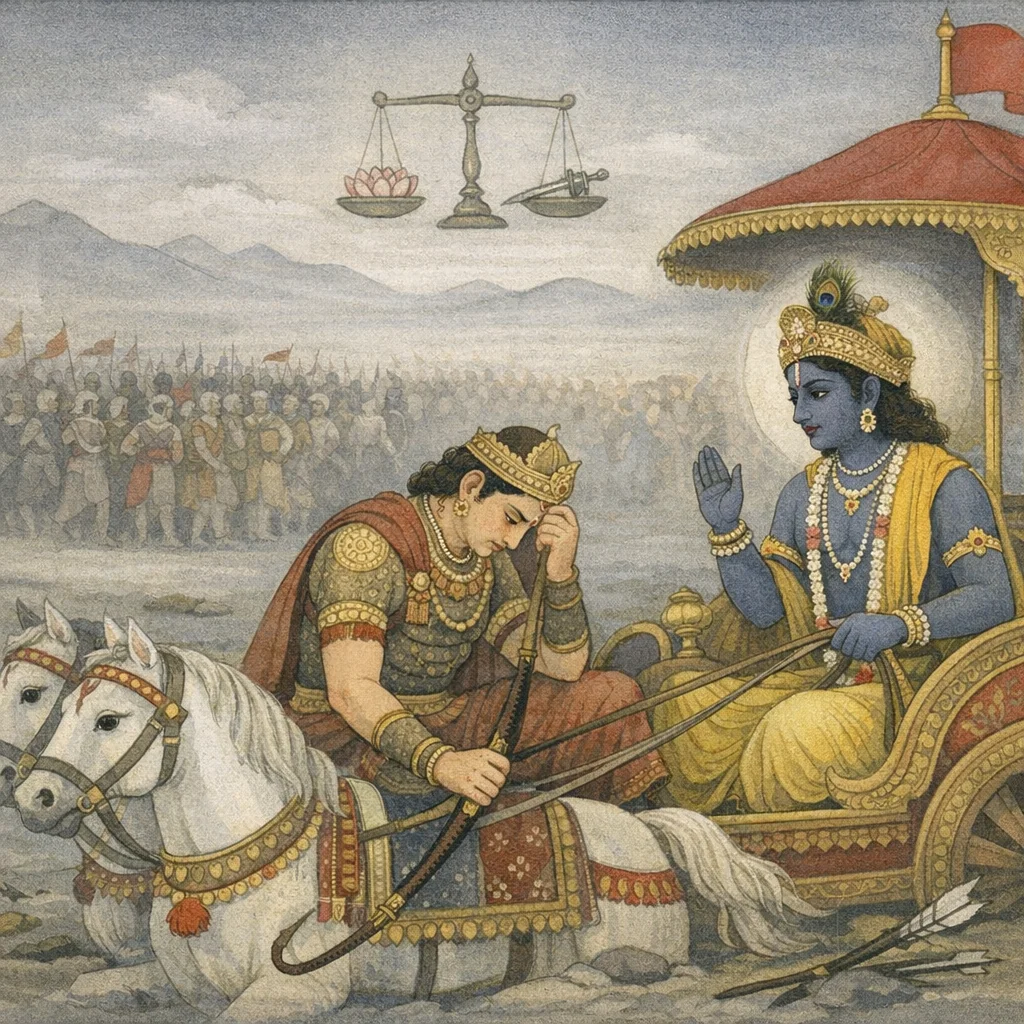
पापमेवाश्रयेदस्मान्हत्वैतानाततायिनः । तस्मान्नार्हा वयं हन्तुं धार्तराष्ट्रान्सबान्धवान् । स्वजनं हि कथं हत्वा सुखिनः स्याम माधव ॥ १.३६ ॥
pāpam evāśrayed asmān hatvaitān ātatāyinaḥ | tasmān nārhā vayaṃ hantuṃ dhārtarāṣṭrān sa-bāndhavān | svajanaṃ hi kathaṃ hatvā sukhinaḥ syāma mādhava || 1.36 ||

Sin alone would come upon us by slaying these aggressors; therefore we are not fit to kill the sons of Dhṛtarāṣṭra along with their kinsmen. For how, O Mādhava, could we be happy after killing our own people?
Sin alone would attach to us by opposing these aggressors; therefore we ought not to oppose the sons of Dhṛtarāṣṭra along with their relatives. For how could we be happy, O Mādhava, after opposing our own people?
Only wrongdoing would accrue to us by opposing these, even though they are aggressors; therefore we are not fit to oppose the sons of Dhṛtarāṣṭra together with their kinsmen. For how, having opposed our own people, could we be happy, O Mādhava?
Ātatāyin (‘aggressor’) is a technical term in dharma literature; Arjuna acknowledges their culpability yet still prioritizes the moral and emotional cost of acting against kin, reflecting tension between juridical norms and personal conscience.
FAQs
Arjuna anticipates guilt and lasting distress, suggesting that psychological well-being is tied to perceived moral legitimacy, not merely to external success.
The linkage of action with pāpa anticipates later discussion on karma and intention; Krishna’s response will distinguish binding action from action performed with right understanding and non-attachment.
Arjuna argues that even if the opposing side has committed grave wrongs, responding in kind against relatives threatens ethical self-conception and social cohesion.
The verse can inform debates on proportional response and restorative ethics: acknowledging wrongdoing does not automatically justify any countermeasure, especially when it damages community bonds.