
Shloka 37
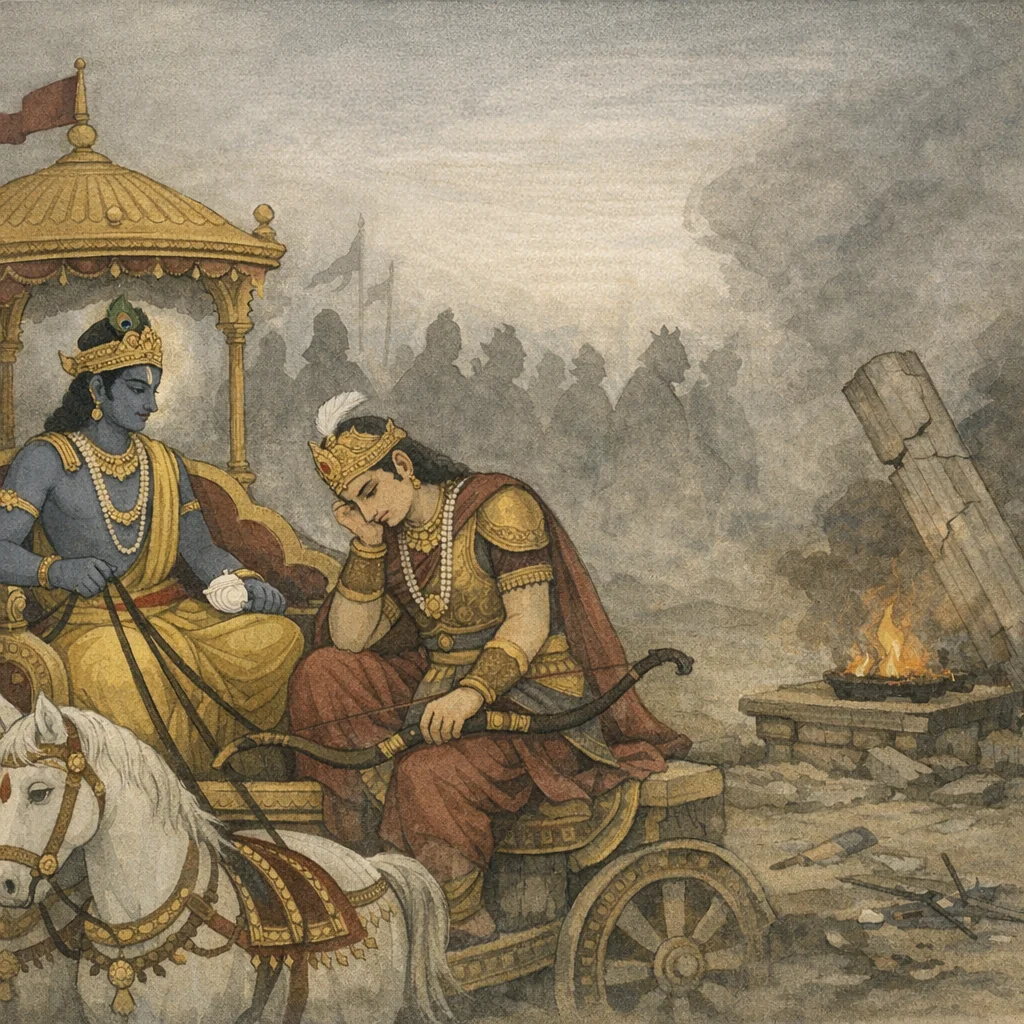
Arjuna Vishada Yoga — The Yoga of Arjuna's Despondency
यद्यप्येते न पश्यन्ति लोभोपहतचेतसः । कुलक्षयकृतं दोषं मित्रद्रोहे च पातकम् ॥ १.३७ ॥
yady apy ete na paśyanti lobhopahata-cetasaḥ | kula-kṣaya-kṛtaṃ doṣaṃ mitra-drohe ca pātakam || 1.37 ||

Though these people, their minds overpowered by greed, do not see the fault that arises from the destruction of the family, nor the sin in betraying friends…
Though these people, with minds overpowered by greed, do not see the fault arising from the destruction of the family and the wrongdoing in betraying friends…
Even if these, whose minds are impaired by greed, do not perceive the defect caused by the ruin of the lineage and the transgression in treachery toward allies…
Mitra-droha can mean betrayal of friends/allies and, more broadly, violation of reciprocal trust. Kula-kṣaya is not only physical loss but the collapse of lineage-based institutions and practices.
FAQs
The verse portrays greed as a force that narrows moral vision, a theme common in Indian ethical literature: strong desire can impair judgment and empathy.
Moral ‘seeing’ (paśyanti) implies discernment (viveka). The later teaching develops how clarity arises from disciplined understanding rather than reactive emotion.
Arjuna contrasts his own awareness with what he claims is the opponents’ greed-driven failure to recognize broader communal harm.
It can be applied to institutional ethics: competitive self-interest may obscure long-term harms to trust, community stability, and shared norms.