
Shloka 27
Arjuna Vishada Yoga — Arjuna Vishada Yoga
श्वशुरान्सुहृदश्चैव सेनयोरुभयोरपि । तान्समीक्ष्य स कौन्तेयः सर्वान्बन्धूनवस्थितान् ॥ १.२७ ॥
śvaśurān suhṛdaś caiva senayor ubhayor api | tān samīkṣya sa kaunteyaḥ sarvān bandhūn avasthitān || 1.27 ||

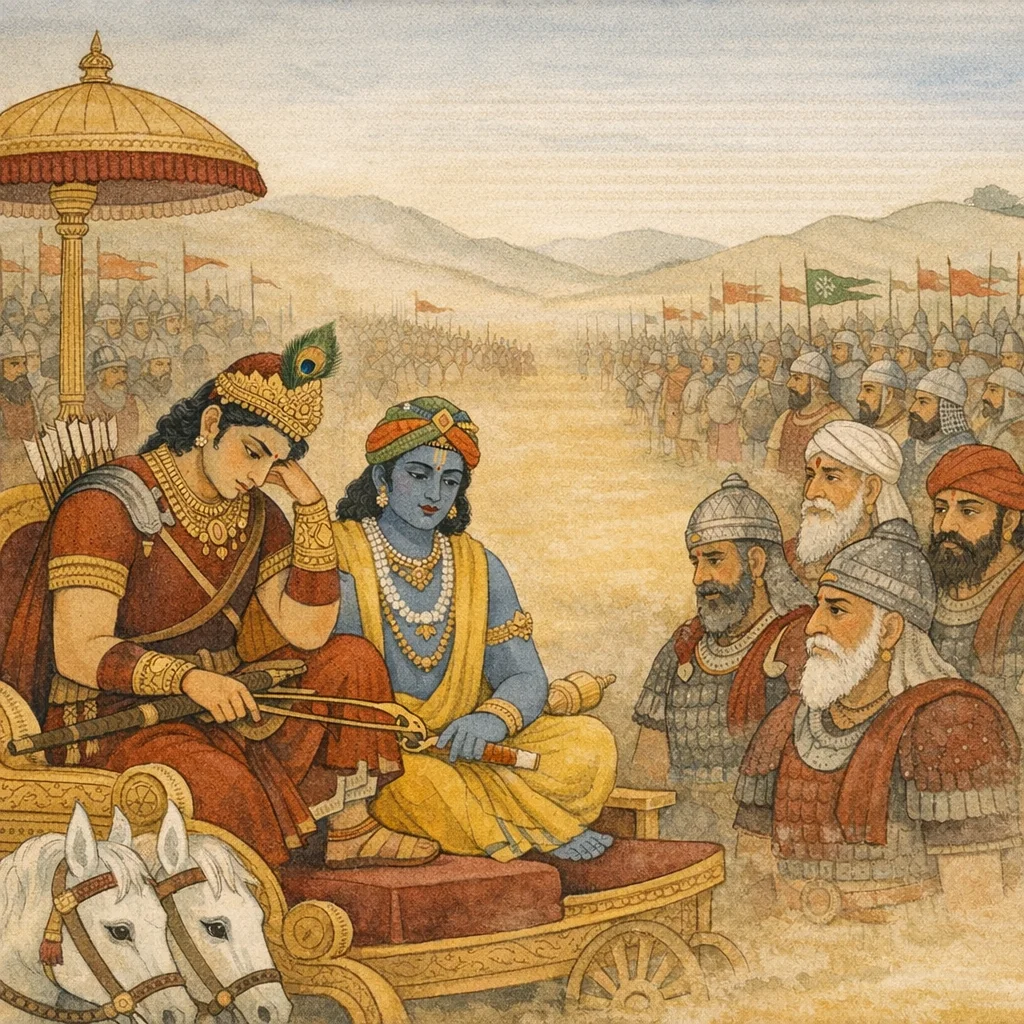
And fathers-in-law and well-wishers too, in both armies. Beholding all those kinsmen standing there, the son of Kuntī (Arjuna)…
And fathers-in-law and well-wishers too, in both forces. Seeing all those kinsmen standing there, the son of Kuntī...
And fathers-in-law and friends as well, on both sides. Seeing all those kinsmen standing there, that Kaunteya...
The verse ends with a participial setup leading into 1.28 (Arjuna’s emotional response). Traditional translations often bridge this enjambment with punctuation; academically it is syntactically continuous.
FAQs
Seeing loved ones on both sides intensifies ambivalence and anticipatory grief, setting the conditions for Arjuna’s breakdown in resolve.
The ‘both sides’ motif can be read as inner polarity—virtues and impulses arrayed within one psyche—calling for integration through wisdom.
This verse completes the recognition list and transitions directly to Arjuna’s compassion and despondency in 1.28.
In polarized disputes, remembering that valued people exist across positions can reduce demonization and support ethical deliberation.