
Shloka 26
Arjuna Vishada Yoga — The Yoga of Arjuna's Despondency
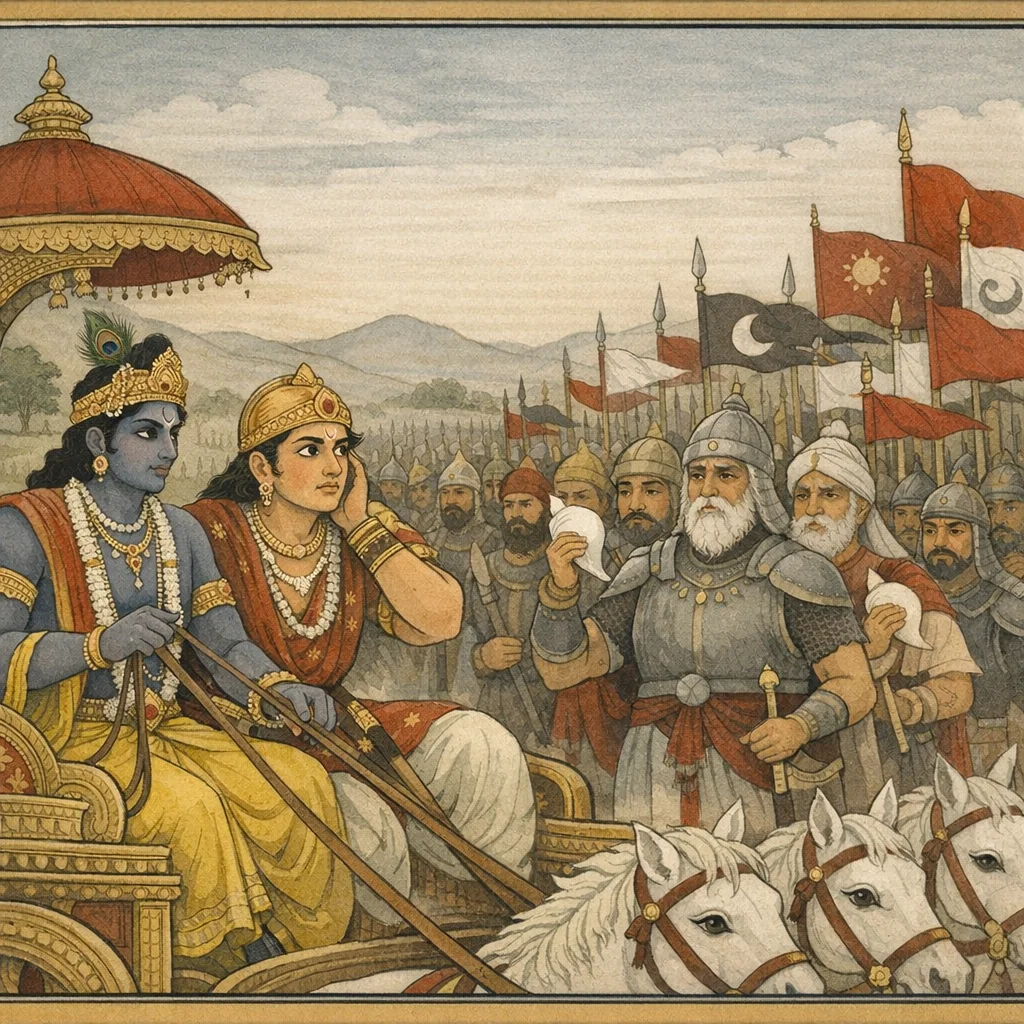
तत्रापश्यत्स्थितान्पार्थः पितॄनथ पितामहान् । आचार्यान्मातुलान्भ्रातॄन्पुत्रान्पौत्रान्सखींस्तथा ॥ १.२६ ॥
tatrāpaśyat sthitān pārthaḥ pitṝn atha pitāmahān | ācāryān mātulān bhrātṝn putrān pautrān sakhīṁs tathā || 1.26 ||

There Pārtha beheld, standing arrayed, fathers and grandfathers, teachers, maternal uncles, brothers, sons, grandsons, and friends as well.
There Pārtha saw stationed fathers and grandfathers, teachers, maternal uncles, brothers, sons, grandsons, and friends as well.
There Pārtha saw standing: fathers, grandfathers, teachers, maternal uncles, brothers, sons, grandsons, and also friends.
Some recensions continue the list into the next verse(s); the present verse is a catalog of relations, central to the ethical tension. The academic translation maintains the enumerative structure.
FAQs
Recognition of close relations triggers empathic distress and role-conflict: Arjuna’s warrior duty collides with familial and social bonds.
The catalog can symbolize the many identities the self inhabits (son, student, friend), which later teachings interrogate in light of a deeper self-understanding.
This recognition scene is the narrative hinge: Arjuna’s crisis becomes intelligible as a conflict between dharma and attachment.
Ethical decisions often involve multiple roles and relationships; acknowledging them explicitly helps clarify what is at stake.