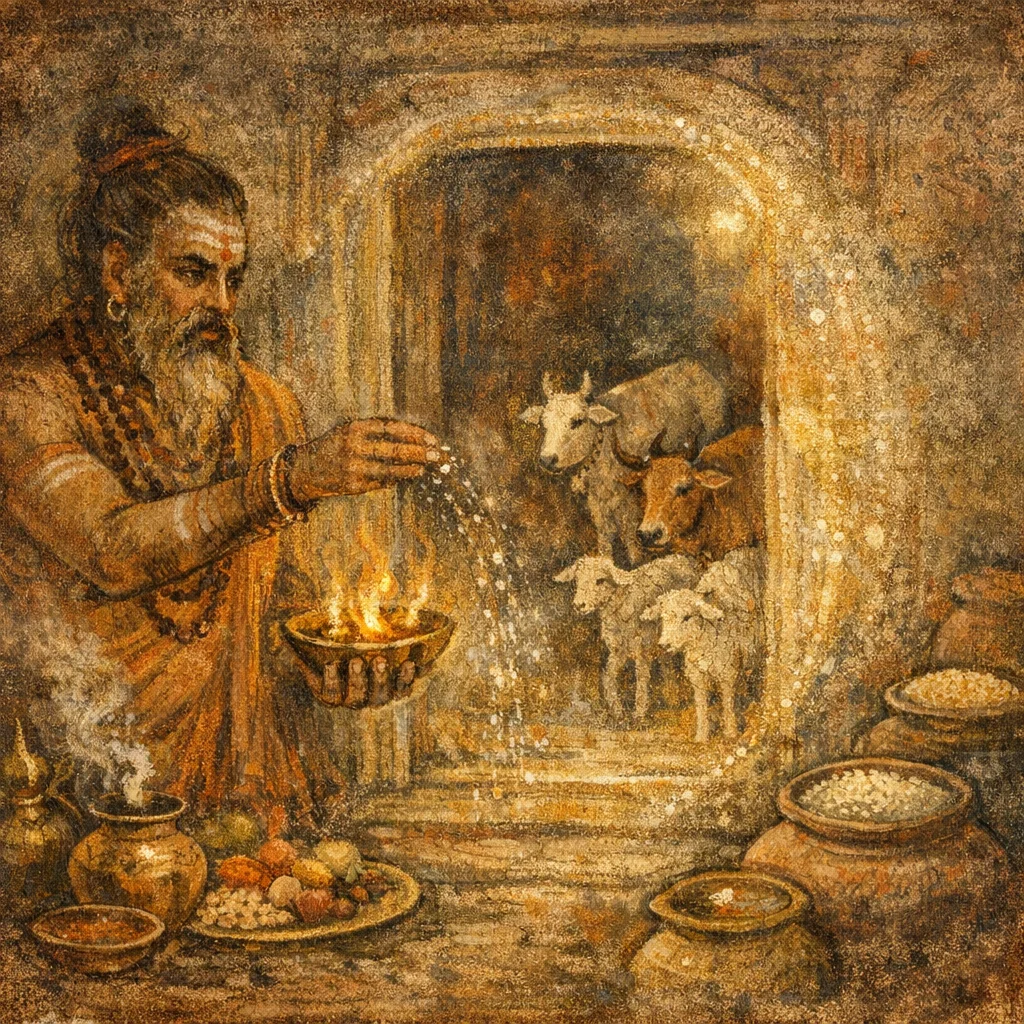
Sukta 60
Rishi: Atharvanic/Aṅgiras-type attribution (kāṇḍa 7 paustika strata; specific r̥ṣi not supplied in the input)
Devata: Bhadra (Auspiciousness) / generalized prosperity-power; implicit Manu as normative human authority
Chandas: Anuṣṭubh-like cadence (mixed; kāṇḍa 7 often uses anuṣṭubh variants)
Mantras
Mantra 1
रम्यं गृहम्। ऊर्जं बिभ्रद् वसुवनिः सुमेधा अघोरेण चक्षुषा मित्रियेण । गृहानैमि सुमना वन्दमानो रमध्वं मा बिभीत मत्
A pleasant house. Bearing strength, winning wealth, of good wisdom, with gaze benign and friendly: unto the houses I enter, of gracious mind, doing reverence. Rejoice ye; fear not because of me.
Mantra 2
इमे गृहा मयोभुव ऊर्जस्वन्तः पयस्वन्तः । पूर्णा वामेन तिष्ठन्तस्ते नो जानन्त्वायतः
These houses, welfare-breeding, rich in sustaining strength, rich in milk, standing full by gracious good—may they acknowledge us as we draw nigh.
Mantra 3
येषामध्येति प्रवसन् येषु सौमनसो बहुः । गृहानुप ह्वयामहे ते नो जानन्त्वायतः
Those houses wherein the traveller yet pursues his sacred study, wherein goodwill is abundant—those houses we call hitherward: may they acknowledge us as we approach.
Mantra 4
उपहूता भूरिधनाः सखायः स्वादुसंमुदः । अक्षुध्या अतृष्या स्त गृहा मास्मद् बिभीतन
Invoked hither, wealthy, friendly, of sweet rejoicing—be ye unhungry, unthirsting, O houses; be not afraid of us.
Mantra 5
उपहूता इह गाव उपहूता अजावयः । अथो अन्नस्य कीलाल उपहूतो गृहेषु नः
Invoked hither are the cows here; invoked hither the goats and sheep; yea, and the sweet drink of food is invoked hither within our houses.
Mantra 6
सूनृतावन्तः सुभगा इरावन्तो हसामुदाः । अतृष्या अक्षुध्या स्त गृहा मास्मद् बिभीतन
Rich in gracious truth of speech, well-fortuned, rich in refreshment, glad with laughter—be ye unthirsting, unhungry, O houses; be not afraid of us.
Mantra 7
इहैव स्त मानु गात विश्वा रूपाणि पुष्यत । ऐष्यामि भद्रेणा सह भूयांसो भवता मया
Here, even here, stand fast; O Manu, come hither: make all fair forms to thrive. With auspiciousness for companion will I seek my end; be ye more and more with me.
Frequently Asked Questions
It is used to bless and stabilize a dwelling—especially at house-entry—so the home becomes pleasant, friendly, prosperous, and free from the conditions of scarcity (hunger and thirst).
In Atharvanic domestic ritual language, the dwelling is personified so it can be invited, pacified, and turned into an ally—one that protects occupants and supports abundance rather than resisting them.
The cited verses work primarily through recitation and intention at the threshold/inside the home. Offerings are optional; simple hospitality and orderly cleanliness can serve as paustika supports to the mantra’s aim.