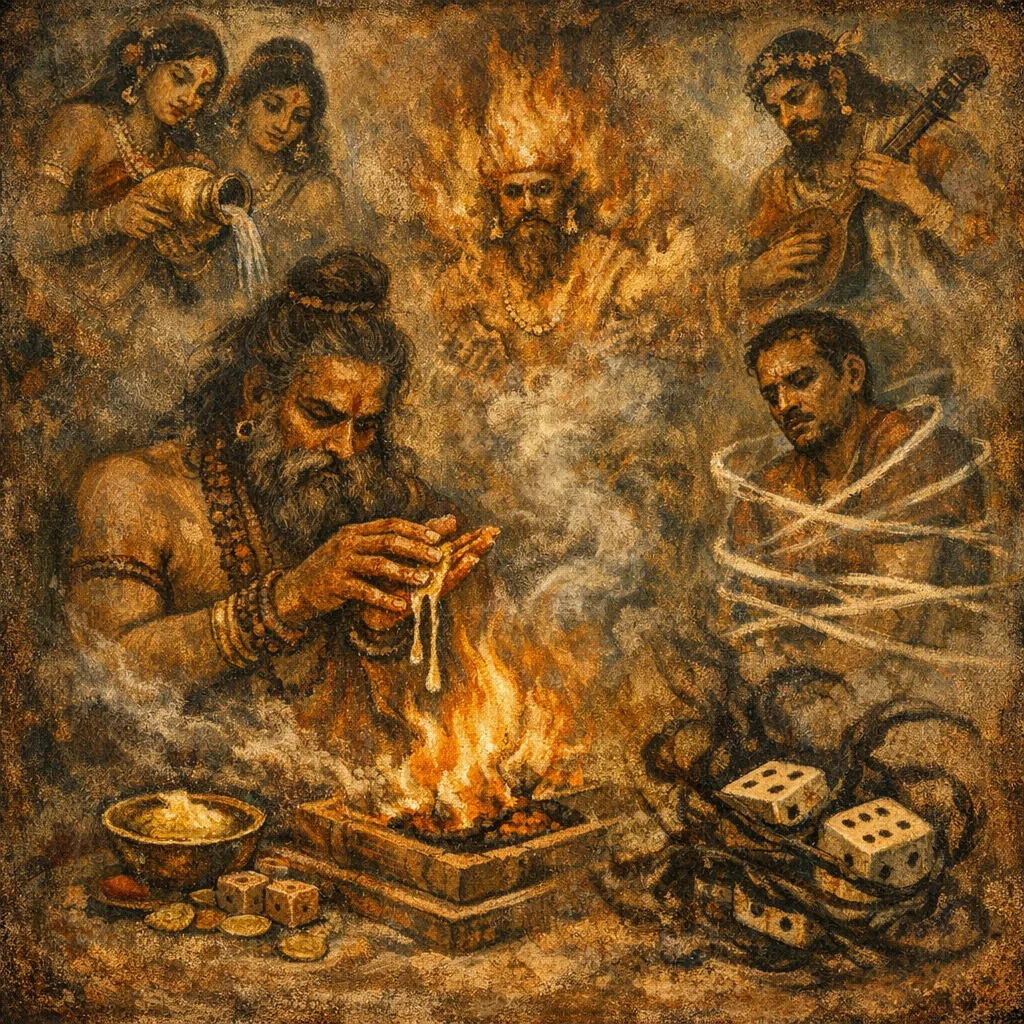
Sukta 109
Rishi: Atharvanic tradition (varies)
Devata: Babhru (dice-power) and Kali (personified losing throw/misfortune)
Chandas: Anuṣṭubh tendency (requires metrical verification)
Mantras
Mantra 1
राष्ट्रभृतः। इदमुग्राय बभ्रवे नमो यो अक्षेषु तनूवशी। घृतेन कलिं शिक्षामि स नो मृडातीदृशे
Upholders of the realm. This obeisance is to the formidable Babhru, who among the dice is master over men’s very persons. With ghee I discipline Kali: may he be gracious unto us in such a case.
Mantra 2
घृतमप्सराभ्यो वह त्वमग्ने पांसूनक्षेभ्यः सिकता अपश्च । यथाभगं हव्यदातिं जुषाणा मदन्ति देवा उभयानि हव्या
Bear thou the ghee unto the Apsarases, O Agni; (bear) the dusts from the dice, the gravels, and the waters. So that, taking pleasure in the unimpaired share and in the due bestowal of oblations, the Gods may rejoice in both the offerings.
Mantra 3
अप्सरसः सधमादं मदन्ति हविर्धानमन्तरा सूर्यं च । ता मे हस्तौ सं सृजन्तु घृतेन सपत्नं मे कितवं रन्धयन्तु
The Apsarases revel in common mirth betwixt the offering-place and the Sun. Let them with ghee set my hands in order; let them subdue for me the rival, the cheating gamester.
Mantra 4
आदिनवं प्रतिदीव्ने घृतेनास्माँ अभि क्षर । वृक्षमिवाशन्या जहि यो अस्मान् प्रतिदीव्यति
Pour thou with ghee the taking-away ruin upon the counter-gambler; smite, as with a thunderbolt a tree, him who plays against us.
Mantra 5
यो नो द्युवे धनमिदं चकार यो अक्षाणां ग्लहनं शेषणं च । स नो देवो हविरिदं जुषाणो गन्धर्वेभिः सधमादं मदेम
He who for our play hath made this wealth, he who (ordains) the dice’s seizure and the leaving of a remnant—may that God, accepting this oblation, with the Gandharvas let us rejoice in common mirth.
Mantra 6
संवसव इति वो नामधेयमुग्रंपश्या राष्ट्रभृतो ह्य१क्षाः । तेभ्यो व इन्दवो हविषा विधेम वयं स्याम पतयो रयीणाम्
‘Samvasavas’—thus is your name, ye fierce-seeing dice, for ye are indeed upholders of the realm. To you, O bright drops, with oblation would we do worship: may we be lords of riches.
Mantra 7
देवान् यन्नाथितो हुवे ब्रह्मचर्यं यदूषिम। अक्षान् यद् बभ्रूनालभे ते नो मृडन्त्वीदृशे
When, being in distress, I call upon the Gods; when I undertake the holy course of continence, when I enter upon the observance; when I lay hold upon the tawny dice—then may they be gracious unto us in such a case.
Frequently Asked Questions
Its main aim is restraint and protection: it pacifies the dice-power, disciplines Kali (loss/misfortune), and seeks steadiness and wealth-stability rather than reckless play.
Ghṛta is a standard auspicious offering-medium; here it functions as a ritual means to cool, appease, and regulate a dangerous force so it becomes favorable instead of destructive.
Yes, the hymn includes language to subdue the ‘kitava’ (cheating gambler) and rival, but traditionally it is best framed as defensive—protecting one’s agency and preventing deceit from causing ruin.