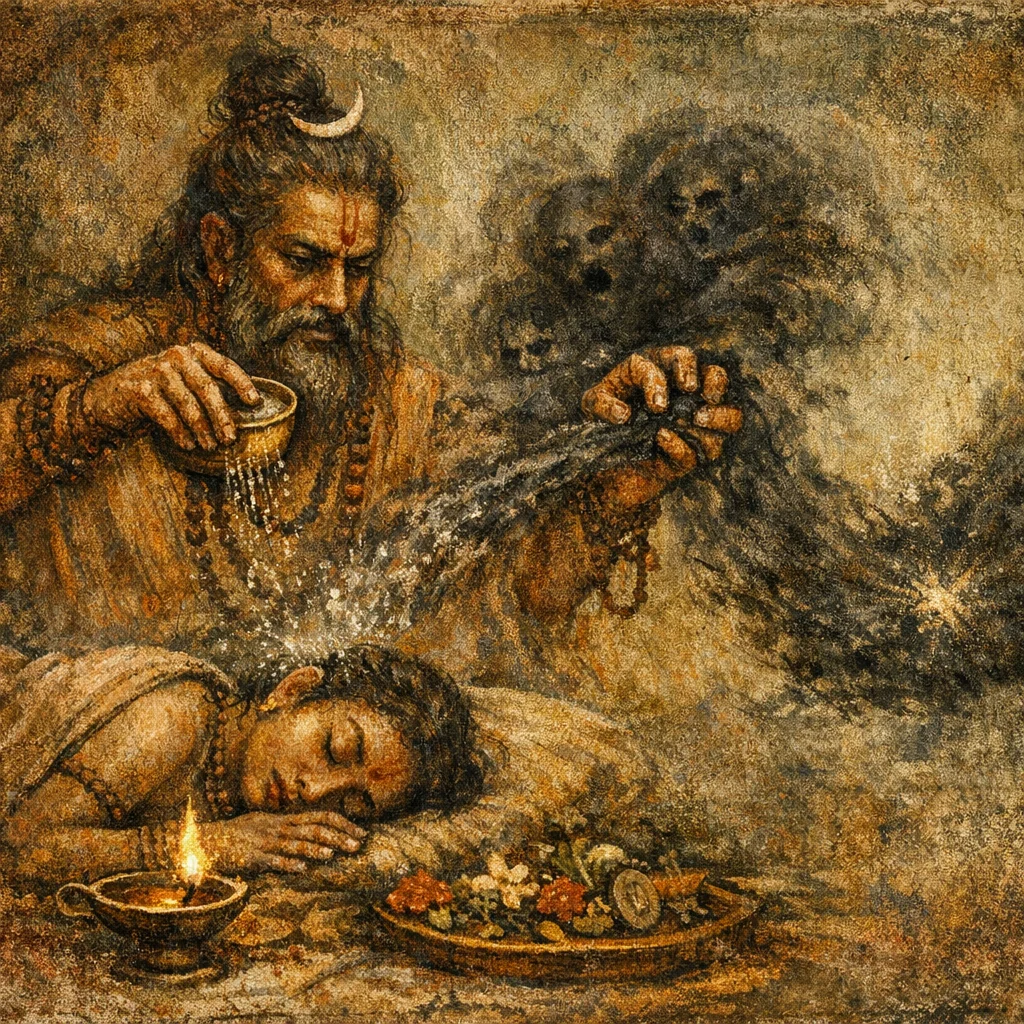
Sukta 46
Rishi: Atharvanic tradition (Anukramaṇī attribution not supplied in input; commonly treated as Atharvan/Angiras type)
Devata: Svapna (Dream), with Varuṇānī and Yama as invoked genealogical powers
Chandas: Anuṣṭubh (probable; requires pada-count verification against a critical text)
Mantras
Mantra 1
दुःष्वप्ननाशनम्। यो न जीवोऽसि न मृतो देवानाममृतगर्भोऽसि स्वप्न । वरुणानी ते माता यमः पिताररुर्नामासि
Thou who art neither living nor dead, O Dream—thou art of the Gods, with an immortal womb. Varuṇānī is thy mother; Yama thy father; Arur is thy name.
Mantra 2
विद्म ते स्वप्न जनित्रं देवजामीनां पुत्रोऽसि यमस्य करणः । अन्तकोऽसि मृत्युरसि। तं त्वा स्वप्न तथा सं विद्म स नः स्वप्न दुष्वप्न्यात् पाहि
We know thy birth, O Dream: thou art the son of the divine kindred, the instrument of Yama. Thou art the Ender; thou art Death. Thus do we fully know thee, O Dream: do thou protect us from evil dreaming.
Mantra 3
यथा कलां यथा शफं यथर्णं संनयन्ति । एवा दुष्वप्न्यं सर्वं द्विषते सं नयामसि
As men bring together a portion, as they drive together the hoofed herd, as they gather up a debt—so do we wholly convey all evil-dreaming unto the hater.
Frequently Asked Questions
It is used to prevent or neutralize bad dreams (duḥsvapna) and the feared misfortunes thought to follow from them, especially when nightmares recur or cause anxiety.
Because Svapna is treated as a liminal force that moves between worlds—linked to Yama and death—so naming this in-between status helps the practitioner gain control over its harmful effects.
Not in its wording: it works primarily through recitation and the logic of naming/knowing. Some traditions may add simple customary supports, but the sukta itself is textually self-sufficient.