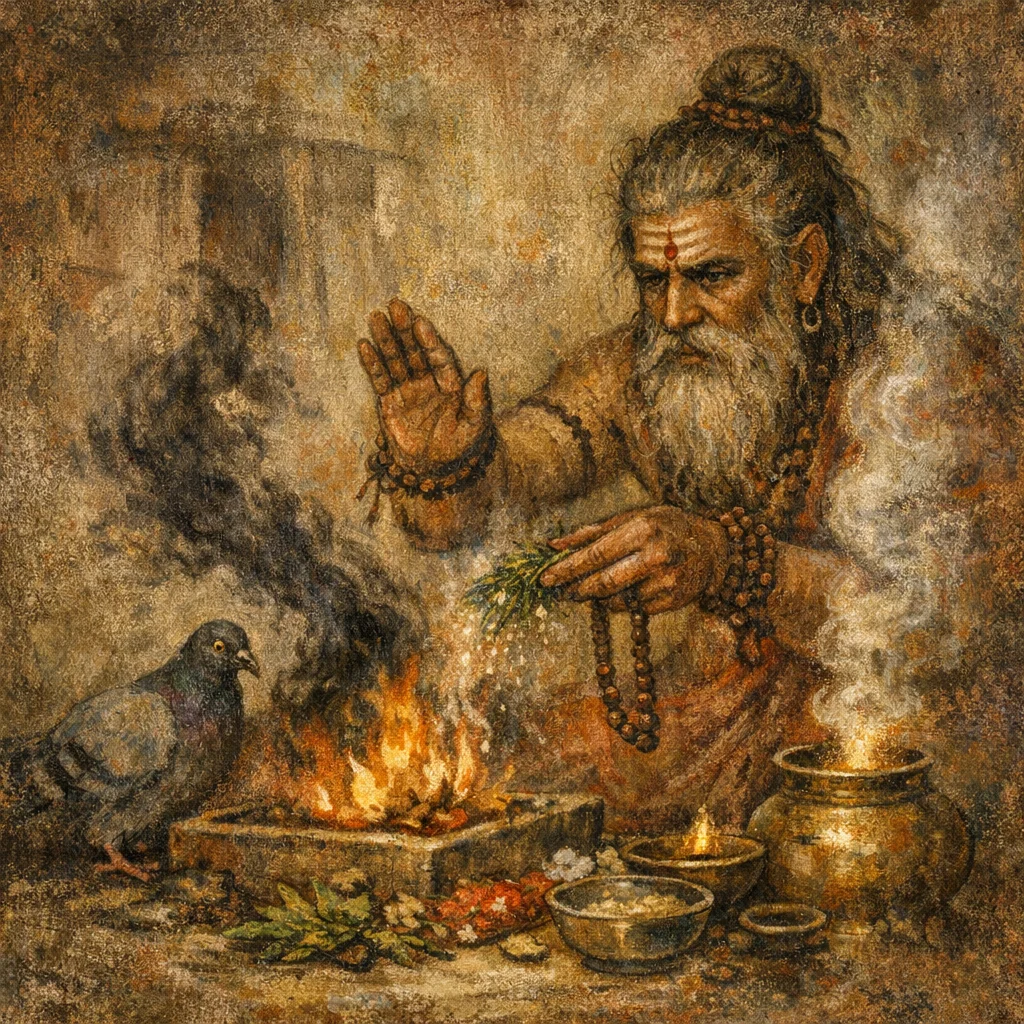
Sukta 27
Rishi: Atharvanic tradition (often transmitted without a single named ṛṣi for short apotropaic pieces; kapota-śakuna context)
Devata: Nirṛti (as the threatening power) and the Gods (as controllers of dispatch); implicitly Śam (weal) as desired state
Chandas: Triṣṭubh-like cadence (mixed/irregular in AV omens); often treated as pragmatic prose-verse in ritual use
Mantras
Mantra 1
अरिष्टक्षयणम्। देवाः कपोत इषितो यदिछन् दूतो निरृत्या इदमाजगाम । तस्मा अर्चाम कृणवाम निष्कृतिं शं नो अस्तु द्विपदे शं चतुष्पदे
If the Gods have sent the Pigeon forth, and he, the messenger of Nirṛti, hath come hither—then with a hymn will we contrive for him a release: welfare be ours for the two-footed, welfare for the four-footed.
Mantra 2
शिवः कपोत इषितो नो अस्त्वनागा देवाः शकुनो गृहं नः । अग्निर्हि विप्रो जुषतां हविर्नः परि हेतिः पक्षिणी नो वृणक्तु
Auspicious be the Pigeon, though sent, and guiltless, O ye Gods, the bird-omen toward our house. For Agni, the inspired, shall take delight in our oblation: and round about us let the winged missile choose (its course away), and encompass us.
Mantra 3
हेतिः पक्षिणी न दभात्यस्मानाष्ट्री पदं कृणुते अग्निधाने । शिवो गोभ्य उत पुरुषेभ्यो नो अस्तु मा नो देवा इह हिंसीत् कपोतः
The winged missile shall not injure us; like a cast stone it shall not make it a footing at the fire-place. Auspicious be it for our cows and for our men: O Gods, let not the Pigeon here do us hurt.
Frequently Asked Questions
In this omen-context the pigeon can be read as a śakuna (portent), even as a ‘messenger of Nirṛti’—a sign that misfortune is trying to enter the household. The hymn does not attack the bird; it cancels the omen’s harmful meaning.
Niṣkṛti is an expiatory “release” or undoing: a ritual-linguistic act that removes the household from the claim of an inauspicious sign, restoring normal welfare (śam).
No. The core action is recitation oriented to the hearth (Agni) with a simple offering if available. It is designed as an immediate domestic śānti: redirect harm, prevent it from ‘taking footing’, and affirm safety for people and animals.