Sukta 16
Rishi: Atharvanic tradition (often anonymous/Angiras-type attribution in AV medical hymns)
Devata: Bhaiṣajya (healing power) personified as Ābaya/Anābaya; implicitly the medicinal ‘rasa’
Chandas: Anuṣṭubh (with Atharvanic irregularities noted in some recensions)
Mantras
Mantra 1
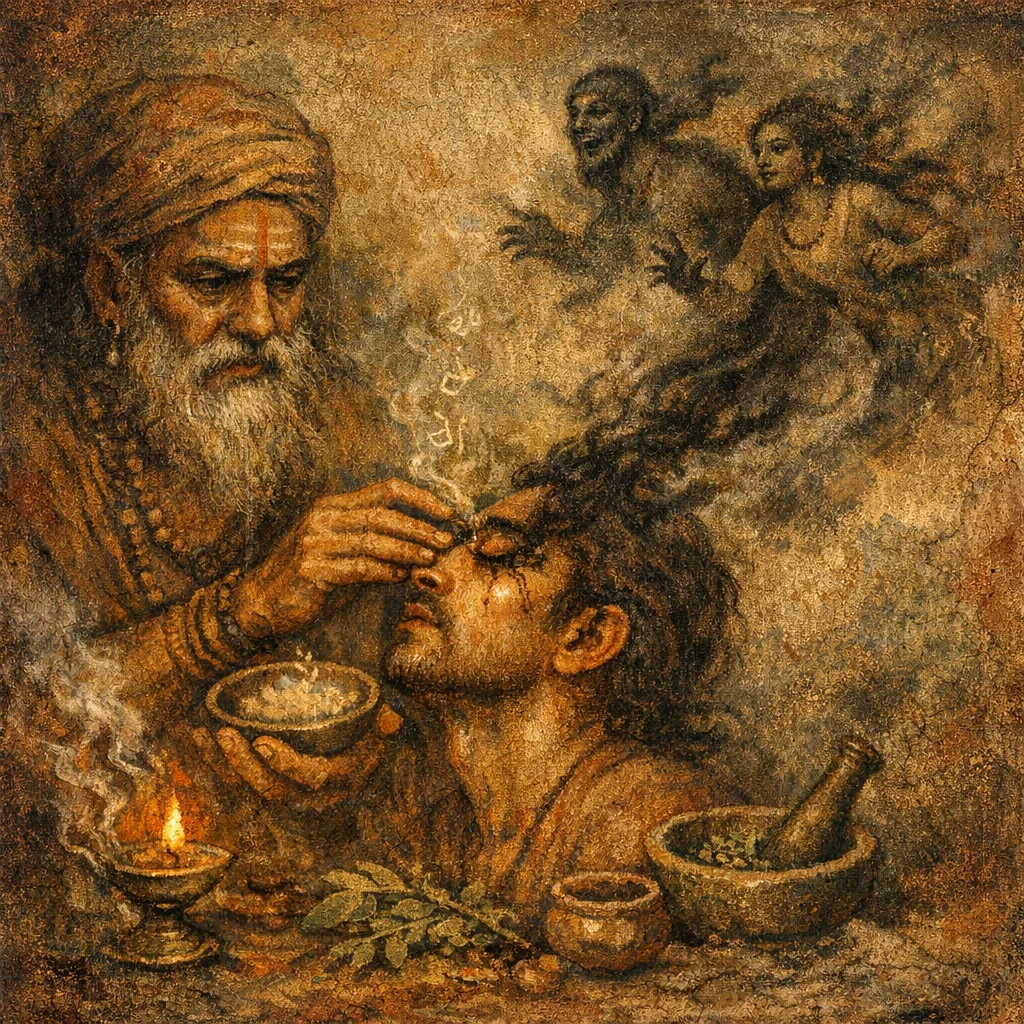
अक्षिरोगभैषजम्। ३ बृहतीगर्भा ककुम्मत्यनुष्टुप्, ४ त्रिपदा प्रतिष्ठा। आबयो अनाबयो रसस्त उग्र आबयो । आ ते करम्भमद्मसि
O Ābaya, O harmless Anābaya—thy sap is fierce in power, O Ābaya. Hither for thee we eat the karambha-mixture.
Mantra 2
विहह्लो नाम ते पिता मदावती नाम ते माता। स हिन त्वमसि यस्त्वमात्मानमावयः
Vihahla by name is thy father; Madāvatī by name is thy mother. For thou art now that one who weaveth thyself about (the man).
Mantra 3
तौविलिकेऽवेलयावायमैलब ऐलयीत्। बभ्रुश्च बभ्रुकर्णश्चापेहि निराल
O Tauvīlike, O Avelayāva—whom Ailaba would make to ail; Babhru and Babhru-ear likewise: depart! forth, away from here!
Mantra 4
अलसालासि पूर्व सिलाञ्जालास्युत्तरा । नीलागलसाला
Thou art Alasālā, the former; thou art Silāñjālā, the latter—thou art Nīlāgalasālā.
Frequently Asked Questions
It is used to treat and ward off eye-disease (akṣi-roga) by empowering a medicinal preparation and driving away the affliction named in multiple forms.
Ābaya/Anābaya is the personified healing potency of the remedy—its rasa (sap/essence)—described as fierce against disease yet harmless to the patient.
Atharvanic medical hymns often name the disease and its agents to gain control over them; listing variants ensures the ailment is addressed in every form and then expelled.