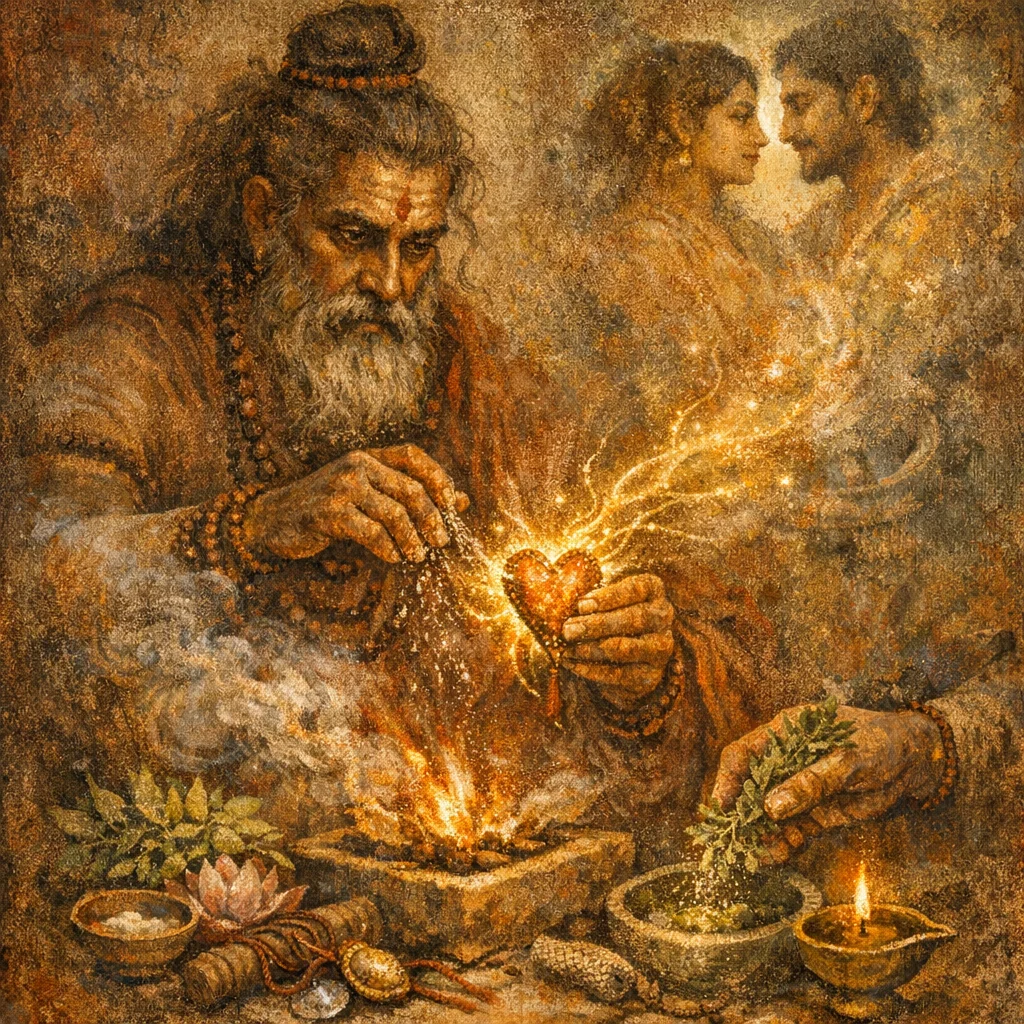
Sukta 139
Rishi: Atharvanic (traditional attribution for kāmya hymns; specific r̥ṣi varies by anukramaṇī)
Devata: Kāma (desire) as operative force; the target’s heart/mouth as loci of efficacy
Chandas: Anuṣṭubh (predominant in AV coercive charms; exact metrical scan may vary with pada division)
Mantras
Mantra 1
सौभाग्यवर्धनम्। न्यस्तिका रुरोहिथ सुभगंकरणी मम । शतं तव प्रतानास्त्रयस्त्रिंशन्नितानाः ॥ तया सहस्रपर्ण्या हृदयं शोषयामि ते
Increase of good fortune. O Nyastikā, grow thou forth, fortune-making for me. A hundred are thy spreadings, three-and-thirty thy planted shoots. With thee, O thousand-leaved, I make thy heart to wither (to pine) within thee.
Mantra 2
शुष्यतु मयि ते हृदयमथो शुष्यत्वास्यऽम्। अथो नि शुष्य मां कामेनाथो शुष्कास्या चर
Let thy heart be parched toward me; yea, let thy mouth be parched. Yea, dry up wholly for me with longing; and, dry-mouthed, come thou hither and move as I will.
Mantra 3
संवननी समुष्पला बभ्रु कल्याणि सं नुद । अमूं च मां च सं नुद समानं हृदयं कृधि
O Uniter, Samuṣpalā, brown and gracious, thrust us two together; thrust yonder one and me together—make our hearts one and the same.
Mantra 4
यथोदकमपपुषोऽपशुष्यत्यास्यऽम्। एवा नि शुष्य मां कामेनाथो शुष्कास्या चर
As water dries away from one swollen with dropsy, so in like wise dry up wholly for me with longing; and, dry-mouthed, come thou and obey thy course toward me.
Mantra 5
यथा नकुलो विच्छिद्य संदधात्यहिं पुनः । एवा कामस्य विच्छिन्नं सं धेहि वीर्यावति
As the mongoose, having rent apart, joins up again the serpent, even so, O mighty one, restore and knit together what of love is broken off.
Frequently Asked Questions
It is primarily abhicārika (coercive): it aims to create love-sickness—parching the heart and mouth—so the target comes under the operator’s influence.
In Atharvanic charm-logic, bodily states mirror mental states. ‘Dry heart/mouth’ expresses intense longing and restlessness, making desire feel like thirst that drives the person to approach.
The text names an herb-power in v.1, suggesting an oṣadhi support, but later verses work through Kāma and command-formulas. In practice, traditions vary: some use a plant token, others rely on recitation alone.