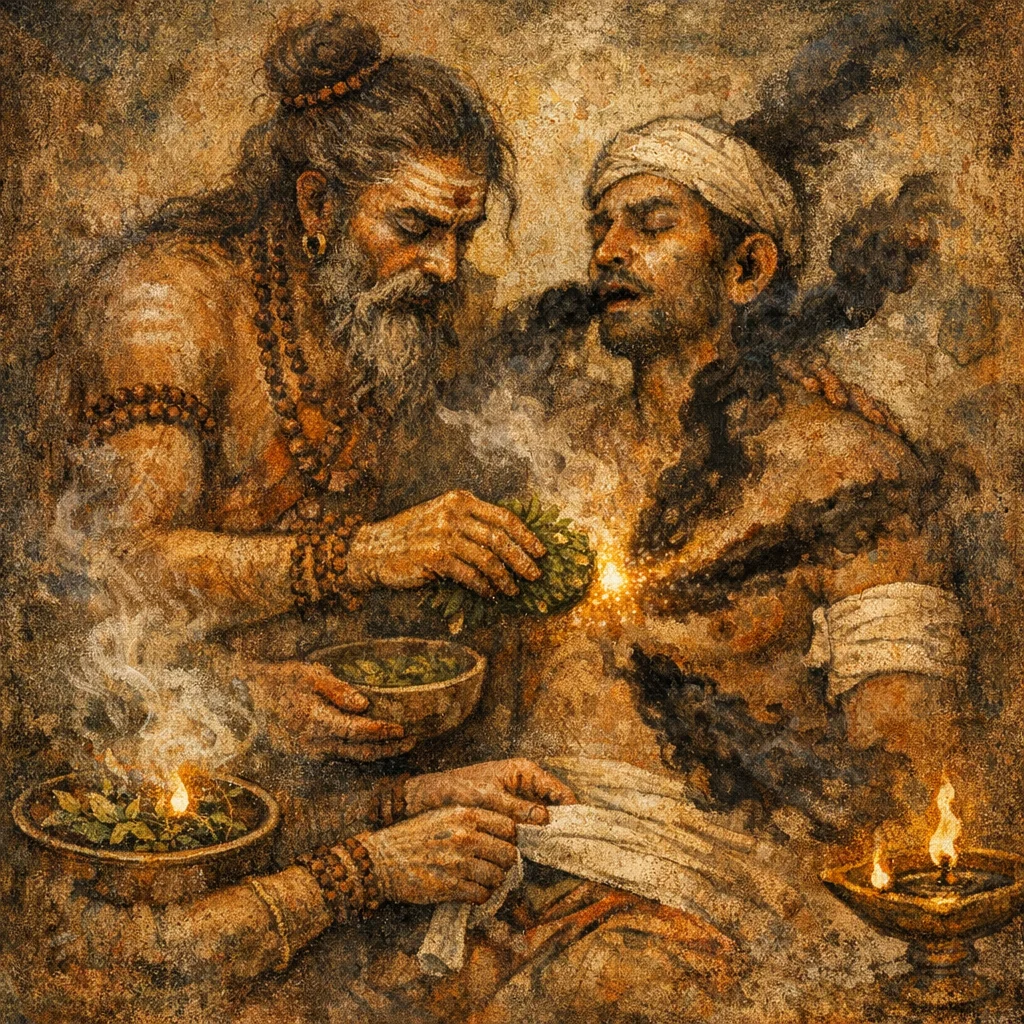
Sukta 127
Rishi: Atharvanic tradition (exact r̥ṣi not specified in the provided input; commonly anonymous in AV medical charms)
Devata: Oṣadhi/Vanaspati (medicinal plant as deity-like agent); secondarily the expulsion of Yakṣma and allied diseases
Chandas: Mixed/irregular (medical charms often show non-R̥gvedic regularity; exact meter requires full pada-count verification)
Mantras
Mantra 1
यक्ष्मनाशनम्। विद्रधस्य बलासस्य लोहितस्य वनस्पते । विसल्पकस्योषधे मोच्छिषः पिशितं चन
A charm for the slaying of Yakṣma. Of abscess, of balāsa-phlegm, of the red disorder, O Lord of the Forest—of visalpaka, O Herb—leave thou no remnant, no flesh at all.
Mantra 2
यौ ते बलास तिष्ठतः कक्षे मुष्कावपश्रितौ । वेदाहं तस्य भेषजं चीपुद्रुरभिचक्षणम्
Those two of thine, O Balāsa, that stand fast—lodged in the armpit, clinging to the testicles—I know the remedy thereof: Cīpudru, of manifest and searching virtue.
Mantra 3
यो अङ्ग्यो यः कर्ण्यो यो अक्ष्योर्विसल्पकः । वि वृहामो विसल्पकं विद्रधं हृदयामयम्। परा तमज्ञातं यक्ष्ममधराञ्चं सुवामसि
What visalpaka is in the limbs, what in the ears, what in the eyes—we tear away the visalpaka, the abscess, the heart-sickness. That unknown Yakṣma we drive far off, downward do we send it.
Frequently Asked Questions
Yakṣma is a wasting, lingering disease-category in Atharvavedic medicine, often treated as a harmful force that must be expelled—especially when it is ‘unknown’ (ajñāta) or hidden in the body.
In the Atharvaveda, medicinal plants are personified as living healers whose power can be invoked by mantra; the herb is treated as an agent that searches out illness and removes it.
The hymn combines (1) naming and locating the disorder, (2) activating a specific remedy (cīpudru), and (3) a forceful ‘tearing out’ and banishing of disease—sending it downward and far away so it cannot remain or return.