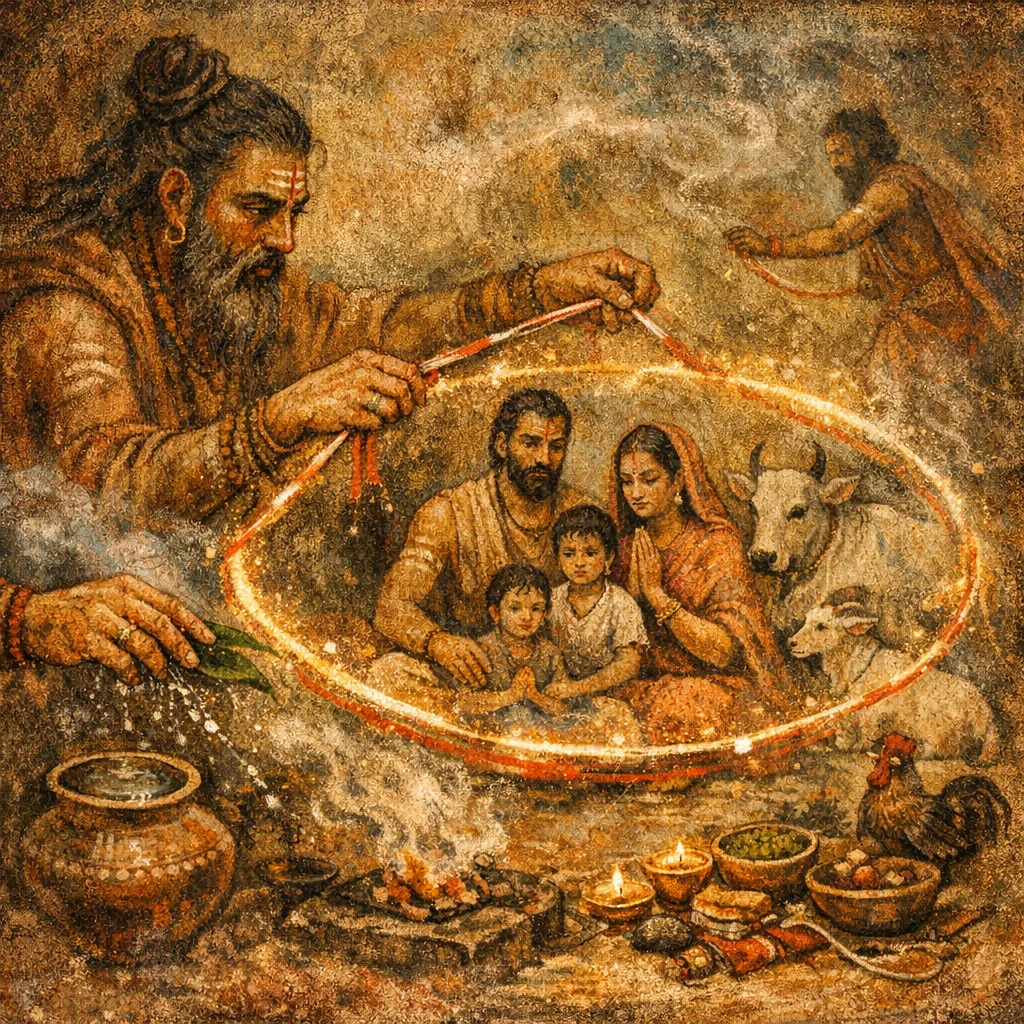
Sukta 107
Rishi: Atharvanic tradition (to be verified from AVŚ anukramaṇī).
Devata: Viśvajit/Trāyamāṇā as personified protective power (often amulet-deity).
Chandas: Anuṣṭubh (probable; to be confirmed).
Mantras
Mantra 1
विश्वजित्। विश्वजित् त्रायमाणायै मा परि देहि । त्रायमाणे द्विपाच्च सर्वं नो रक्ष चतुष्पाद् यच्च नः स्वम्
All-conqueror! All-conqueror, set thyself about me for my saving. O Protectress, guard for us all that is two-footed, and the four-footed, and whatsoever is our own.
Mantra 2
त्रायमाणे विश्वजिते मा परि देहि । विश्वजिद् द्विपाच्च सर्वं नो रक्ष चतुष्पाद् यच्च नः स्वम्
O Saving, O All-conquering, set thyself about me. O All-conqueror, guard for us all that is two-footed, and the four-footed, and whatsoever is our own.
Mantra 3
विश्वजित् कल्याण्यैऽ मा परि देहि । कल्याणि द्विपाच्च सर्वं नो रक्ष चतुष्पाद् यच्च नः स्वम्
All-conqueror, set thyself about me for auspicious welfare. O Auspicious one, guard for us all that is two-footed, and the four-footed, and whatsoever is our own.
Mantra 4
कल्याणि सर्वविदे मा परि देहि । सर्वविद् द्विपाच्च सर्वं नो रक्ष चतुष्पाद् यच्च नः स्वम्
O Auspicious, set thyself about me as the All-knowing. O All-knowing, guard for us all that is two-footed, and the four-footed, and whatsoever is our own.
Frequently Asked Questions
They are social-economic categories: dvipād (“two-footed”) mainly means people, and catuṣpād (“four-footed”) means livestock. The hymn asks protection for both, covering the full household estate.
Yes, the repeated request “mā pari dehi” (“place yourself around me”) strongly suggests an amulet/band or binding action that ritually ‘encloses’ the person or space in protection.
To establish an all-around protective perimeter so that harm is repelled and the household’s well-being is preserved—people, animals, and whatever possessions are ‘ours’ (svam).