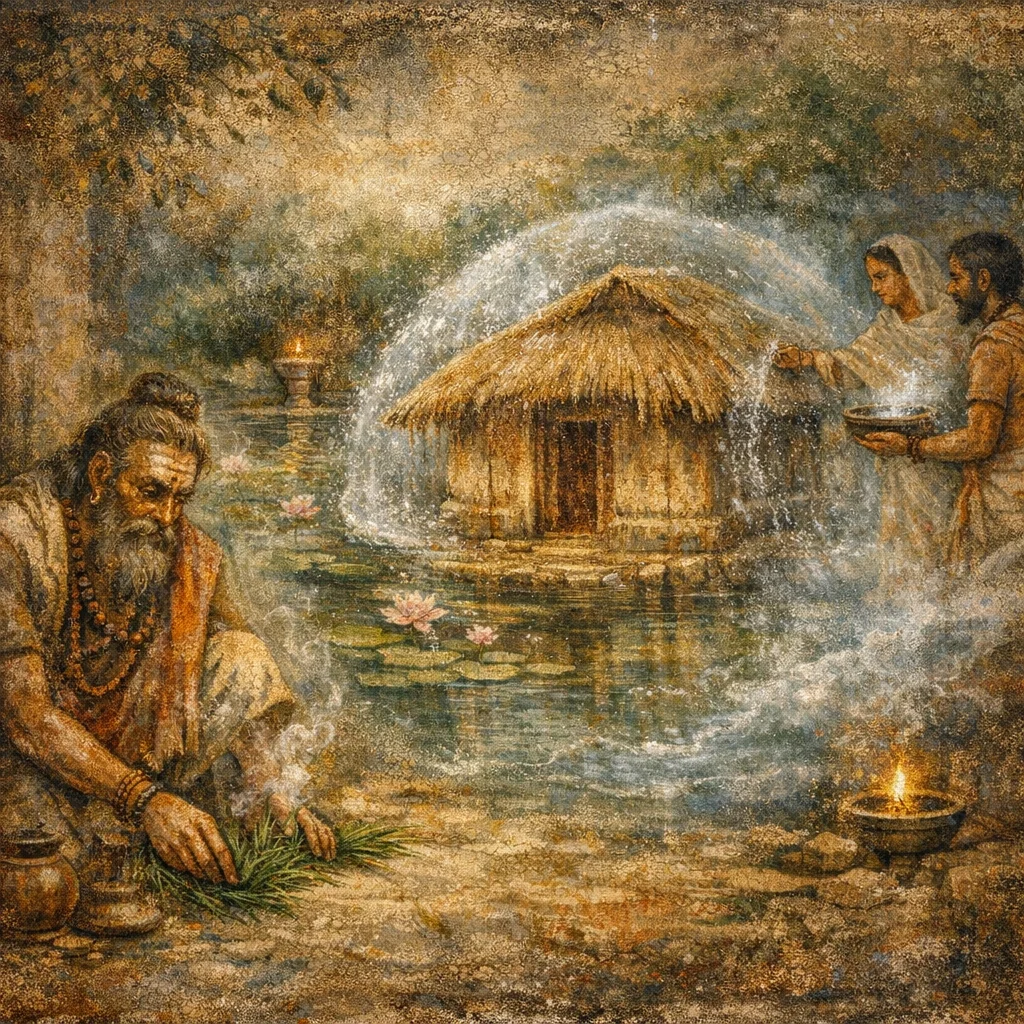
Sukta 106
Rishi: Atharvanic tradition (specific r̥ṣi not stated in the provided excerpt; to be verified from AVŚ anukramaṇī).
Devata: Agni (as healer-transformer) and the personified cold-affliction addressed/controlled.
Chandas: Anuṣṭubh (probable; to be confirmed by metrical count in critical edition).
Mantras
Mantra 1
दूर्वाशाला आयने ते परायणे दूर्वा रोहतु पुष्पिणीः । उत्सो वा तत्र जायतां ह्रदो वा पुण्डरीकवान्
Dūrvā be thy house at coming-in, at going-forth; let dūrvā grow there, rich in bloom. Or let a spring arise therein, or a pool, lotus-bearing.
Mantra 2
अपामिदं न्ययनं समुद्रस्य निवेशनम्। मध्ये ह्रदस्य नो गृहाः पराचीना मुखा कृधि
This is the waters’ downward-leading, the sea’s resting-place. In the midst of the pool set thou our houses, with faces turned away.
Mantra 3
हिमस्य त्वा जरायुणा शाले परि व्ययामसि । शीतह्रदा हि नो भुवोऽग्निष्कृणोतु भेषजम्
With the caul, within the dwelling, we wind thee round against the cold. Be thou for us, O chill of heart: let Agni make thee medicine.
Frequently Asked Questions
It targets cold-based affliction (hima/śīta)—such as chilling, shivering, or a cold-fever-like state—while also securing the home through protective plant-and-water imagery.
Dūrvā marks and protects thresholds (entry/exit), and waters (spring/pool/sea) provide a ritual map for channeling harm away and settling it elsewhere, so the dwelling becomes a safe, ordered space for recovery.
Agni is invoked as the transformer: the hymn asks that Agni “make it medicine,” meaning the cold-affliction is ritually contained and converted from a threat into a curable condition.