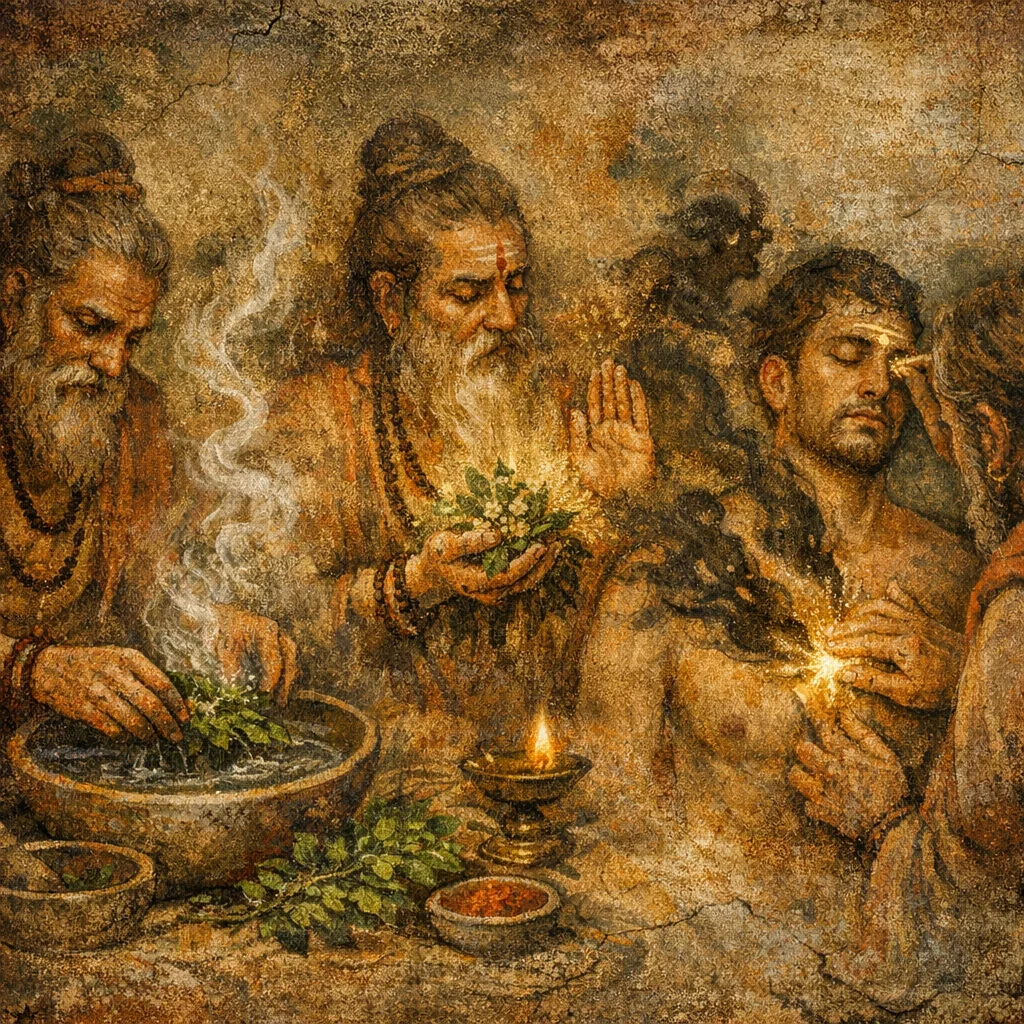
Sukta 95
Rishi: Atharvanic tradition (often transmitted under Atharvan/Angiras lineages; specific r̥ṣi not explicit in the provided excerpt).
Devata: Kuṣṭha (herb as divine remedy) / amṛta-associated divine agency
Chandas: Mixed; predominantly anuṣṭubh-like cadence with Atharvanic flexibility (needs padic confirmation from full hymn).
Mantras
Mantra 1
कुष्ठौषधिः। अश्वत्थो देवसदनस्तृतीयस्यामितो दिवि। तत्रामृतस्य चक्षणं देवाः कुष्ठमवन्वत
Kuṣṭha, the healing herb: the Aśvattha, a seat of Gods, stands in the third, the boundless heaven. There was the visible token of immortality: there the Gods won Kuṣṭha for themselves.
Mantra 2
हिरण्ययी नौरचरद्धिरण्यबन्धना दिवि। तत्रामृतस्य पुष्पं देवाः कुष्ठमवन्वत
A golden ship went coursing, gold-bound, in heaven. There was the flower of immortality: there the Gods won Kuṣṭha for themselves.
Mantra 3
गर्भो अस्योषधीनां गर्भो हिमवतामुत। गर्भो विश्वस्य भूतस्येमं मे अगदं कृधि
The womb of herbs is he; the womb of the Himavant mountains also; the womb of all that hath become: make thou this for me an antidote.
Frequently Asked Questions
Kuṣṭha is a medicinal herb treated as a divine power. The hymn praises it as amṛta-linked and commands it to act as a living remedy for the patient.
These images establish the medicine’s highest authority: Kuṣṭha is portrayed as obtained by the gods where immortality is manifest. The mythic setting ‘licenses’ the herb’s healing force in ritual use.
Traditionally, one recites the three mantras over Kuṣṭha, then applies or administers the herb (often with water, honey, or ghee). The final verse explicitly asks the herb to become an agada—an effective antidote.