Sukta 93
Rishi: Atharvanic tradition
Devata: Composite: Yama/Mṛtyu/Nirṛti and Rudra-forms as controlled guardians; also Deva-senā (divine hosts)
Chandas: Triṣṭubh-like (catalogue style; may be metrically irregular)
Mantras
Mantra 1
स्वस्त्ययनम्। यमो मृत्युरघमारो निरृथो बभ्रुः शर्वोऽस्ता नीलशिखण्डः । देवजनाः सेनयोत्तस्थिवांसस्ते अस्माकं परि वृञ्जन्तु वीरान्
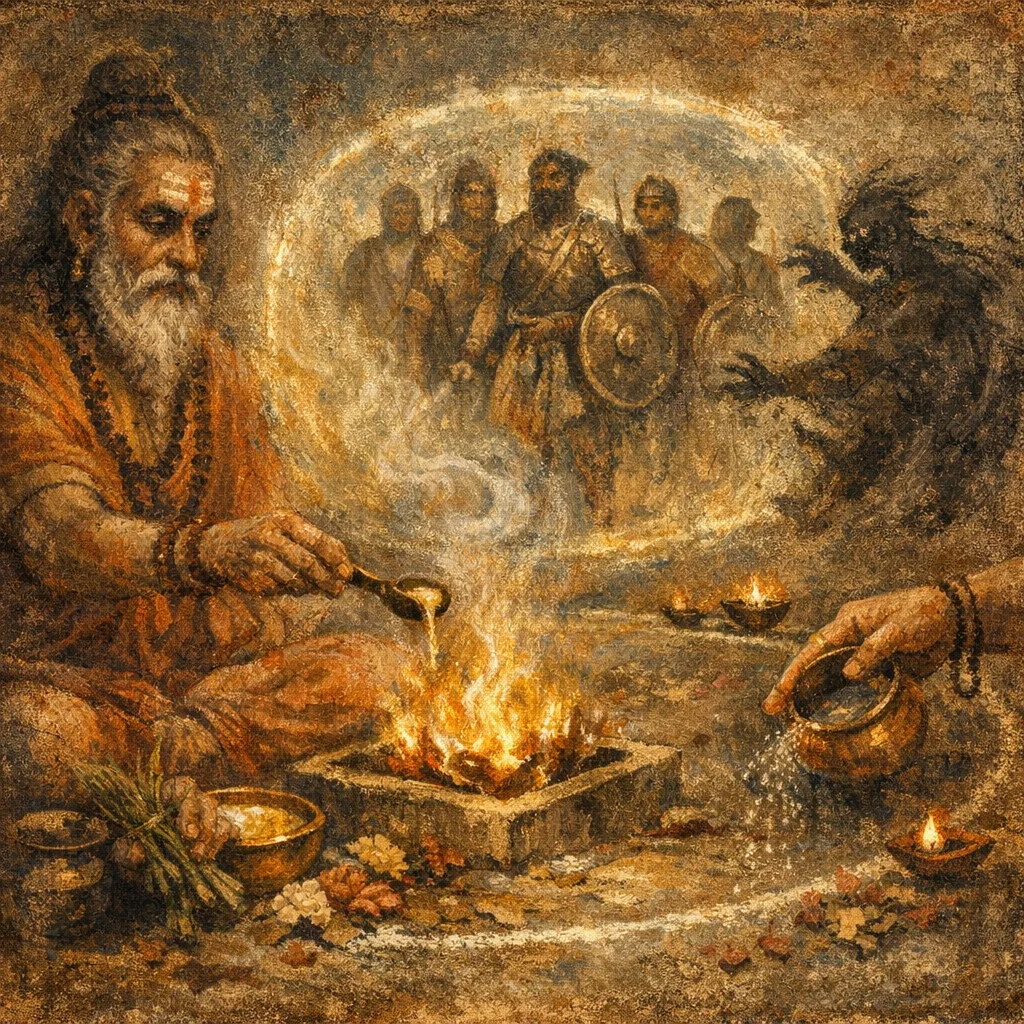
For a safe-going: Yama, Death, the Evil-slayer, Nirṛti, Babhru, Śarva, Asta, the blue-crested—divine-born hosts, armies standing up in readiness—may they encompass round about our heroes.
Mantra 2
मनसा होमैर्हरसा घृतेन शर्वायास्त्र उत राज्ञे भवाय । नमस्येऽभ्यो नम एभ्यः कृणोम्यन्यत्रास्मदघविषा नयन्तु
With mind, with oblations, with ardent force, with ghee, to Śarva, to the Weapon, and to the King, to Bhava—unto the reverence-worthy I make obeisance, obeisance unto these: let the evil-venomed bear (their bane) elsewhere, away from us.
Mantra 3
त्रायध्वं नो अघविषाभ्यो वधाद् विश्वे देवा मरुतो विश्ववेदसः । अग्नीषोमा वरुणः पूतदक्षा वातापर्जन्ययोः सुमतौ स्याम
Protect us from the evil-venomed, from the stroke of death—O all ye Gods, O Maruts all-knowing. With Agni-Soma, with Varuṇa of purified might, in the gracious favour of Vāta and Parjanya may we abide.
Frequently Asked Questions
In Atharvanic protection practice, naming feared powers can ‘bind’ and redirect them. The hymn treats them as controlled guardians, compelled to stand watch and keep harm outside the boundary.
It is a broad term for harmful influence—poison, hostile intent, weapon-like injury, or sorcery. The hymn’s strategy is to send that danger “elsewhere,” away from the household.
Recite it before travel or when feeling threatened, ideally with a small ghee offering or lamp and a water-sprinkled boundary at the doorway. The key intention is visualization of a protective circle and the explicit redirection of harm away from you and your family.