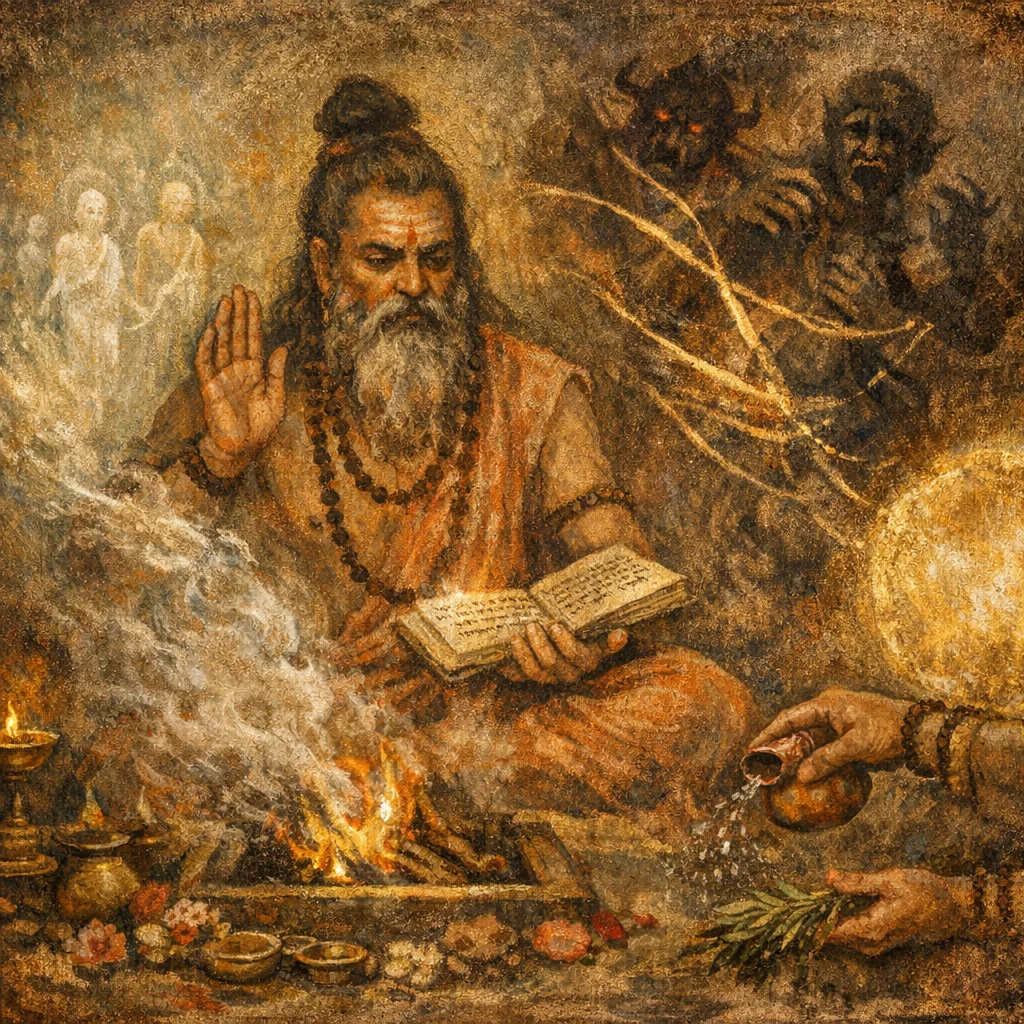
Sukta 7
Rishi: Atharvanic/Angiras-type (protective formula; specific r̥ṣi attribution varies by anukramaṇī tradition)
Devata: Devas (collective) as precedent agents; protection (śarma) as the sought boon
Chandas: Anuṣṭubh (probable; short bipāda structure)
Mantras
Mantra 1
असुरक्षयणम्। येन सोमादितिः पथा मित्रा वा यन्त्यद्रुहः । तेना नोऽवसा गहि
Asura-destruction. By what path, O Soma, Aditi—and the Mitras, harmless—go; by that same (path) come thou to us with saving aid.
Mantra 2
येन सोम साहन्त्यासुरान् रन्धयासि नः । तेना नो अधि वोचत
By what (power), O Soma, they overcome the Asuras—by that thou subduest (them) for us: by that speak thou authoritatively over us.
Mantra 3
येन देवा असुराणामोजांस्यवृणीध्वम्। तेना नः शर्म यच्छत
By what device the Gods chose to them the Asuras’ strengths, by that same means vouchsafe to us protection.
Frequently Asked Questions
It is used for protection: to repel or subdue hostile forces and to secure śarma—safety, shelter, and well-being—over a person or community.
Here Soma represents victorious deva-power and safeguarding presence. The hymn asks Soma to arrive by the deva-path and to apply the same Asura-overcoming power for the reciter’s benefit.
No. The text itself does not require substances or amulets; it works primarily through recitation and the idea of placing protective, authoritative speech ‘over’ the target.