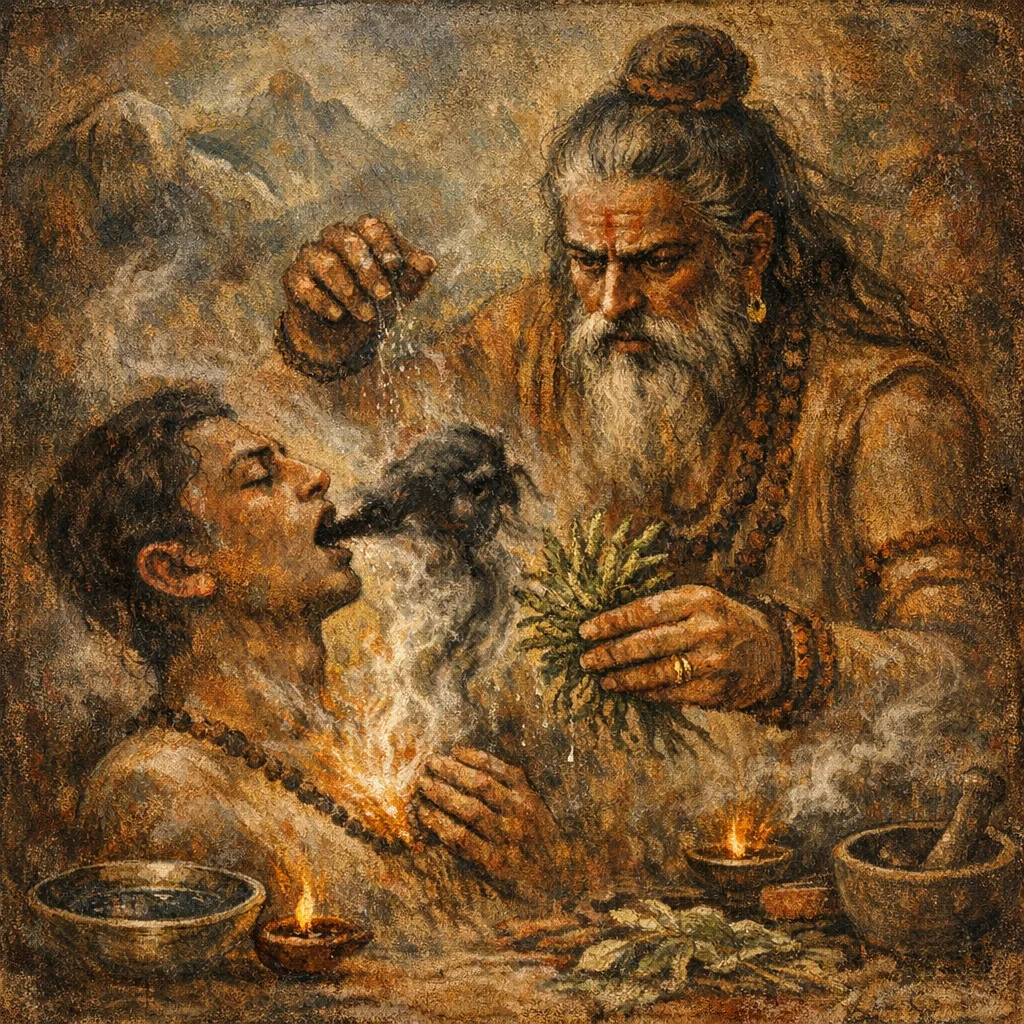
Sukta 4
Rishi: Atharvanic tradition (often transmitted under Atharvan/Āṅgirasa headings for bhaiṣajya hymns; specific r̥ṣi attribution depends on Anukramaṇī).
Devata: Kuṣṭha (as personified healing plant) allied with Soma; also implicitly the Devas as source.
Chandas: Anuṣṭubh (predominant in AV healing verses; metrical exactness may be affected by Saṃhitā sandhi).
Mantras
Mantra 1
कुष्ठतक्मनाशनम्। यो गिरिष्वजायथा वीरुधां बलवत्तमः । कुष्ठेहि तक्मनाशन तक्मानं नाशयन्नितः
Kushtha, the fever-destroyer—thou who wast born upon the mountains, most mighty of plants—come hither, O fever-devourer, destroying fever from hence.
Mantra 2
सुपर्णसुवने गिरौ जातं हिमवतस्परि । धनैरभि श्रुत्वा यन्ति विदुर्हि तक्मनाशनम्
Born on the mountain, from about the Himavant, at the Suparṇa’s generating-place: hearing thereof, men come toward it with gifts; for they know it indeed as the devourer of Fever.
Mantra 3
अश्वत्थो देवसदनस्तृतीयस्यामितो दिवि। तत्रामृतस्य चक्षणं देवाः कुष्ठमवन्वत
The Aśvattha is the Gods’ own seat in the third, immeasurable heaven: there was the token of immortality; there the Gods won Kuṣṭha.
Mantra 4
हिरण्ययी नौरचरद्धिरण्यबन्धना दिवि। तत्रामृतस्य पुष्पं देवाः कुष्ठमवन्वत
A golden ship went coursing in the heaven, with golden bonds: there was the blossom of immortality; there the Gods won Kuṣṭha.
Mantra 5
हिरण्ययाः पन्थान आसन्नरित्राणि हिरण्यया । नावो हिरण्ययीरासन् याभिः कुष्ठं निरावहन्
Golden were the paths; golden were the oars; golden were the boats: with which they carried Kuṣṭha forth and brought it away.
Mantra 6
इमं मे कुष्ठ पूरुषं तमा वह तं निष्कुरु । तमु मे अगदं कृधि
This man of mine, O Kuṣṭha—bring him hither; him do thou make free (drive it out): and him, for me, do thou render an antidote.
Mantra 7
देवेभ्यो अधि जातोऽसि सोमस्यासि सखा हितः । स प्राणाय व्यानाय चक्षुषे मे अस्मै मृड
From the Gods above thou wast begotten; thou art of Soma, his well-appointed friend. For my prāṇa and my vyāna, for mine eye-sight—be gracious unto this man here.
Mantra 8
उदङ् जातो हिमवतः स प्राच्यां नीयसे जनम्। तत्र कुष्ठस्य नामान्युत्तमानि वि भेजिरे
Born northward from Himavant, thou art led on to the eastern folk. There have the excellent names of Kuṣṭha been set forth and duly apportioned.
Mantra 9
उत्तमो नाम कुष्ठस्युत्तमो नाम ते पिता। यक्ष्मं च सर्वं नाशय तक्मानं चारसं कृधि
Supreme is the Name of Kuṣṭha; supreme the Name—thy Father. Destroy thou every yakṣma; the takman too—make thou the ārasa (malady) to cease.
Mantra 10
शीर्षामयमुपहत्यामक्ष्योस्तन्वो३रपः । कुष्ठस्तत् सर्वं निष्करद् दैवं समह वृष्ण्यम्
Having smitten the head-disease, and (the ills) of the eyes, and of the body—away with them! Kuṣṭha hath expelled them all, the divinely-sent (bane), wholly, and (restored) vigorous strength.
Frequently Asked Questions
Kuṣṭha is a medicinal plant treated as a divine power. The hymn portrays it as heaven-authorized and Soma-allied, so that its use becomes both medicine and sacred protection.
It primarily targets takman—fever—imagined as an afflicting force that must be expelled. It also asks for recovery of strength, steady breathing (prāṇa, vyāna), and clear eyesight.
Traditionally it is recited over Kuṣṭha to consecrate it, then the herb is applied by touch/rubbing or carried as a tied packet. The mantra frames the remedy as deva-derived and directs the fever to depart.