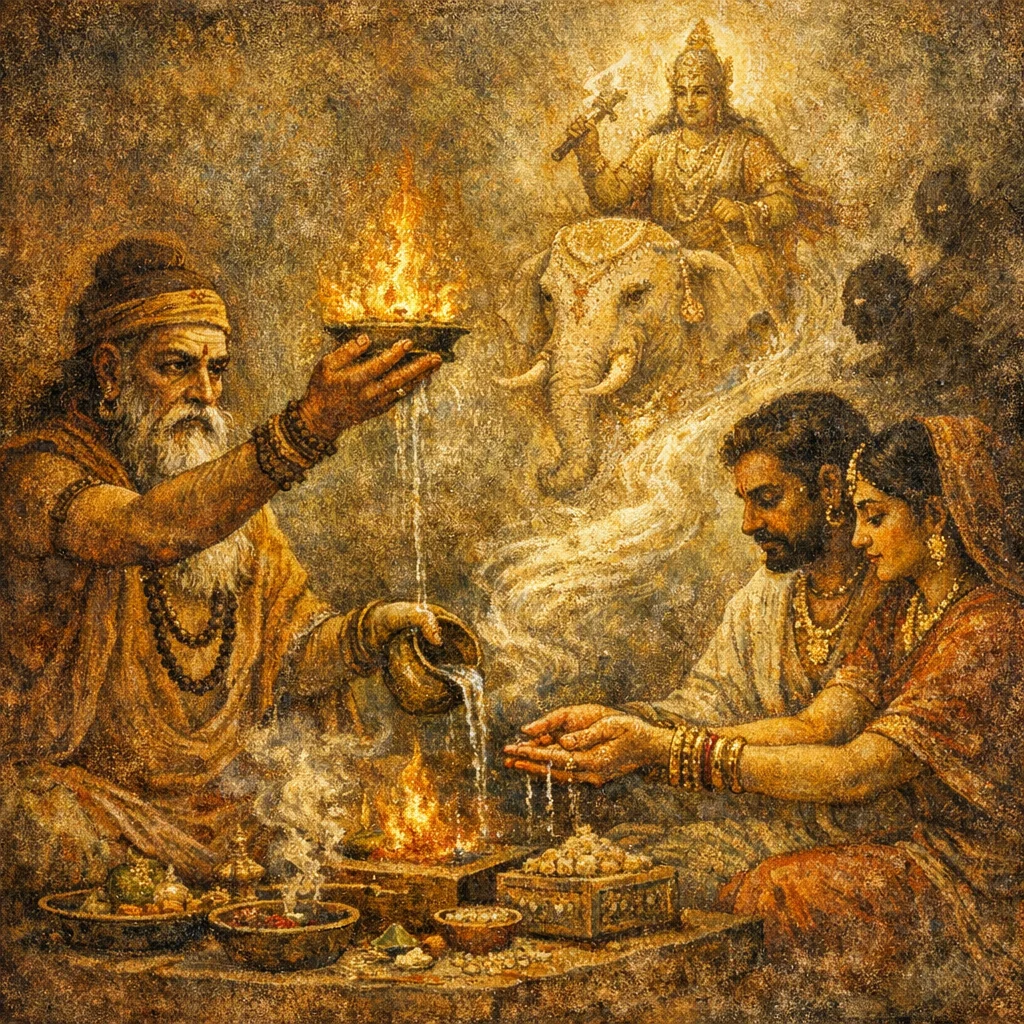
Sukta 82
Rishi: As in RV parallel tradition for this verse (Indra-stuti); AV 20 largely reuses RV seers—exact r̥ṣi assignment depends on the RV locus.
Devata: Indra
Chandas: Anuṣṭubh (as transmitted in AV 20 Indra-stutis; metrical identification may vary with pada division)
Mantras
Mantra 1
यदिन्द्र यावतस्त्वमेतावदहमीशीय । स्तोतारमिद् दिधिषेय रदावसो न पापत्वाय रासीय
If, Indra, to what extent thou art mighty, to that same extent may I have mastery. The praiser—yea, him—would I set in firm place, O wealth-bestower; I would not give (aught) over unto evil.
Mantra 2
शिक्षेयमिन्महयते दिवेदिवे राय आ कुहचिद्विदे । नहि त्वदन्यन्मघवन् न आप्यं वस्यो अस्ति पिता चन
May I, yea, win day after day from the Great One riches from whatever quarter they be found. For, bounteous Maghavan, apart from thee there is no other better boon attainable—no, not even a father’s.
Frequently Asked Questions
It asks Indra to grant mastery/authority and to provide wealth repeatedly (“day by day”), while ensuring the gains do not turn into pāpatva—harmful or blameworthy acquisition.
Because prosperity can bring moral and ritual risk if gained through harmful means or misused. The mantra safeguards the request so wealth and power remain legitimate, stabilizing, and non-injurious.
No. AV 20.82 functions as a stuti (praise-petition) and can be recited on its own; optional simple offerings may be added if performed within a broader household or fire-rite context.