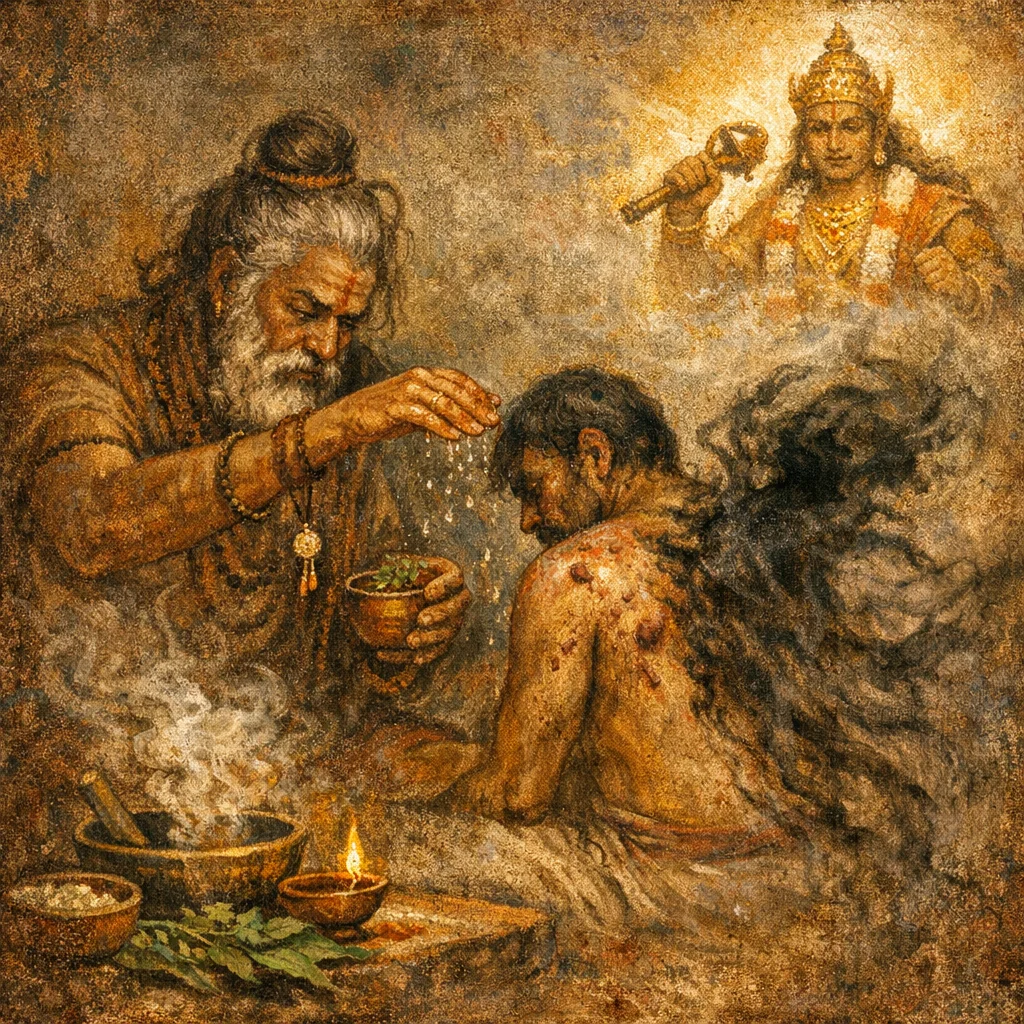
Sukta 65
Rishi: RV-source attribution (Indra hymn tradition; AV20 borrows RV material—exact r̥ṣi depends on RV locus)
Devata: Indra / Dakṣiṇā (as sacralized gift, in interpretive frame)
Chandas: Likely Triṣṭubh/Jagatī depending on RV original; AV20 preserves RV meters (needs RV locus for certainty).
Mantras
Mantra 1
एतो न्विन्द्रं स्तवाम सखाय स्तोम्यं नरम्। कुष्टीर्यो विश्वा अभ्यस्त्येक इत्
Come now, O friends: let us praise Indra, the Hero meet for hymns; desirable, he alone indeed surpasseth all.
Mantra 2
अगोरुधाय गविषे द्युक्षाय दस्म्यं वचः । घृतात् स्वादीयो मधुनश्च वोचत
For him who hinders not the kine, for cattle-seeking, for the radiant—utter ye the wondrous word, sweeter than ghee and honey both.
Mantra 3
यस्यामितानि वीर्या न राधः पर्येतवे । ज्योतिर्न विश्वमभ्यस्ति दक्षिणा
Whose powers are measureless—his bounty is not to be compassed; like light it overspreadeth all: such is the sacrificial gift.
Frequently Asked Questions
It is used to secure prosperity—especially cattle-wealth and unobstructed success—by praising Indra and affirming dakṣiṇā as the rite’s completing power.
They symbolize the ideal quality of mantra-speech: the utterance should be ‘sweet’ and acceptable, making the praise effective for gaining wealth and Indra’s favor.
It presents the sacrificial gift as a consecrated force that spreads auspiciousness through the whole rite and community, ensuring Indra’s boundless bounty is properly received.