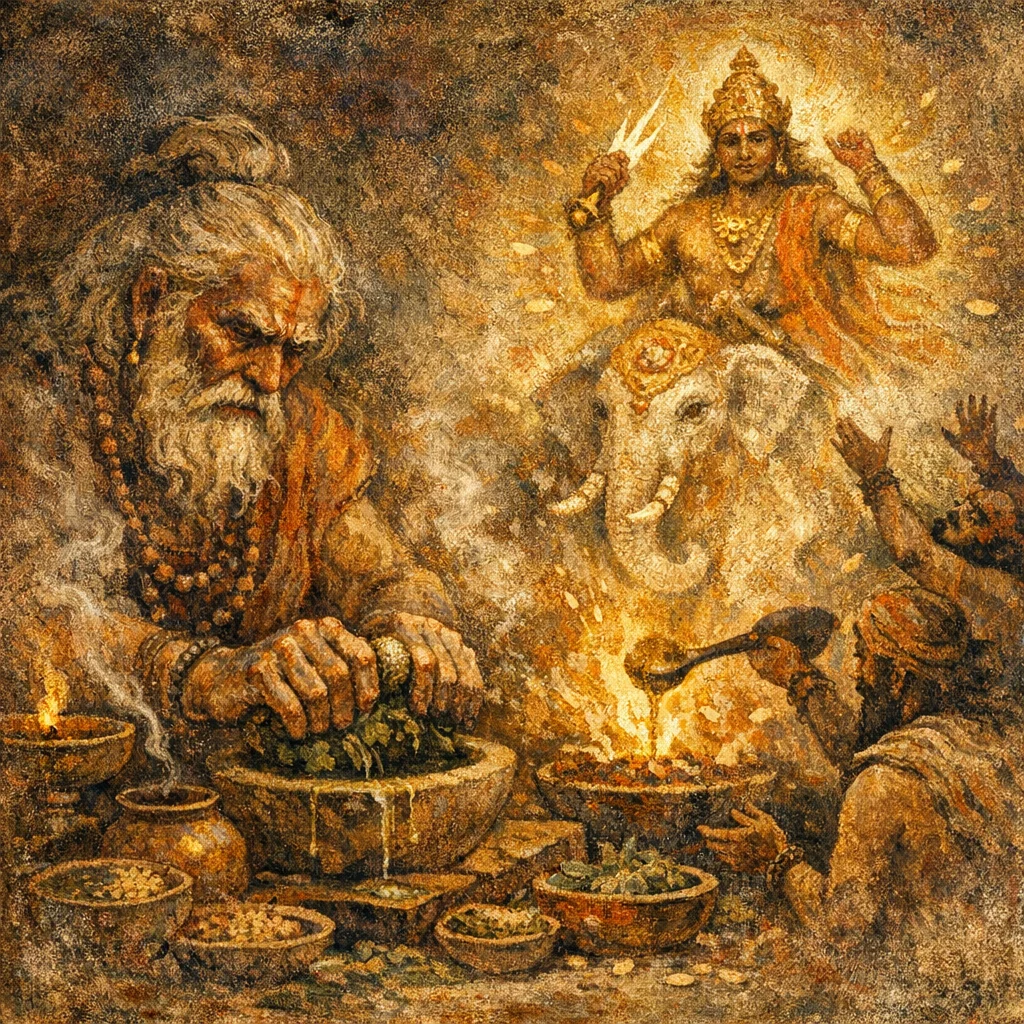
Sukta 52
Rishi: Ṛgvedic provenance (Soma-rite Indra hymn source)
Devata: Indra (Vṛtrahan)
Chandas: Triṣṭubh
Mantras
Mantra 1
वयं घ त्वा सुतावन्त आपो न वृक्तबर्हिषः । पवित्रस्य प्रस्रवणेषु वृत्रहन् परि स्तोतार आसते
We verily, with Soma-pressings, like waters—our grass-seat duly strewn—at the outflowings of the strainer, O Vṛtra-slayer, the singers sit around thee in attendance.
Mantra 2
स्वरन्ति त्वा सुते नरो वसो निरेक उक्थिनः । कदा सुतं तृषाण ओक आ गम इन्द्र स्वब्दीव वंसगः
The men, the Uktha-chanters, cry aloud to thee at the Soma pressed, O bounteous one, with no reserve. When, thirsting for the pressed draught, wilt thou come homeward to our house, O Indra, well-armed, winner of the prize?
Mantra 3
कण्वेभिर्धृष्णवा धृषद् वाजं दर्षि सहस्रिणम्। पिशङ्गरूपं मघवन् विचर्षणे मक्षू गोमन्तमीमहे
With the Kaṇvas, O bold one, thou showest, in daring wise, the prize a thousandfold. The tawny-formed, bounteous, far-seeing—him we beseech, and quickly, for wealth of kine.
Frequently Asked Questions
To summon Indra to the pressed and filtered Soma at the pavitra’s outflow, seat him in attendance with the singers, and gain protection, victory-prize (vāja), and cattle-wealth.
Because the Soma’s filtered flow is treated as a key ritual moment and location where Indra is invited to arrive and be present; the rite’s order and purity are emphasized there.
It is primarily paustika and śrauta-liturgical: its ‘power’ works through correct Soma-rite hospitality and praise, aiming at prosperity and success rather than a healing drug-charm or sorcery.