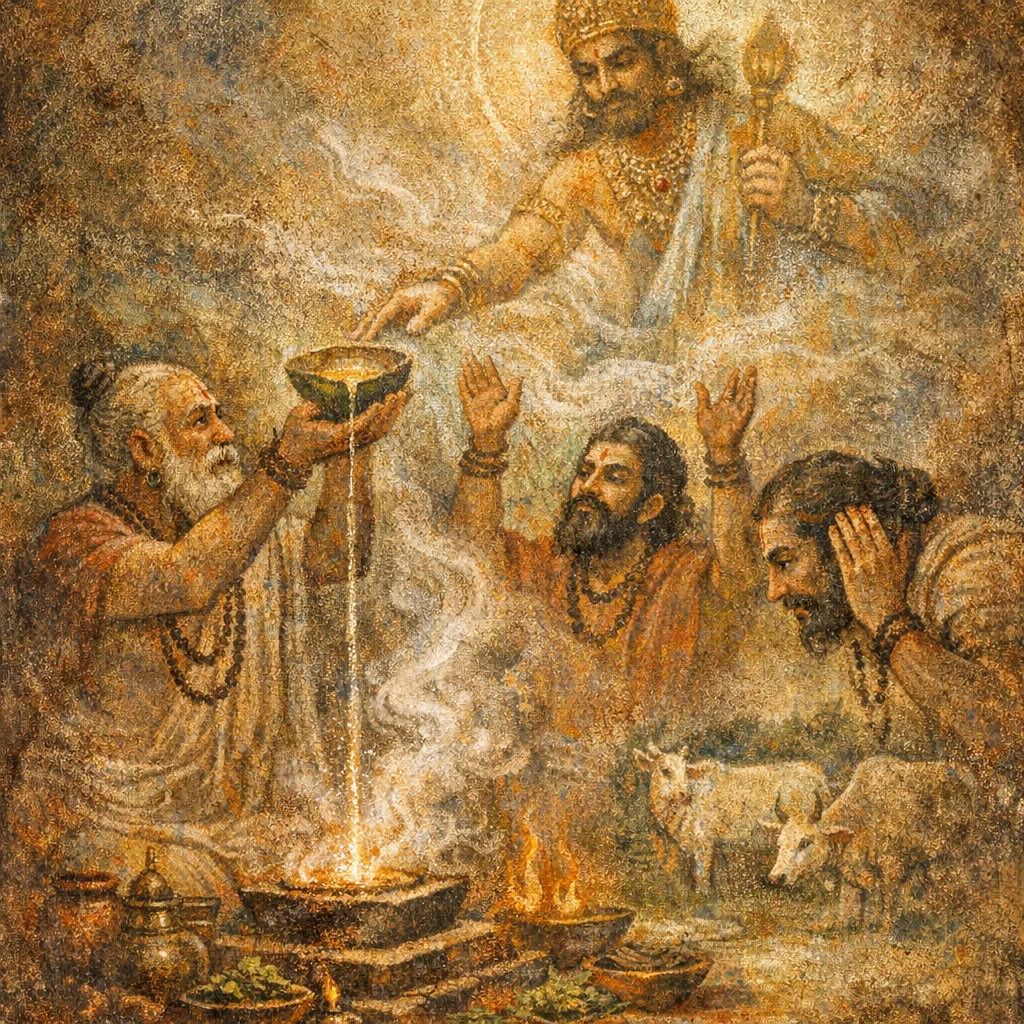
Sukta 38
Rishi: Ṛgvedic provenance (AV 20 is a borrowing-book); specific seer not determinable from the provided excerpt alone.
Devata: Indra
Chandas: Triṣṭubh/Jagatī-type praise-lineation (Ṛgvedic style; exact meter requires full verse-context).
Mantras
Mantra 1
आ याहि सुषुमा हि त इन्द्र सोमं पिबा इमम्। एदं बर्हिः सदो मम
Come hither: for for thee, O Indra, is the most gladdening (draught); drink this Soma. Here is the barhis, my seat (prepared for thee).
Mantra 2
आ त्वा ब्रह्मयुजा हरी वहतामिन्द्र केशिना । उप ब्रह्माणि नः शृणु
Let the two tawny steeds, yoked by the brahman, bring thee hither, O Indra, the long-maned. Hearken thou unto our sacred utterances.
Mantra 3
ब्रह्माणस्त्वा वयं युजा सोमपामिन्द्र सोमिनः । सुतावन्तो हवामहे
We, the brahmans, yoking (thee), O Indra—Soma-drinkers, soma-possessing, furnished with pressings—do invoke thee.
Mantra 4
इन्द्रमिद् गाथिनो बृहदिन्द्रमर्केभिरर्किणः । इन्द्रं वाणीरनूषत
Indra—yea, Indra—do the gāthā-singers, the lofty, praise; Indra do the hymn-smiths with their hymns: Indra have the Voices duly lauded.
Mantra 5
इन्द्र इद्धर्योः सचा संमिश्ल आ वचोयुजा । इन्द्रो वज्री हिरण्ययः
Indra indeed, in company with the two Bays, closely joined, comes hither—yoked with our speech: Indra, the thunderbolt-bearer, golden-bright.
Mantra 6
इन्द्रो दीर्घाय चक्षस आ सूर्यं रोहयद् दिवि। वि गोभिरद्रिमैरयत्
Indra, for long-enduring sight, made the Sun mount up in heaven; and with the Cows he thrust the Rock apart.
Frequently Asked Questions
To bring Indra to the rite, have him drink the pressed Soma, and secure his favor so the sacrificers gain strength, prosperity, and victory.
Barhis marks the prepared divine seat (presence), and Soma is the offering that delights and empowers Indra—together they make the invitation ritually complete.
It is Atharvavedic in compilation (Book 20) but largely Ṛgvedic in origin and style; it functions in AV as a powerful Indra-stuti for prosperity and martial support.