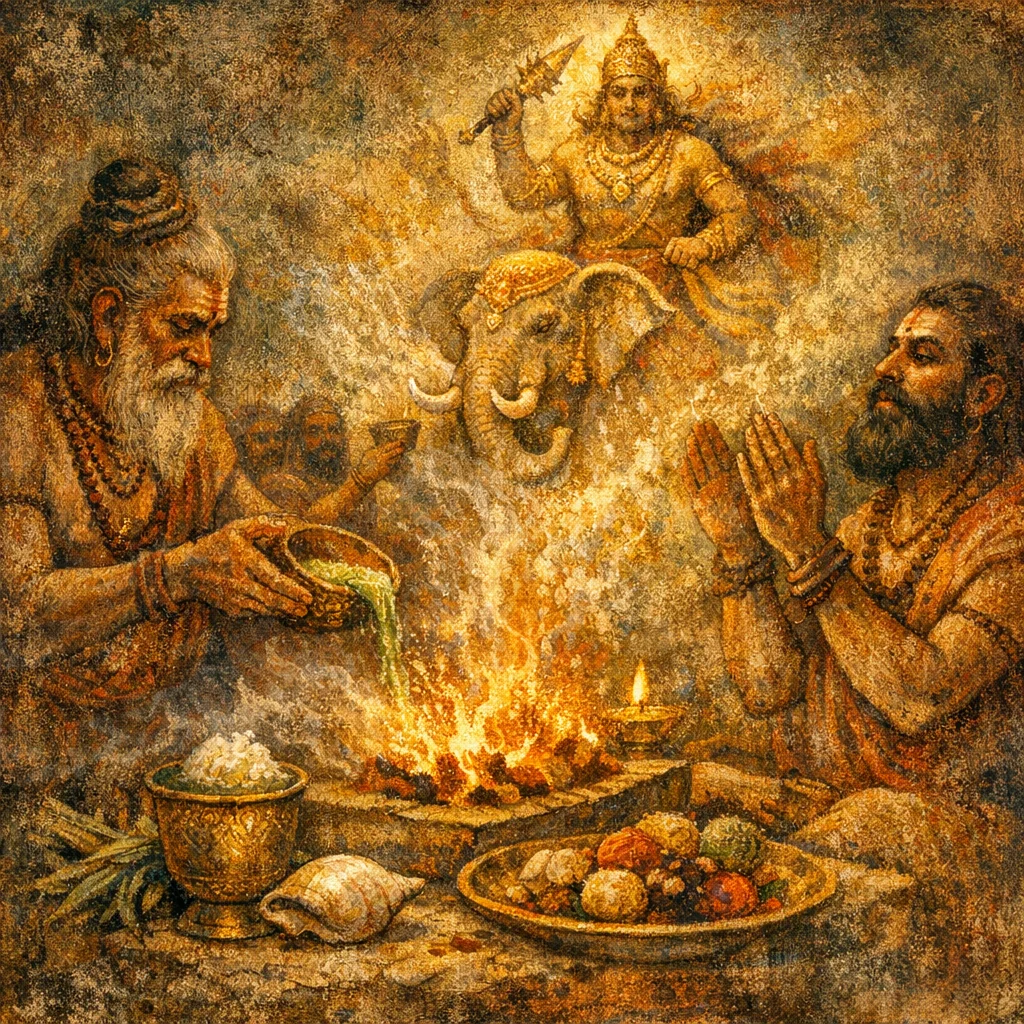
Sukta 33
Rishi: Ṛgvedic provenance (Indra-stotra); in AV 20, verses are largely adopted from the Ṛgveda; specific r̥ṣi attribution follows the RV source-hymn tradition rather than Atharvanic family lists.
Devata: Indra
Chandas: Triṣṭubh (probable, matching RV-style cadence; AV 20 commonly preserves RV meters)
Mantras
Mantra 1
अप्सु धूतस्य हरिवः पिबेह नृभिः सुतस्य जठरं पृणस्व । मिमिक्षुर्यमद्रय इन्द्र तुभ्यं तेभिर्वर्धस्व मदमुक्थवाहः
Drink here, O thou of tawny steeds, of the Soma cleansed in waters; of that pressed by men fill thou the belly. That which the stones have mingled for thee, O Indra—by those means increase, thou bearer of intoxication and of hymn.
Mantra 2
प्रोग्रां पीतिं वृष्ण इयर्मि सत्यां प्रयै सुतस्य हर्यश्व तुभ्यम्। इन्द्र धेनाभिरिह मादयस्व धीभिर्विश्वाभिः शच्या गृणानः
Forth do I set the fierce, the true draught for the Bull—for thine advance, O Indra of tawny steeds—of the pressed Soma. O Indra, with the flowing ‘cows’ thereof rejoice thou here, while praised with every thought, with efficacious power.
Mantra 3
ऊती शचीवस्तव वीर्येण वयो दधाना उशिज ऋतज्ञाः । प्रजावदिन्द्र मनुषो दुरोणे तस्थुर्गृणन्तः सधमाद्यासः
With thy succouring aid, O Lord of skill, and with thy hero-might, bearing vital strength, the eager offerers, knowers of Order, have stood within the house of Manu, O Indra, rich in offspring, praising thee, companions in the common sacred gladness.
Frequently Asked Questions
It is used to invoke Indra through a Soma-offering (or its ritual substitute) so that his strengthened power brings protection, vitality, prosperity, and offspring to the household.
In Vedic ritual logic, Soma is the energizing draught that increases Indra’s vīrya (heroic might). The hymn treats correct Soma preparation and praise as the means that reliably draw Indra’s help.
Yes, it is often adapted devotionally: one prepares clean water and a symbolic offering drink, recites the three verses with intention for protection and prosperity, and treats the home (dūrōṇa) as the ritual locus.