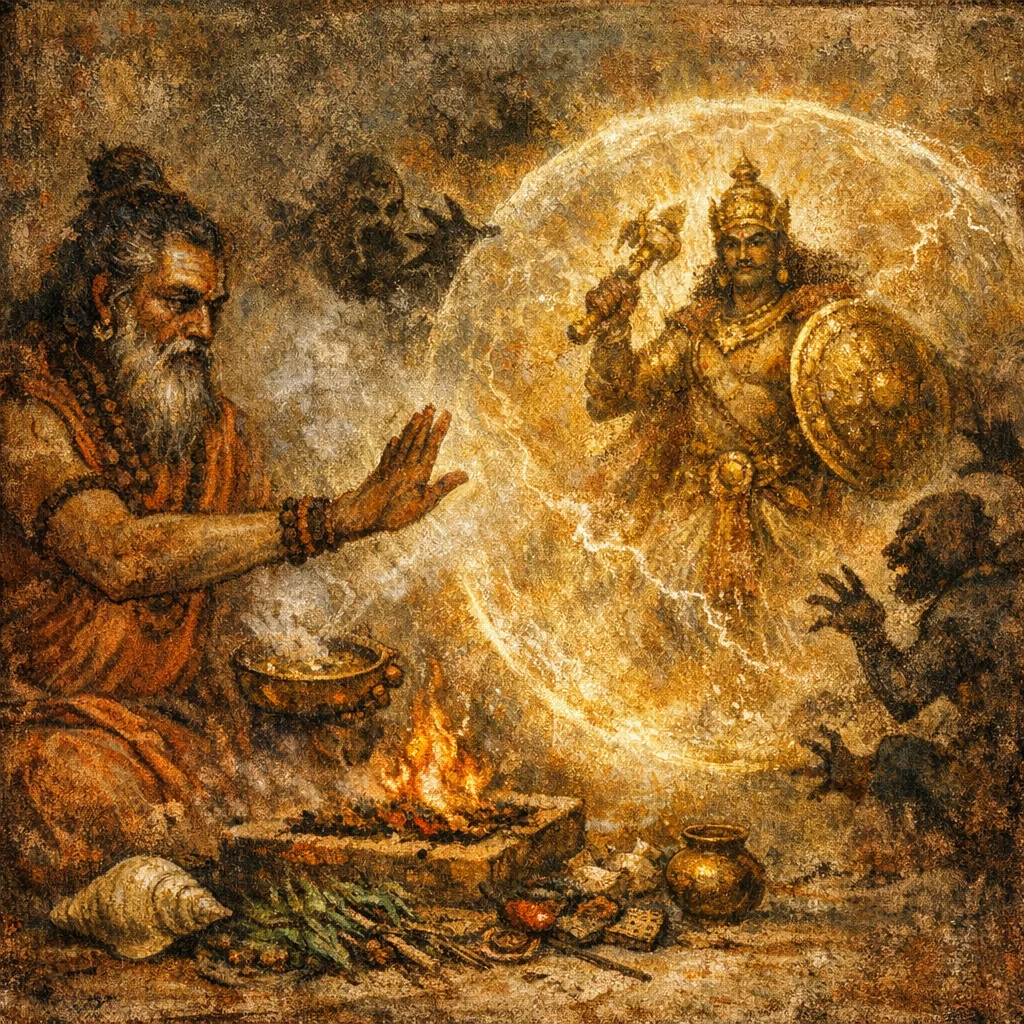
Sukta 120
Rishi: Kāṇva / RV-derived attribution (Book 20 is predominantly Rigvedic material in Atharvan arrangement)
Devata: Indra
Chandas: Triṣṭubh (RV-style; AV Book 20 commonly preserves RV meters)
Mantras
Mantra 1
यदिन्द्र प्रागपागुदङ्न्यग् वा हूयसे नृभिः । सिमा पुरू नृषूतो अस्यानवेऽसि प्रशर्ध तुर्वशे
If, Indra, eastward or westward, northward or downward, thou art called by men, within the many bounds—thou, driver-on of heroes, art for this Anu’s son: press on in onset against the Turvaśa.
Mantra 2
यद् वा रुमे रुशमे श्यावके कृप इन्द्र मादयसे सचा । कण्वासस्त्वा ब्रह्मभि स्तोमवाहस इन्द्रा यच्छन्त्या गहि
Or when, at Ruma, at Ruśama, at Śyāvaka, at Kṛpa, Indra, thou art made glad in fellowship—then the Kaṇvas, hymn-bearers, with their potent prayers, direct thee: Indra, come hither.
Frequently Asked Questions
It is used to summon Indra quickly for victory, protection, and royal/warrior success—especially when decisive force is needed in conflict or rivalry.
The directions function as a total summons: wherever Indra may be, he is called to appear immediately, leaving no ‘place’ outside the reach of invocation.
No. The text works as a direct Indra-invocation and battle-command; it can be performed with pure recitation and focused intention, even without materials.