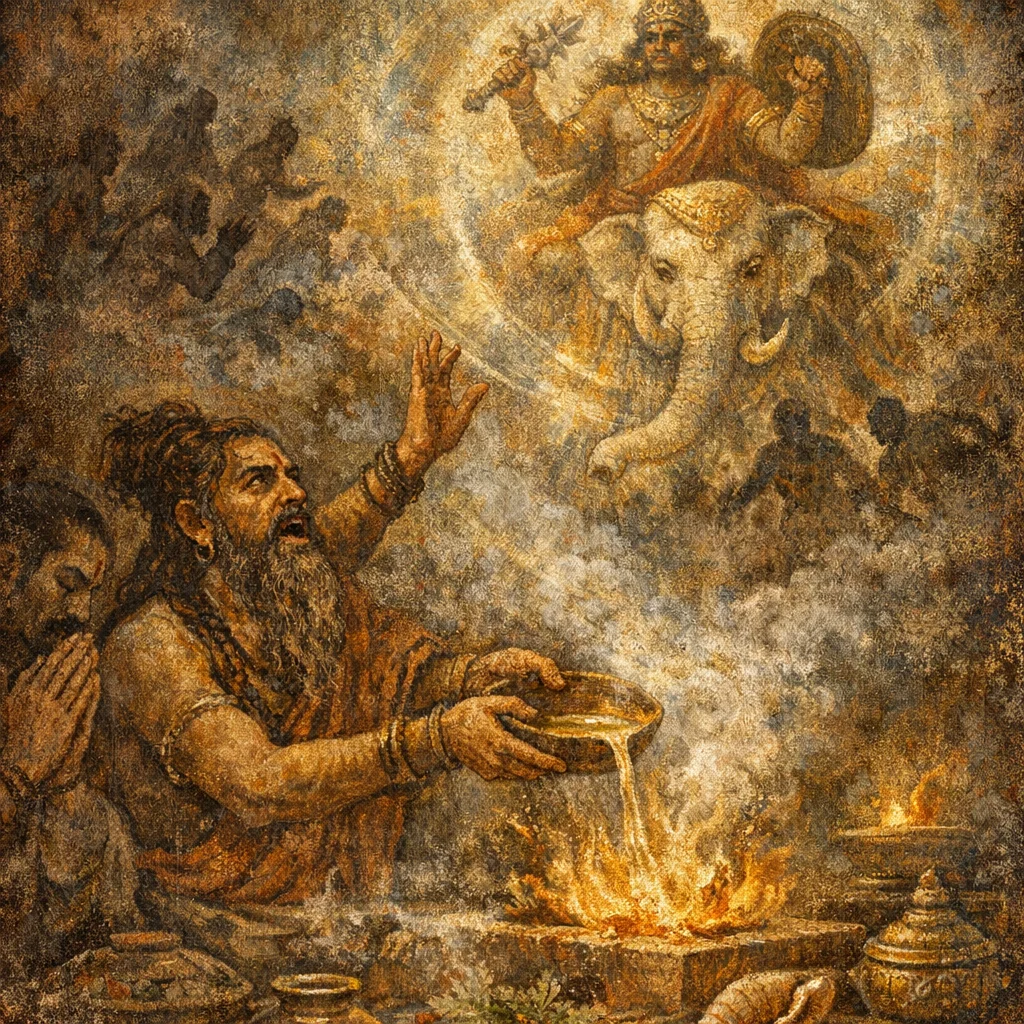
Sukta 98
Rishi: Rigvedic attribution (imported into AV 20): Indra-stotra tradition; specific r̥ṣi not determinable from excerpt alone.
Devata: Indra
Chandas: Likely Triṣṭubh/Jagatī-class (verification needed).
Mantras
Mantra 1
वयमेनमिदा ह्योपीपेमेह वज्रिणम्। तस्मा उ अद्य समना सुतं भरा नूनं भूषत श्रुते
We, even now, have made him drink here, the Thunder-armed; yesterday (too). To him, then, to-day, in common accord, bring the pressed Soma: now make ready (the rite) for the Renowned, that he may hear.
Mantra 2
वृकश्चिदस्य वारण उरामथिरा वयुनेषु भूषति । सेमं नः स्तोमं जुजुषाण आ गहीन्द्र प्र चित्रया धिया
Even the wolf of him is a repeller; the strong-stirrers shine in their devices. Accepting this our hymn of praise, come hither, O Indra, with brilliant thought.
Mantra 3
कदू न्व१स्याकृतमिन्द्रस्यास्ति पौंस्यम्। केनो नु कं श्रोमतेन न शुश्रुवे जनुषः परि वृत्रहा
When, then, is there aught unaccomplished of Indra’s manly puissance? By what renowned deed—by whom—hath it not been heard, the Vṛtra-slayer, from birth onward, far and wide?
Frequently Asked Questions
To call Indra to the offering, make him ‘hear’ and accept the hymn of praise, and thereby strengthen the rite while removing obstacles and dangers.
In its original Śrauta setting it belongs with Soma pressing, but in later use the essential offering is the stoma itself; a symbolic offering can accompany recitation when Soma is unavailable.
Calling Indra ‘Vṛtrahan’ frames him as the breaker of obstructions; praising that universally known power is meant to transfer the same obstacle-slaying force to the patron’s situation.