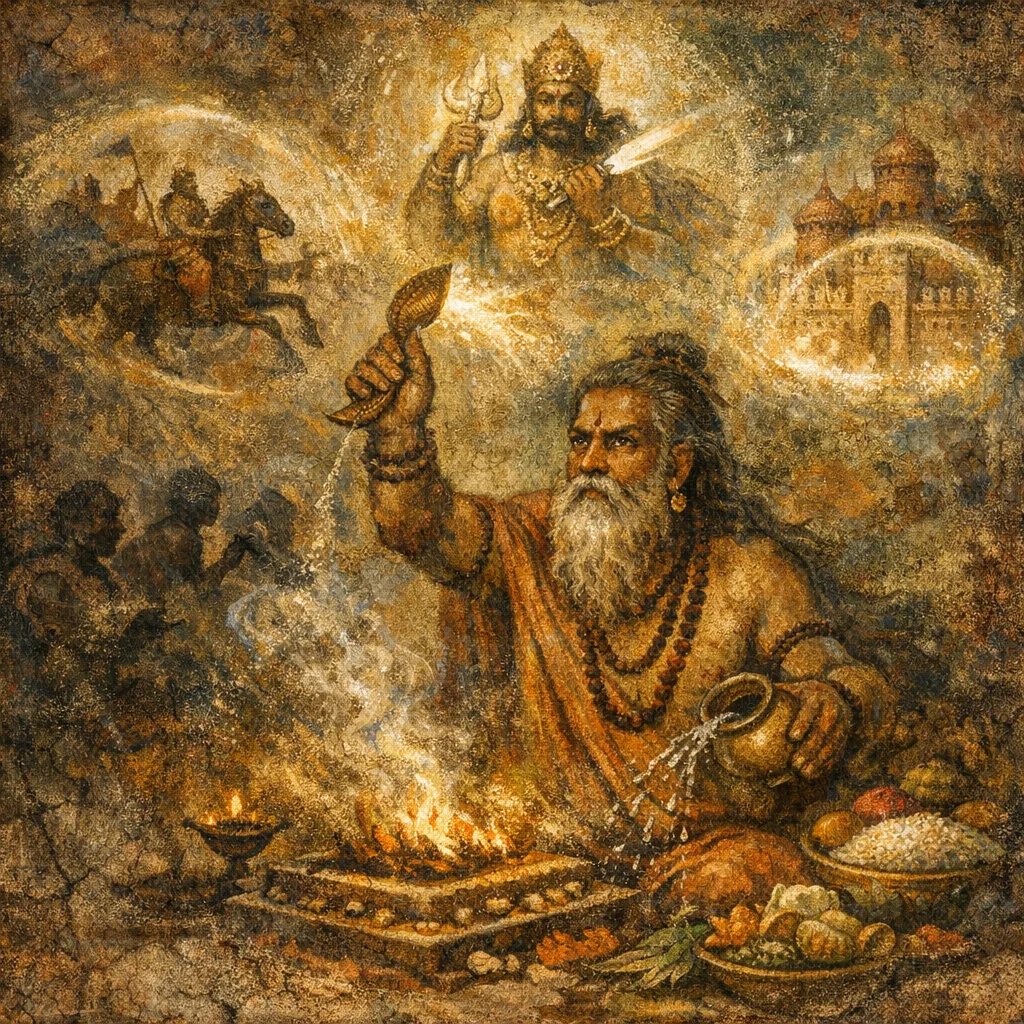
Sukta 94
Rishi: Ṛgvedic provenance (Indra-stotra tradition); in AV 20, hymns are largely adopted from the Ṛgveda (exact r̥ṣi attribution varies by anukramaṇī).
Devata: Indra (Soma-invited lord of wealth and victory)
Chandas: Triṣṭubh/Jagatī-type cadence (as in many RV Indra stanzas; AV 20 follows RV meters)
Mantras
Mantra 1
आ यात्विन्द्रः स्वपतिर्मदाय यो धर्मणा तूतुजानस्तुविष्मान्। प्रत्वक्षाणो अति विश्वा सहांस्यपारेण महता वृष्ण्येन
Let Indra, self-lord, come hither for exhilaration—he who, by ordinance, impels himself, the vehement; waxing strong, he overpasses all resistances with boundless, great, and manly might.
Mantra 2
सुष्ठामा रथः सुयमा हरी ते मिम्यक्ष वज्रो नृपते गभस्तौ । शीभं राजन् सुपथा याह्यर्वाङ् वर्धाम ते पपुषो वृष्ण्यानि
Firm stands thy chariot, well-yoked thy bays; the thunderbolt, O lord of men, is in thy grasp. Swiftly, O King, by good paths come hitherward: we will increase for thee—when thou hast drunk—thy manly powers.
Mantra 3
एन्द्रवाहो नृपतिं वज्रबाहुमुग्रमुग्रासस्तविषास एनम्। प्रत्वक्षसं वृषभं सत्यशुष्ममेमस्मत्रा सधमादो वहन्तु
O Indra-bearers—fierce and strong—bear hither to our side this lord of men, the thunderbolt-armed, the fierce; him waxing strong, the Bull of true might: let the fellow-rejoicers convey him.
Mantra 4
एवा पतिं द्रोणसाचं सचेतसमूर्ज स्कम्भं धरुण आ वृषायसे । ओजः कृष्व सं गृभाय त्वे अप्यसो यथा केनिपानामिनो वृधे
Thus the lord, seated at the trough, of one accord, the prop and bearer of nourishment—hither thou waxest. Make vigor; grasp it wholly in thee, O rich in sap, that the strong impeller may be for the increase of the drinkers.
Mantra 5
गमन्नस्मे वसून्या हि शंसिषं स्वाशिषं भरमा याहि सोमिनः । त्वमीशिषे सास्मिन्ना सत्सि बर्हिष्यनाधृष्या तव पात्राणि धर्मणा
Come unto us with riches; for I will hymn thee: bring thine own blessing; come to the Soma-pressers. Thou art the lord; here thou sittest on the sacred grass: unassailable are thy vessels, by ordinance and by right.
Mantra 6
पृथक् प्रायन् प्रथमा देवहूतयोऽकृण्वत श्रवस्याऽनि दुष्टरा । न ये शेकुर्यज्ञियां नावमारुहमीर्मैव ते न्यविशन्त केपयः
Apart went forth the first god-invocations; they wrought fame-winning deeds, hard to be withstood. But they who had not power to mount the sacrificial ship—those waverers, even they sank down within.
Mantra 7
एवैवापागपरे सन्तु दूढ्योऽश्वा येषां दुर्युज आयुयुज्रे। इत्था ये प्रागुपरे सन्ति दावने पुरूणि यत्र वयुनानि भोजना
So let the others be set backward: stubborn are the horses of those who yoke them ill. But thus are they who stand in front and higher for bestowal, where many are the wise devices and the distributions of enjoyment.
Mantra 8
गिरींरज्रान् रेजमानां अधारयद् द्यौः क्रन्ददन्तरिक्षाणि कोपयत्। समीचीने धिषणे वि ष्कभायति वृष्णः पीत्वा मद उक्थानि शंसति
He held aloft the trembling mountains and their ridges; Heaven roared, and he set the mid-air regions in commotion. In due-ordered bowls he braces all apart: the Bull, when he hath drunk, in rapture chants the hymns of praise.
Mantra 9
इमं बिभर्मि सुकृतं ते अङ्कुशं येनारुजासि मघवं छफारुजः । अस्मिन्त्सु ते सवने अस्त्वोक्त्यं सुत इष्टौ मघवन् बोध्याभगः
This well-wrought goad for thee I bear, wherewith thou breakest, O Bounteous, the hoof-breakers. In this thy pressing let there be meet laudation; the Soma is pressed for the offering: awake, O Maghavan—hither, as bounty and good fortune.
Mantra 10
गोभिष्टरेमामतिं दुरेवां यवेन क्षुधं पुरुहूत विश्वाम्। वयं राजभिः प्रथमा धनान्यस्माकेन वृजनेना जयेम
With kine may we pass beyond the evil-minded plot, the ill course; with barley may we drive away all hunger, O Much-invoked. With kings (as allies) may we be foremost in riches; with our own host may we win the victory.
Mantra 11
बृहस्पतिर्नः परि पातु पश्चादुतोत्तरस्मादधरादघायोः । इन्द्रः पुरस्तादुत मध्यतो नः सखा सखिभ्यो वरिवः कृणोतु
May Bṛhaspati guard us round about—from behind, and from the north, and from below—against the evil-doer. May Indra, from the front and from the midst, our friend, make free way and favor for our friends.
Frequently Asked Questions
To invite Indra to the Soma offering so that prosperity (wealth, cattle, food) and victory come to the sacrificer, while the ritual itself remains protected and effective.
They are concrete signs of prosperity: cows stand for movable wealth and strength, and barley stands for food security; together they express crossing beyond harmful plots and driving away hunger.
Yes. Alongside requests for wealth and victory, it asks that Indra’s ordinance make the Soma vessels and offering ‘unassailable,’ and it explicitly seeks the removal of hunger and ill intent.